Brown Butter Orange Pecan Christmas Morning Rolls with Vanilla Bean Glaze

Soft, fluffy homemade cinnamon rolls filled with rich brown butter, warm cinnamon, fresh orange zest, and toasted pecans, then finished with a sweet vanilla bean glaze. These are the kind of Christmas morning cinnamon rolls that turn a simple breakfast into a family tradition.

There's something about Christmas morning that makes even the simplest moments feel a little more special. The excitement of little feet running toward the Christmas tree, coffee brewing in the kitchen, wrapping paper scattered across the floor, and something warm and homemade baking in the oven.

As our little family grows, I've been thinking more about the traditions I want to create for our children. Not necessarily anything elaborate, but those familiar little things they'll remember year after year. The recipes we make together, the smells that remind them of home, and the moments that eventually become their favorite childhood memories.

These Brown Butter Orange Pecan Christmas Morning Cinnamon Rolls are one of those recipes.

I wanted to take everything we love about a classic homemade cinnamon roll and make it feel just a little more special for the holidays. The brown butter adds a rich, nutty flavor, fresh orange zest brings the perfect touch of brightness, and toasted pecans add a little crunch to every soft, buttery swirl.

And then there's the vanilla bean glaze. It's sweet, creamy, and melts beautifully into the warm rolls.

The best part? You can prepare these the night before, so Christmas morning can be spent enjoying your family instead of spending hours in the kitchen.

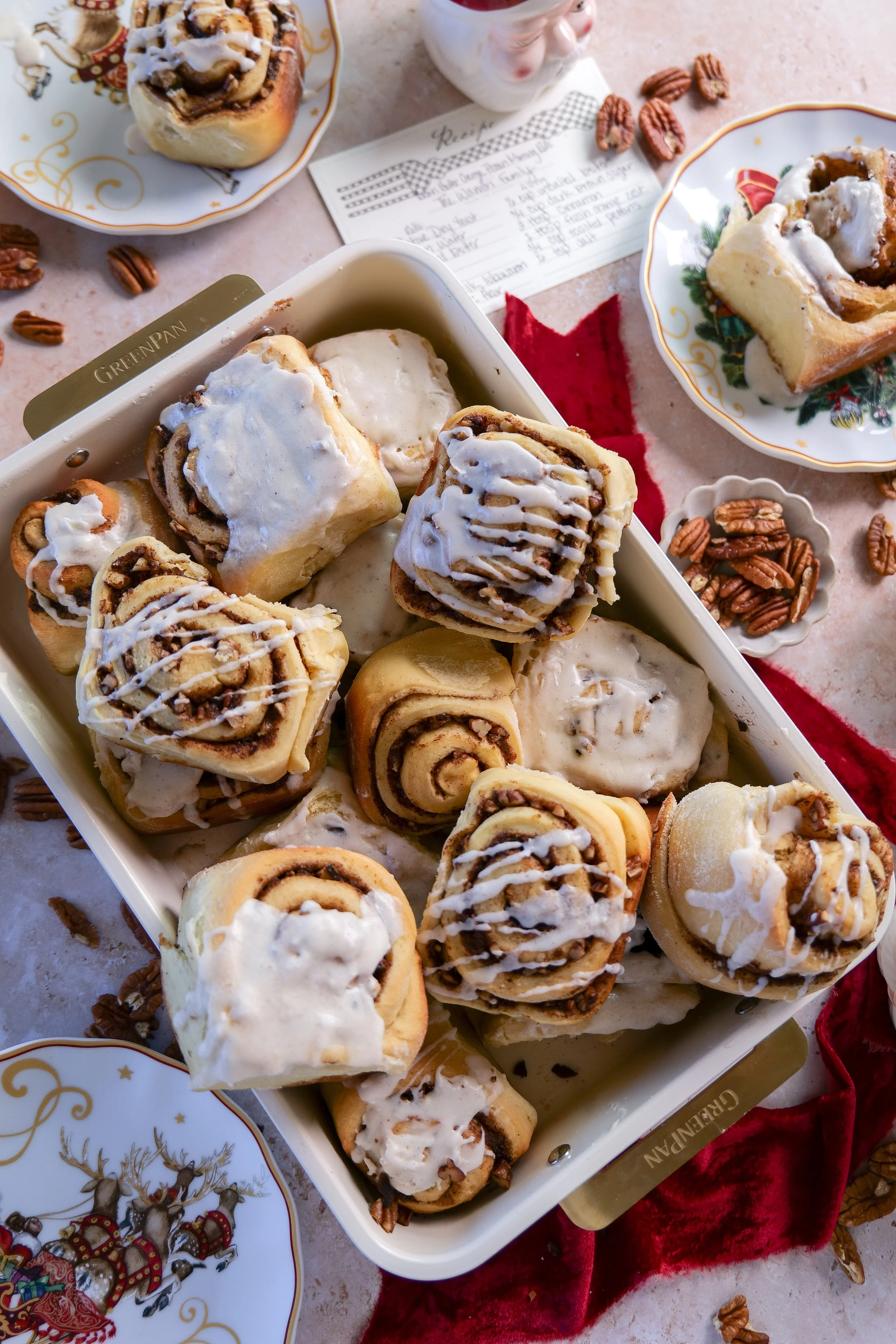
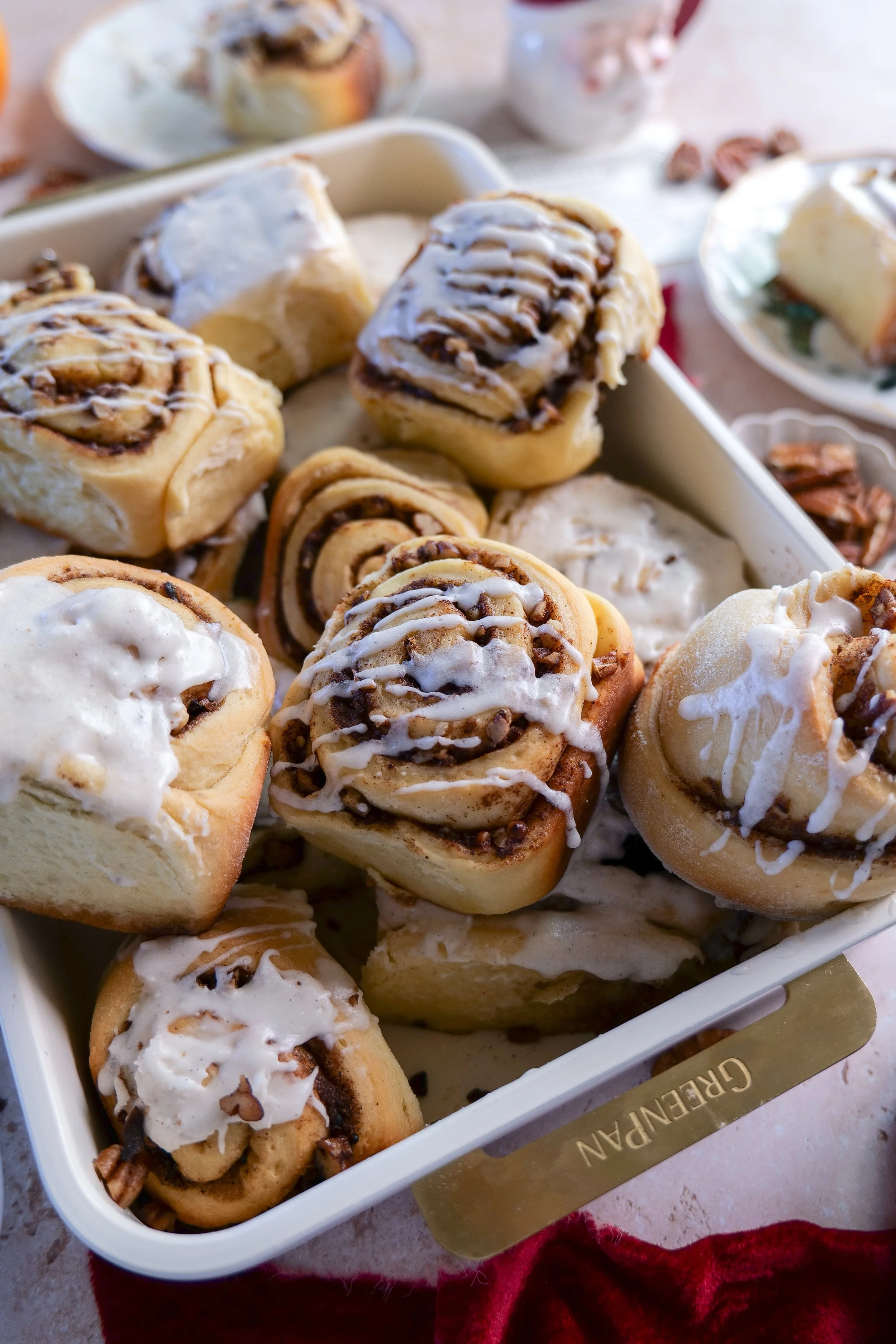
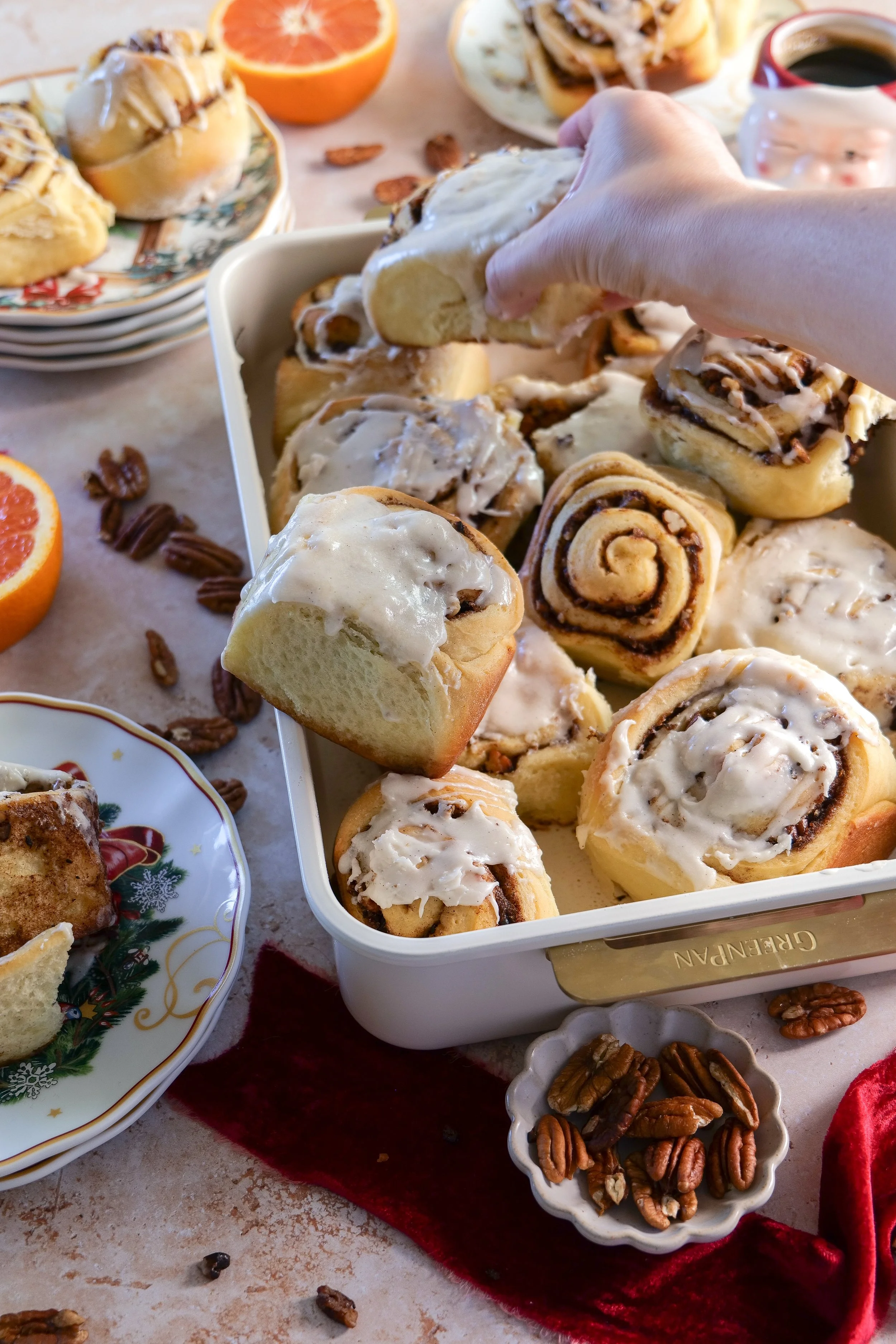
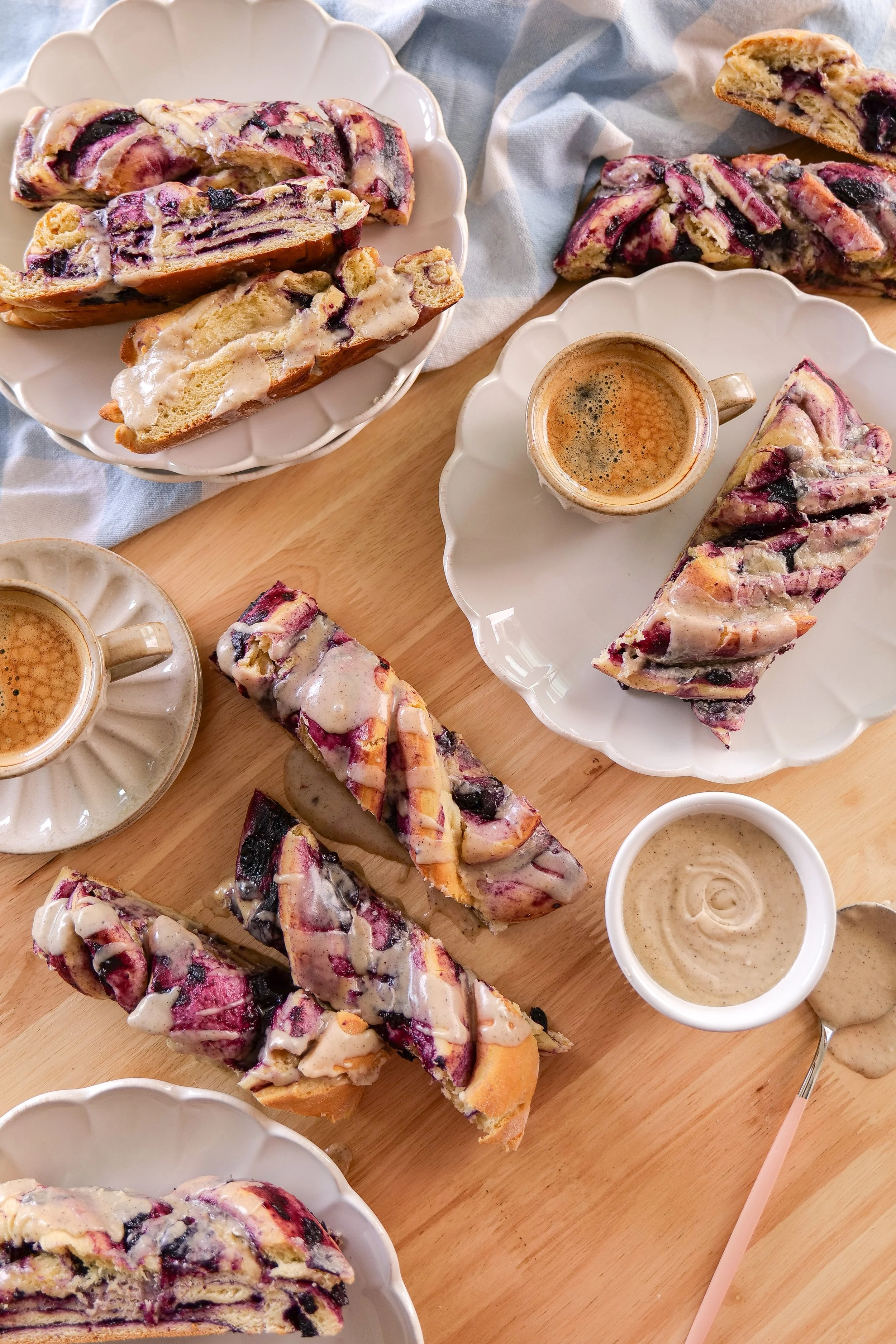
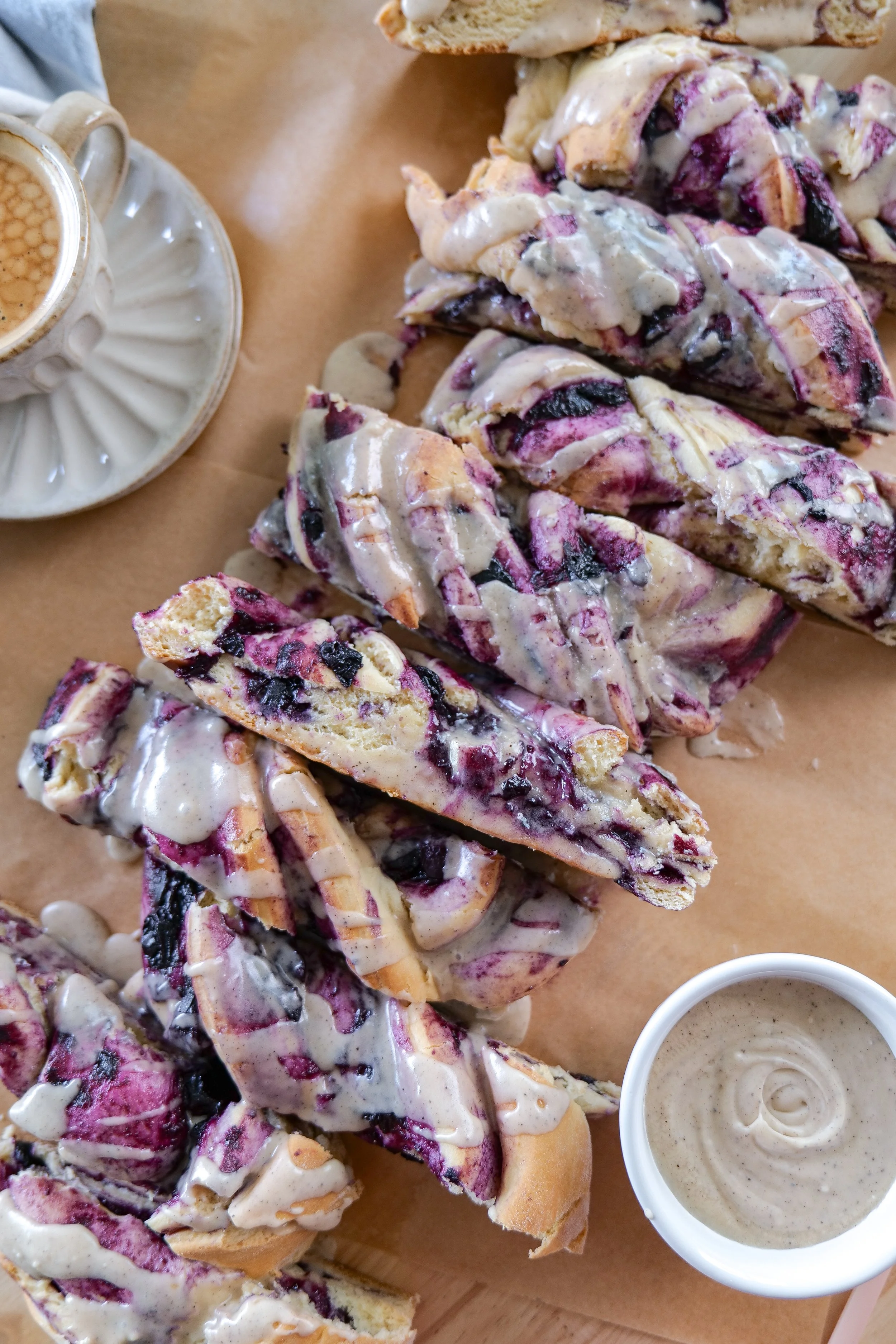
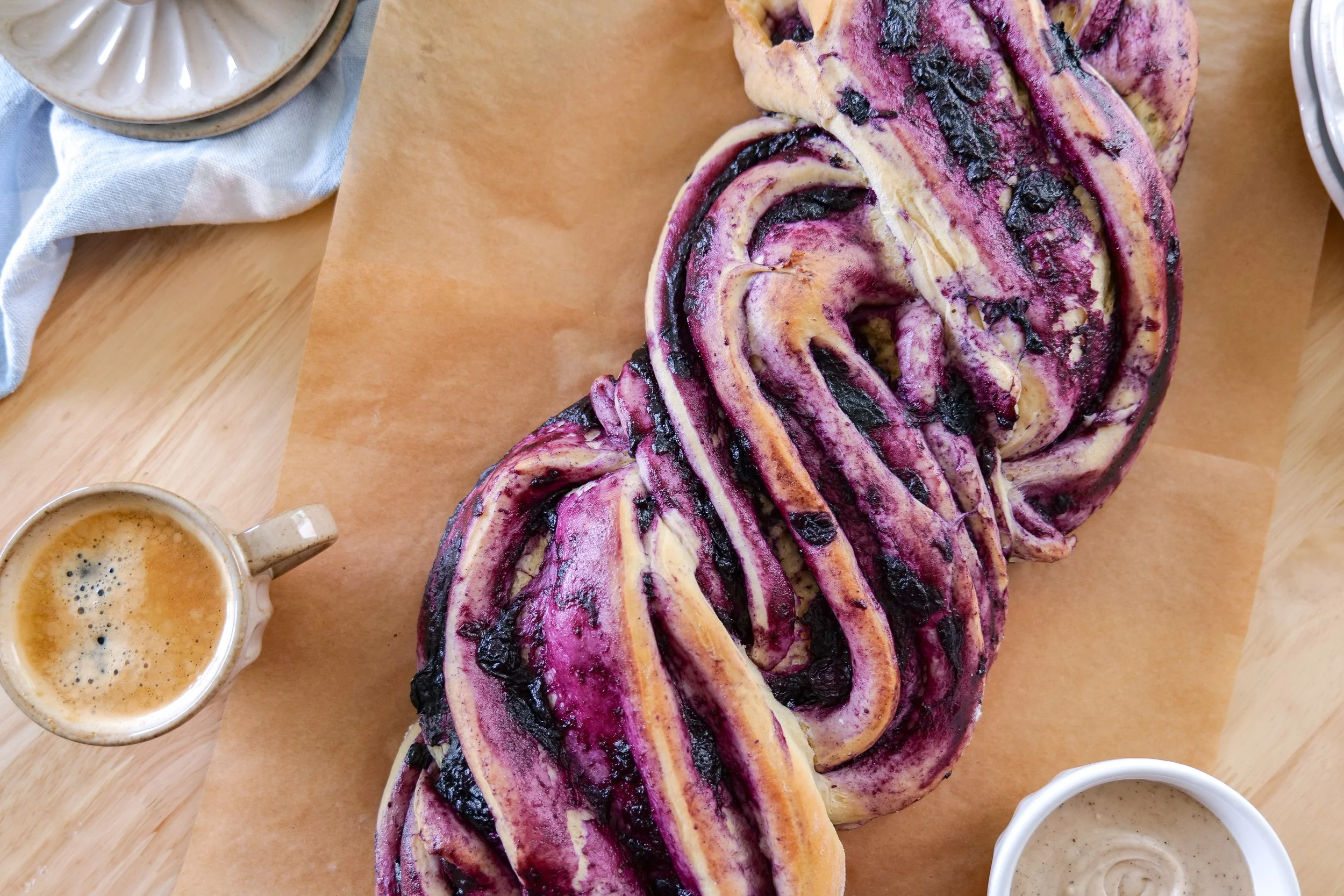
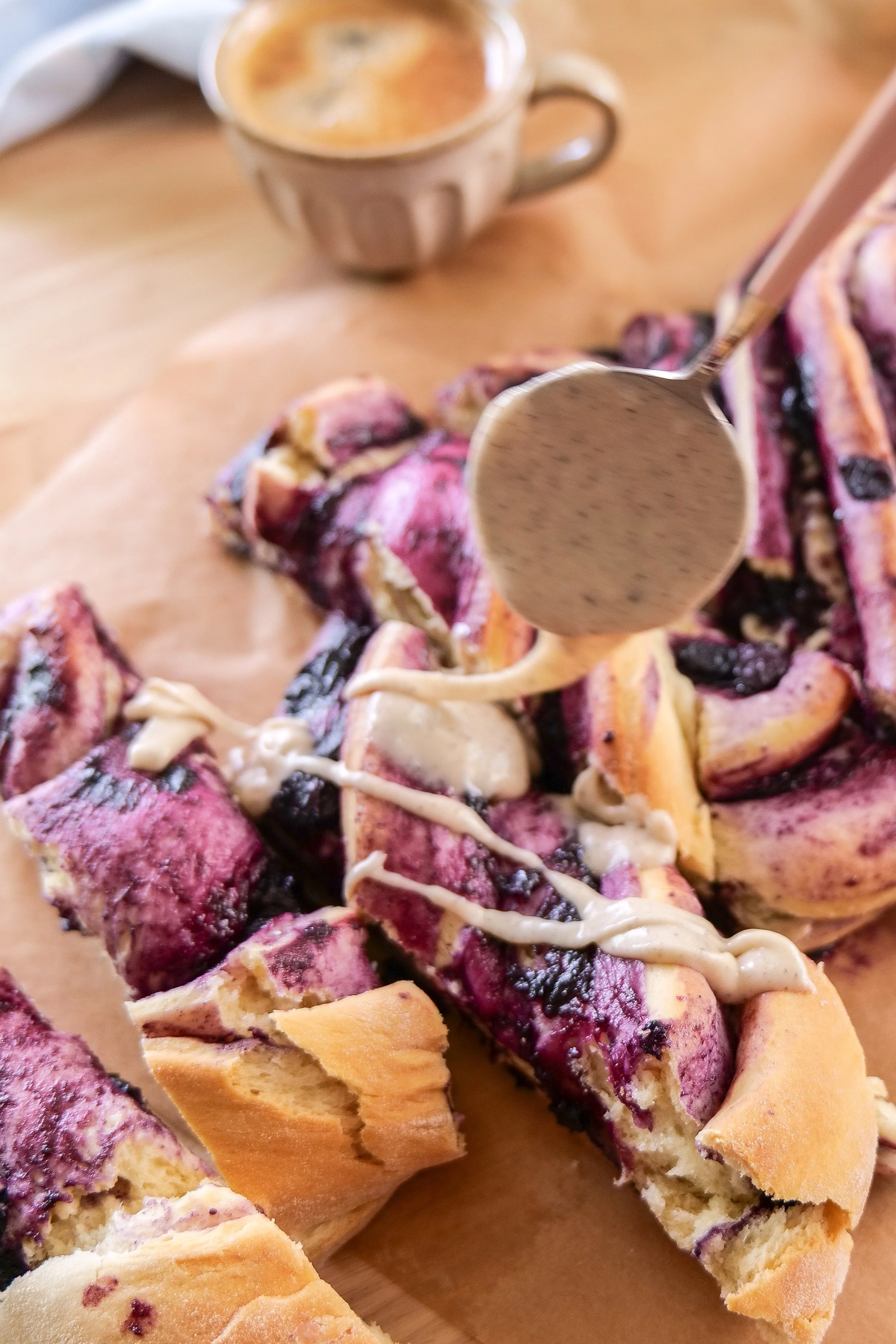
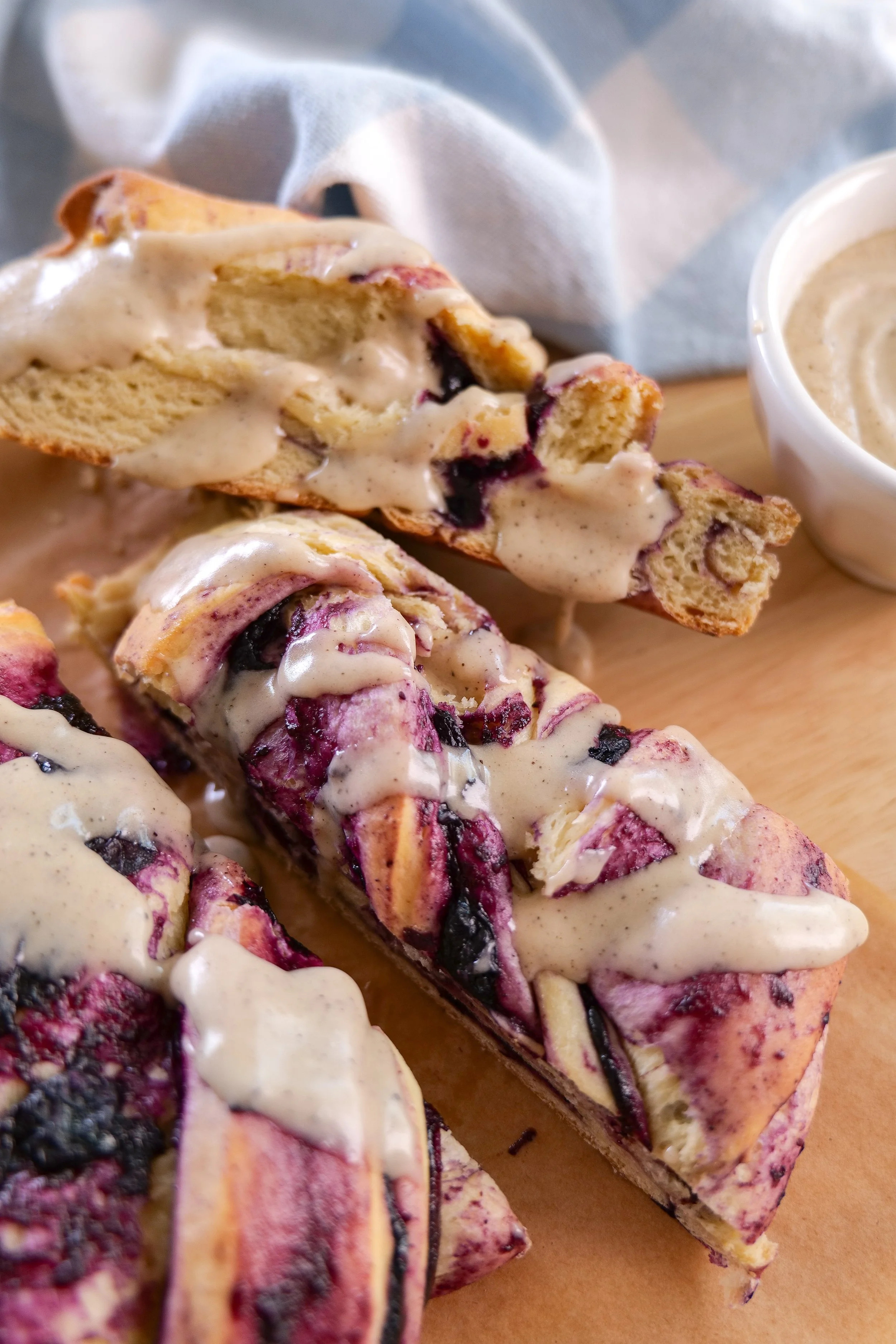
Freshly baked brown butter orange pecan cinnamon rolls topped with creamy vanilla bean glaze.

Why You'll Love These Christmas Morning Cinnamon Rolls

There's nothing quite like homemade cinnamon rolls, especially during the holidays. Here's what makes this recipe one you'll want to save.

Rich, nutty brown butter. Browning the butter gives the filling a deeper, almost caramel-like flavor that makes these rolls taste extra special.

A little fresh orange zest. The orange adds a beautiful brightness that pairs perfectly with cinnamon, brown sugar, and pecans without overpowering the rolls.

Soft, fluffy homemade dough. These rolls bake up beautifully tender with plenty of buttery cinnamon swirls.

Toasted pecans in every bite. They add just enough texture and a delicious nutty flavor.

A beautiful vanilla bean glaze. Sweet and creamy with those little specks of real vanilla bean.

Perfect for making ahead. You can prepare the rolls on Christmas Eve and bake them fresh the next morning.

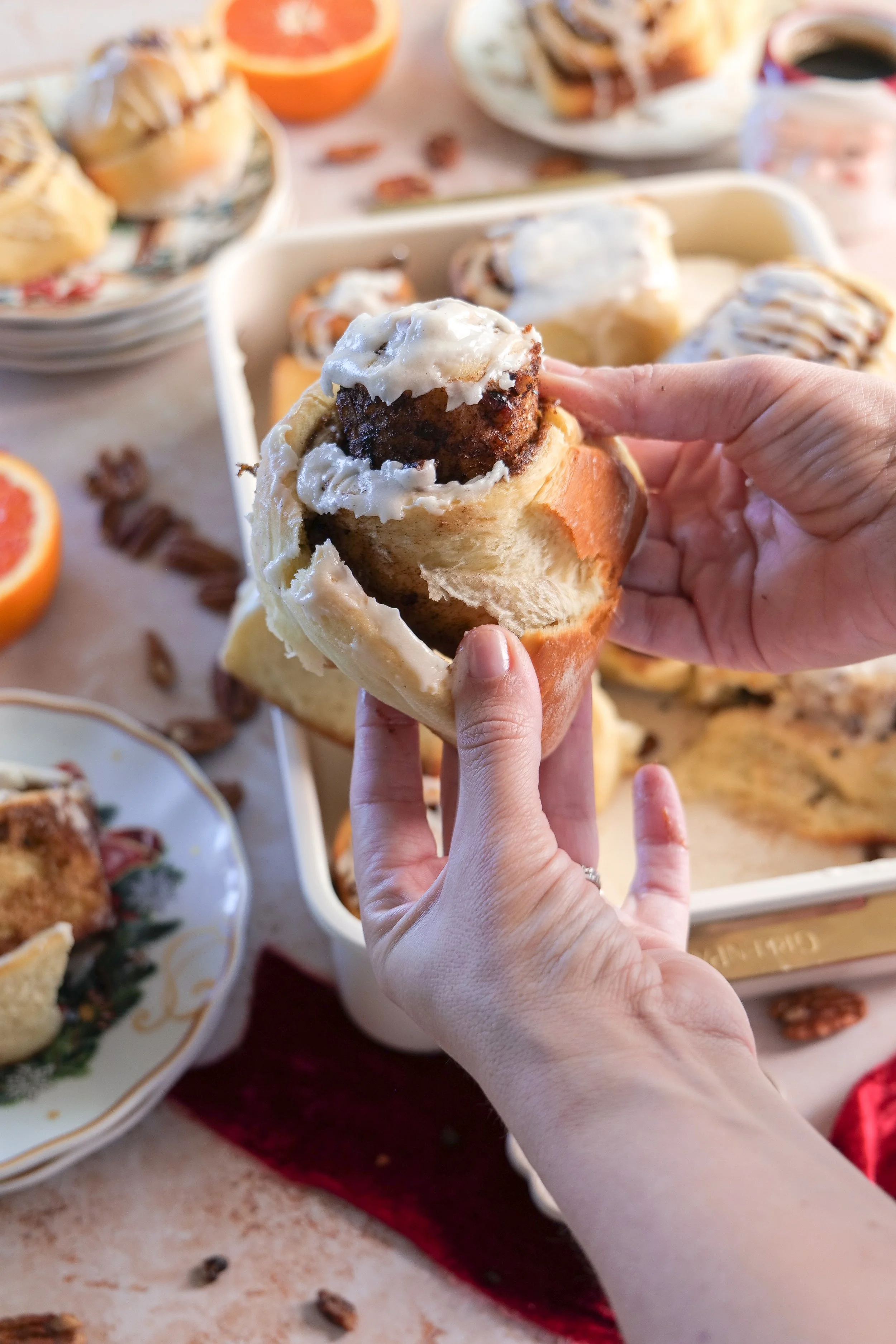
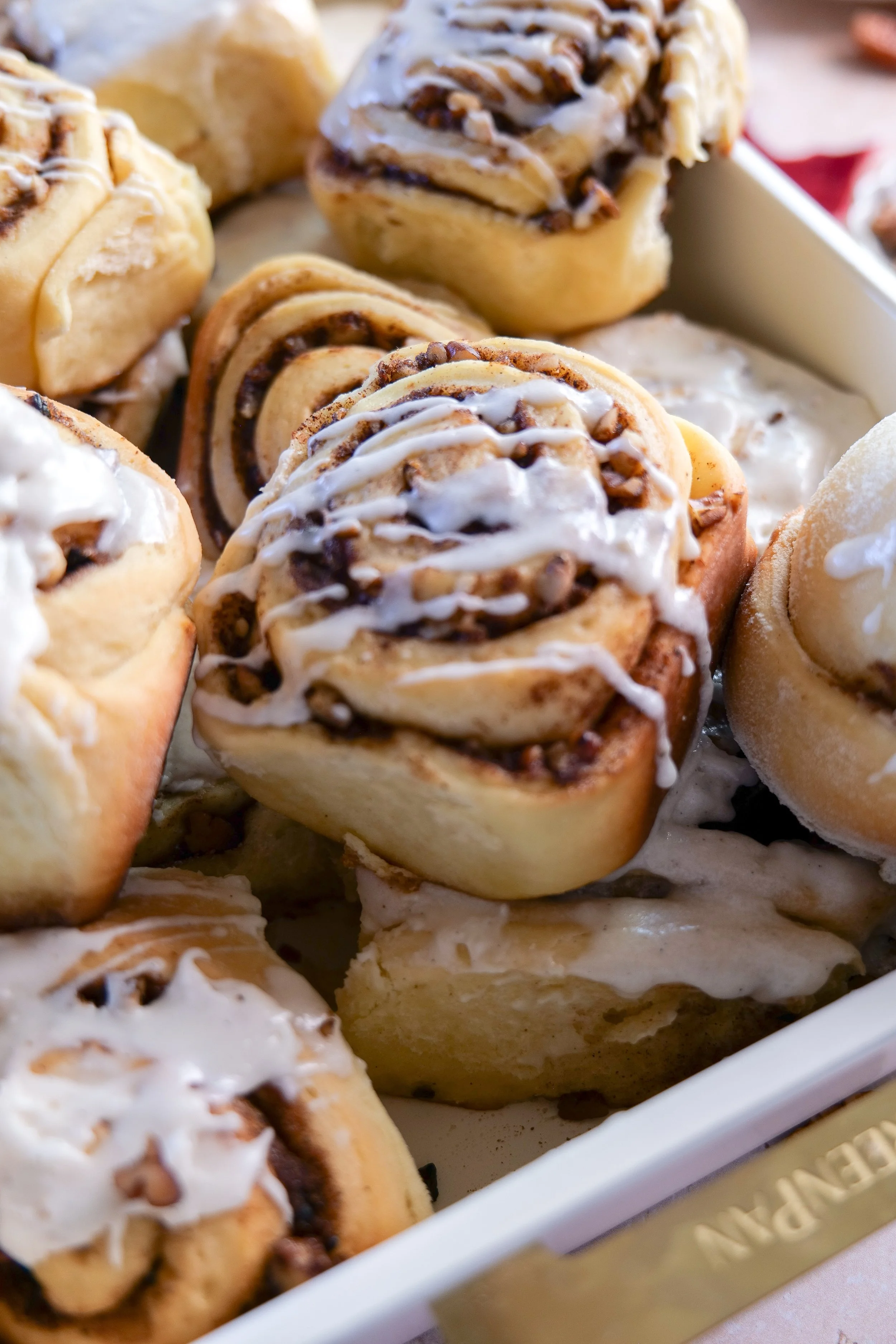
Close-up of soft orange pecan cinnamon rolls with swirls of cinnamon filling and vanilla bean glaze.

Ingredients You'll Need

One of my favorite things about homemade cinnamon rolls is that they're made with ingredients you probably already have in your kitchen. A few special touches are what make these perfect for Christmas morning.

For the Homemade Cinnamon Roll Dough

All-purpose flour: Creates the structure of the dough while keeping the rolls soft and tender.

Active dry yeast: Helps the dough rise and gives the cinnamon rolls their beautiful, fluffy texture.

Whole milk: Adds richness and moisture to the dough.

Granulated sugar: Sweetens the dough and helps activate the yeast.

Unsalted butter: Makes the dough wonderfully soft and buttery.

Egg: Adds richness and helps create a tender texture.

Warm water and salt: Help activate the yeast and balance the sweetness.

For the Brown Butter Orange Pecan Filling

Unsalted butter: The star of the filling! Browning it creates a rich, nutty flavor that makes these cinnamon rolls especially delicious.

Dark brown sugar: Adds sweetness with a deep, caramel-like flavor.

Ground cinnamon: Gives the rolls their classic warm and cozy flavor.

Fresh orange zest: Adds a bright citrus note that feels perfect for Christmas.

Toasted pecans: Bring a little crunch and delicious roasted flavor.

Salt: Balances the sweetness and enhances the filling.

For the Vanilla Bean Glaze

Powdered sugar: Creates the sweet, smooth base of the glaze.

Heavy cream: Makes the glaze rich and beautifully pourable.

Vanilla bean paste: Adds a wonderful vanilla flavor and those pretty little vanilla bean specks.

Fresh orange juice: Just a splash ties the glaze back to the orange zest in the filling.

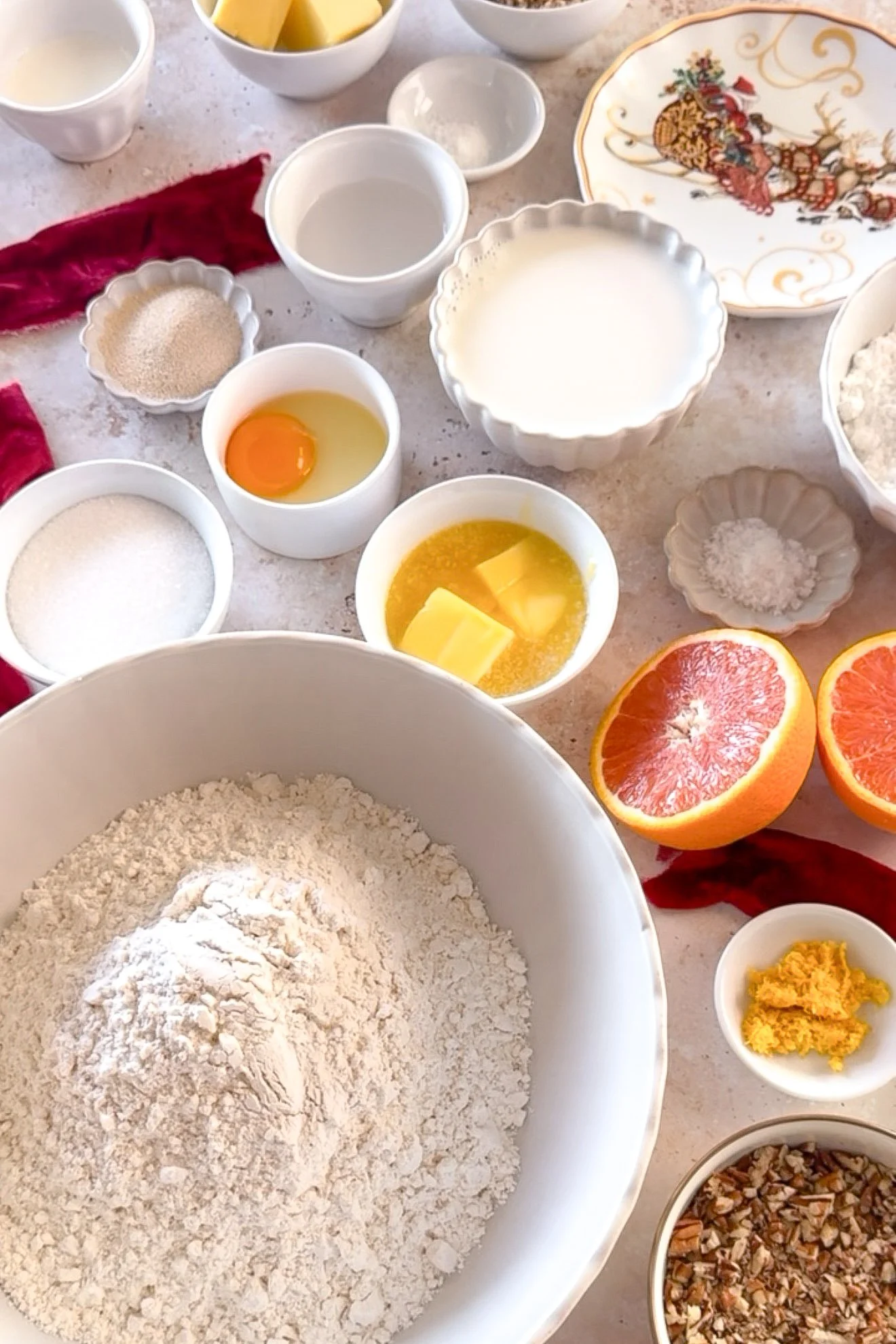
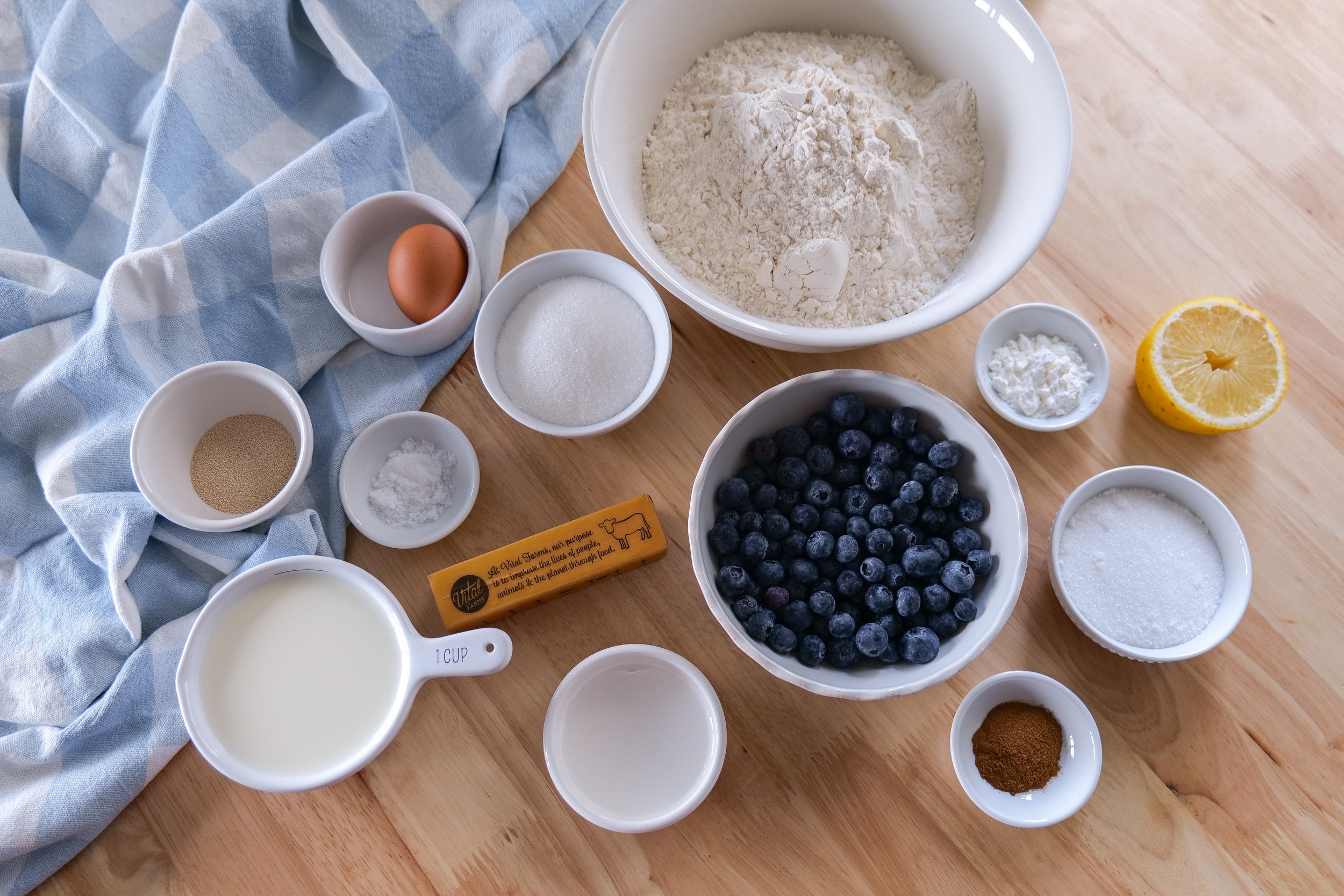
Ingredients for homemade orange cinnamon rolls, including flour, butter, cinnamon, oranges, and pecans.

How to Make Brown Butter Orange Pecan Cinnamon Rolls

Homemade cinnamon rolls take a little patience, but they're surprisingly simple to make. And once you've tasted them warm from the oven, I promise the extra effort feels worth it.

Step 1: Make the Cinnamon Roll Dough

Start by activating the yeast in warm water with a little sugar until it becomes foamy.

In a large mixing bowl, combine the remaining sugar, softened butter, egg, salt, and warm milk. Add the yeast mixture and gradually mix in the flour until a soft dough forms.

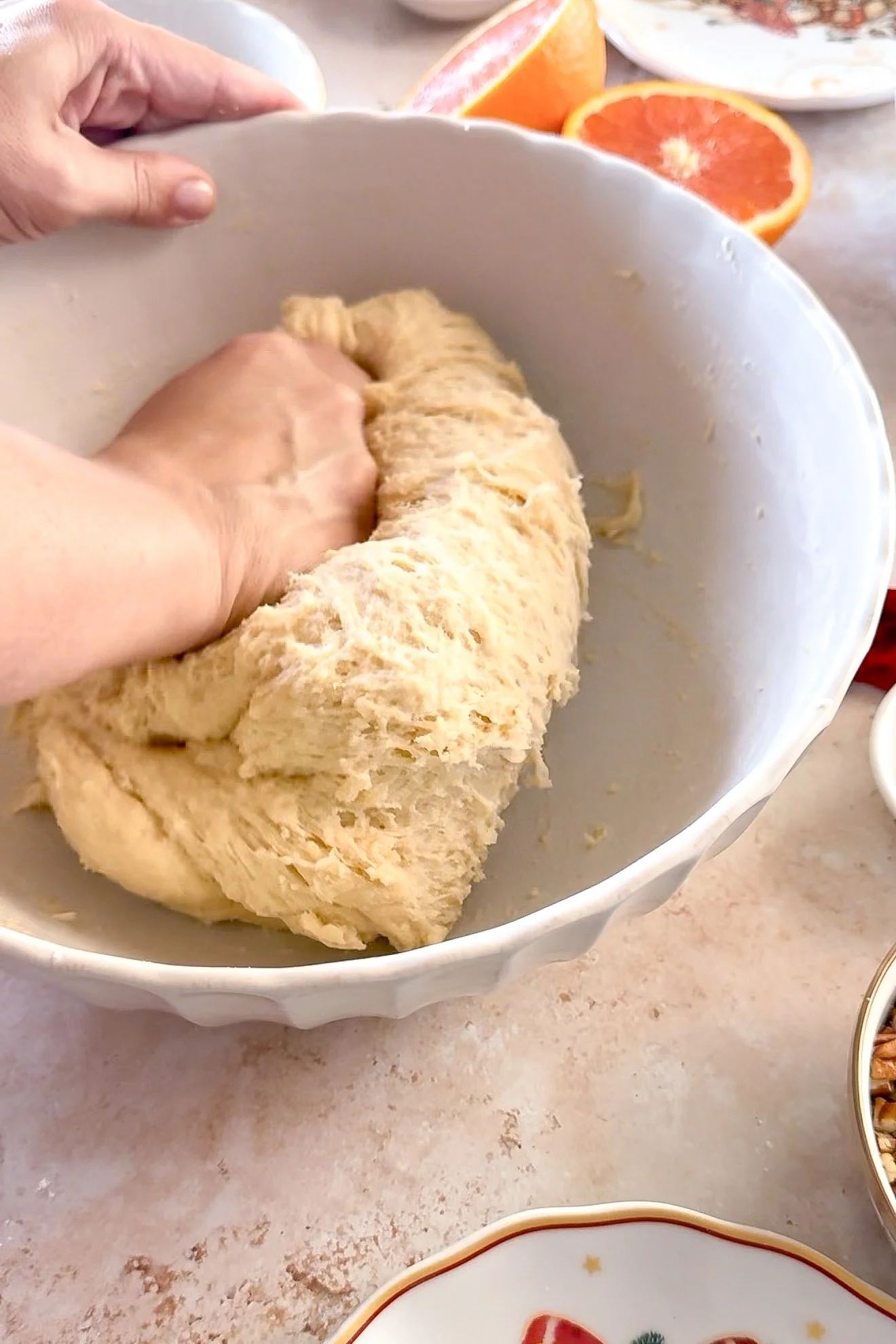
Knead the dough until it's smooth and elastic, then transfer it to a lightly greased bowl.

Cover and allow it to rise in a warm place until doubled in size.

Amanda's Tip: The dough should feel soft and slightly tacky. Avoid adding too much extra flour, which can make your cinnamon rolls dense instead of fluffy.

Soft homemade cinnamon roll dough being prepared for orange pecan cinnamon rolls.
Homemade cinnamon roll dough rolled into a rectangle before adding the brown butter filling.

Step 2: Brown the Butter

While the dough rises, prepare the brown butter.

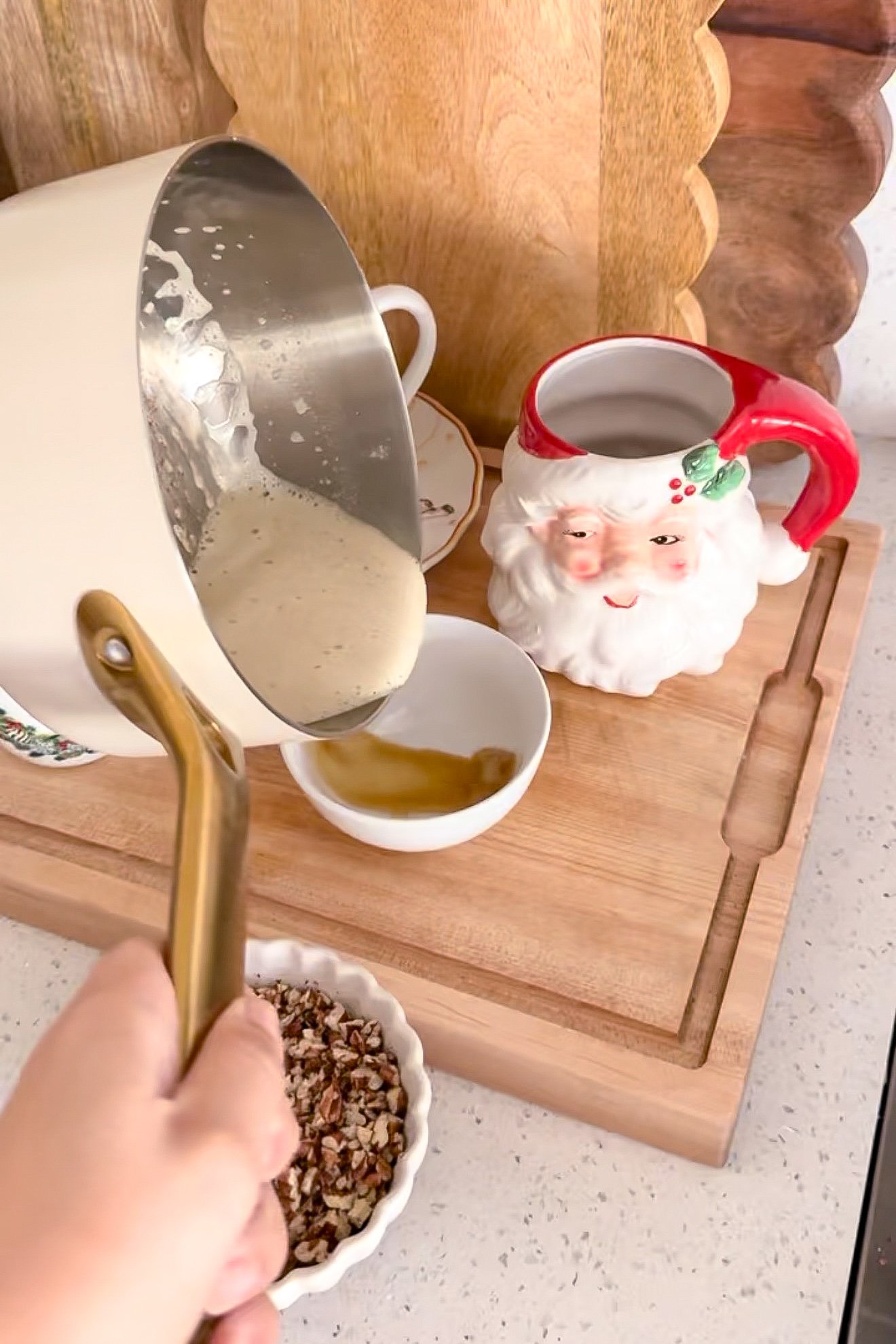
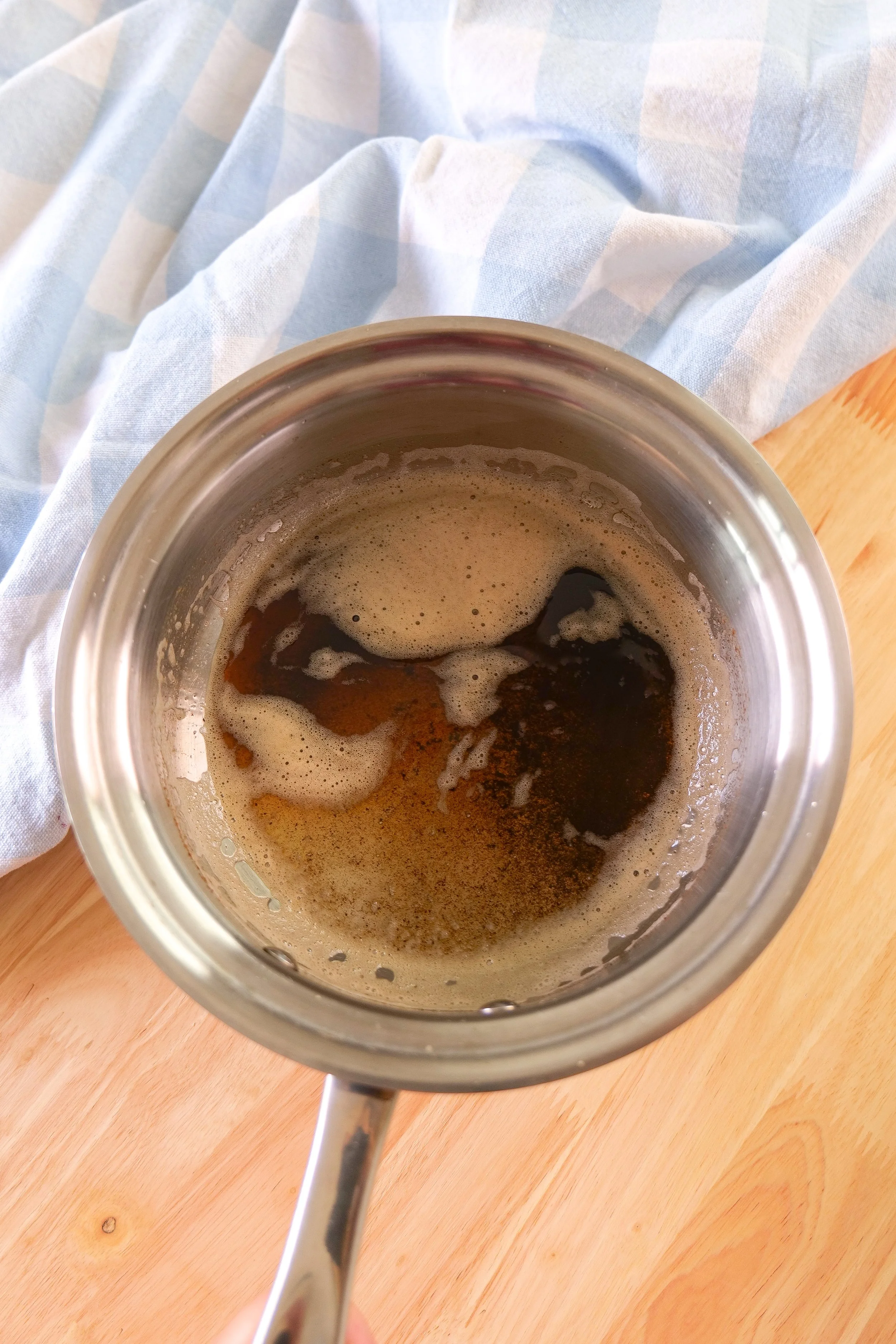
Melt the butter in a light-colored saucepan over medium heat, stirring frequently as it begins to foam.

After a few minutes, you'll notice the milk solids turning golden brown and the butter developing a delicious, nutty aroma.

As soon as it reaches that beautiful golden color, remove it from the heat and transfer it to a heat-safe bowl.

Allow the butter to cool until it's thickened and spreadable.

This is one of my favorite steps because it adds so much flavor to the finished cinnamon rolls.

Golden brown butter in a saucepan, prepared for the orange pecan cinnamon roll filling.

Step 3: Prepare the Orange Pecan Filling

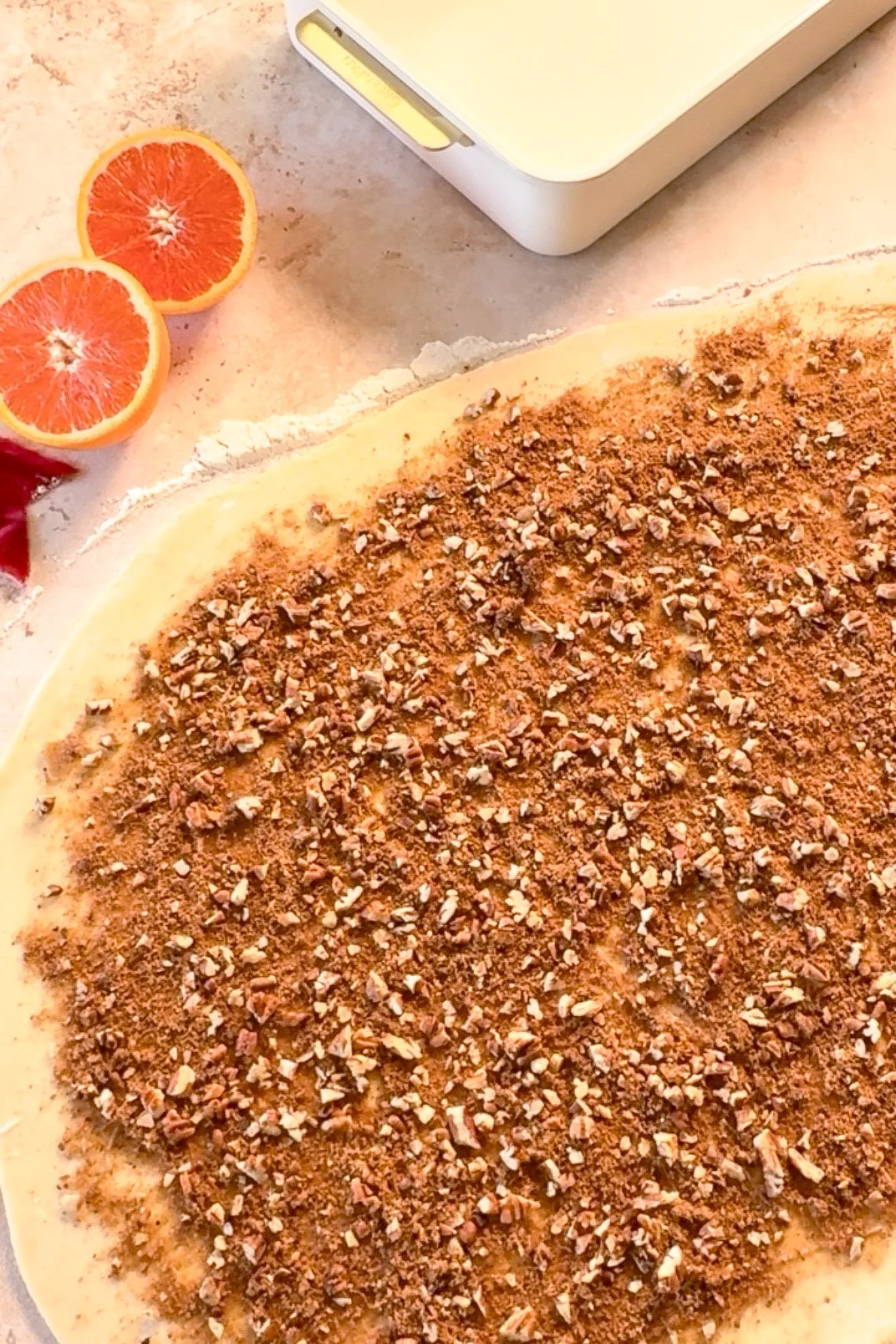
In a small bowl, combine the dark brown sugar, ground cinnamon, fresh orange zest, finely chopped toasted pecans, and salt.

The orange zest makes this filling smell absolutely wonderful before it even goes into the oven.

Cinnamon roll dough covered with brown butter, cinnamon sugar, orange zest, and chopped pecans.

Step 4: Roll, Fill, and Shape the Cinnamon Rolls

Once the dough has doubled in size, gently punch it down and transfer it to a lightly floured surface.

Roll the dough into a large rectangle.

Spread the cooled brown butter evenly over the dough, leaving a small border around the edges.

Sprinkle the orange pecan cinnamon sugar mixture over the butter, gently pressing it into the dough.

Starting at the long edge, roll the dough tightly into a log.

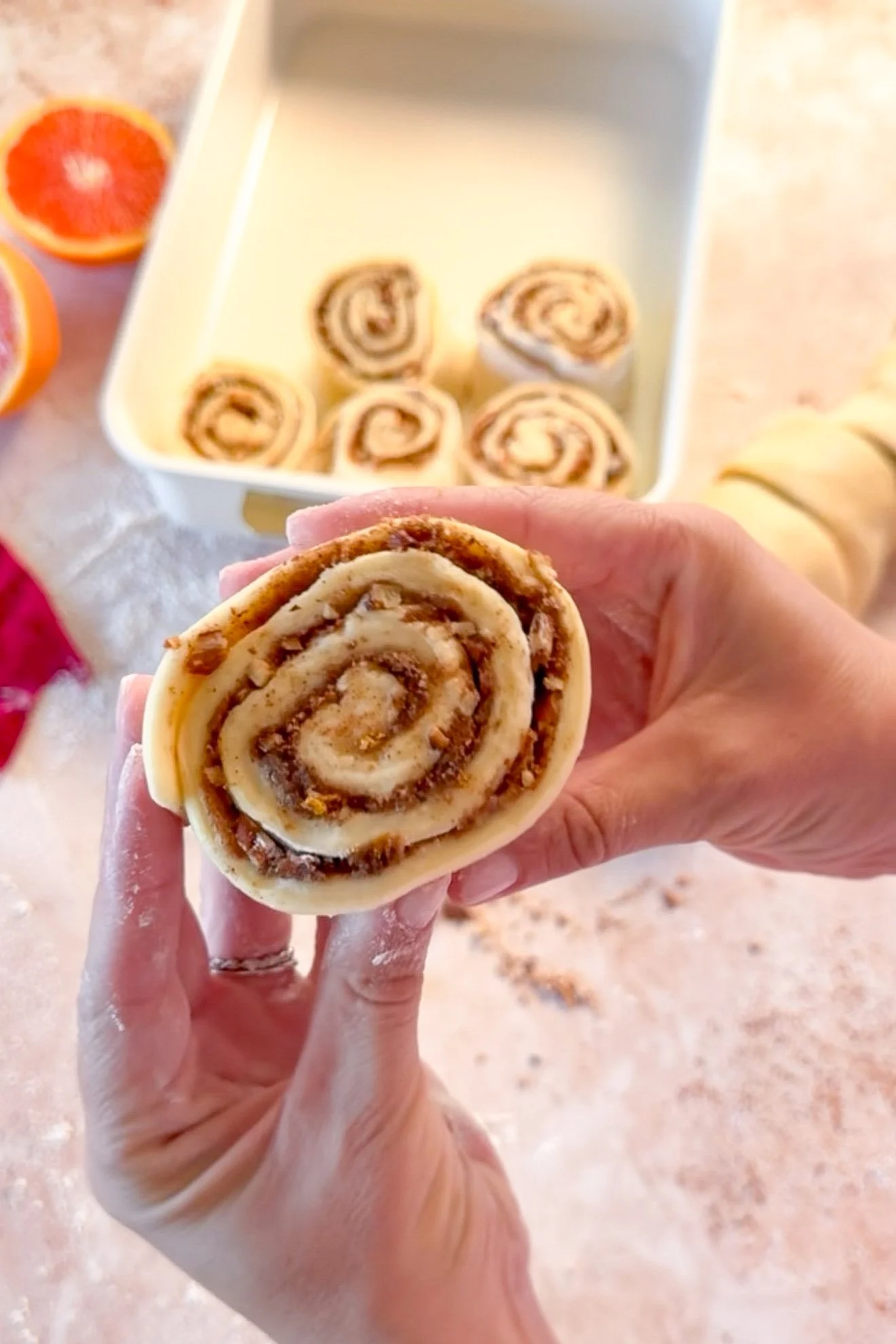
Cut into 12 evenly sized cinnamon rolls using a sharp knife or unflavored dental floss.

Filled cinnamon roll dough sliced into individual orange pecan cinnamon rolls.
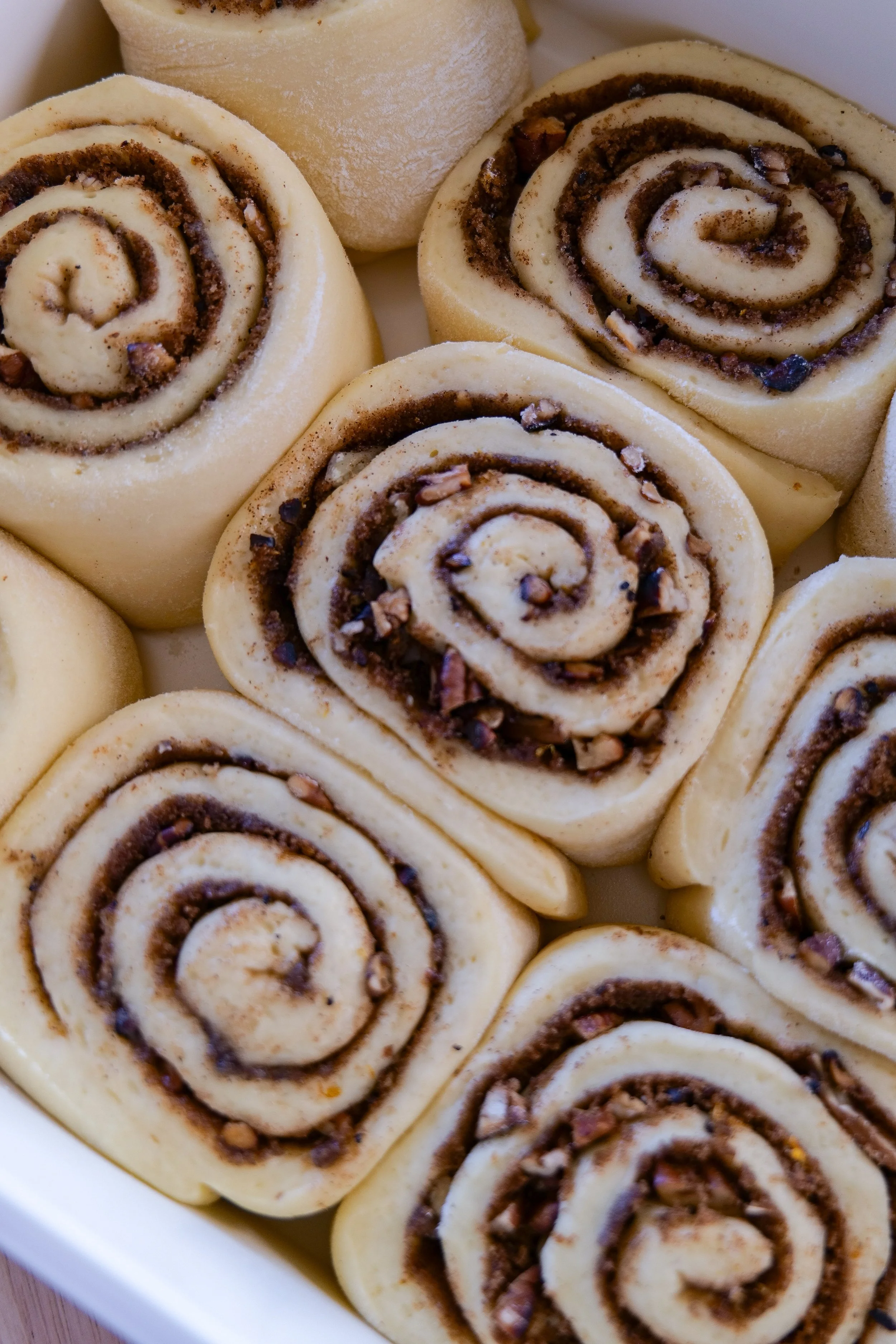
Unbaked orange pecan cinnamon rolls arranged in a baking dish before rising and baking.

Step 5: Let the Cinnamon Rolls Rise

Arrange the cinnamon rolls in a lightly buttered baking dish, leaving a little room between each roll.

Cover loosely and allow them to rise until noticeably puffy.

This second rise helps create those beautifully soft, fluffy layers.

For an extra-rich finish, you can pour a little warm heavy cream over the risen rolls just before baking.

Unbaked orange pecan cinnamon rolls arranged in a baking dish before rising and baking.

Step 6: Bake Until Golden

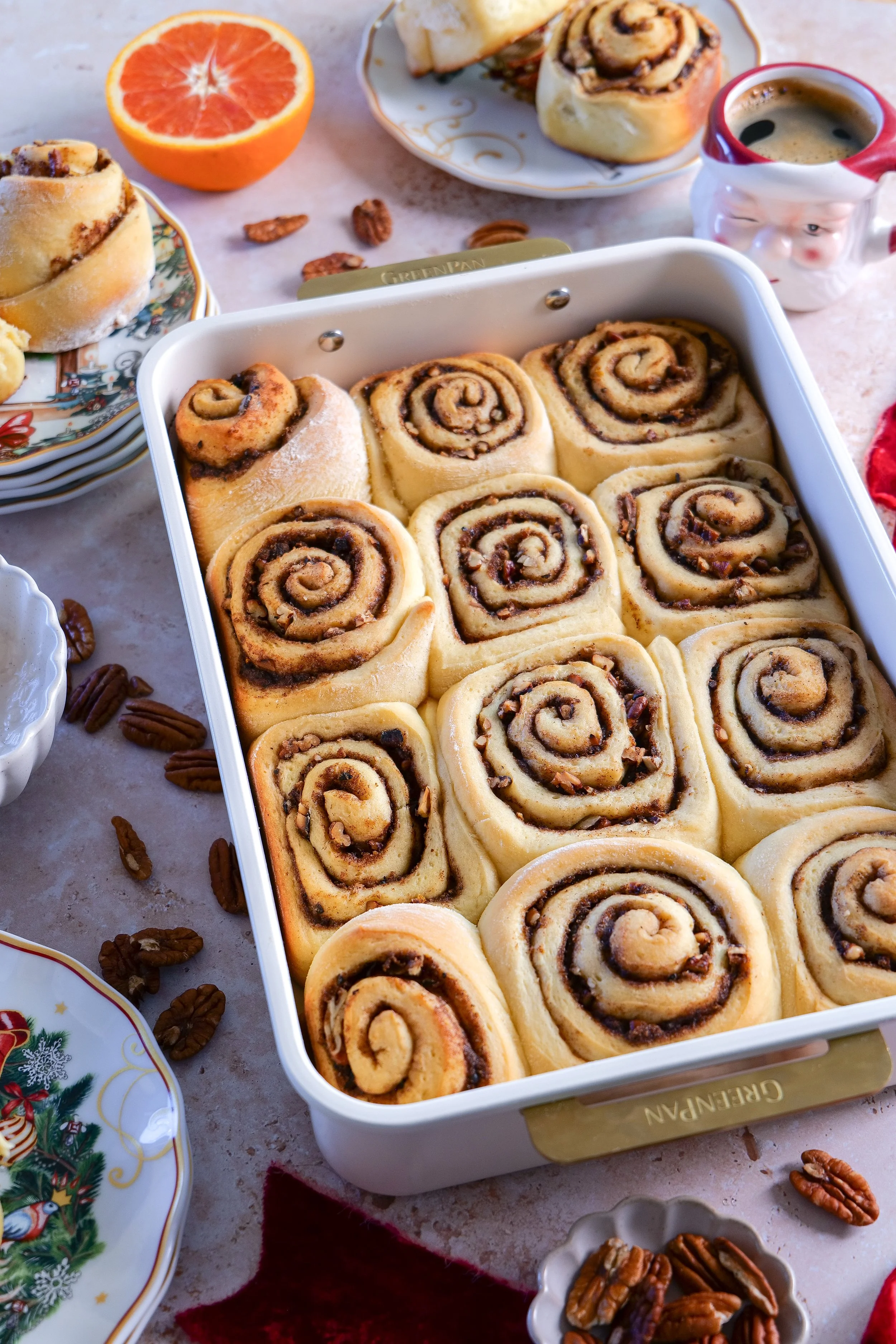
Bake the cinnamon rolls in a preheated oven until the tops are lightly golden and the centers are fully baked.

Your kitchen will smell like brown butter, cinnamon, and fresh orange.

Allow the rolls to cool for a few minutes before adding the glaze.

Golden brown homemade orange pecan cinnamon rolls fresh from the oven before glazing.

Step 7: Finish with Vanilla Bean Glaze

While the rolls cool slightly, whisk together the powdered sugar, heavy cream, vanilla bean paste, and fresh orange juice.

Adjust the consistency with a little additional cream until the glaze is smooth and pourable.

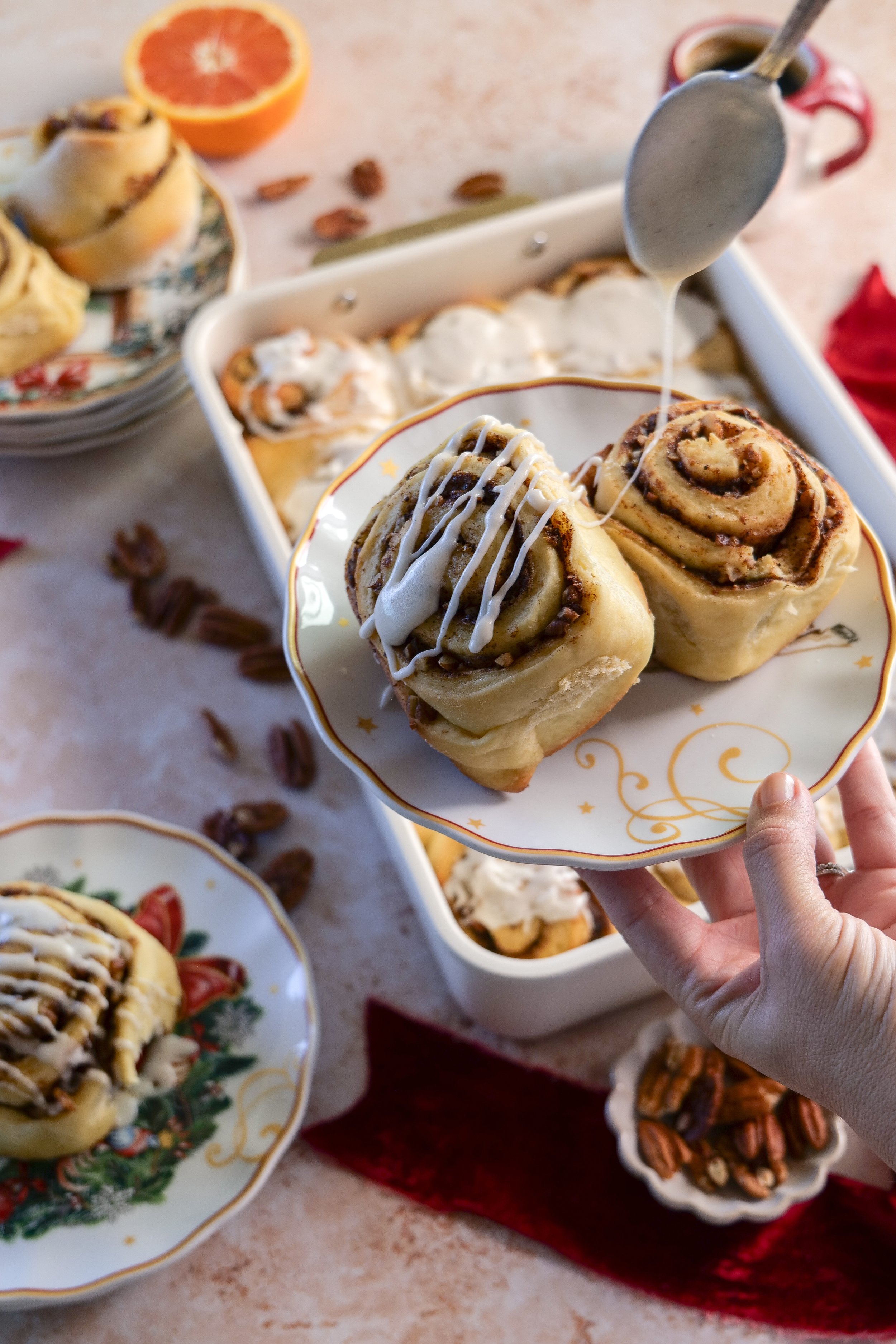
Drizzle generously over the warm cinnamon rolls, allowing it to melt into all those beautiful swirls.

Serve warm with a cup of coffee and enjoy!

Vanilla bean glaze being drizzled over warm brown butter orange pecan cinnamon rolls.

How to Make These Cinnamon Rolls the Night Before

If there's one thing I love about a Christmas morning recipe, it's being able to prepare most of it ahead of time.

And these cinnamon rolls are perfect for that.

On Christmas Eve, prepare the dough, allow it to complete its first rise, and assemble the cinnamon rolls as directed.

Arrange them in your baking dish, cover tightly, and place them in the refrigerator overnight before the second rise.

On Christmas morning, remove the rolls from the refrigerator and allow them to sit at room temperature until noticeably puffy. Depending on the temperature of your kitchen, this may take approximately 60–90 minutes.

Then bake as directed and prepare the vanilla bean glaze while they're in the oven.

You'll have warm, homemade cinnamon rolls ready for Christmas breakfast without having to start from scratch that morning.

Homemade orange pecan cinnamon rolls served with vanilla bean glaze for Christmas morning breakfast.

Amanda's Tips for the Best Homemade Cinnamon Rolls

Don't rush the rising time. The dough needs time to rise properly to create soft, fluffy cinnamon rolls.

Use fresh orange zest. Freshly grated zest has a brighter flavor than dried orange peel and makes a beautiful difference in the filling.

Watch your brown butter closely. It can go from perfectly golden to burnt very quickly. Remove it from the heat as soon as it smells nutty and the milk solids turn golden brown.

Toast your pecans first. Toasting brings out their natural flavor and adds a little extra crunch.

Use a sharp knife or dental floss to cut the rolls. This helps preserve their round shape and beautiful swirls.

Glaze while the rolls are warm. Allow them to cool for just a few minutes so the glaze melts slightly into the rolls without disappearing completely.

Make them your own. If your family prefers cinnamon rolls without nuts, simply leave out the pecans. The brown butter and orange filling is delicious on its own.

Frequently Asked Questions

Can I make these cinnamon rolls ahead of time?

Yes! Prepare the rolls through shaping, cover, and refrigerate overnight. The next morning, allow them to rise until puffy before baking.

Can I make these without pecans?

Absolutely. Simply leave out the pecans for a classic brown butter orange cinnamon roll.

Can I use light brown sugar instead of dark brown sugar?

Yes. Dark brown sugar gives the filling a richer flavor, but light brown sugar works beautifully too.

What if I don't have vanilla bean paste?

You can substitute pure vanilla extract in the same amount. The glaze will still be delicious, although it won't have the pretty vanilla bean specks.

How should I store leftover cinnamon rolls?

Store cooled cinnamon rolls in an airtight container in the refrigerator for up to 4 days. Warm gently before serving.

Can I freeze these cinnamon rolls?

Yes! I recommend freezing the baked cinnamon rolls without glaze. Wrap tightly and freeze for up to 2 months. Thaw, warm, and finish with freshly prepared vanilla bean glaze.

More Recipes You'll Love

If you love making something special for breakfast or sharing homemade baked treats with your family, there are a few more recipes from my kitchen I think you'll enjoy.

My Blueberry Peach Bread is one of those simple, comforting recipes that's perfect for slow mornings with a cup of coffee.

For something you can prepare with very little effort, try my Cinnamon Roll Casserole, the taste of with cozy cinnamon rolls made even more simple.

And if you're anything like me and love baking with brown butter, my Brown Butter Oatmeal Cookies are another favorite to make and share.

Shop My Kitchen

There's something so special about bringing a beautiful baking dish straight from the oven to the breakfast table, especially during the holidays.

For this recipe, I used my GreenPan baking essentials to make everything from browning the butter to baking the cinnamon rolls.

I've gathered some of my favorite kitchen pieces below, along with a few essentials that make homemade baking a little easier.

Save This Recipe for Christmas Morning

Some recipes are made once, and others become the ones you look forward to making year after year.

I hope these Brown Butter Orange Pecan Christmas Morning Cinnamon Rolls become one of those recipes in your home.

Save this recipe to Pinterest, print a copy for your family recipe box, or share it with someone who loves a cozy Christmas morning breakfast.

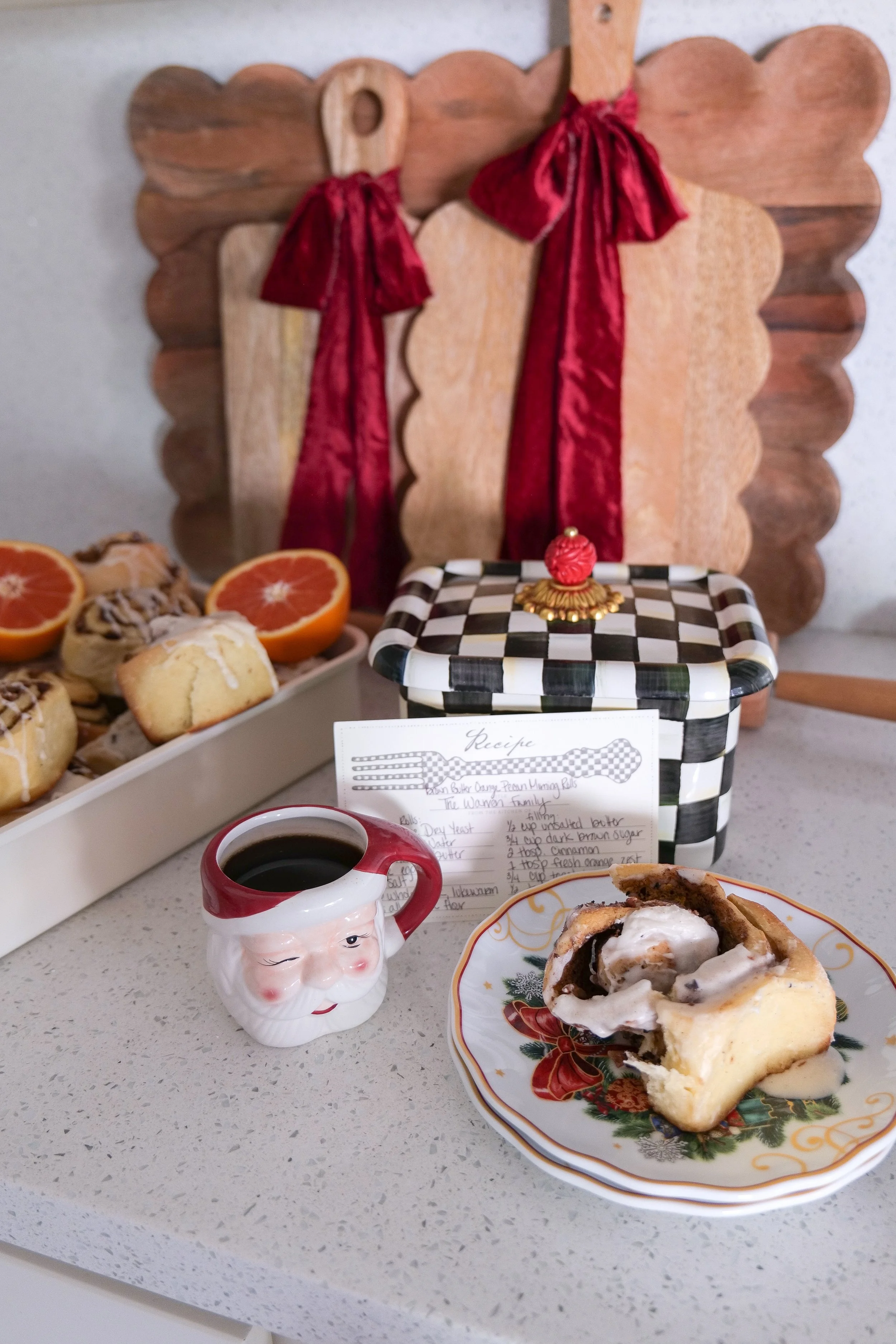
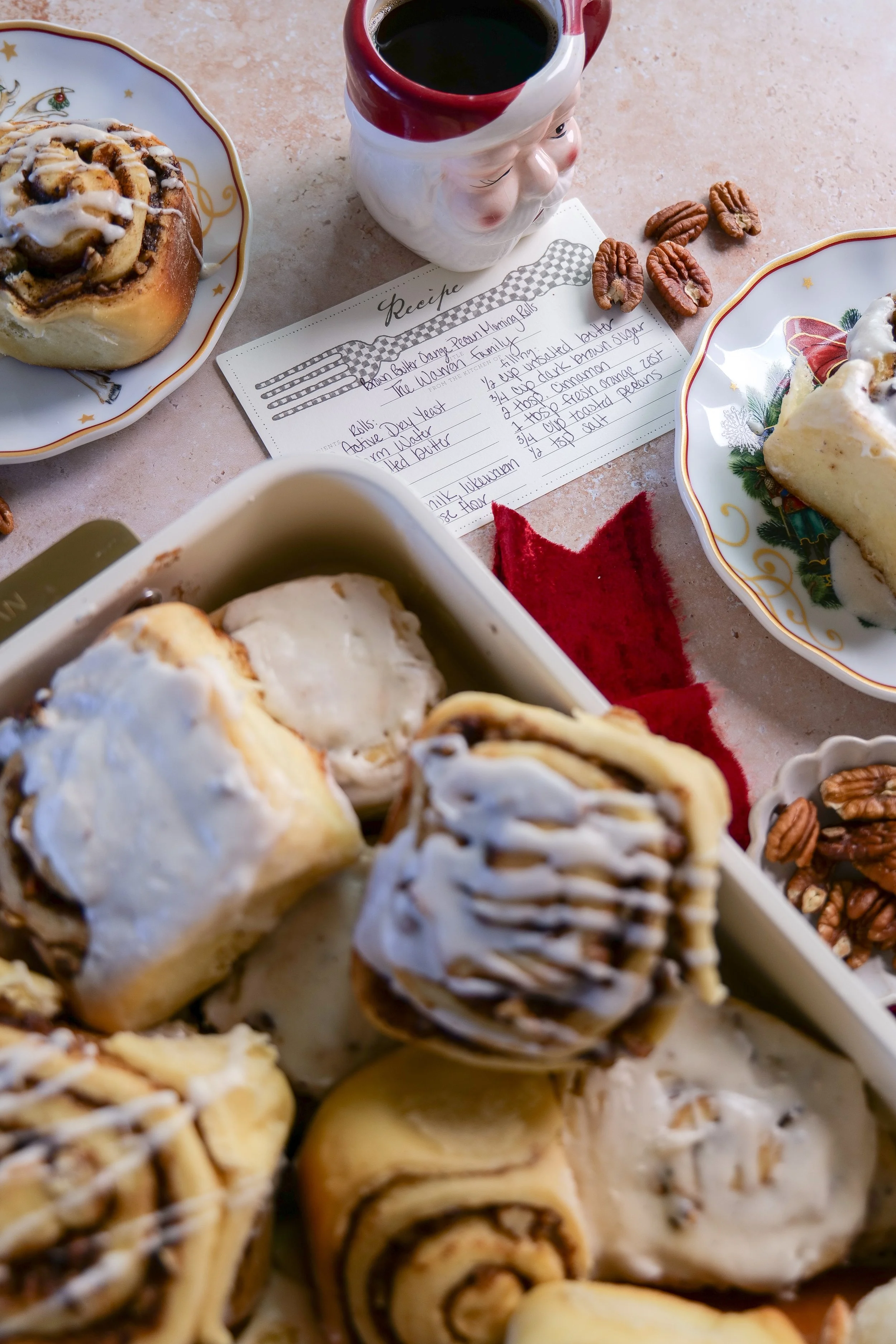
Brown butter orange pecan cinnamon rolls recipe card featuring homemade cinnamon rolls with vanilla bean glaze and Christmas morning baking instructions.

Brown Butter Orange Pecan Christmas Morning Cinnamon Rolls with Vanilla Bean Glaze

Soft, fluffy homemade cinnamon rolls filled with nutty brown butter, cinnamon, fresh orange zest, and toasted pecans, finished with a sweet vanilla bean glaze. Perfect for Christmas morning or a cozy holiday breakfast.

Prep Time: 30 minutes
Rise Time: Approximately 2–3 hours
Cook Time: 25–30 minutes
Total Time: Approximately 3–4 hours
Servings: 12 cinnamon rolls

Ingredients

For the Cinnamon Roll Dough

  • 4½ teaspoons active dry yeast (2 packets)

  • ¼ cup warm water (105–110°F)

  • ½ cup granulated sugar

  • ½ cup unsalted butter, softened

  • 1 large egg

  • 1 teaspoon salt

  • 1 cup whole milk, lukewarm

  • 4 cups all-purpose flour, plus more as needed for dusting

For the Brown Butter Orange Pecan Filling

  • ½ cup unsalted butter

  • ¾ cup dark brown sugar, packed

  • 2 tablespoons ground cinnamon

  • 1 tablespoon fresh orange zest

  • ¾ cup toasted pecans, finely chopped

  • ¼ teaspoon salt

For the Vanilla Bean Glaze

  • 1½ cups powdered sugar

  • 3 tablespoons heavy cream, plus more as needed

  • 1 teaspoon vanilla bean paste

  • 1 teaspoon fresh orange juice

Optional

  • ⅓ cup warm heavy cream, to pour over the rolls before baking

Instructions

Make the Cinnamon Roll Dough

  1. In a small bowl, combine the active dry yeast, warm water, and a pinch of the measured granulated sugar. Let sit for 5–10 minutes, until foamy.

  2. In a large mixing bowl, combine the remaining granulated sugar, softened butter, egg, salt, and lukewarm whole milk.

  3. Add the activated yeast mixture and gradually mix in the flour until a soft dough forms.

  4. Knead for approximately 7–9 minutes, until the dough is smooth and elastic. The dough should be soft and slightly tacky.

  5. Transfer the dough to a lightly greased bowl, cover, and allow to rise in a warm place for 1½–2 hours, or until doubled in size.

Prepare the Brown Butter Filling

  1. While the dough rises, melt the butter in a light-colored saucepan over medium heat, stirring frequently.

  2. Continue cooking until the butter foams and the milk solids turn golden brown. Immediately transfer to a heat-safe bowl and allow to cool until thickened and spreadable.

  3. In a separate bowl, combine the dark brown sugar, cinnamon, orange zest, toasted pecans, and salt.

Assemble the Cinnamon Rolls

  1. Once the dough has doubled in size, gently punch it down and transfer it to a lightly floured surface.

  2. Roll the dough into a rectangle approximately 16 × 12 inches.

  3. Spread the cooled brown butter evenly over the dough, leaving a small border around the edges.

  4. Sprinkle the orange pecan cinnamon sugar mixture evenly over the butter, gently pressing it into the dough.

  5. Starting at the long edge, roll the dough tightly into a log. Cut into 12 evenly sized rolls.

  6. Arrange the rolls in a lightly buttered 9 × 13-inch baking dish. Cover loosely and allow to rise for 30–45 minutes, or until noticeably puffy.

Overnight Christmas Morning Option

After shaping the cinnamon rolls and arranging them in your buttered 9 × 13-inch baking dish, cover tightly and refrigerate overnight (approximately 8–12 hours) instead of allowing them to complete their second rise at room temperature.

On Christmas morning, remove the rolls from the refrigerator and let them sit covered at room temperature for approximately 60–90 minutes, or until noticeably puffy. They may need longer if your kitchen is cool.

Once risen, preheat the oven to 350°F and continue with the baking instructions as written.

Bake the Cinnamon Rolls

  1. Preheat the oven to 350°F.

  2. If desired, pour ⅓ cup warm heavy cream evenly over the risen rolls just before baking.

  3. Bake for 25–30 minutes, or until the tops are lightly golden and the centers are fully baked. The center dough should reach approximately 190°F.

  4. Remove from the oven and allow to cool for 5–10 minutes.

Make the Vanilla Bean Glaze

  1. In a medium bowl, whisk together the powdered sugar, heavy cream, vanilla bean paste, and fresh orange juice until smooth.

  2. Add additional heavy cream, one teaspoon at a time, until the glaze reaches your desired consistency.

  3. Drizzle the vanilla bean glaze generously over the warm cinnamon rolls and serve immediately.

Amanda's Tip

Make them the night before! After shaping the cinnamon rolls and placing them in the baking dish, cover tightly and refrigerate overnight instead of completing the second rise.

On Christmas morning, remove the rolls from the refrigerator and allow them to sit at room temperature for approximately 60–90 minutes, or until visibly puffy.

Bake as directed, then finish with the vanilla bean glaze.

It's one of my favorite ways to make Christmas morning feel a little easier while still serving something homemade and special.

Freshly baked brown butter orange pecan cinnamon rolls topped with vanilla bean glaze.

A Note From Amanda

The older I get, the more I realize that some of the sweetest holiday memories come from the simplest traditions.

A favorite recipe, a familiar smell coming from the kitchen, everyone still in their pajamas, and the excitement of Christmas morning unfolding around us.

I love thinking about the recipes my children will remember from growing up. The ones they'll ask for every year, the ones they'll eventually help make, and maybe even the ones they'll carry into their own homes someday.

I hope these cinnamon rolls become one of those special traditions for your family, too.

Made with love for the people you love.

Amanda

Close-up of soft orange pecan cinnamon rolls with cinnamon swirls and creamy vanilla bean glaze.
Homemade orange pecan cinnamon rolls with vanilla bean glaze ready to serve for Christmas morning breakfast.
Vanilla bean glaze covering the cinnamon swirls of homemade brown butter orange pecan rolls.

Fall Simmer Pot Recipe: How to Make Your Home Smell Like Autumn

Fall Simmer Pot Recipe: How to Make Your Home Smell Like Autumn

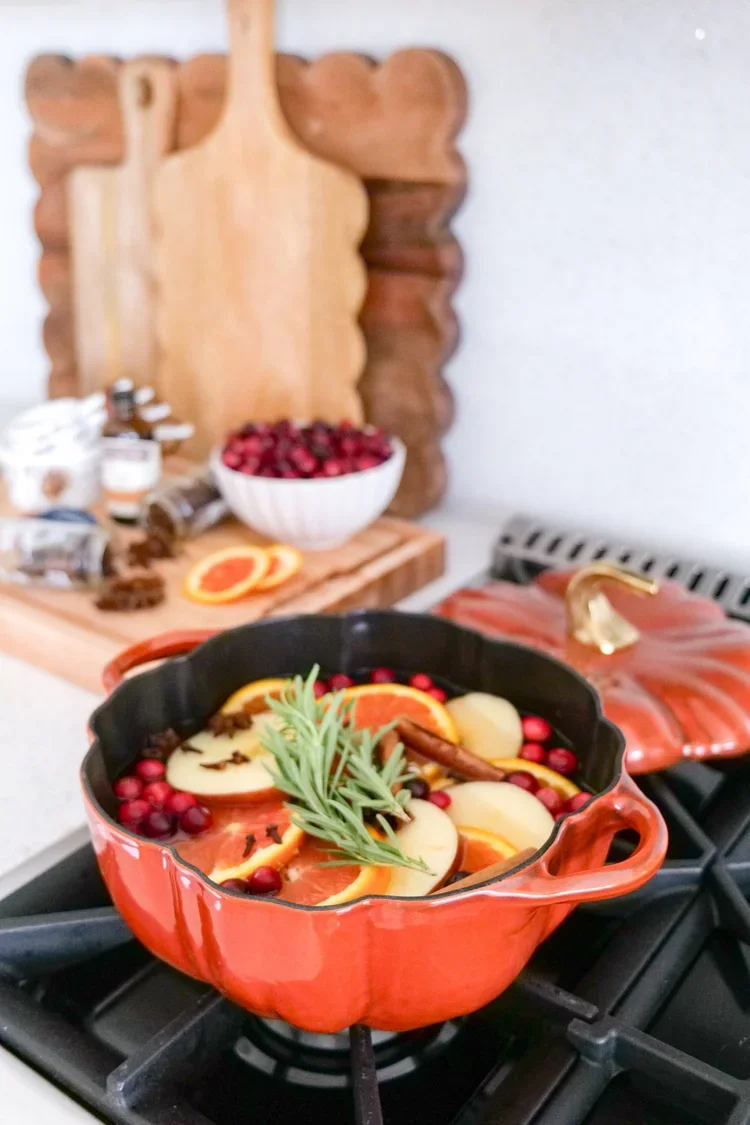
A simple fall simmer pot made with fresh oranges, apples, cranberries, cinnamon sticks, cloves, star anise, and rosemary. An easy way to fill your home with the cozy scents of autumn.

Read More

Salmon Tacos with Elote Corn Salsa

These Salmon Tacos with Elote Corn Salsa are fresh, creamy, a little smoky and one of those dinners that looks far more impressive than it is difficult to make.

Tender salmon is seasoned with chili powder, paprika, garlic and fresh lime, then baked until it flakes easily. Instead of piling on a traditional taco salsa, these are topped with warm elote-inspired corn made with fresh corn, jalapeño, red onion, lime, mayo and crumbled cotija.

You get buttery salmon, charred corn, creamy dressing, a little heat from the jalapeño and plenty of fresh lime in every bite.

They're perfect for an easy weeknight dinner, but they're also fun enough to make when we're having people over—especially when fresh corn is still in season.

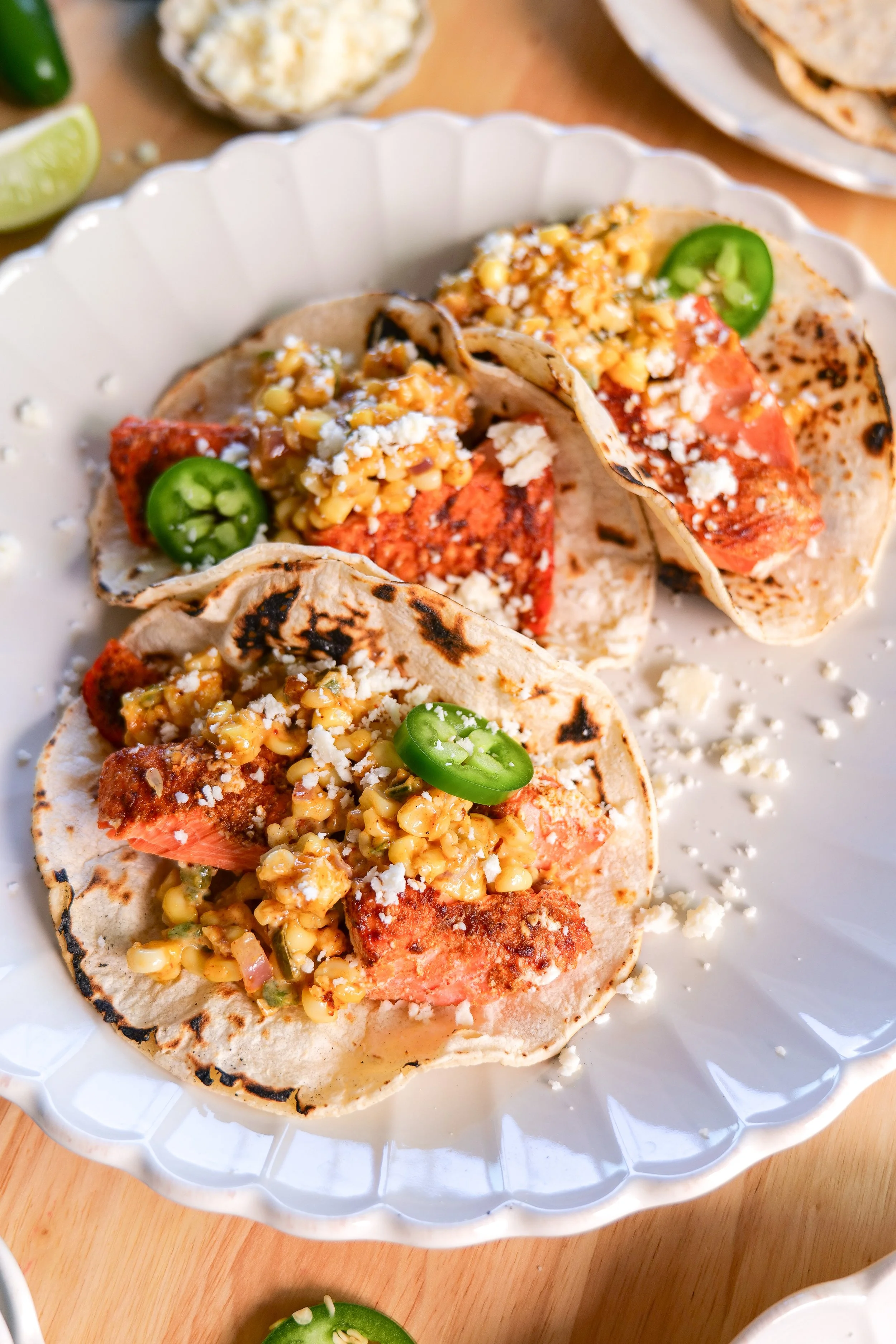
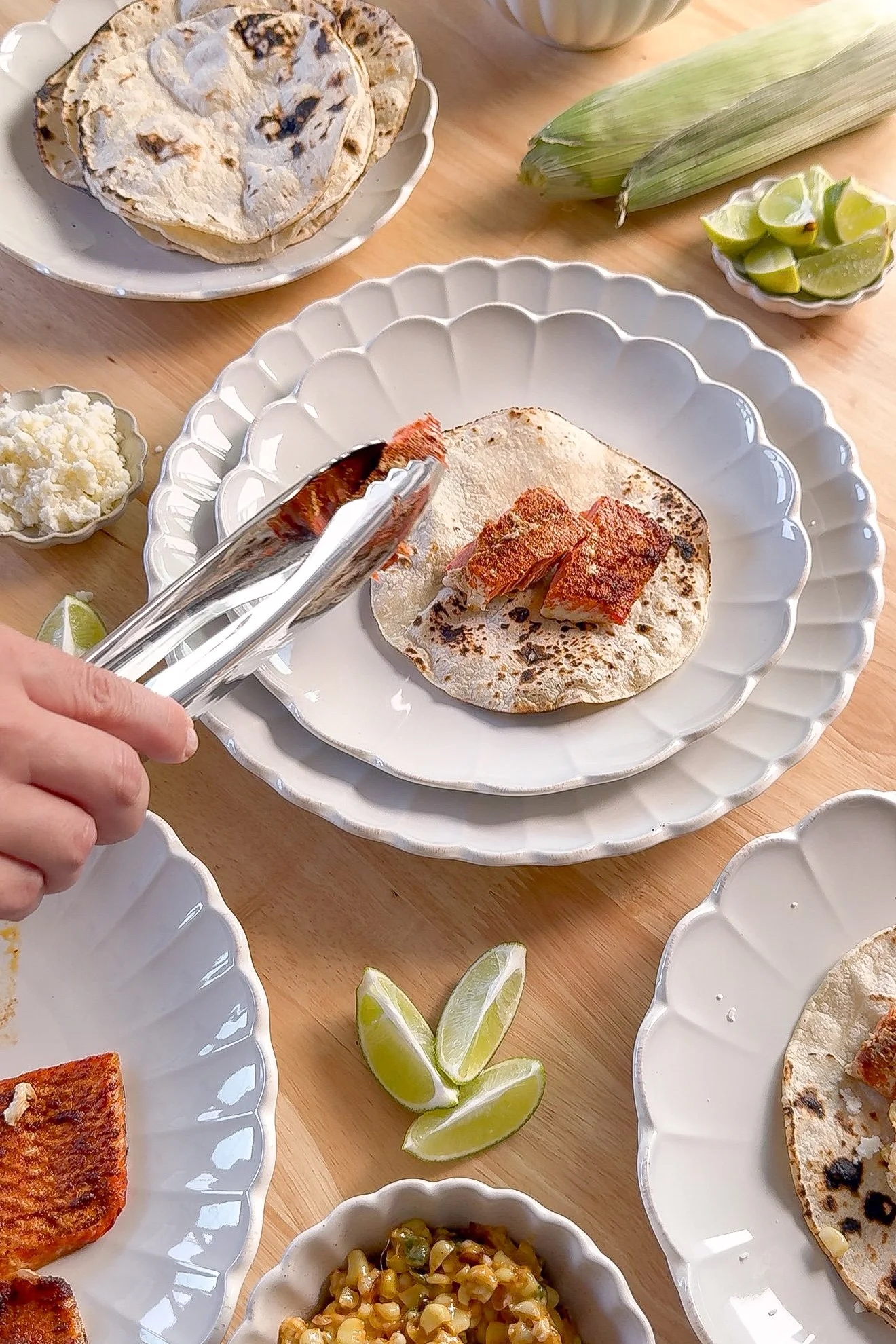
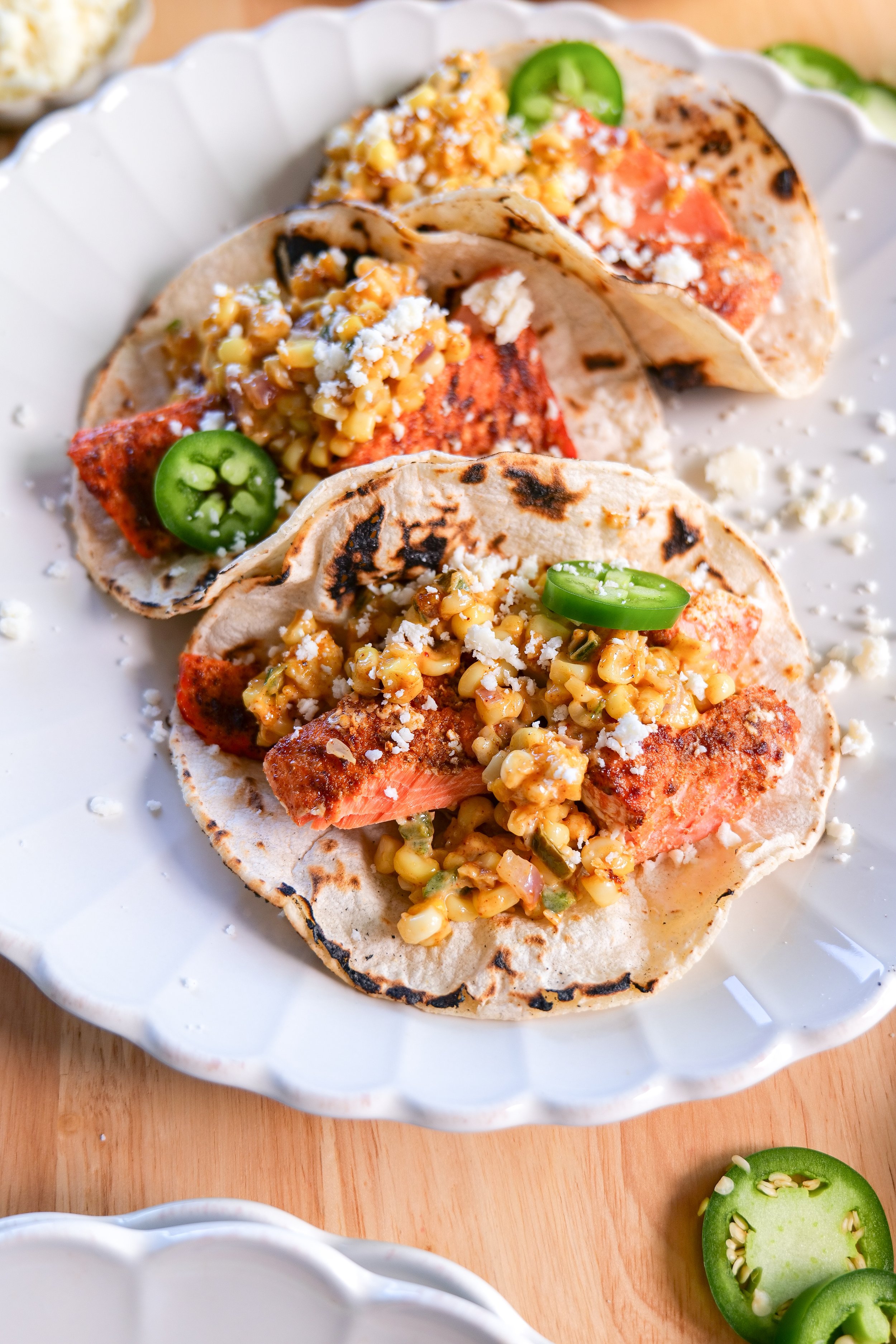
Baked salmon tacos topped with creamy elote corn salsa, cotija cheese, and fresh lime

Why You'll Love These Salmon Tacos

There are a few things that make these different from a basic fish taco.

First, we're using salmon instead of a mild white fish. It has enough richness and flavor to stand up to all of the spices and toppings without getting lost.

Then there's the corn salsa. It's inspired by Mexican street corn, with fresh corn cooked in butter until it begins to brown before being tossed with lime, mayo and cotija.

Instead of needing a separate sauce, slaw and salsa, the creamy corn mixture does most of the work.

And everything comes together while the salmon is baking, making this a surprisingly easy dinner.

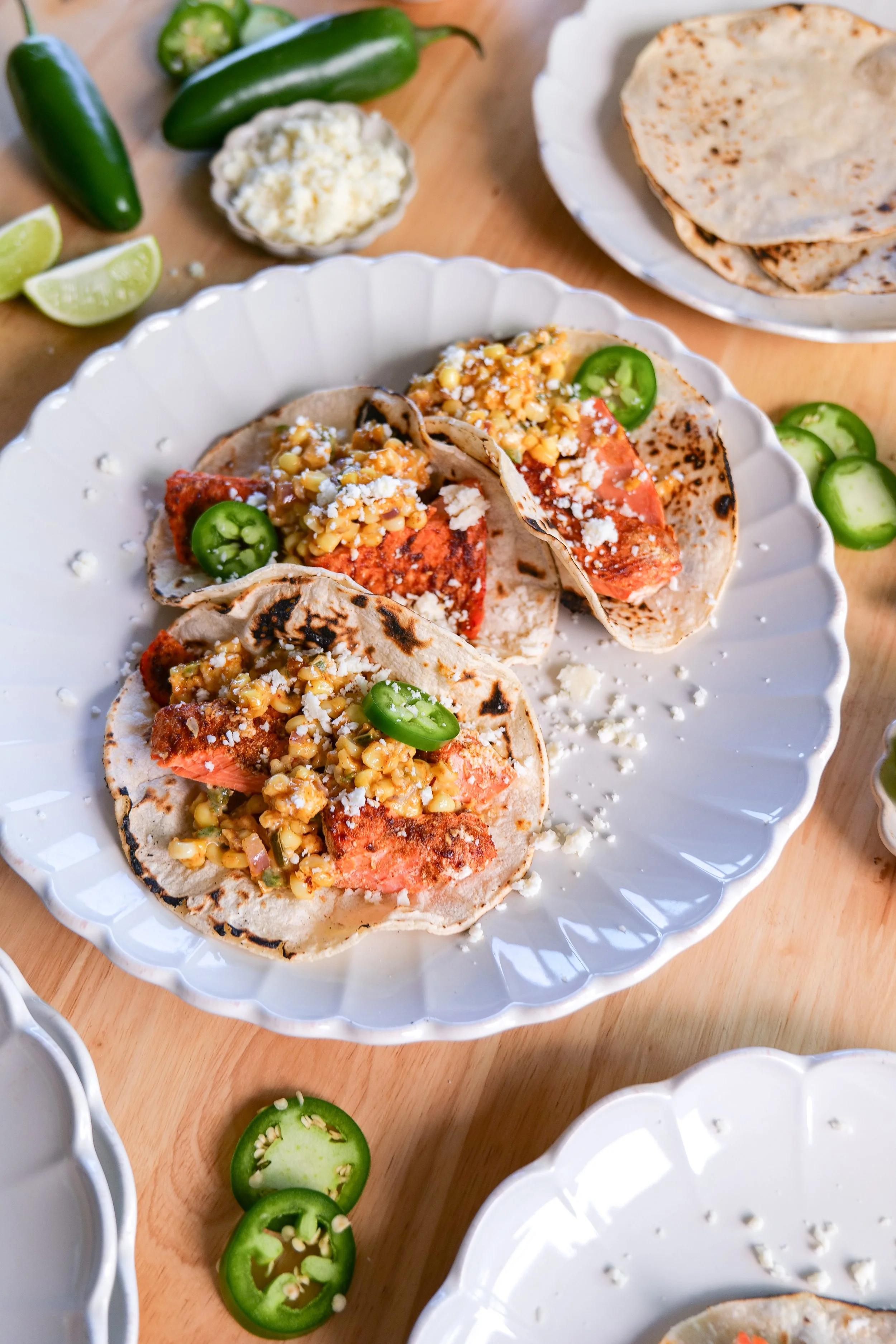
Close-up of salmon tacos with fresh corn salsa, red onion, jalapeño, and cotija

Ingredients You'll Need

Salmon

I use four salmon fillets for this recipe. Salmon is rich enough to pair beautifully with the creamy corn and bold spices.

Fresh Corn

For the best texture and flavor, cut the kernels from four fresh ears of corn. Cooking them in butter lets the edges pick up some color before we turn the corn into the elote salsa.

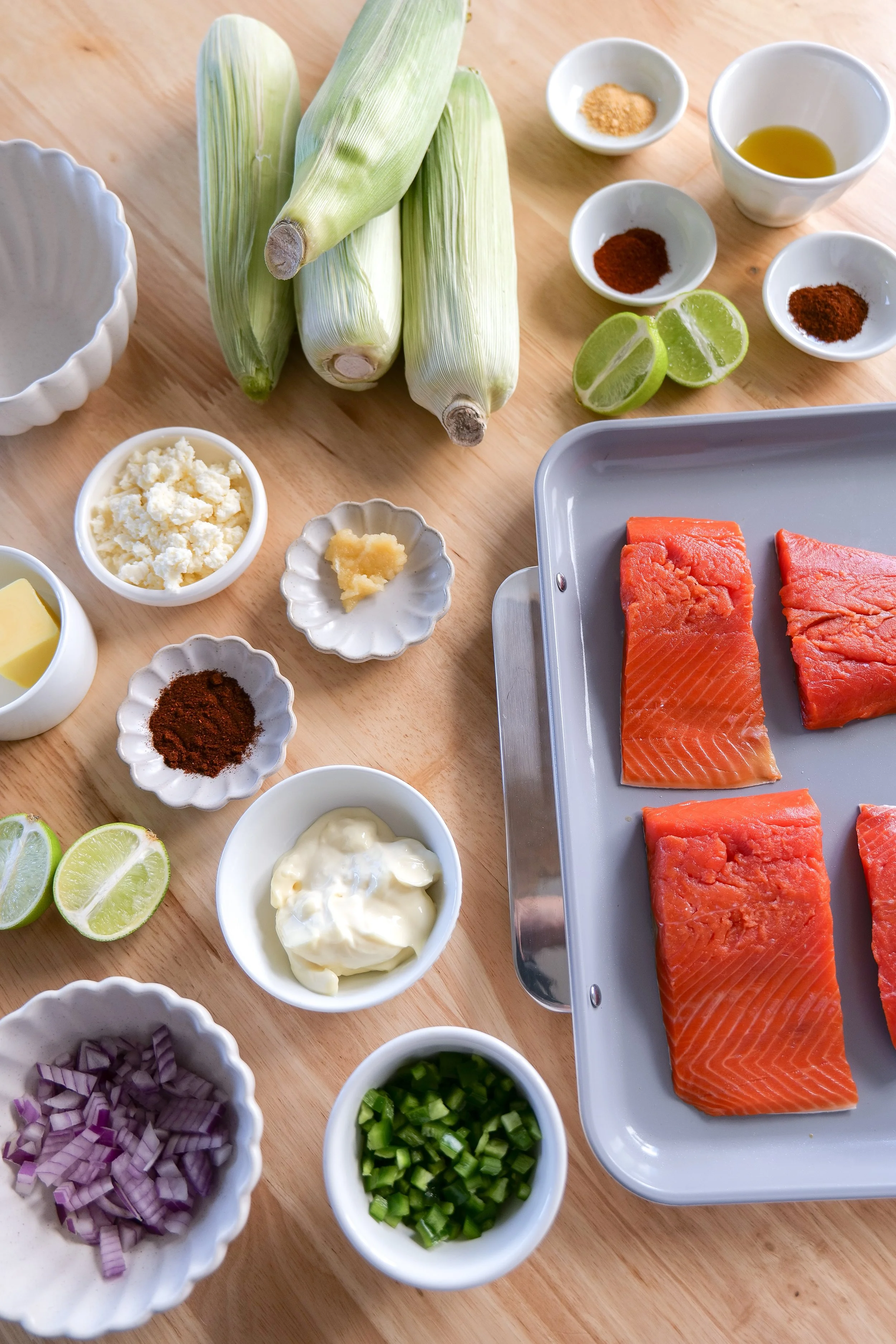
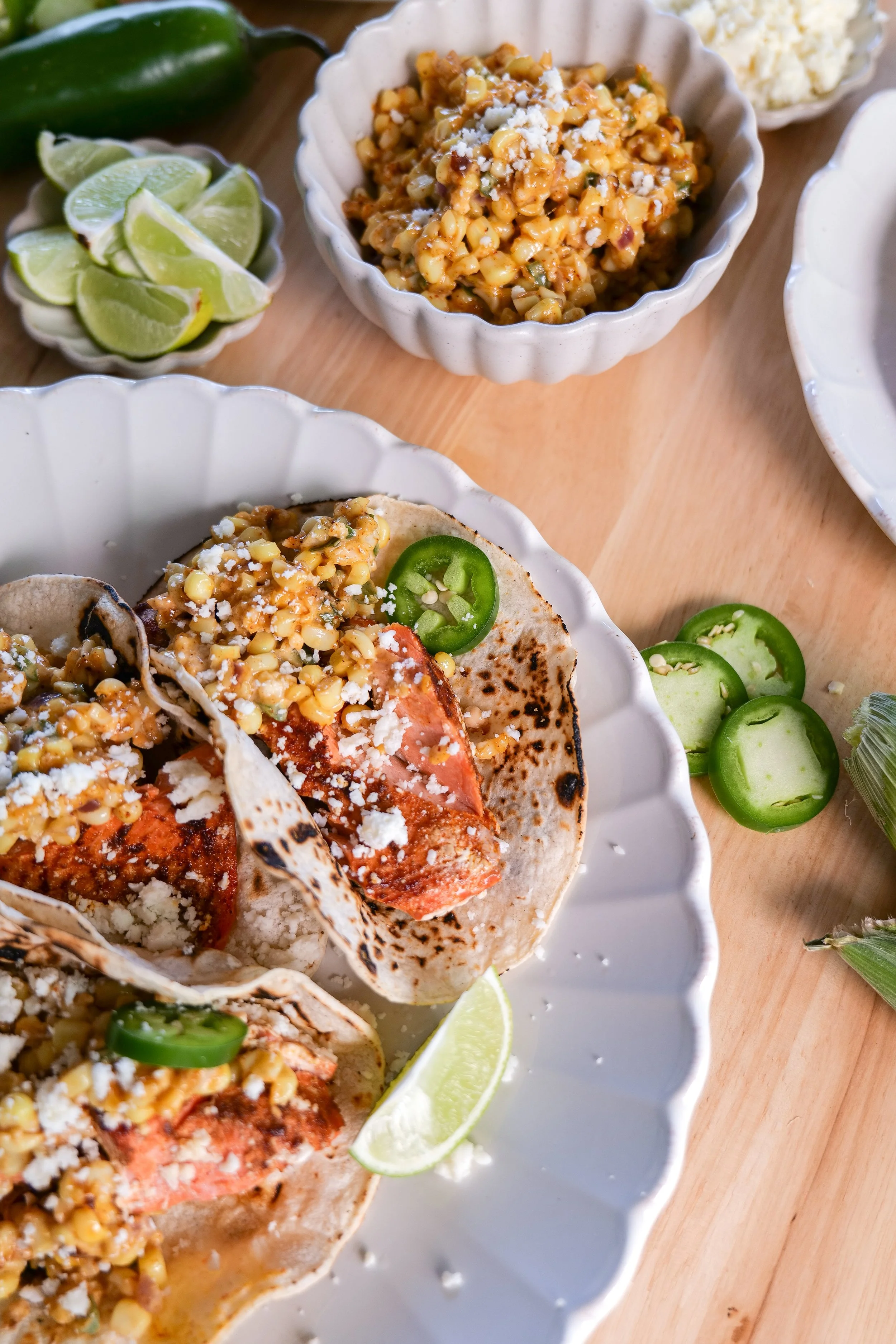
Ingredients for salmon tacos including salmon, fresh corn, lime, cotija cheese, and seasonings

Jalapeño

One cored and diced jalapeño gives the corn some heat without overpowering the salmon. You can remove the seeds and membrane for a milder salsa.

Red Onion

Finely diced red onion gives the corn a little bite and another layer of texture.

Cotija Cheese

I prefer cotija here for the classic salty, crumbly finish that works so well with corn and lime.

Lime

Fresh lime goes into both the salmon seasoning and corn salsa. I also always serve extra wedges alongside the tacos.

Tortillas

Use your favorite tortillas. Warming them over a gas flame gives the edges a little char, but a dry skillet works well too.

How to Make Salmon Tacos

1. Season the Salmon

Preheat the oven to 375°F.

Combine olive oil, fresh lime juice, chili powder, garlic powder, cumin and paprika.

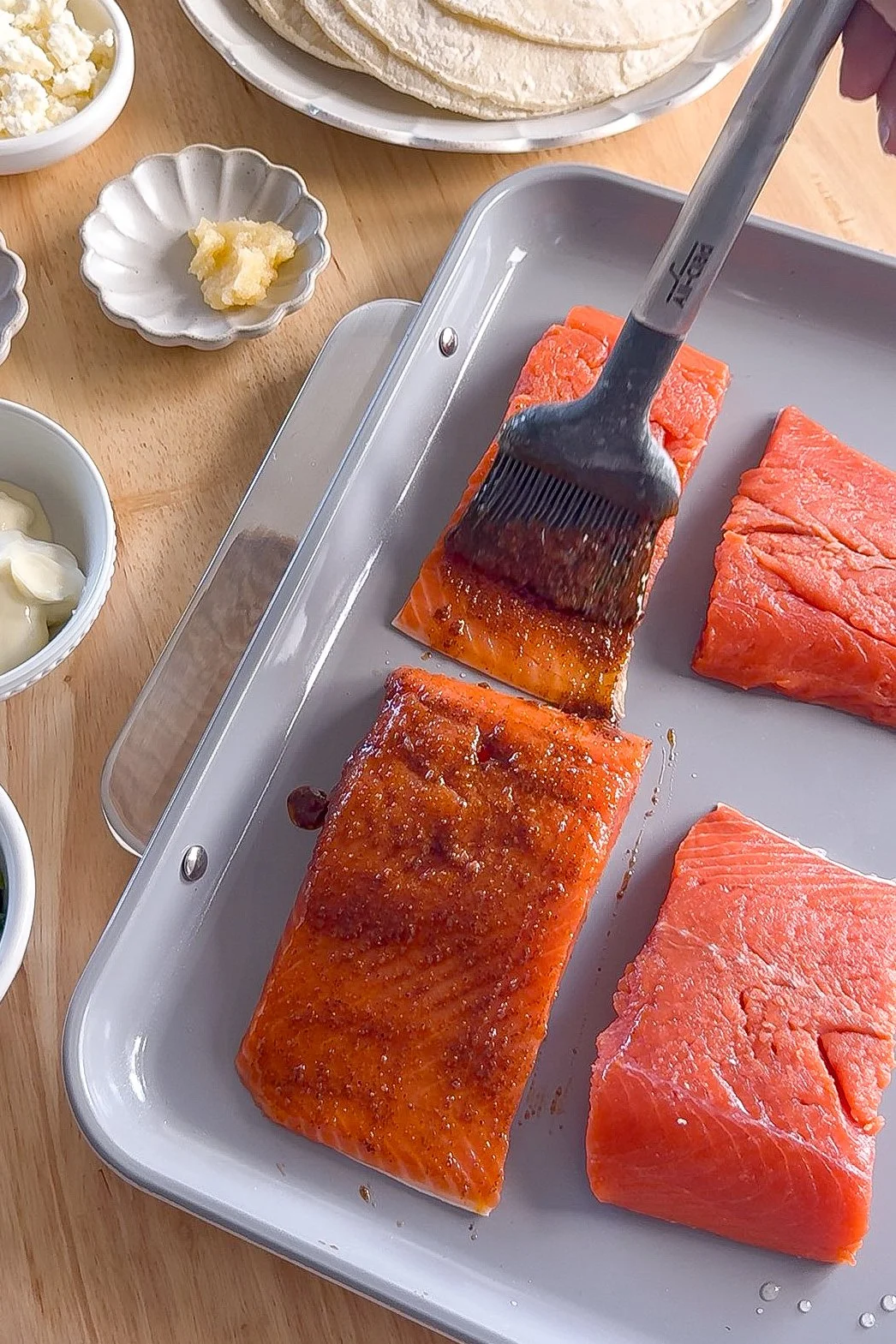
Place the salmon fillets on a baking sheet and coat them evenly with the seasoning mixture.

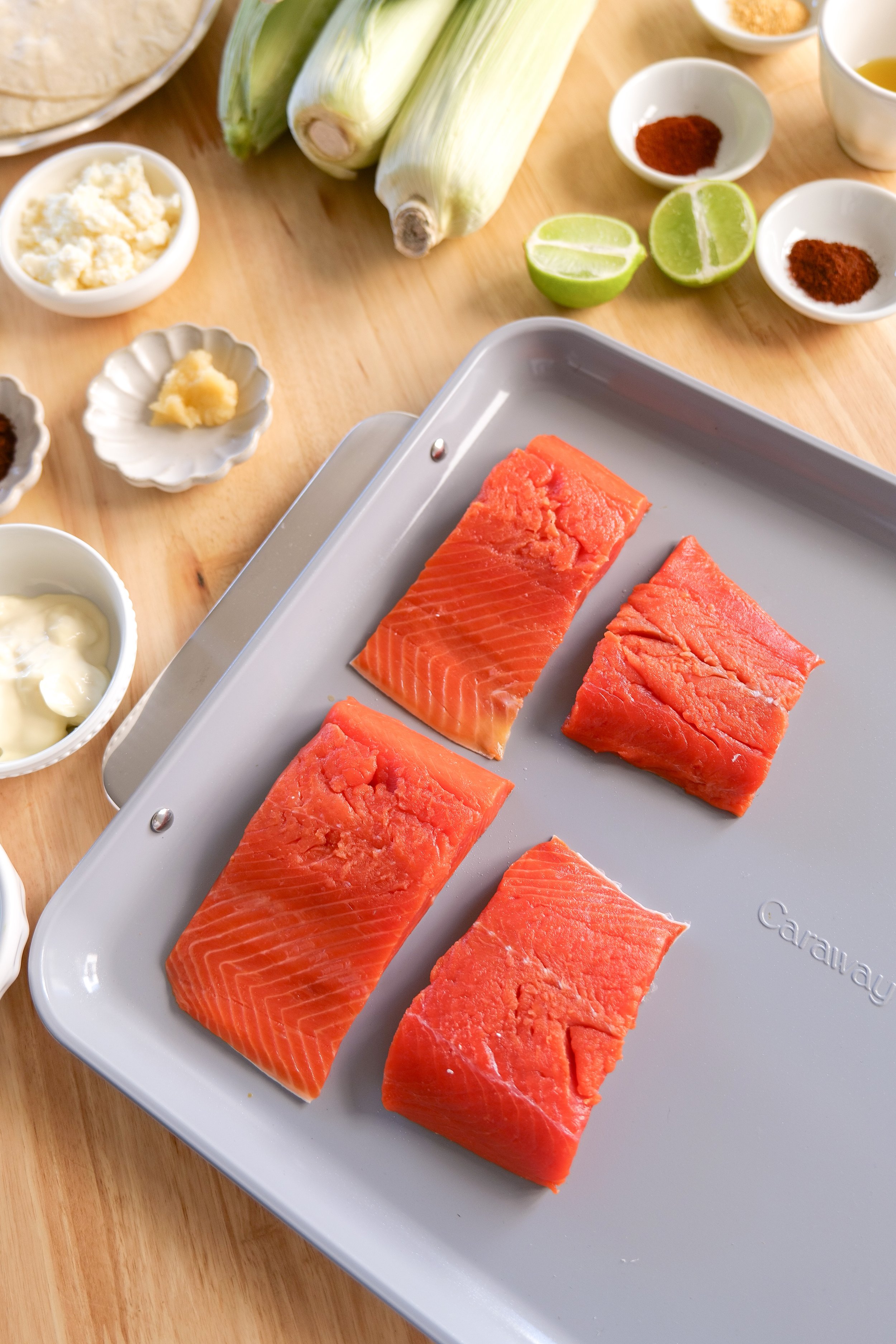
Fresh raw salmon fillets arranged and ready to be seasoned for homemade salmon tacos with elote corn salsa.
Salmon fillets seasoned with chili powder, garlic powder, paprika, and lime

Bake for 20–25 minutes, or until the salmon is cooked to your liking and flakes easily.

2. Make the Elote Corn Salsa

While the salmon is baking, make the corn.

Melt the butter in a large skillet over medium heat. Add the minced garlic and cook briefly until fragrant.

Add the fresh corn, red onion and diced jalapeño.

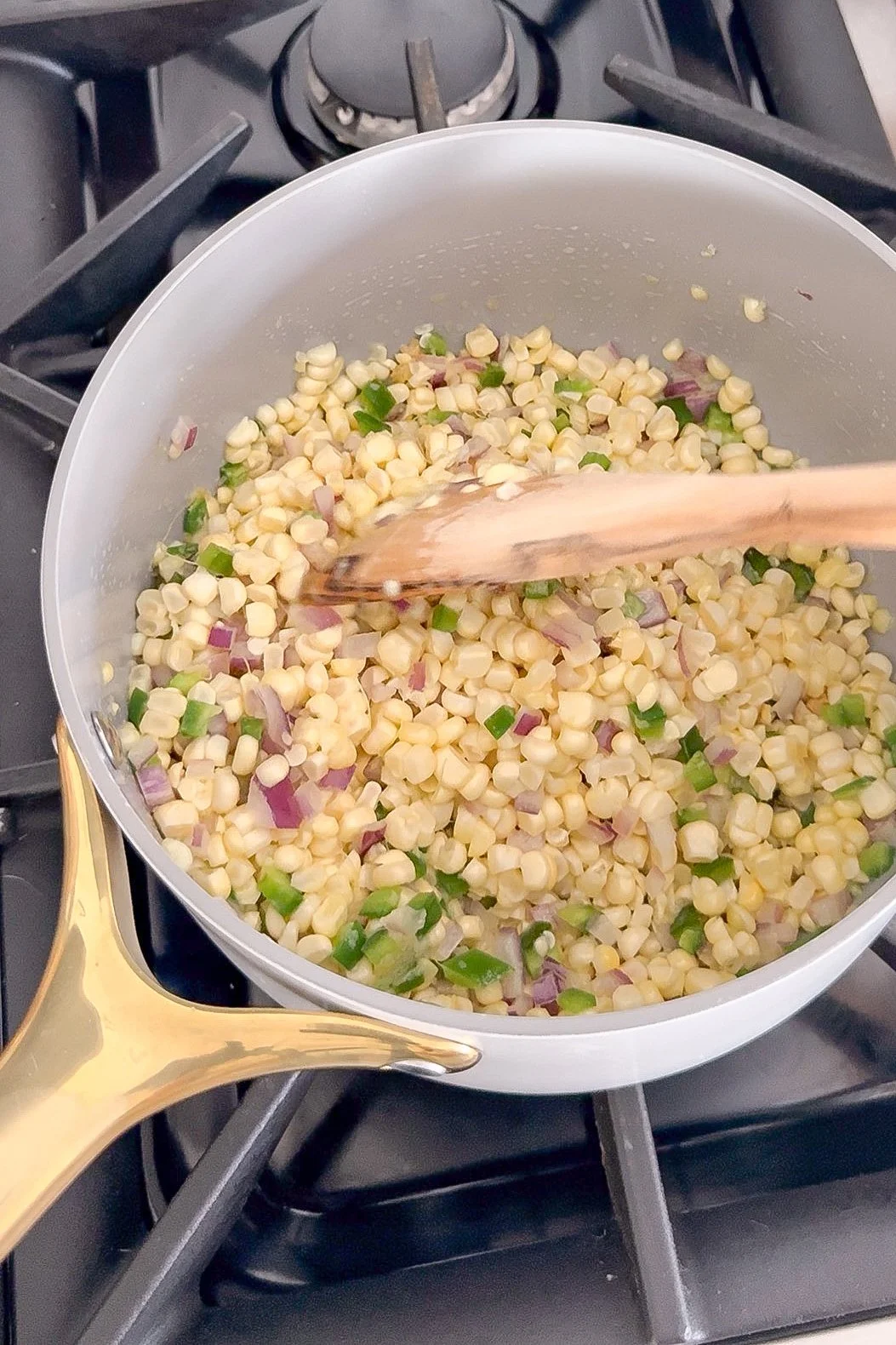
Cook until the corn is tender and you start to see golden, lightly charred edges.

Fresh corn cooking in a skillet for homemade elote-inspired corn salsa

Transfer the warm corn mixture to a bowl.

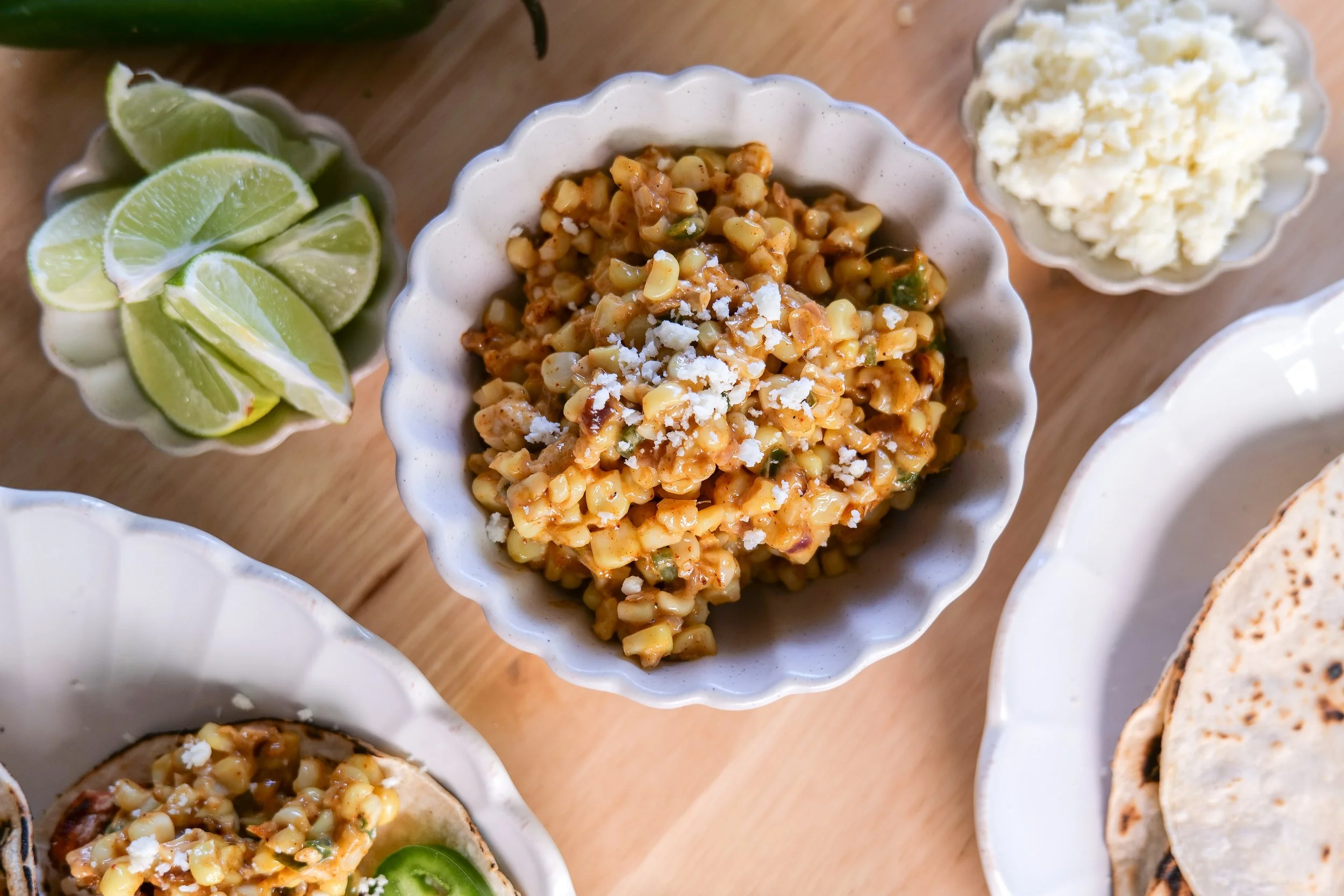
Add the mayo, fresh lime juice, cotija and chili powder and stir until everything is evenly coated.

Creamy corn salsa with cotija cheese, red onion, jalapeño, and lime

3. Warm the Tortillas

Warm your tortillas just before assembling the tacos.

If you have a gas stovetop, you can carefully warm them directly over a low flame until they're soft with a few lightly charred edges.

You can also warm them one at a time in a dry skillet.

4. Assemble the Salmon Tacos

Break the cooked salmon into large, tender pieces and divide it between the warm tortillas.

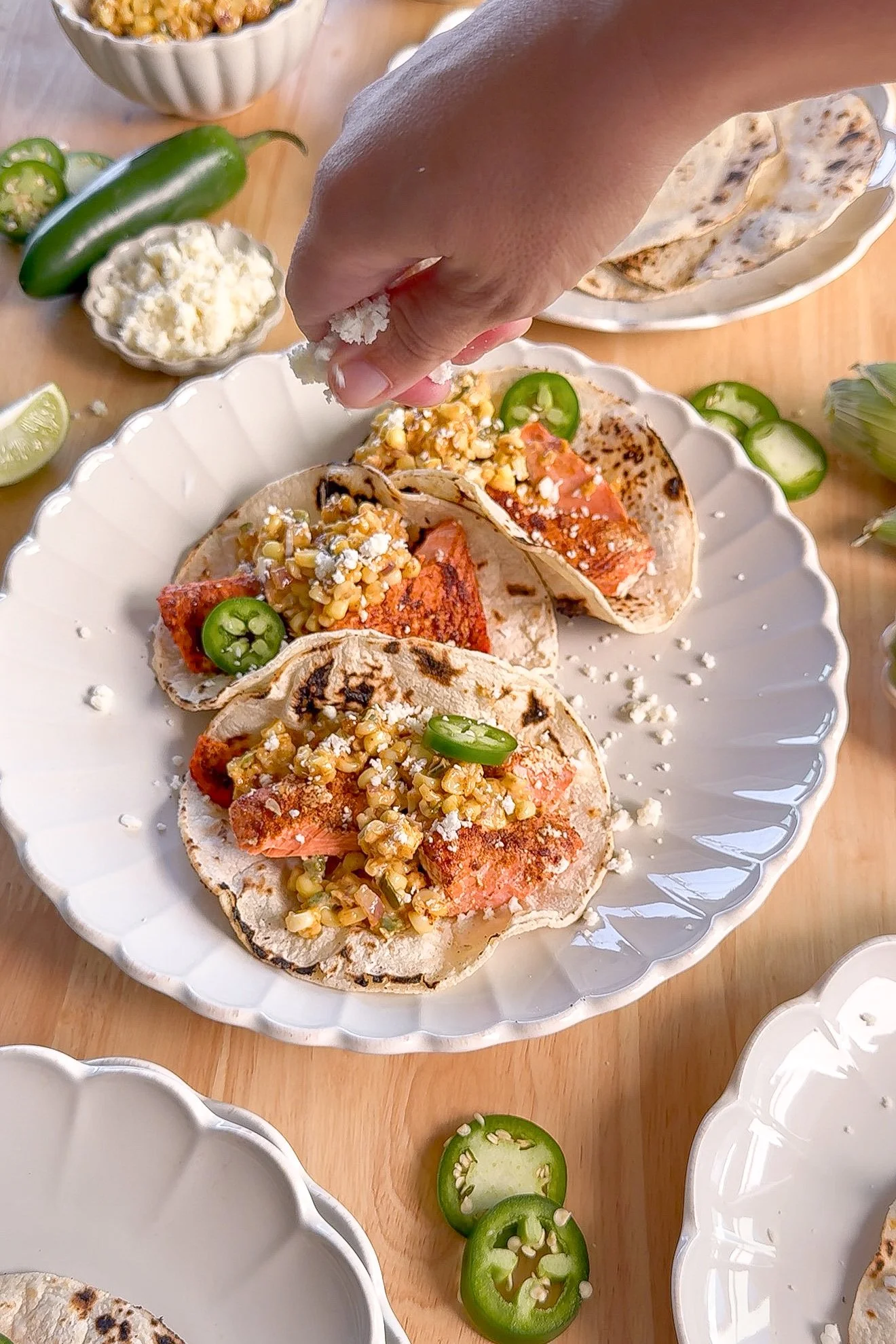
Spoon plenty of the elote corn salsa over each taco, then finish with additional crumbled cotija and a fresh lime wedge.

Warm tortillas filled with baked salmon and topped with elote corn salsa
Crumbled cotija cheese being sprinkled over salmon tacos topped with creamy elote corn salsa.

Serve immediately with extra lime.

Amanda's Tips

Use fresh corn when you can. Cutting the kernels straight from the cob gives the salsa such good texture and lets the corn brown beautifully in the skillet.

Let the corn get some color. Don't constantly stir it. Giving it a little time against the hot pan helps create those browned edges.

Don't overcook the salmon. The original recipe gives a 20–25 minute range, but salmon fillets vary quite a bit in thickness. Since you're retesting this next week, I want you to note the exact thickness/weight and actual cooking time so we can tighten this before publication.

Use cotija if you can find it. Parmesan works as an alternative, but cotija is my first choice for this version.

Char the tortillas. That little bit of color adds flavor and makes the finished tacos look so much better too.

Serve with plenty of lime. A squeeze right before eating balances the richness of both the salmon and creamy corn.

What to Serve with Salmon Tacos

Because the elote salsa already gives you corn, cheese and plenty of flavor, I don't think these tacos need a complicated list of sides.

I'd keep dinner fresh and simple with sliced avocado, a green salad, rice or even extra elote corn salsa served alongside.

For entertaining, set everything out family-style and let everyone build their own tacos.

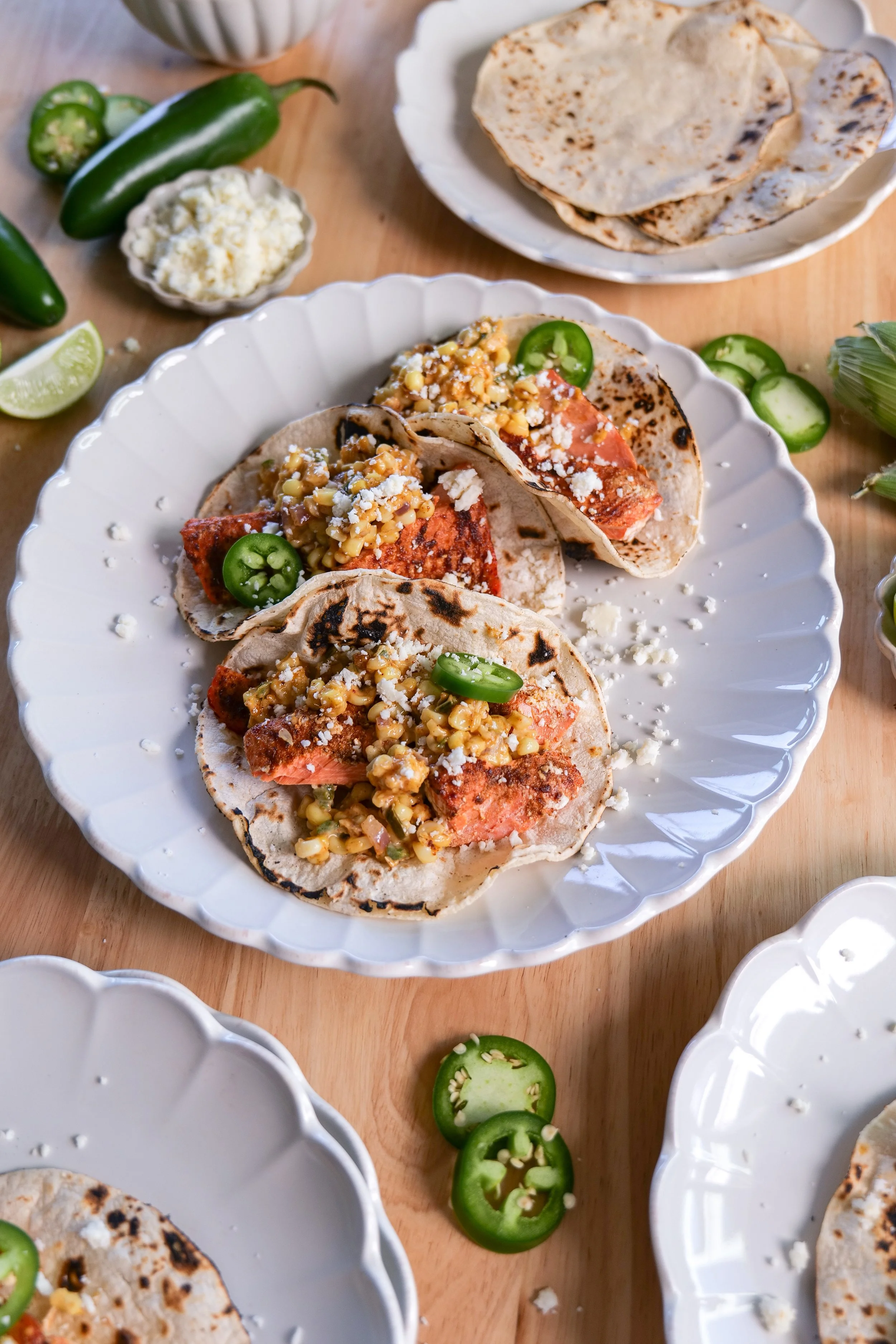
A beautifully styled table featuring homemade salmon tacos with elote corn salsa, fresh lime, and taco night accompaniments.

Can I Make the Elote Corn Salsa Ahead?

You can prep several of the components ahead, but I like this salsa best when the corn has been freshly cooked.

You can cut the corn from the cobs and dice the onion and jalapeño earlier in the day. Then all that's left to do while the salmon bakes is cook the vegetables and finish the salsa.

For the best texture, assemble the tacos right before serving.

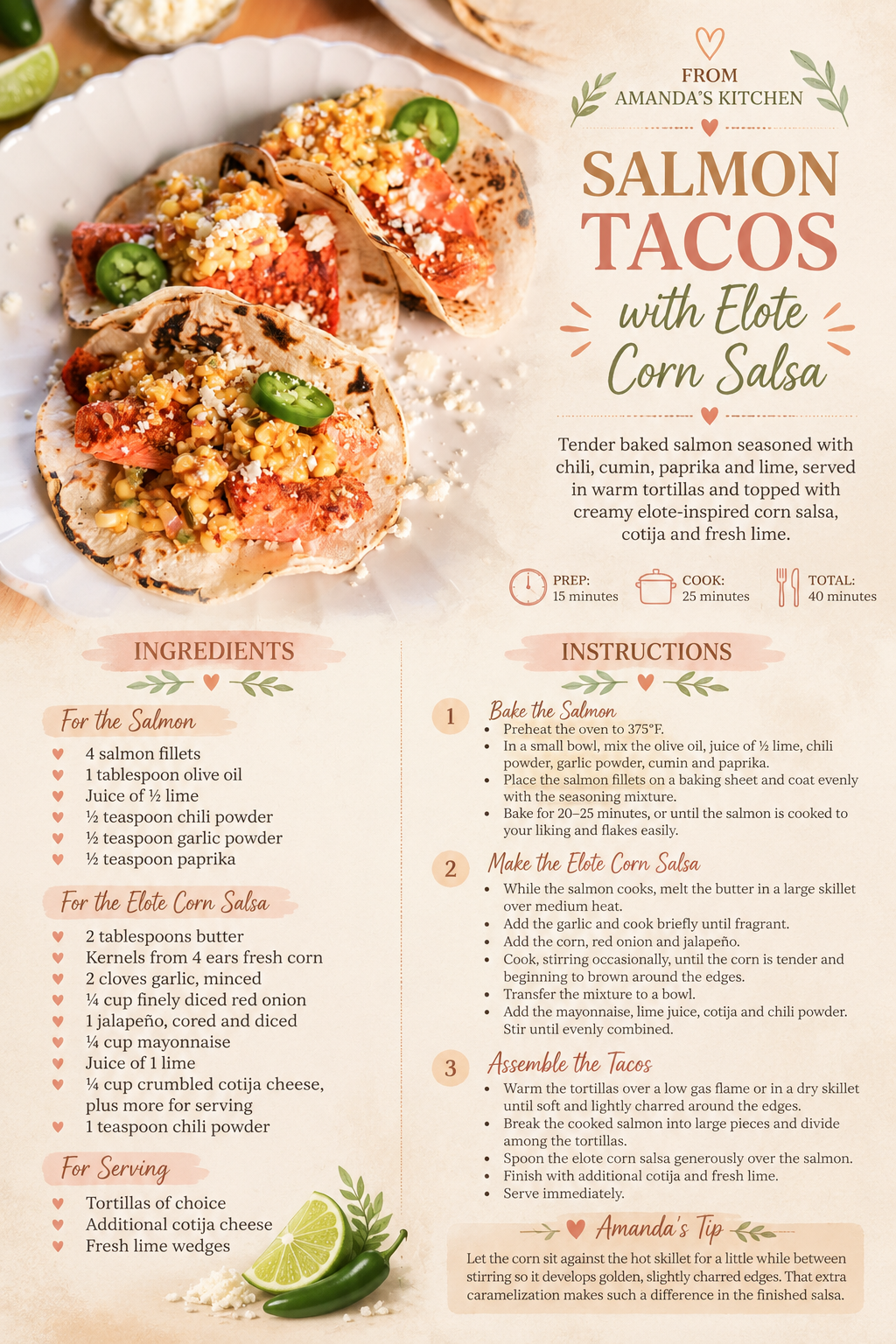
Salmon Tacos with Elote Corn Salsa

Tender baked salmon seasoned with chili, cumin, paprika and lime, served in warm tortillas and topped with creamy elote-inspired corn salsa, cotija and fresh lime.

Prep Time: 15 minutes
Cook Time: 25 minutes
Total Time: 40 minutes

Ingredients

For the Salmon

  • 4 salmon fillets

  • 1 tablespoon olive oil

  • Juice of ½ lime

  • ½ teaspoon chili powder

  • ½ teaspoon garlic powder

  • ½ teaspoon paprika

For the Elote Corn Salsa

  • 2 tablespoons butter

  • Kernels from 4 ears fresh corn

  • 2 cloves garlic, minced

  • ¼ cup finely diced red onion

  • 1 jalapeño, cored and diced

  • ¼ cup mayonnaise

  • Juice of 1 lime

  • ¼ cup crumbled cotija cheese, plus more for serving

  • 1 teaspoon chili powder

For Serving

  • Tortillas of choice

  • Additional cotija cheese

  • Fresh lime wedges

Instructions

Bake the Salmon

  1. Preheat the oven to 375°F.

  2. In a small bowl, mix the olive oil, juice of ½ lime, chili powder, garlic powder, cumin and paprika.

  3. Place the salmon fillets on a baking sheet and coat evenly with the seasoning mixture.

  4. Bake for 20–25 minutes, or until the salmon is cooked to your liking and flakes easily.

Make the Elote Corn Salsa

  1. While the salmon cooks, melt the butter in a large skillet over medium heat.

  2. Add the garlic and cook briefly until fragrant.

  3. Add the corn, red onion and jalapeño.

  4. Cook, stirring occasionally, until the corn is tender and beginning to brown around the edges.

  5. Transfer the mixture to a bowl.

  6. Add the mayonnaise, lime juice, cotija and chili powder. Stir until evenly combined.

Assemble the Tacos

  1. Warm the tortillas over a low gas flame or in a dry skillet until soft and lightly charred around the edges.

  2. Break the cooked salmon into large pieces and divide among the tortillas.

  3. Spoon the elote corn salsa generously over the salmon.

  4. Finish with additional cotija and fresh lime.

  5. Serve immediately.

Amanda's Tip

Let the corn sit against the hot skillet for a little while between stirring so it develops golden, slightly charred edges. That extra caramelization makes such a difference in the finished salsa.

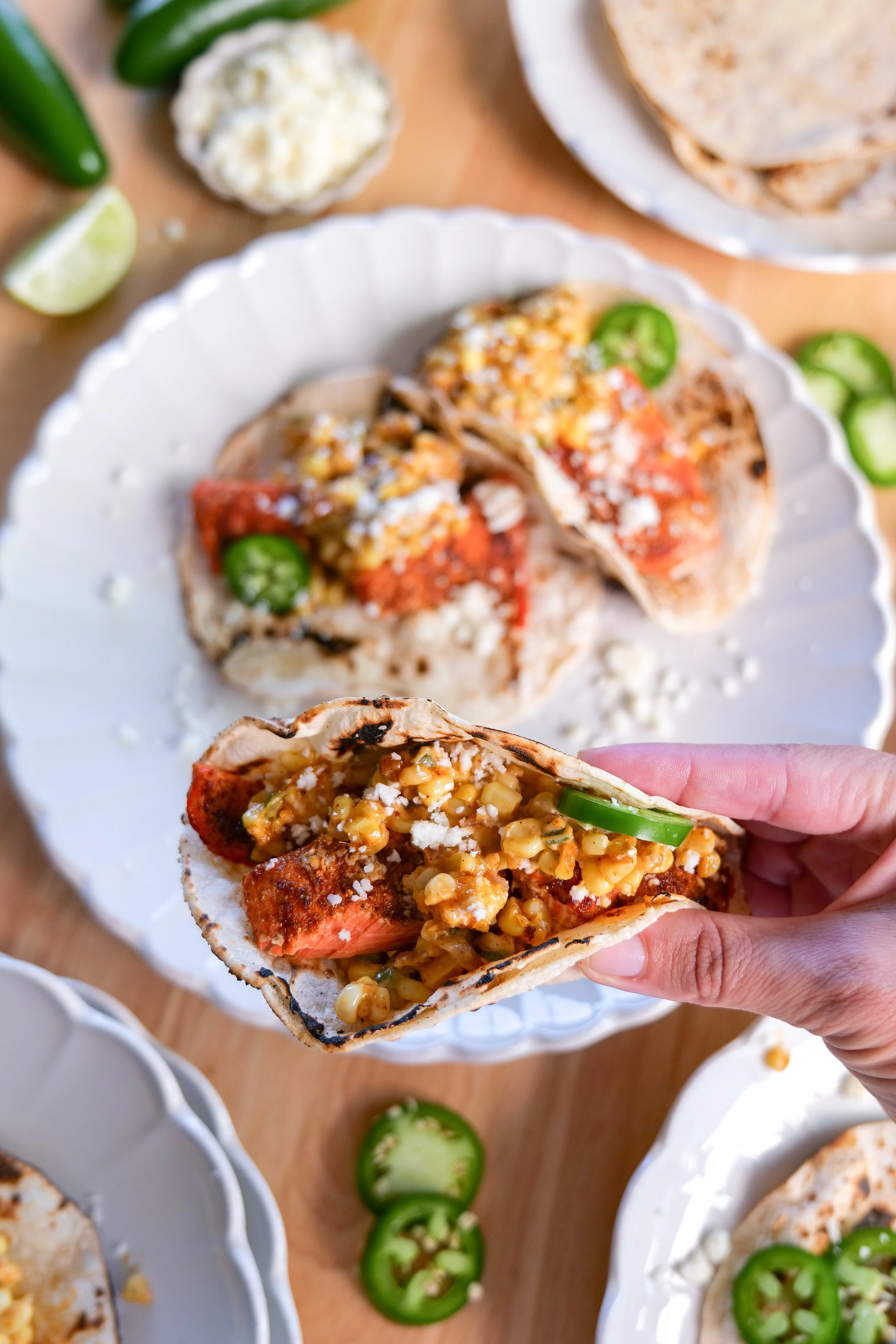
Close-up of a hand holding a homemade salmon taco filled with seasoned salmon, creamy elote corn salsa, and crumbled cotija cheese.
Close-up of salmon tacos filled with tender seasoned salmon and creamy Mexican street corn salsa.
From Amanda's Kitchen recipe card for salmon tacos with elote corn salsa, including ingredients and cooking instructions

Frequently Asked Questions

What kind of salmon is best for salmon tacos?

Use salmon fillets that are similar in size and thickness so they cook at approximately the same rate. Skin-on or skinless can work since you'll be breaking the cooked salmon into pieces for the tacos.

Can I use frozen corn for elote corn salsa?

Fresh corn is my first choice because of its texture and ability to brown in the skillet. Frozen corn can work when fresh isn't available; thaw it and remove excess moisture before adding it to the skillet.

Are salmon tacos spicy?

These have some warmth from chili powder and jalapeño, but you can easily make them milder by removing the seeds and membrane from the jalapeño or using less of it.

Can I make these with flour or corn tortillas?

Yes. Use whichever tortillas you prefer. Either can be warmed in a dry skillet, and corn tortillas can also be lightly charred over a gas flame.

What is elote corn salsa made of?

This elote-inspired corn salsa combines fresh corn, butter, garlic, red onion, jalapeño, mayonnaise, lime juice, cotija cheese and chili powder.

More Recipes You'll Love

If you loved these Salmon Tacos with Elote Corn Salsa, there are plenty of other fresh and flavorful recipes to bring to your table!

For another delicious dinner inspired by Mexican street corn, try my Grilled Chicken with Mexican Street Corn & Cucumber Salad. It's packed with fresh ingredients and perfect for warmer evenings.

If you're craving something a little sweet and savory, my Grilled Peach Caprese Chicken is a beautiful combination of juicy grilled chicken, seasonal peaches, and fresh summer flavors.

And for a salad that's hearty enough to steal the show, you'll love my Maple Bacon Fall Salad. It's filled with comforting seasonal flavors and makes a wonderful addition to any gathering.

Whether you're planning a family dinner or hosting friends, I hope these recipes inspire something delicious for your next meal. ♡

Shop My Kitchen Favorites

Final Thoughts

These salmon tacos are one of those recipes that has everything I want in an easy dinner: plenty of flavor, fresh ingredients and just enough going on to make an ordinary taco night feel a little more special.

The salmon is smoky and bright from the spices and lime, but I think the elote corn salsa is what really makes them. It's creamy, buttery, a little spicy and so good piled over warm salmon with extra cotija and lime.

Put everything on the table, warm a stack of tortillas and let everyone build their own.

Detailed view of baked salmon tacos topped with elote corn salsa, crumbled cotija cheese, and fresh lime.

Crispy Smashed Potatoes with Garlic Aioli (Easy Oven Recipe)

There are few things I love more than a good potato side dish, especially when they're golden and crispy on the outside, soft and fluffy in the center, and served with something delicious for dipping. These crispy smashed potatoes with homemade garlic aioli check every box.

Made with baby red potatoes, olive oil, simple seasonings, and a quick lemon garlic aioli, this recipe turns a handful of everyday ingredients into something that feels a little more special.

They're perfect alongside a Sunday dinner, served as an appetizer when entertaining friends, or added to your holiday table. And if you're anything like me, you'll probably find yourself grabbing a few straight from the baking sheet before they ever make it to the table.

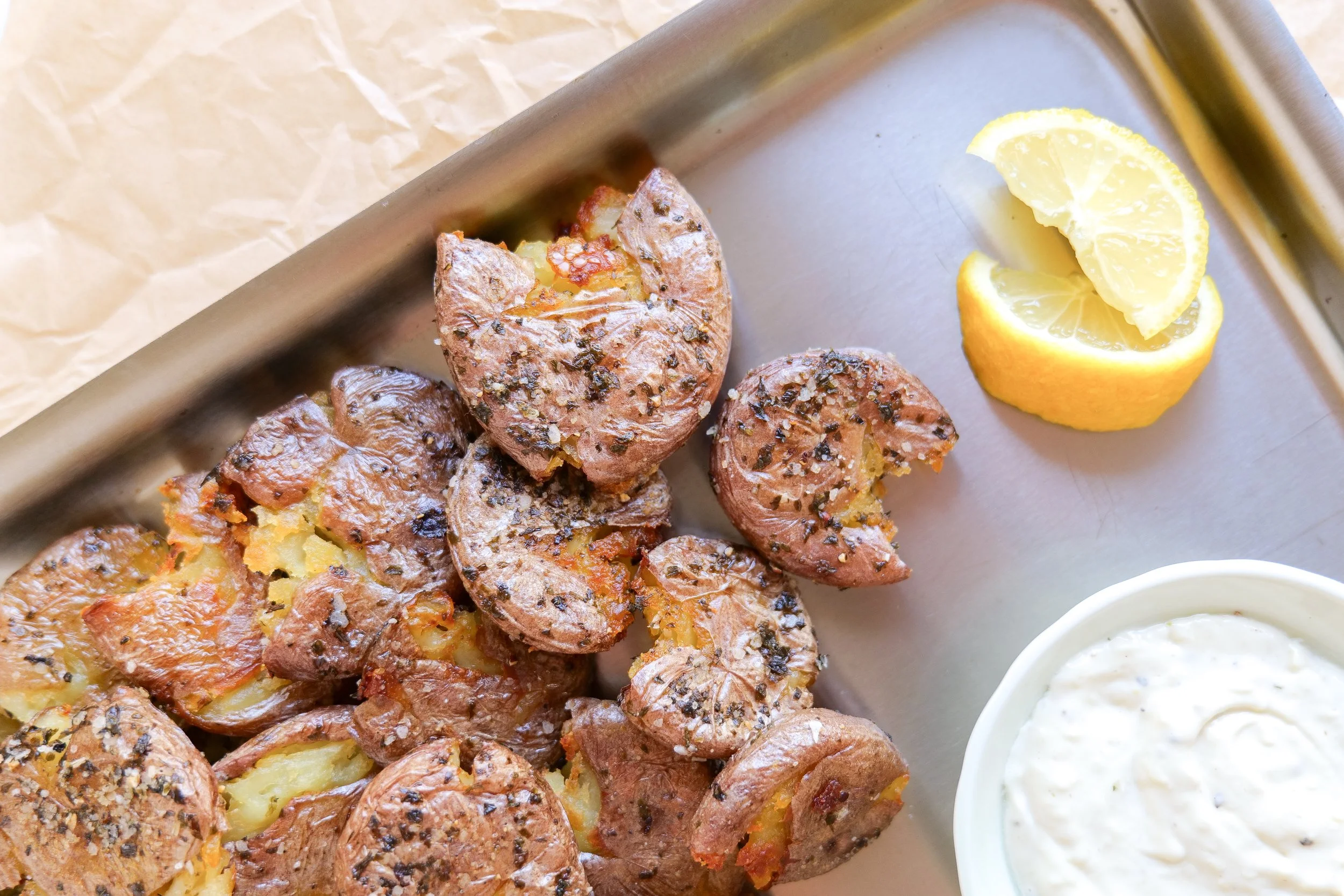
Crispy smashed baby red potatoes served with homemade garlic aioli

Why You'll Love These Crispy Smashed Potatoes

The beauty of this recipe is how simple it is. No complicated ingredients, no fancy techniques, and just a little hands-on preparation.

The potatoes roast until tender, get smashed with the bottom of a glass or mason jar, and return to the oven until the edges become beautifully golden and crisp.

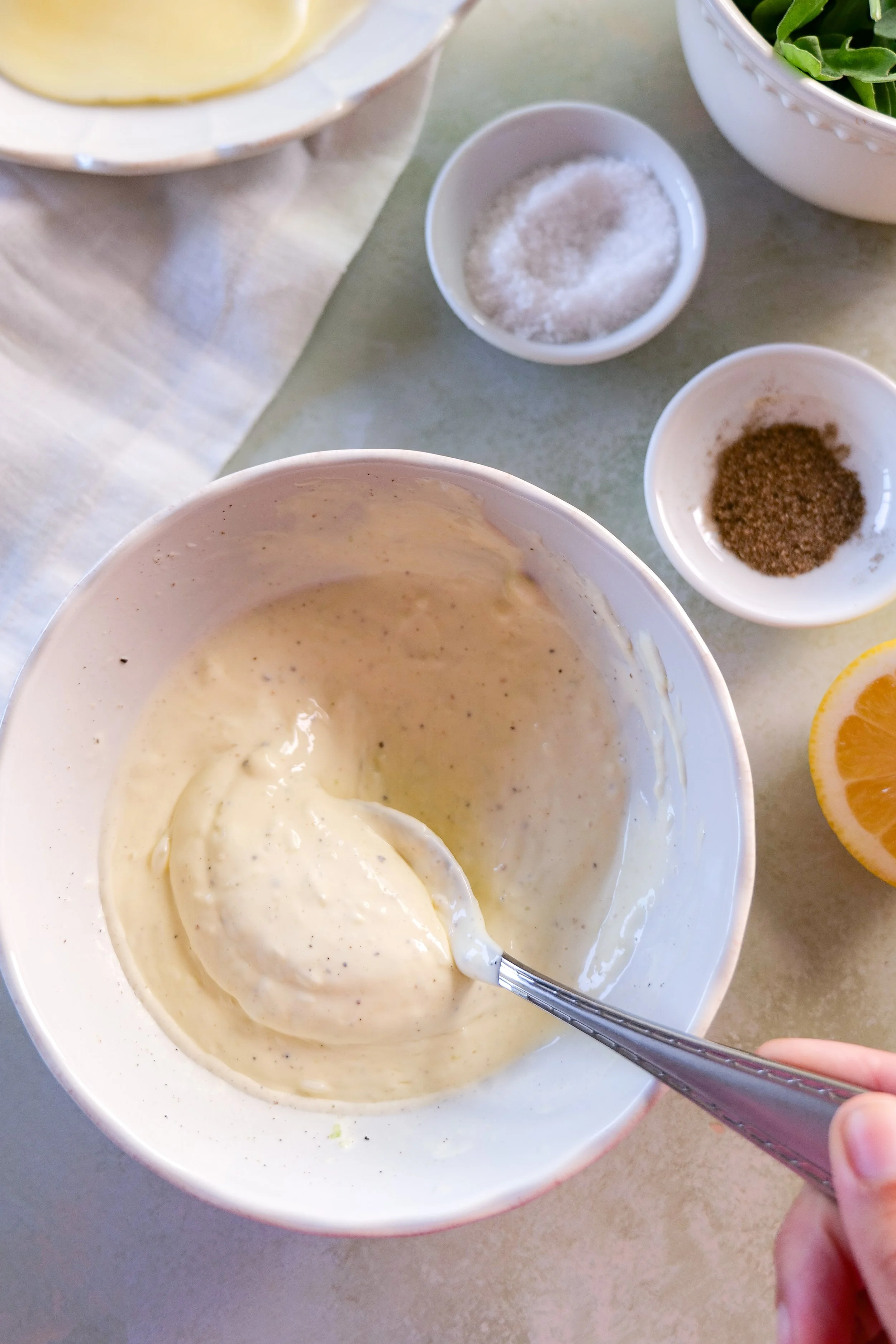
Meanwhile, the homemade garlic aioli comes together in just a few minutes. It's creamy, garlicky, and brightened with fresh lemon juice, making it the perfect complement to the potatoes.

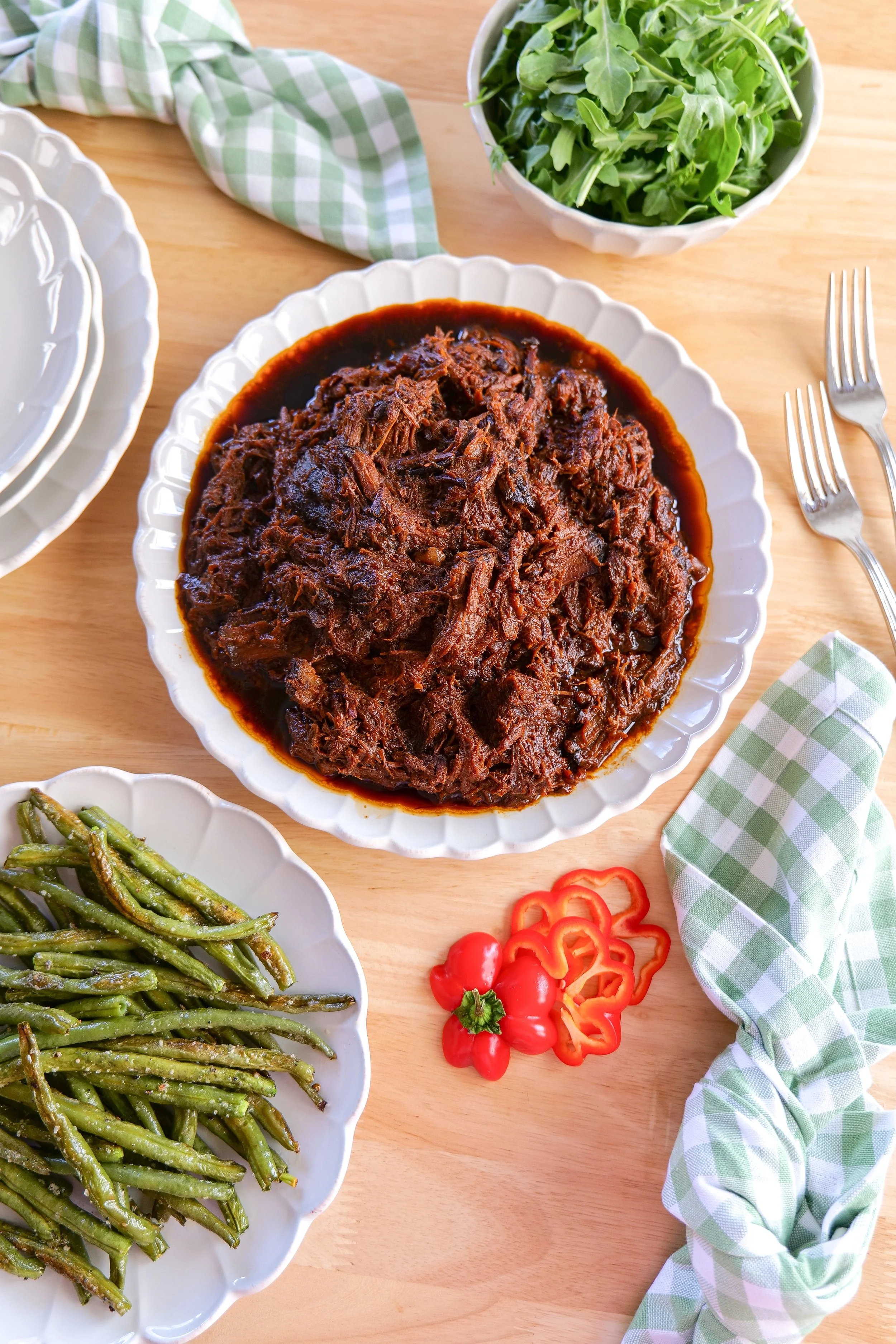
This is one of those recipes that works just as well for a casual family dinner as it does for a holiday gathering. I especially love serving crispy potatoes alongside a hearty main dish, like my Slow Cooker BBQ Brisket, or as part of a cozy dinner spread.

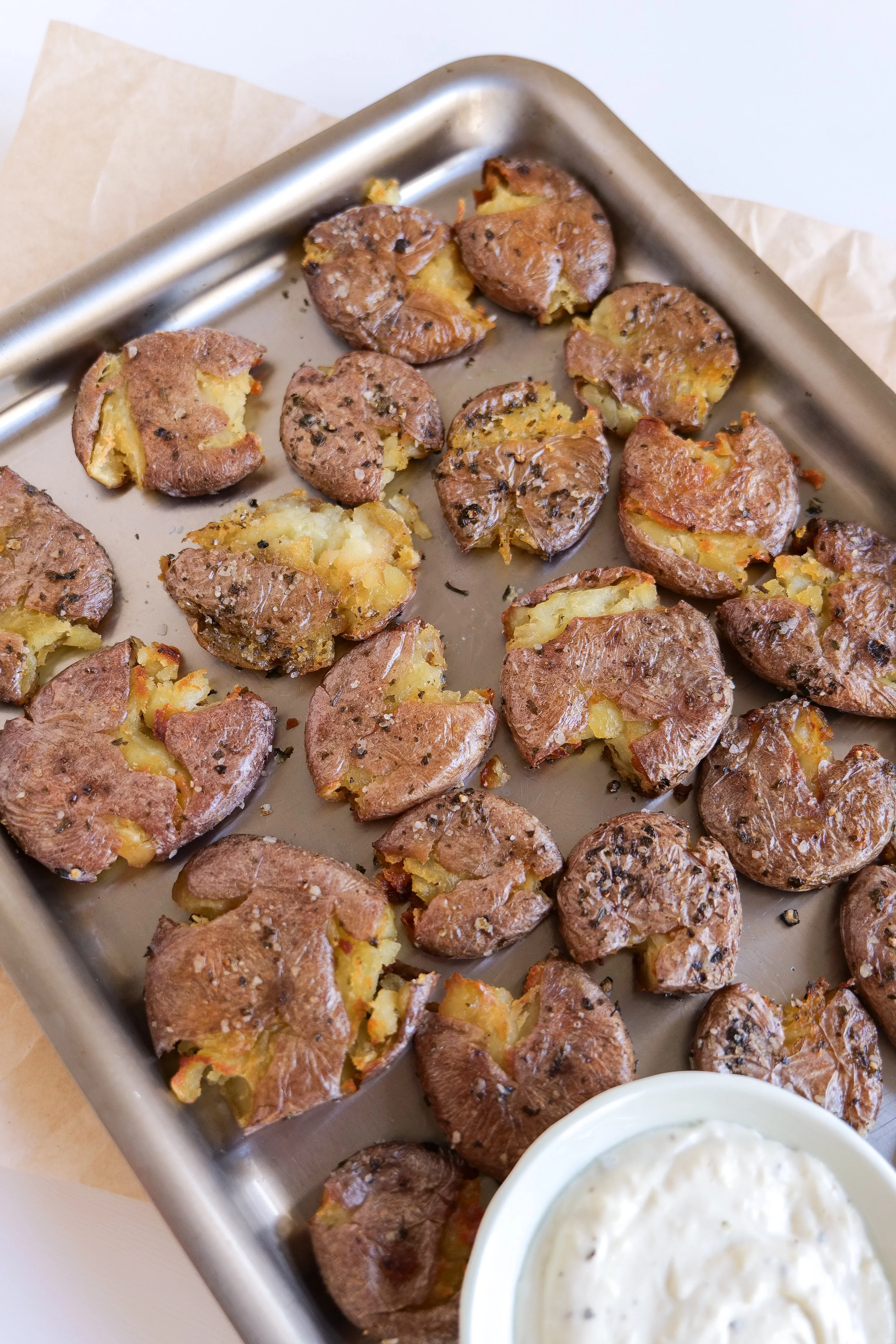
Golden oven-roasted smashed red potatoes with crispy edges and parsley

Ingredients You'll Need

One of my favorite things about this recipe is that you probably have most of the ingredients already in your kitchen.

For the crispy smashed potatoes

  • 1½ pounds baby red potatoes: Their thin skins crisp beautifully while the centers stay tender.

  • 2 teaspoons sea salt: For seasoning the potatoes.

  • 1 teaspoon black pepper: Adds a little warmth and balances the flavor.

  • 4 tablespoons olive oil: Helps the potatoes roast and develop those crispy edges.

  • 1 tablespoon chopped parsley: Fresh or dried, for a little color and herb flavor.

For the homemade garlic aioli

  • ¼ cup mayonnaise: The creamy base of our quick aioli.

  • 1 garlic clove, minced: Fresh garlic gives the sauce its signature flavor.

  • 1 teaspoon lemon juice: Adds brightness and cuts through the richness.

  • ⅛ teaspoon salt

  • ⅛ teaspoon black pepper

The aioli is intentionally simple, but don't underestimate how much it adds. The combination of crispy potatoes and creamy garlic sauce is what makes this recipe so good.

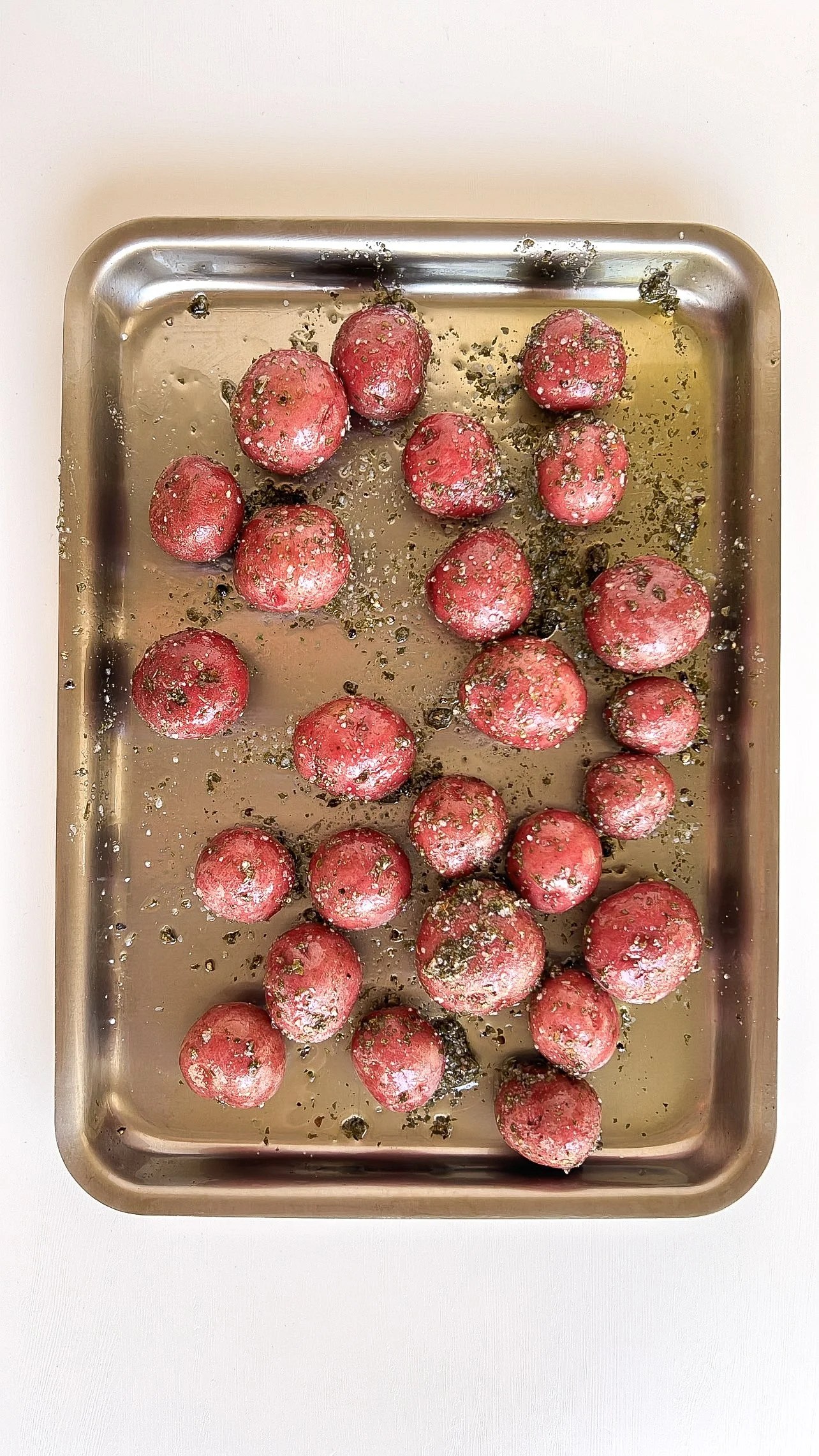
Baby red potatoes arranged on a baking sheet before roasting

How to Make Crispy Smashed Potatoes in the Oven

Step 1: Season and roast the potatoes

Preheat your oven to 425°F.

Wash and thoroughly dry the baby red potatoes, then place them on a large baking sheet. I originally made this recipe using my 360 Cookware jelly roll pan, which works beautifully for roasting.

Drizzle the potatoes with olive oil, then sprinkle with sea salt, black pepper, and parsley. Toss everything together until the potatoes are evenly coated.

Roast for approximately 20 minutes, or until the potatoes are tender enough to smash with gentle pressure. Depending on the size of your potatoes, they may need a little longer.

Baby red potatoes coated with olive oil, sea salt, black pepper, and parsley

Step 2: Smash the potatoes

Remove the baking sheet from the oven.

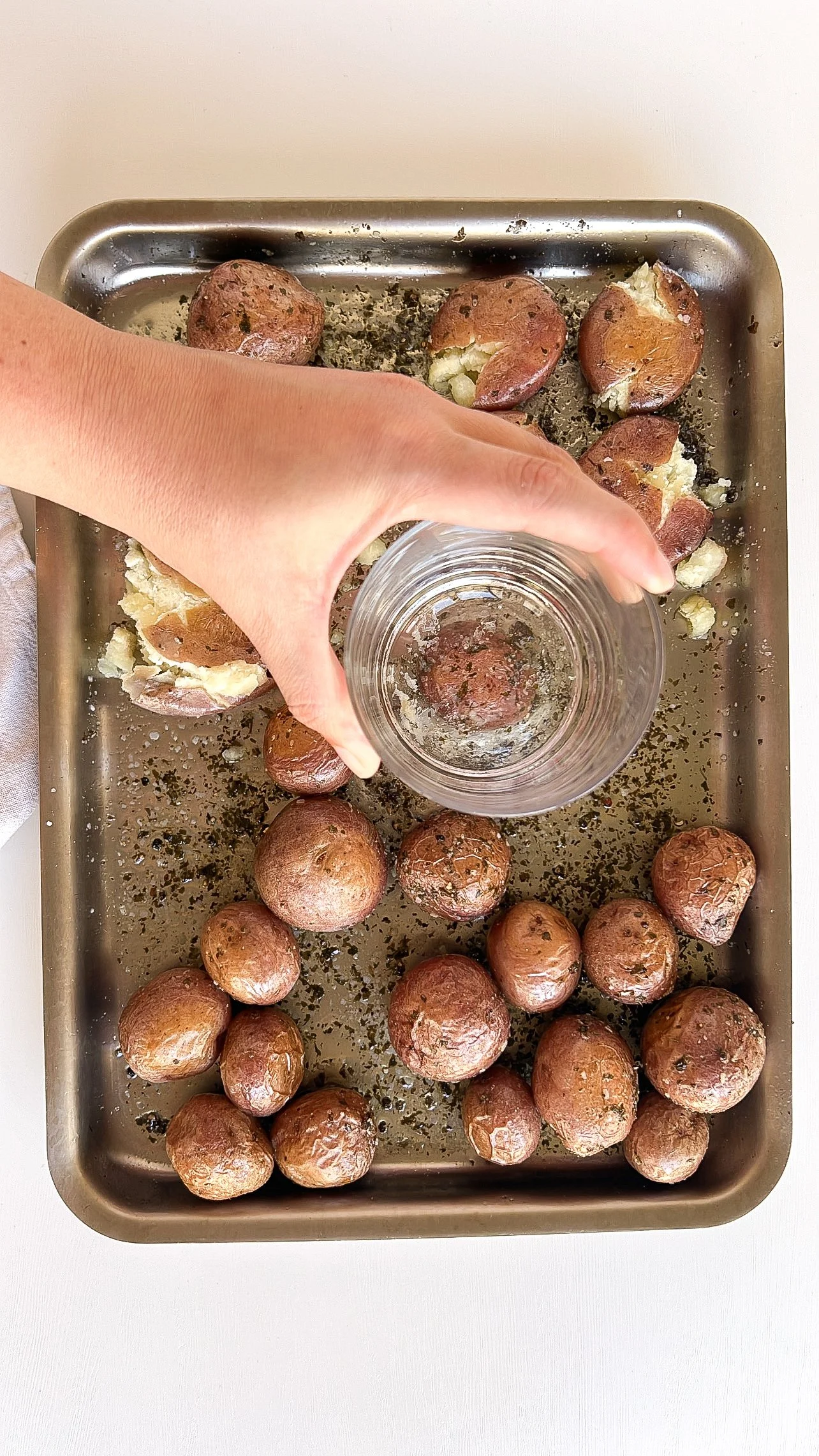
Using the bottom of a mason jar or a flat-bottomed drinking glass, gently press down on each potato until it flattens.

You want the potatoes to spread out and develop those little ridges and uneven edges. Those are the pieces that become extra crispy in the oven!

If the potatoes look dry after smashing, drizzle a little additional olive oil over the tops.

Flattening roasted baby red potatoes with the bottom of a glass

Step 3: Roast until golden and crispy

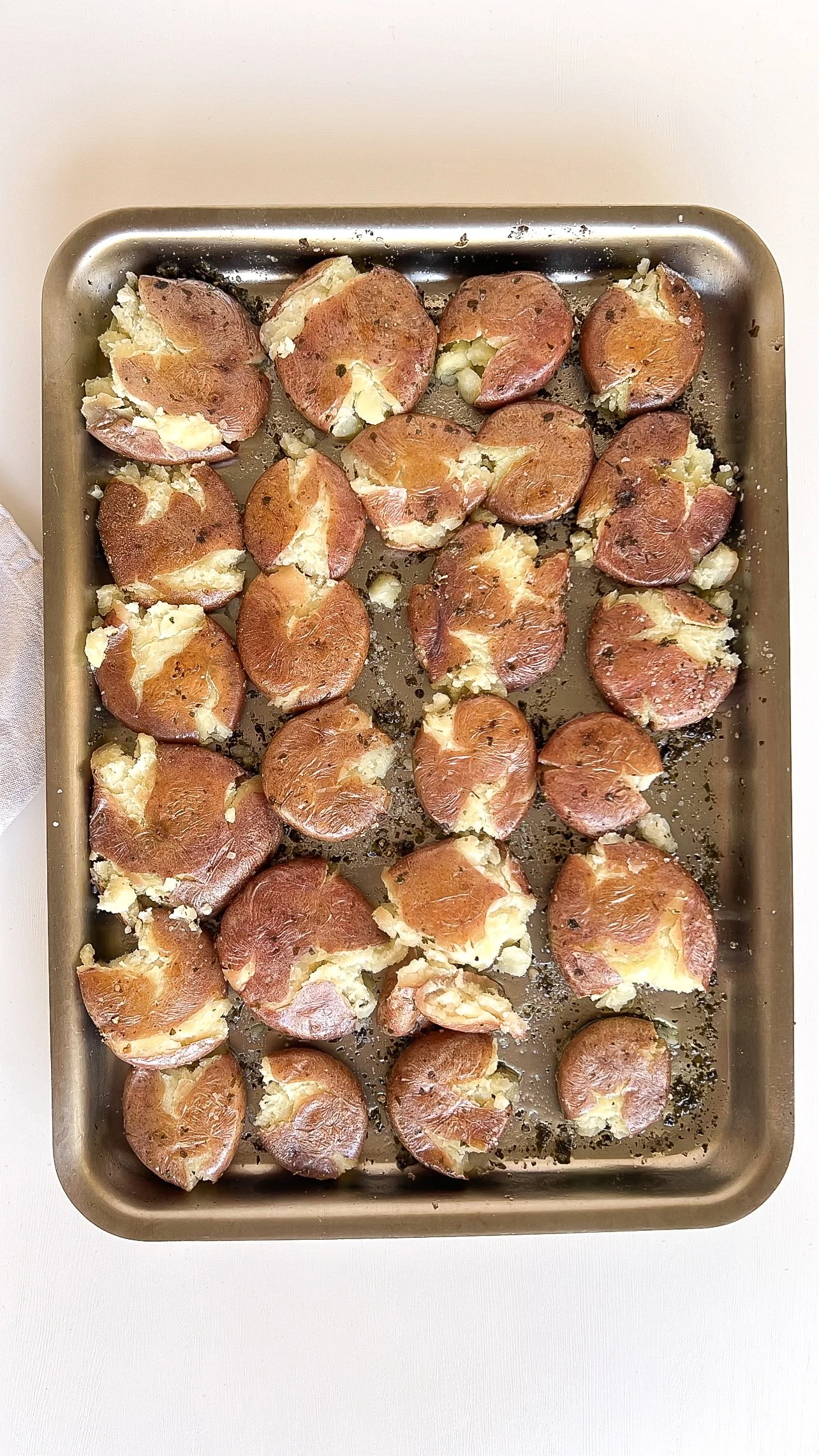
Return the potatoes to the oven and continue roasting for another 30–45 minutes, turning them halfway through if they are firm enough to flip without falling apart.

The exact time will depend on the size of your potatoes and how crispy you like them.

I personally love when the edges are deeply golden with that satisfying crunch, while the centers stay soft and fluffy.

Smashed red potatoes roasting on a baking sheet until crispy

Step 4: Prepare the homemade garlic aioli

While the potatoes finish roasting, make the garlic aioli.

In a small bowl, combine the mayonnaise, minced garlic, lemon juice, salt, and pepper. Stir until smooth and creamy.

Cover and refrigerate until you're ready to serve. Giving the sauce a little time in the refrigerator also allows the garlic flavor to develop.

Step 5: Serve and enjoy

Transfer the crispy smashed potatoes to a serving platter, sprinkle with a little additional fresh parsley if desired, and serve with the chilled garlic aioli.

I love putting the aioli in a small bowl right alongside the potatoes so everyone can dip as they go.

Homemade garlic aioli served alongside crispy smashed potatoes

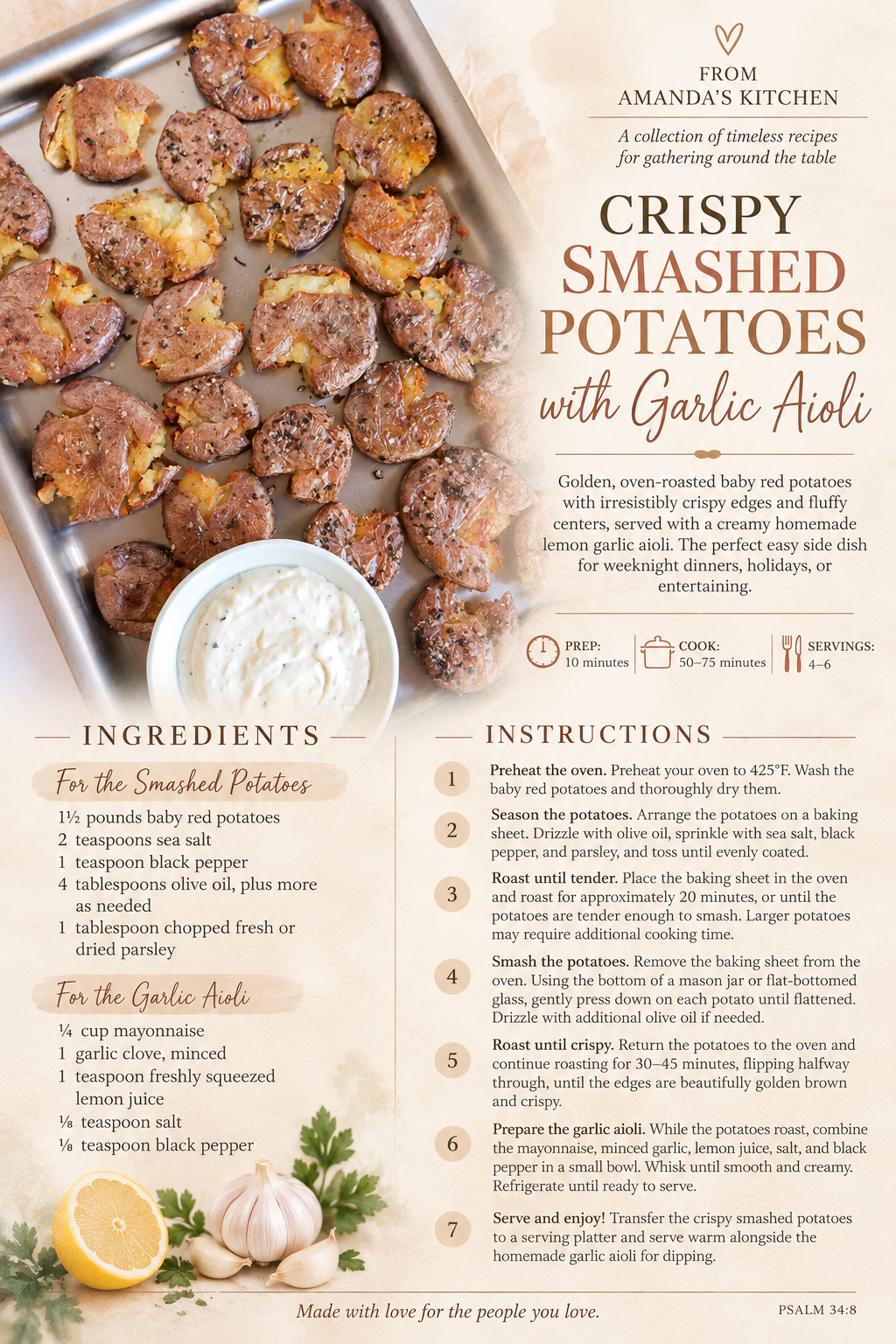
Crispy Smashed Potatoes with Garlic Aioli

Golden, oven-roasted baby red potatoes with irresistibly crispy edges and fluffy centers, served with a creamy homemade lemon garlic aioli. The perfect easy side dish for weeknight dinners, holidays, or entertaining.

Prep: 10 minutes

Cook: 50–75 minutes

Servings: 4–6

Ingredients

For the Smashed Potatoes

  • 1½ pounds baby red potatoes

  • 2 teaspoons sea salt

  • 1 teaspoon black pepper

  • 4 tablespoons olive oil, plus more as needed

  • 1 tablespoon chopped fresh or dried parsley

For the Garlic Aioli

  • ¼ cup mayonnaise

  • 1 garlic clove, minced

  • 1 teaspoon freshly squeezed lemon juice

  • ⅛ teaspoon salt

  • ⅛ teaspoon black pepper

Instructions

  1. Preheat the oven. Preheat your oven to 425°F. Wash the baby red potatoes and thoroughly dry them.

  2. Season the potatoes. Arrange the potatoes on a baking sheet. Drizzle with olive oil, sprinkle with sea salt, black pepper, and parsley, and toss until evenly coated.

  3. Roast until tender. Place the baking sheet in the oven and roast for approximately 20 minutes, or until the potatoes are tender enough to smash. Larger potatoes may require additional cooking time.

  4. Smash the potatoes. Remove the baking sheet from the oven. Using the bottom of a mason jar or flat-bottomed glass, gently press down on each potato until flattened. Drizzle with additional olive oil if needed.

  5. Roast until crispy. Return the potatoes to the oven and continue roasting for 30–45 minutes, flipping halfway through, until the edges are beautifully golden brown and crispy.

  6. Prepare the garlic aioli. While the potatoes roast, combine the mayonnaise, minced garlic, lemon juice, salt, and black pepper in a small bowl. Whisk until smooth and creamy. Refrigerate until ready to serve.

  7. Serve and enjoy! Transfer the crispy smashed potatoes to a serving platter and serve warm alongside the homemade garlic aioli for dipping.

Amanda's Tips for Perfectly Crispy Smashed Potatoes

Dry your potatoes thoroughly. Extra moisture makes it harder to achieve those golden, crispy edges.

Don't overcrowd your baking sheet. Giving the potatoes room allows hot air to circulate and helps them roast rather than steam. Use two baking sheets if necessary.

Smash gently. Press just enough to flatten each potato while keeping it mostly intact. If the potatoes break apart a little, that's perfectly fine.

Don't rush the second roast. The first roast softens the potatoes, but the second is where the magic happens. Let those edges become beautifully golden.

Serve immediately. Like most crispy potato recipes, these are best enjoyed fresh from the oven.

Close-up of golden crispy smashed potatoes with tender centers

What to Serve with Smashed Potatoes

These crispy smashed potatoes are incredibly versatile, which is one of the reasons I love making them.

For a cozy family dinner, pair them with roasted chicken, steak, or slow-cooked brisket. They also make a wonderful addition to a holiday dinner alongside beef tenderloin and roasted vegetables.

If you're entertaining, try serving them as a shareable appetizer with the garlic aioli in the center of the platter.

And for another cozy potato recipe, my Brown Butter Mashed Potatoes are a lovely option for a more traditional holiday meal.

My Favorite Kitchen Essentials for Making This Recipe

I always say that you don't need an elaborate kitchen to make good food, but having a few reliable pieces makes cooking and entertaining so much easier.

For this recipe, a sturdy baking sheet is especially helpful because it allows the potatoes to roast evenly and develop those golden edges. I originally used my 360 Cookware jelly roll pan, along with a simple mason jar for smashing.

I've gathered some of my favorite everyday kitchen essentials, roasting pans, and entertaining pieces in my ShopMy storefront so you can find pieces you'll use well beyond this recipe.

Frequently Asked Questions

Do you have to boil potatoes before smashing them?

No! While many smashed potato recipes begin by boiling the potatoes, this version roasts them directly in the oven until tender enough to smash. It keeps the preparation simple and avoids an extra pot.

Why aren't my smashed potatoes crispy?

Too much moisture, overcrowding the baking sheet, or not roasting long enough can prevent the potatoes from crisping. Make sure they're thoroughly dried before roasting and give them enough space on the pan.

Can I make smashed potatoes ahead of time?

You can roast the potatoes until tender, smash them, and refrigerate them in an airtight container for up to one day before finishing the final roast. Add a little olive oil before baking and cook until heated through and crispy.

Can I make garlic aioli ahead of time?

Absolutely. The garlic aioli can be made a day ahead and stored in a covered container in the refrigerator. Stir before serving.

What are the best potatoes for smashed potatoes?

Baby red potatoes are wonderful because they have thin skins and creamy centers. Small Yukon Gold potatoes also work well. Try to select potatoes of similar sizes so they cook evenly.

How do you reheat leftover smashed potatoes?

Reheat the potatoes in a 400°F oven for approximately 10–15 minutes, or until hot and crispy again. An air fryer also works well. Store leftovers in the refrigerator for up to 3–4 days.

Crispy smashed potatoes with garlic aioli recipe card from Amanda's Kitchen featuring golden roasted baby red potatoes, ingredients, and step-by-step instructions.

A Simple Side Dish Worth Making Again and Again

Sometimes the simplest recipes are the ones that become favorites, and these crispy smashed potatoes are a perfect example.

With their golden edges, fluffy centers, and creamy homemade garlic aioli, they're an easy way to make an everyday dinner feel just a little more special.

Whether you're preparing a cozy family meal or planning your next holiday gathering, I hope these find their way onto your table.

And if you make them, I'd love to hear what you think!

With love,

Amanda

Brown Butter Pear Cake with Spiced Pear Filling & Vanilla Mascarpone Cream

There’s something about pears that feels like the quiet beginning of fall. They’re sweet without being overly sweet, beautiful enough to decorate a cake almost entirely on their own, and one of those flavors I don’t think gets used nearly enough in baking.

For Amelia’s 10-month milestone cake, I knew I wanted pears to be the inspiration. I’ve been making a special cake each month as she grows, and I love that each one has become its own little memory of this first year.

But I also wanted this to be a cake I would make again long after her monthly milestone cakes are finished.

So this one became a Brown Butter Pear Cake with Spiced Pear Filling and Vanilla Mascarpone Cream.

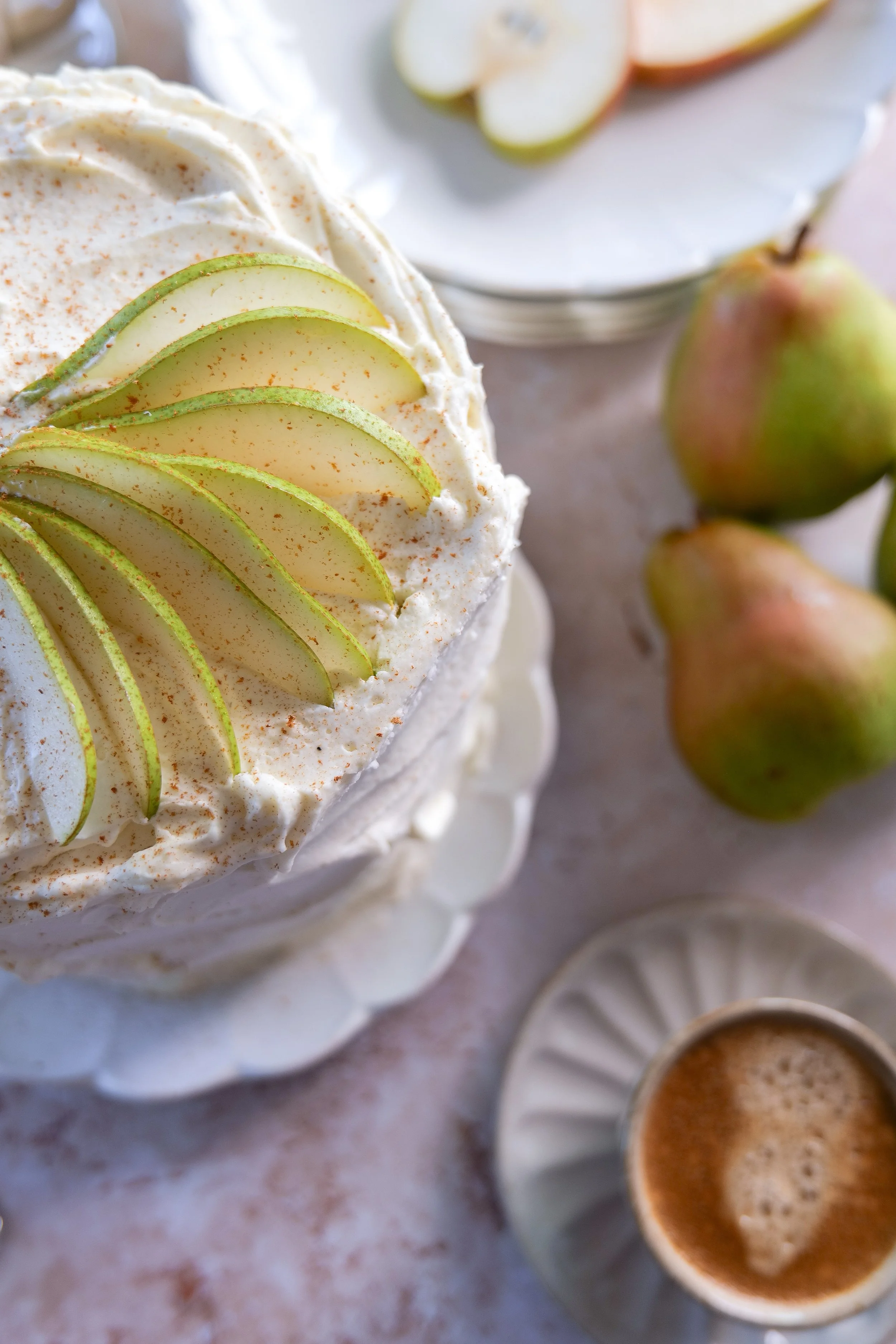
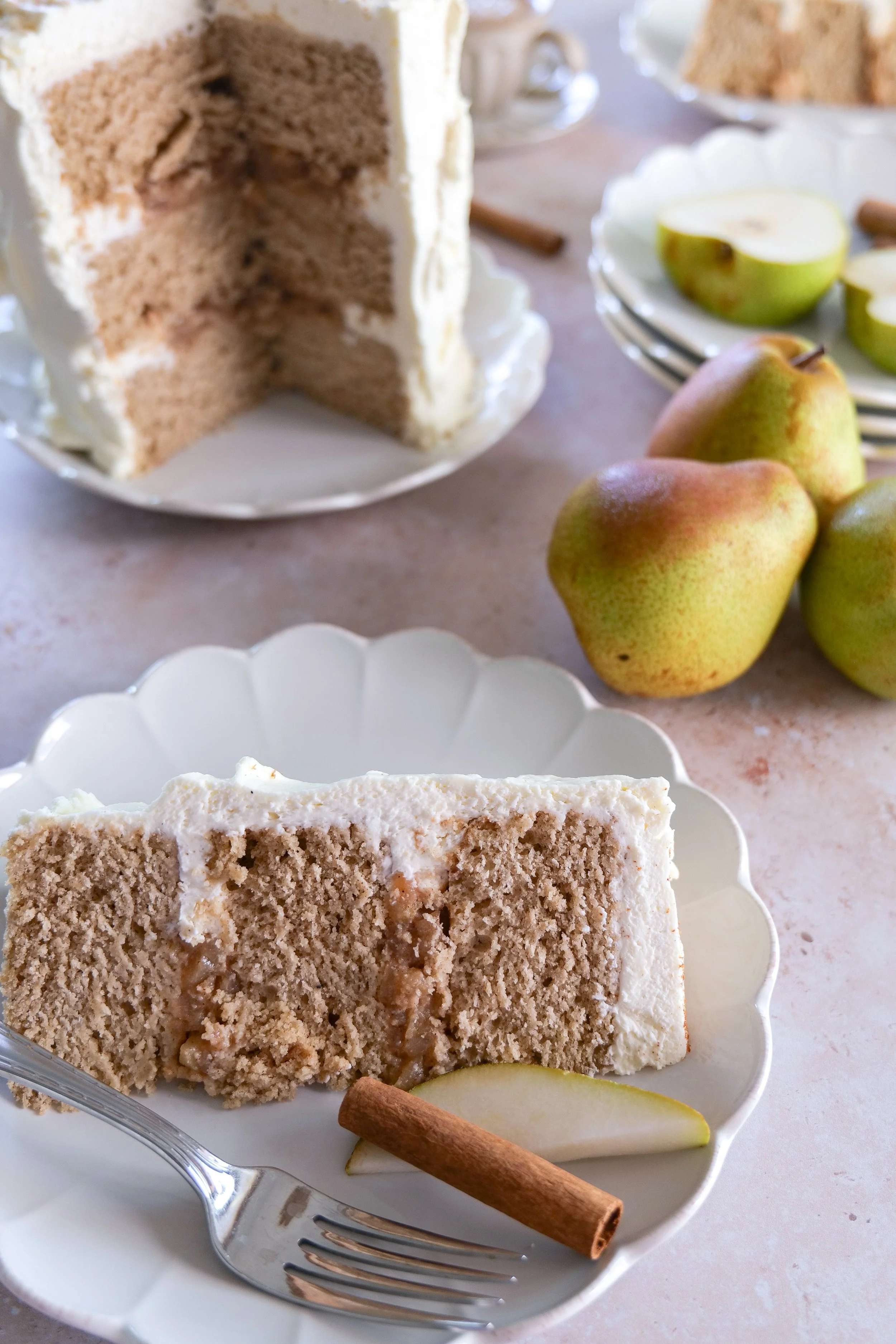
The finished cake has three soft brown butter pear cake layers with a homemade spiced pear filling tucked between them. Then the entire cake is covered in a light vanilla mascarpone cream that I added in loose, whipped swoops instead of trying to create a perfectly smooth finish.

Fresh pears on top are really all it needs.

It feels special without being overly fussy, which might be my favorite kind of cake.

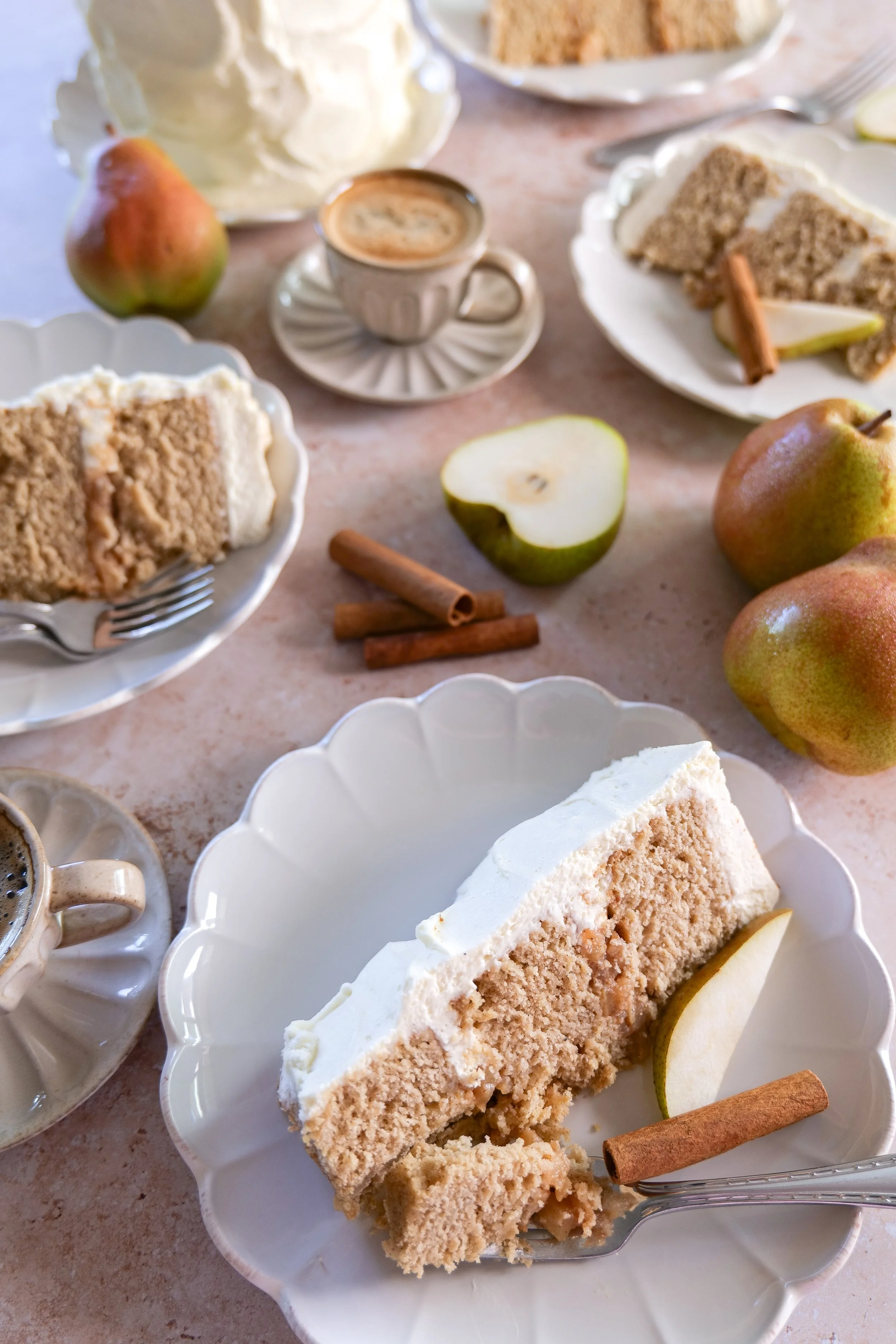
Brown butter pear layer cake with spiced pear filling, vanilla mascarpone cream and fresh pears.

Why You'll Love This Pear Cake

What I love most about this cake is that pear actually tastes like pear.

It can be such a delicate flavor that it's easy to cover it with too much cinnamon or spice. Instead, we're using fresh pear in the cake, a concentrated pear filling between the layers and fresh pear again on top.

Brown butter gives the cake a warm, toasted flavor without overwhelming the fruit, while the vanilla mascarpone cream keeps everything light.

And because the final cake is covered completely in mascarpone cream, you get a little of that creamy vanilla flavor with every bite.

It's also a beautiful cake for fall birthdays, Thanksgiving, dinner parties or any autumn gathering when you want something a little different from pumpkin and apple.

Three-layer pear cake covered in vanilla mascarpone cream and topped with fresh pears.

Ingredient Notes

Fresh Pears

Pears are the star of this cake, so use ripe pears that have some sweetness and flavor but aren't so soft that they're difficult to work with.

You'll use pear three ways: finely grated in the cake, diced in the filling and thinly sliced for decorating.

For decorating, look for the prettiest pears you can find. I love leaving the skin on because the natural green, gold or blush color is part of what makes the finished cake so beautiful.

Ingredients for homemade brown butter pear cake with mascarpone cream.

Brown Butter

Brown butter and pear are so good together.

Browning the butter cooks the milk solids until they're golden and nutty, giving you so much more flavor than melted butter alone. We're using it in both the cake and pear filling so that flavor runs throughout the recipe.

The final cake recipe uses 1 cup of butter for the cake layers, which gives the larger three-layer cake plenty of that warm brown butter flavor.

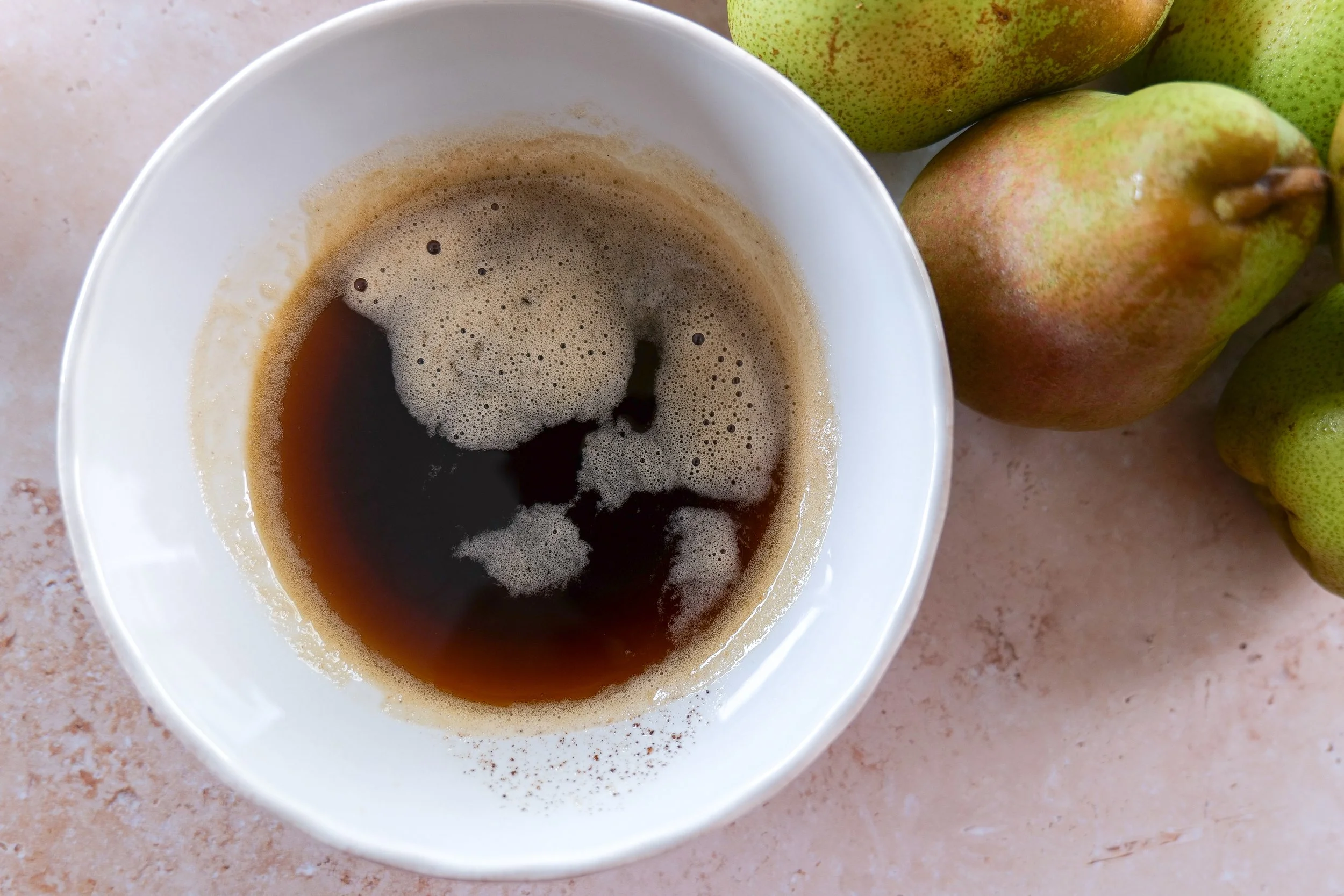
Browned butter with golden milk solids for brown butter pear cake.

Buttermilk

Buttermilk adds moisture and a slight tang that balances the sweetness of the pears and brown sugar.

Cinnamon + Cardamom

I want this to taste like pear cake, not spice cake, so even though we're adding cinnamon and cardamom, neither should overpower the pear.

They're there to add warmth and make the cake feel like fall.

Mascarpone

The mascarpone cream might be one of my favorite parts of this cake.

Instead of traditional buttercream, the cake is covered in a vanilla mascarpone cream made with 16 ounces of mascarpone and heavy whipping cream. It's rich and creamy but still light enough that it doesn't compete with the pear and brown butter.

I used it between the layers and then covered the entire outside of the cake, creating a loose, whipped design with lots of soft swoops and texture.

It doesn't need to be perfectly smooth—that's part of what makes this cake so pretty.

How to Make Brown Butter Pear Cake

1. Brown the Butter

Place the butter in a light-colored saucepan over medium heat. Allow it to melt, then continue cooking as it foams and bubbles.

Stir or swirl the pan occasionally. Once the milk solids at the bottom turn golden brown and the butter smells nutty, immediately remove it from the heat.

Pour it into a heatproof bowl, making sure to scrape in all of those browned bits.

Allow it to cool for about 15–20 minutes before adding it to the cake batter.

2. Prepare the Pear

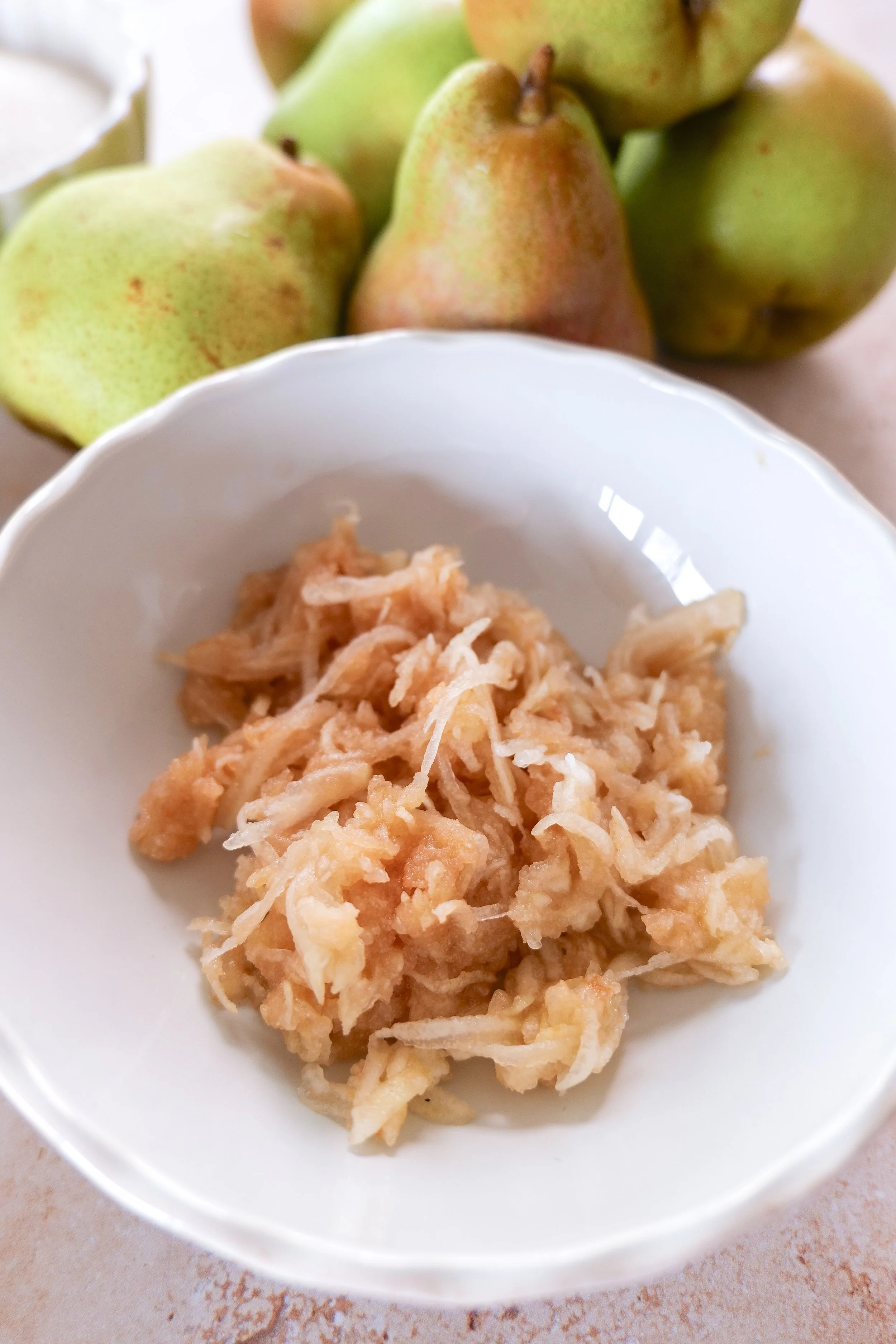
Peel and core the pears you'll be using inside the cake, then finely grate them.

You want the pear incorporated throughout the batter rather than having large chunks in the cake layers.

Fresh pear finely grated for homemade pear cake batter.

3. Make the Cake Batter

Whisk together the flour, baking powder, baking soda, salt, cinnamon and cardamom.

In a separate large bowl, whisk the cooled brown butter with the granulated sugar and brown sugar.

Add the eggs one at a time, whisking well after each addition, followed by the vanilla.

Fold in the grated pear.

Add approximately half of the dry ingredients, followed by the buttermilk and then the remaining dry ingredients. Mix only until everything comes together.

Don't overmix the batter.

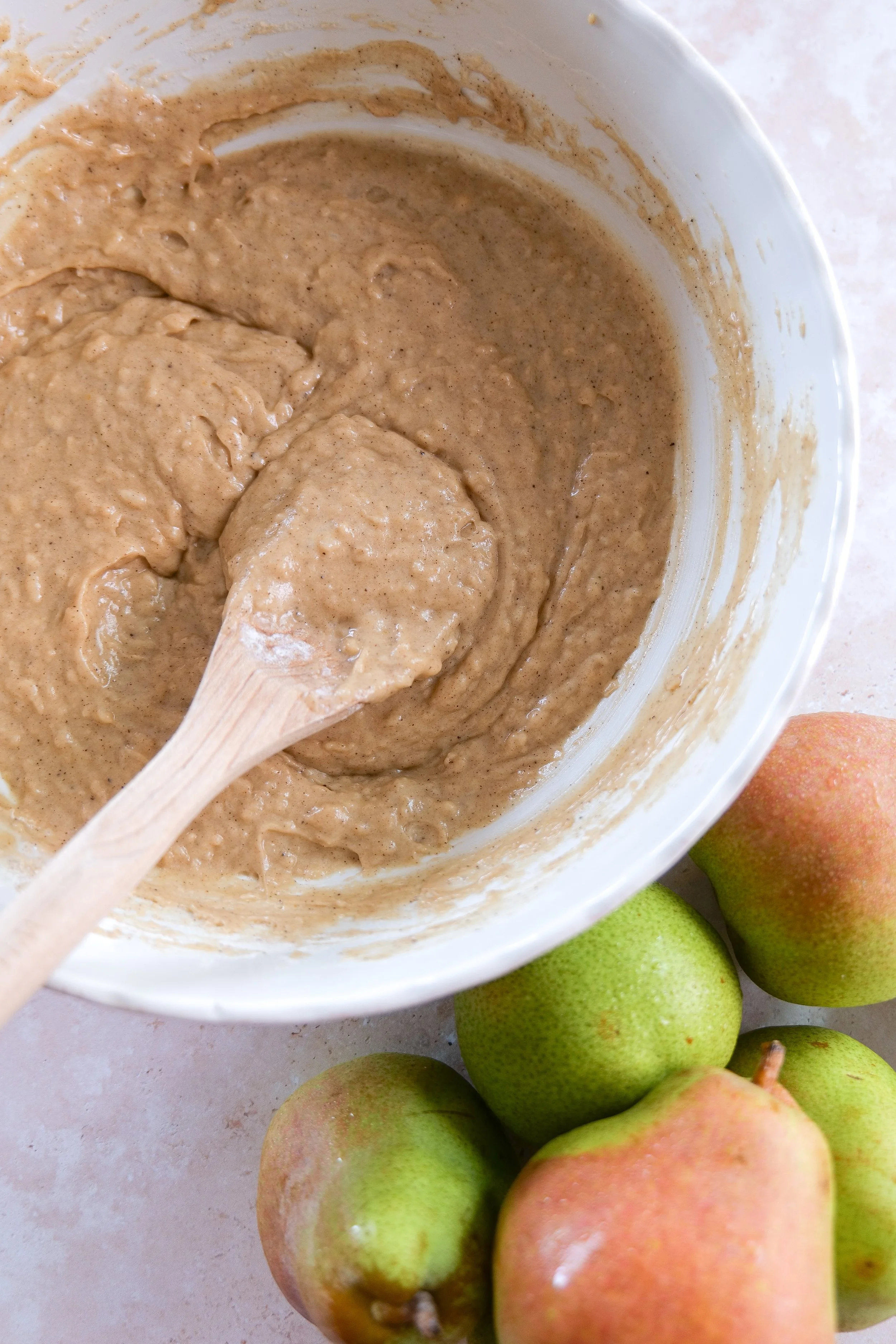
Brown butter pear cake batter before baking.

Divide it evenly between three prepared 6-inch cake pans. If you want perfectly even layers, weigh the finished batter and divide it equally between the three pans.

Bake until the centers spring back lightly and a toothpick inserted into the center comes out clean or with a few moist crumbs.

Allow the cakes to cool in the pans for about 10 minutes before turning them out onto a cooling rack.

Cool completely before assembling.

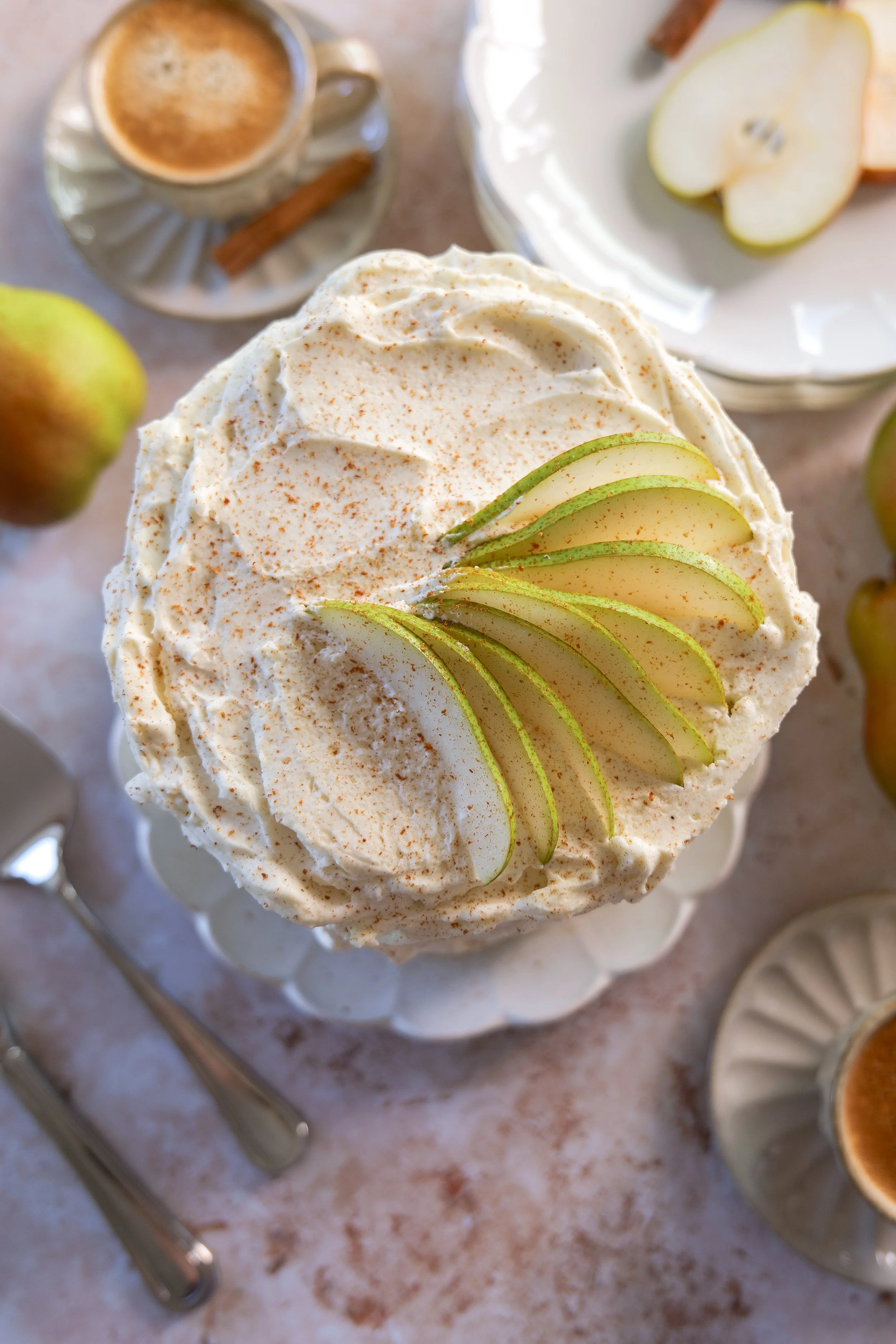
Fresh pear slices arranged on top of a mascarpone frosted cake.

Make the Brown Butter Spiced Pear Filling

While the cakes cool, make the pear filling.

Brown the butter in a skillet, then add the finely diced pears, brown sugar, lemon juice, cinnamon and salt.

Cook over medium heat, stirring occasionally, until the pears soften and the liquid reduces into a thick, glossy, almost jammy filling.

Remove from the heat and stir in the vanilla.

Transfer the filling to a bowl and cool completely before assembling the cake.

The filling should be thick and spoonable rather than watery. This is especially important with a three-layer cake because you don't want the filling causing the layers to slide.

Make the Vanilla Mascarpone Cream

Keep the mascarpone and heavy cream cold until you're ready to use them.

Add the cold mascarpone to a large mixing bowl and beat briefly on low speed just until smooth.

Add the cold heavy whipping cream, powdered sugar, vanilla bean paste and salt.

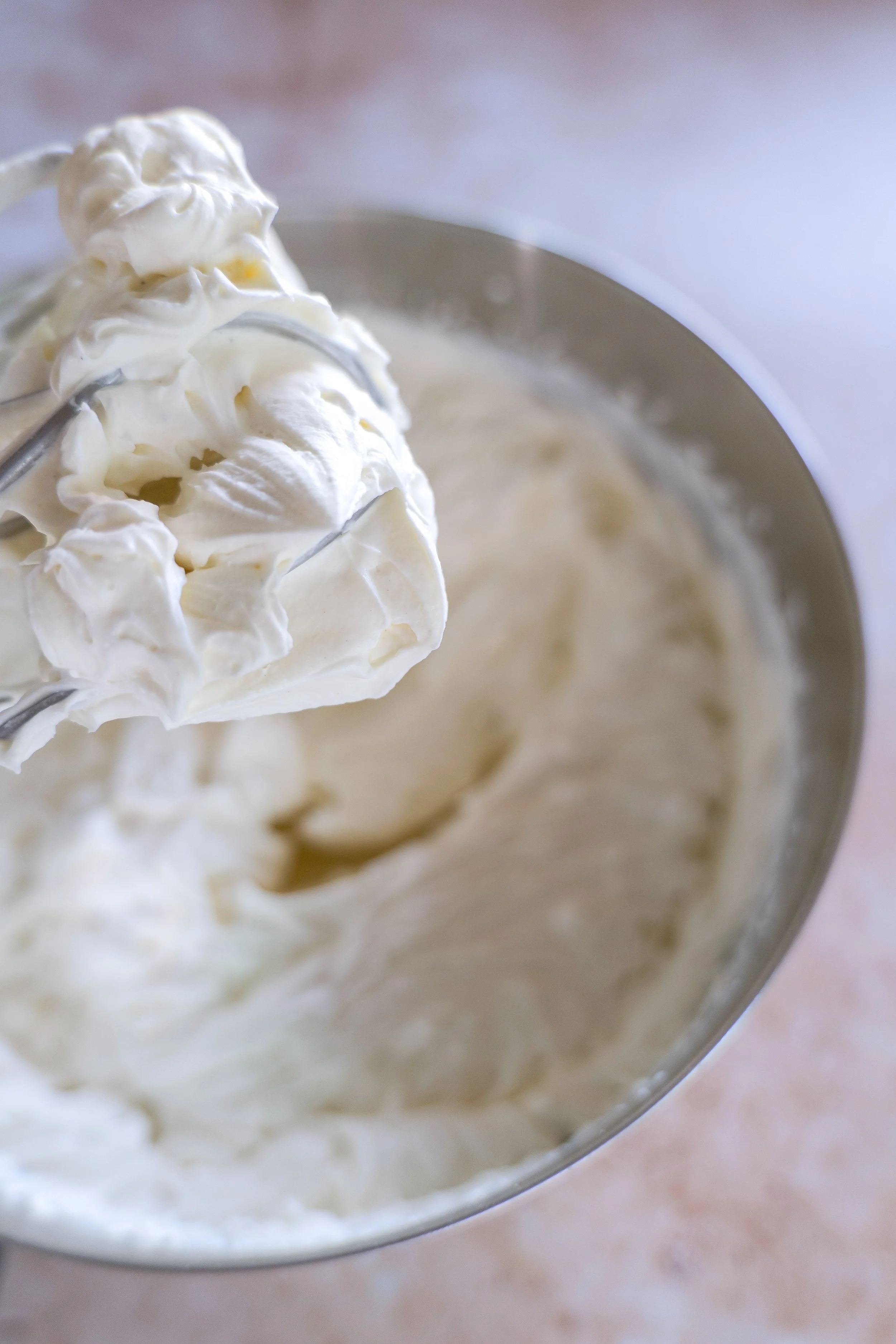
Whip on medium speed until the cream holds medium-stiff peaks and is thick enough to spread.

Stop as soon as it reaches that consistency. Mascarpone cream can be overwhipped, so don't keep mixing once it's thick and fluffy.

This recipe makes enough mascarpone cream to fill the cake and cover the entire outside in the whipped finish.

Fluffy vanilla mascarpone cream whipped to medium-stiff peaks.

How to Assemble the Pear Layer Cake

Make sure your cake layers and pear filling are completely cool before you begin.

Place the first cake layer on your serving plate or cake stand.

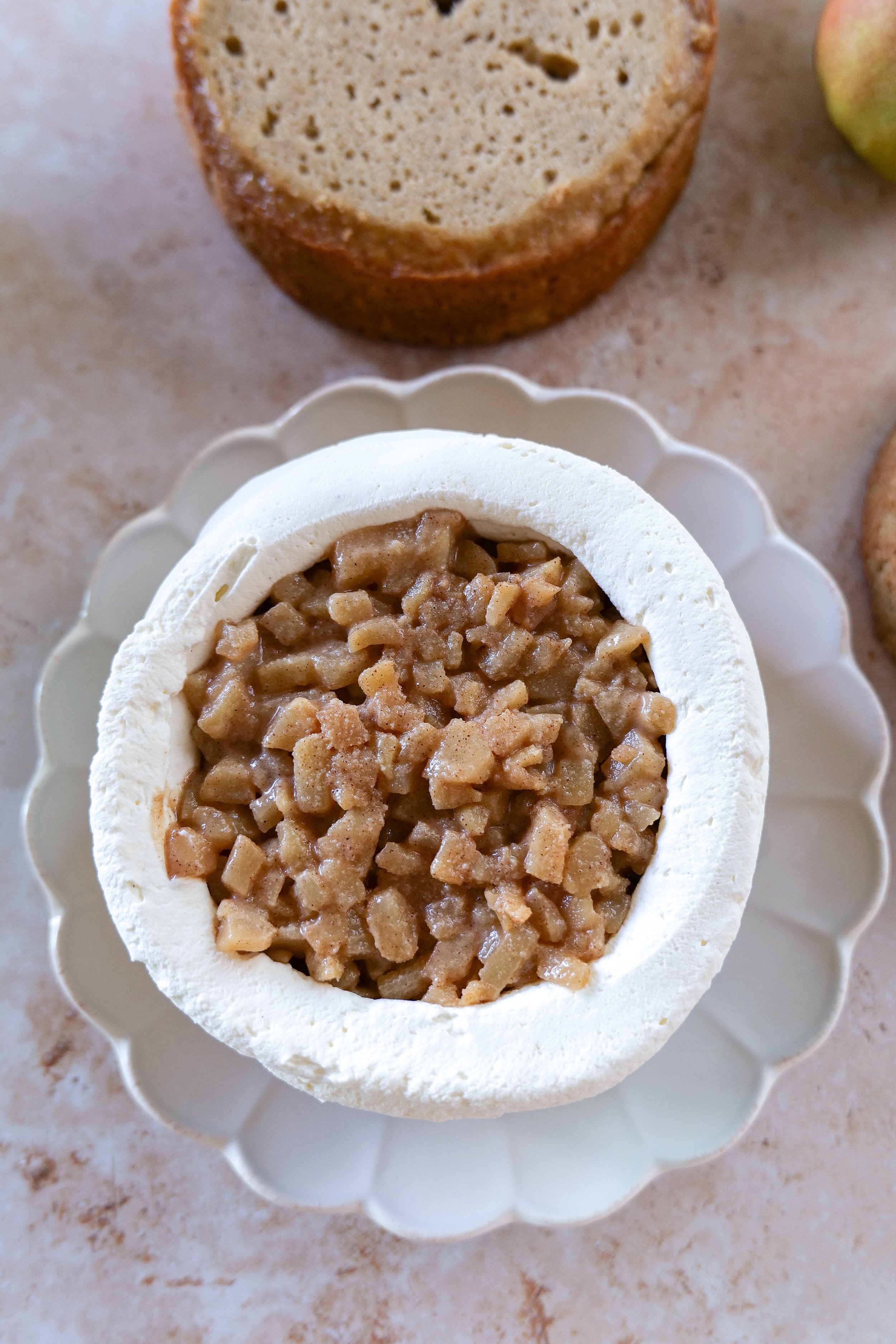
Spread vanilla mascarpone cream over the top, then create a slightly raised border of cream around the outer edge. Spoon half of the cooled pear filling into the center and gently spread it into an even layer.

Add the second cake layer.

Repeat with another layer of mascarpone cream, a raised border and the remaining pear filling.

Place the third cake layer on top.

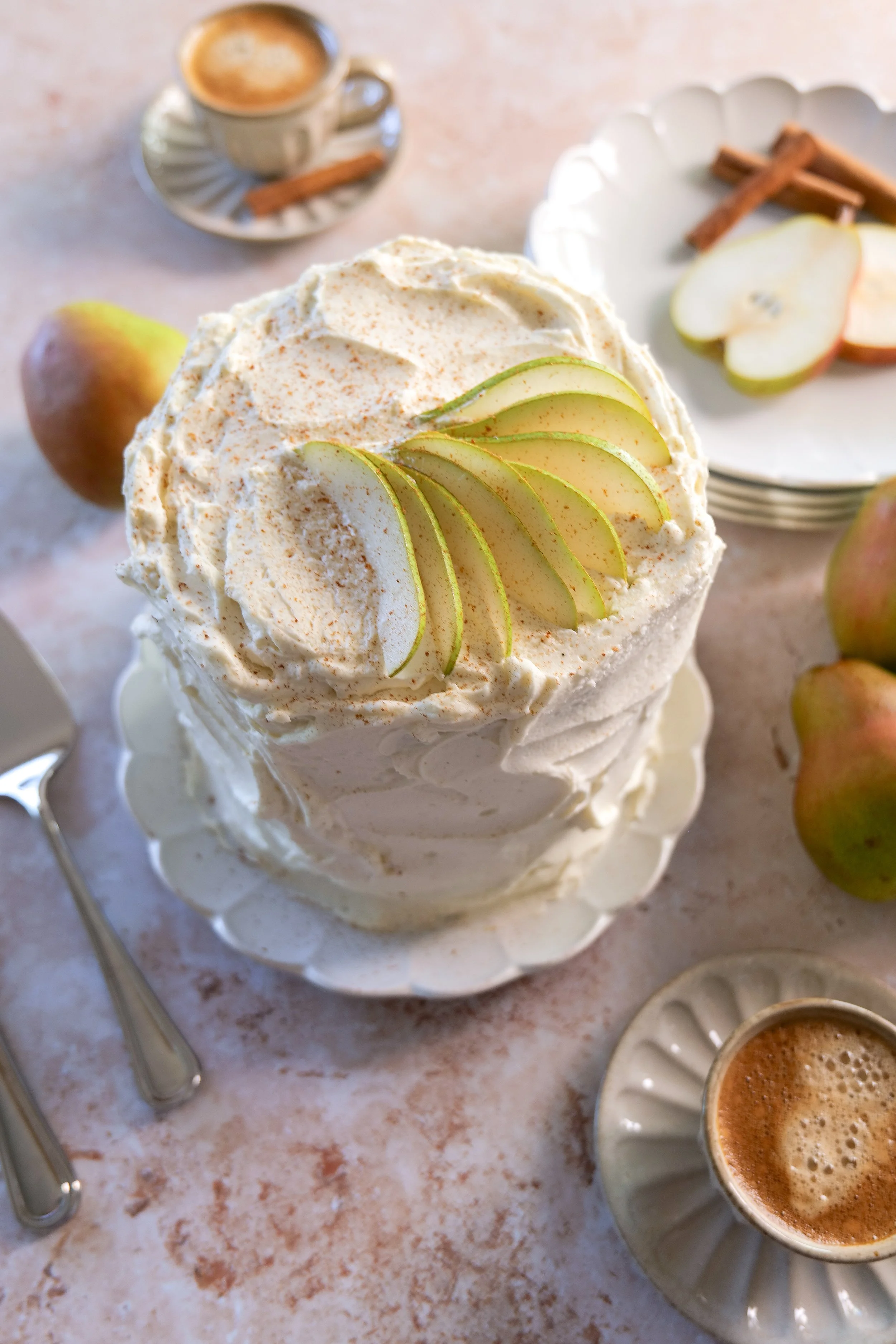
Now cover the top and sides of the entire cake with the remaining vanilla mascarpone cream.

Instead of smoothing the frosting perfectly, use an offset spatula or the back of a spoon to create soft swoops and a loose, whipped texture all over the cake.

I love this finish with the pears because it feels a little more organic and relaxed than a perfectly smooth buttercream cake.

Brown butter pear cake layered with vanilla mascarpone cream and spiced pear filling.
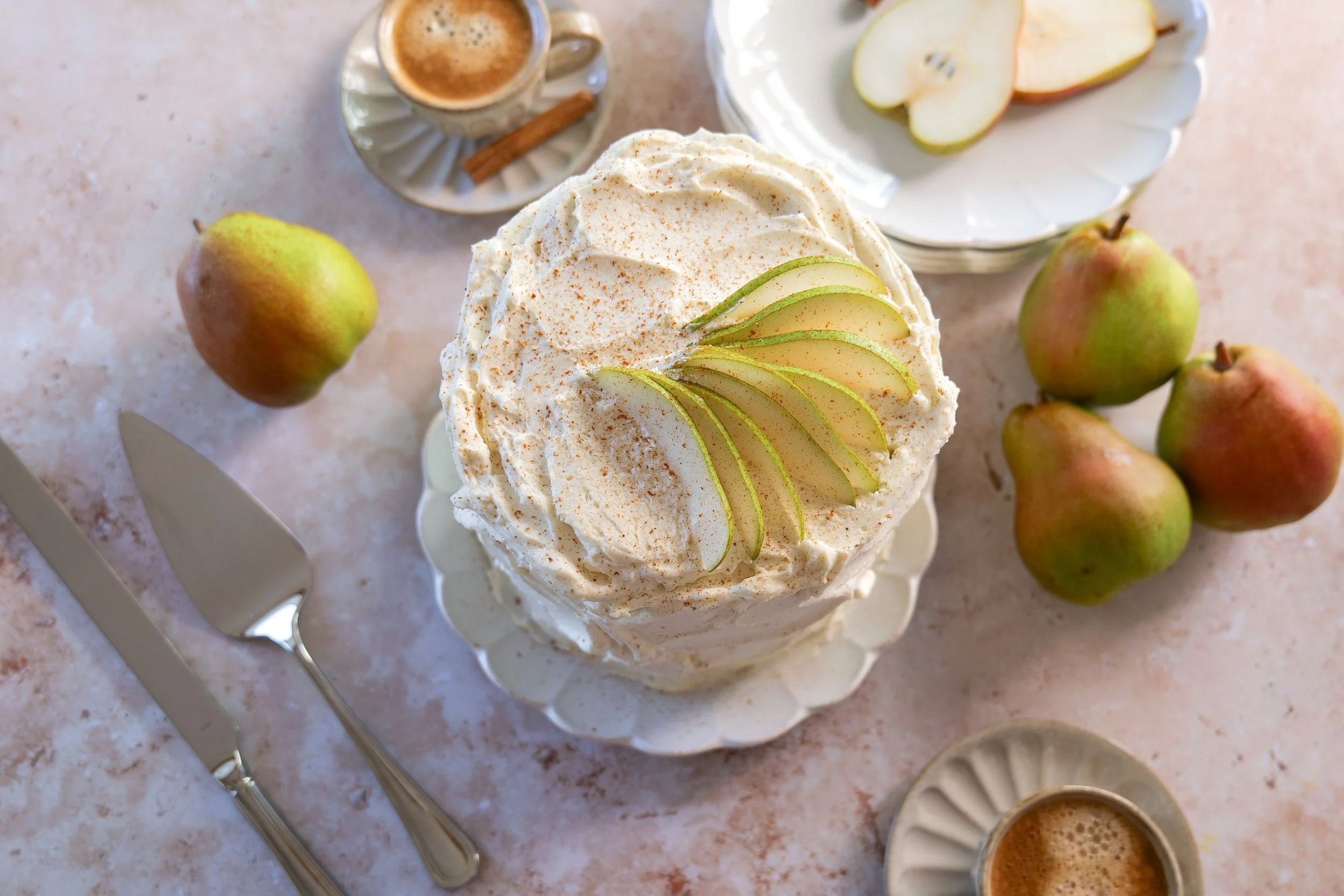
Fall pear cake with whipped mascarpone cream and fresh pear slices viewed from above.

How to Decorate a Pear Cake

This cake really doesn't need much once the mascarpone cream is on.

Thinly slice fresh pears while keeping the skin intact. Gently fan the slices and arrange them over the top of the cake.

I like letting the pears follow the movement of the whipped mascarpone rather than trying to make the arrangement perfectly symmetrical.

Brush the exposed cut surfaces of the pears very lightly with fresh lemon juice to help slow browning.

And that's it.

No berries, extra fall fruit or elaborate cake decorations. Between the swooped mascarpone cream and fresh pears, there's already plenty happening while still keeping the cake elegant.

Three-layer pear cake completely frosted with fluffy vanilla mascarpone cream.
Slice of brown butter pear cake showing pear filling and mascarpone cream between the layers.
Pear mascarpone layer cake with brown butter cake layers and fresh pears on top.

Amanda's Tips

Don't over-spice the cake. Pear is delicate, so the cinnamon and cardamom should support it rather than become the main flavor.

Don't leave the brown butter bits behind. Those little toasted milk solids have so much flavor. Scrape all of them into the bowl with the brown butter.

Cool everything completely. Warm cake or warm pear filling will soften the mascarpone cream and make a three-layer cake much harder to assemble.

Cook the filling until it's thick. You don't want excess liquid sitting between the cake layers.

Create a mascarpone border around the filling. The cream acts as a dam and helps keep the pear filling from squeezing out of the sides.

Keep the mascarpone and heavy cream cold. Both should come straight from the refrigerator.

Don't overwhip the mascarpone cream. Stop as soon as it holds medium-stiff peaks.

Embrace the whipped finish. Don't worry about getting perfectly smooth sides. Soft swoops and texture are part of the finished look.

Decorate with pears close to serving. Fresh pear slices will eventually oxidize. A light brushing of lemon juice helps, but they'll look their prettiest when freshly cut.

Can I Make This Cake Ahead?

Yes, and I actually think breaking it into steps makes layer cakes much easier.

The cake layers can be baked ahead, cooled completely and wrapped well.

The brown butter pear filling can also be made ahead and stored covered in the refrigerator.

I would make the vanilla mascarpone cream and assemble the cake closer to when you're planning to serve it.

Wait to add the fresh pears until the day you're serving or photographing the cake so they stay as fresh and beautiful as possible.

What to Serve with Pear Cake

This cake is perfect with coffee after a fall dinner, but I also think it would be beautiful served with Champagne for a celebration.

Because the cake itself isn't overly sweet and the frosting is mascarpone-based rather than traditional buttercream, it works especially well after a richer fall meal.

Homemade three-layer pear cake with spiced pear filling and fresh pear decoration.

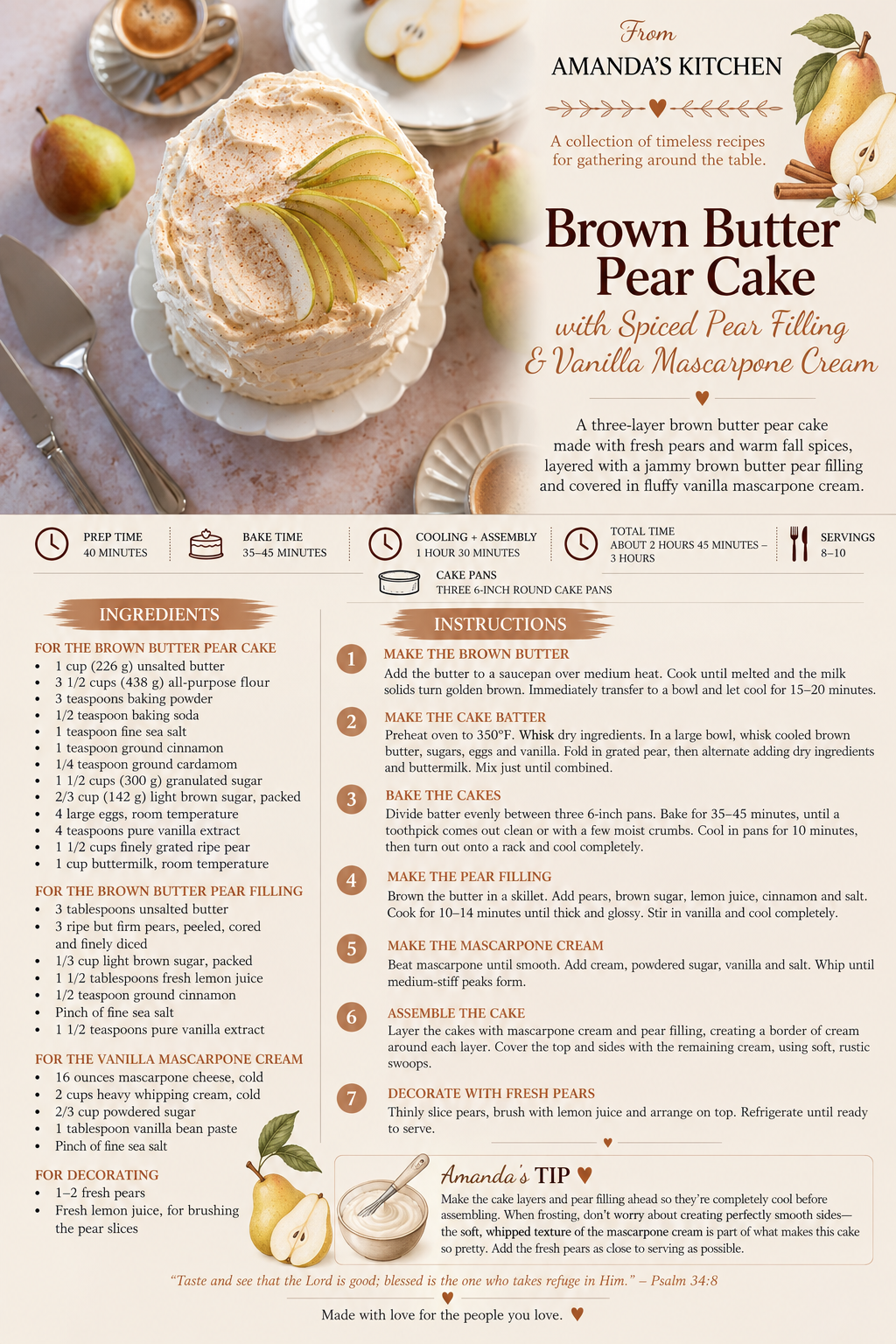
Brown Butter Pear Cake with Spiced Pear Filling & Vanilla Mascarpone Cream

A three-layer brown butter pear cake made with fresh pears and warm fall spices, layered with a jammy brown butter pear filling and covered in fluffy vanilla mascarpone cream.

Prep Time: 40 minutes
Bake Time: 35–45 minutes
Cooling + Assembly: 1 hour 30 minutes
Total Time: About 2 hours 45 minutes–3 hours
Servings: 8–10
Cake Pans: Three 6-inch round cake pans

Ingredients

For the Brown Butter Pear Cake

  • 1 cup (226 g) unsalted butter

  • 3 1/2 cups (438 g) all-purpose flour

  • 3 teaspoons baking powder

  • 1/2 teaspoon baking soda

  • 1 teaspoon fine sea salt

  • 1 teaspoon ground cinnamon

  • 1/4 teaspoon ground cardamom

  • 1 1/2 cups (300 g) granulated sugar

  • 2/3 cup (142 g) light brown sugar, packed

  • 4 large eggs, room temperature

  • 4 teaspoons pure vanilla extract

  • 1 1/2 cups finely grated ripe pear

  • 1 cup buttermilk, room temperature

For the Brown Butter Pear Filling

  • 3 tablespoons unsalted butter

  • 3 ripe but firm pears, peeled, cored and finely diced

  • 1/3 cup light brown sugar, packed

  • 1 1/2 tablespoons fresh lemon juice

  • 1/2 teaspoon ground cinnamon

  • Pinch of fine sea salt

  • 1 1/2 teaspoons pure vanilla extract

For the Vanilla Mascarpone Cream

  • 16 ounces mascarpone cheese, cold

  • 2 cups heavy whipping cream, cold

  • 2/3 cup powdered sugar

  • 1 tablespoon vanilla bean paste

  • Pinch of fine sea salt

For Decorating

  • 1–2 fresh pears

  • Fresh lemon juice, for brushing the pear slices

Instructions

Make the Brown Butter

  1. Add the 1 cup butter to a light-colored saucepan over medium heat.

  2. Cook until melted, then continue cooking as the butter begins to foam. Swirl or stir occasionally until the milk solids turn golden brown and the butter smells rich and nutty.

  3. Immediately pour the brown butter, including all of the browned milk solids, into a heatproof bowl.

  4. Let cool for about 15–20 minutes before making the cake batter.

Make the Brown Butter Pear Cake

  1. Preheat the oven to 350°F. Grease three 6-inch round cake pans and line the bottoms with parchment paper.

  2. In a medium bowl, whisk together the flour, baking powder, baking soda, salt, cinnamon and cardamom. Set aside.

  3. In a large mixing bowl, whisk together the cooled brown butter, granulated sugar and brown sugar until well combined.

  4. Add the eggs one at a time, whisking well after each addition. Stir in the vanilla.

  5. Fold in the finely grated pear.

  6. Add approximately half of the dry ingredients and gently mix just until combined.

  7. Pour in the buttermilk and mix gently, then add the remaining dry ingredients. Mix only until no streaks of flour remain. Do not overmix.

  8. Divide the batter evenly between the three prepared pans and smooth the tops. For the most even layers, weigh the batter and divide it equally between the pans.

  9. Bake for approximately 35–45 minutes. Begin checking the cakes at 35 minutes. If the centers are not yet set, continue baking and check every 5 minutes until the centers spring back lightly when touched and a toothpick inserted into the center comes out clean or with a few moist crumbs.

  10. Allow the cakes to cool in the pans for about 10 minutes.

  11. Carefully turn the cakes onto a cooling rack, remove the parchment and cool completely before assembling.

Make the Brown Butter Pear Filling

  1. Add the butter to a large skillet over medium heat.

  2. Cook until the butter becomes golden brown and smells nutty.

  3. Add the finely diced pears, brown sugar, lemon juice, cinnamon and salt.

  4. Cook for approximately 10–14 minutes, stirring occasionally, until the pears are tender and the liquid has reduced into a thick, glossy filling.

  5. Remove from the heat and stir in the vanilla.

  6. Transfer to a bowl and cool completely. The filling should be thick and spoonable rather than watery.

Make the Vanilla Mascarpone Cream

  1. Add the cold mascarpone to a large mixing bowl and beat briefly on low speed just until smooth.

  2. Add the cold heavy whipping cream, powdered sugar, vanilla bean paste and salt.

  3. Whip on medium speed until the mascarpone cream holds medium-stiff peaks and is thick enough to spread.

  4. Stop mixing as soon as it reaches the desired consistency to avoid overwhipping.

Assemble the Cake

  1. Make sure the three cake layers and pear filling are completely cool.

  2. Place the first cake layer on a serving plate or cake stand.

  3. Spread a layer of vanilla mascarpone cream over the top and create a slightly raised border around the outer edge.

  4. Spoon half of the cooled pear filling into the center and gently spread it into an even layer, keeping it inside the mascarpone border.

  5. Place the second cake layer on top.

  6. Repeat with another layer of mascarpone cream, a raised border and the remaining pear filling.

  7. Place the third cake layer on top.

  8. Cover the top and sides of the cake with the remaining vanilla mascarpone cream.

  9. Use an offset spatula or the back of a spoon to create loose, soft swoops throughout the mascarpone cream rather than smoothing the frosting completely.

Decorate with Fresh Pears

  1. Thinly slice 1–2 fresh pears just before decorating.

  2. Lightly brush the cut surfaces with fresh lemon juice to help slow browning.

  3. Arrange the pear slices in overlapping fans or loose groupings across the top of the cake.

  4. Refrigerate the finished cake until ready to serve.

Amanda's Tip

Make the cake layers and pear filling ahead so they're completely cool before assembling. When frosting, don't worry about creating perfectly smooth sides—the soft, whipped texture of the mascarpone cream is part of what makes this cake so pretty. Add the fresh pears as close to serving as possible.

Fresh pear brown butter cake covered in whipped vanilla mascarpone cream.
Printable Brown Butter Pear Cake with Spiced Pear Filling and Vanilla Mascarpone Cream recipe card.

Frequently Asked Questions

What are the best pears for pear cake?

Choose pears that are ripe and flavorful but still firm enough to work with. For the decorative pears especially, avoid fruit that's overly soft because you'll want to create thin, clean slices.

Do I need to peel the pears?

I recommend peeling the pears used in the cake and pear filling for the smoothest texture. Leave the skin on the pears used to decorate the cake because the natural color makes the finished cake especially pretty.

Can I make the pear filling ahead?

Yes. Make the filling ahead, let it cool completely and store it covered in the refrigerator until you're ready to assemble the cake.

How do you keep sliced pears from turning brown on a cake?

Lightly brush the cut sides with fresh lemon juice and add them as close to serving as possible. The lemon helps slow oxidation, although freshly sliced pears will always look best.

Does pear cake need to be refrigerated?

Yes. Because this cake is filled and frosted with mascarpone cream, keep the assembled cake refrigerated. For the best texture, let it sit out briefly before serving rather than serving it refrigerator-cold.

More Fall Recipes

This is where I'd connect the pear cake to the rest of my fall recipe collection.

My Brown Butter Spice Cake with Honey & Fig Jam Frosting is another beautiful fall cake, while Pumpkin Swirl Brownies and Brown Butter Pumpkin Sandwich Cookies are perfect when you're craving something a little more classic for pumpkin season.

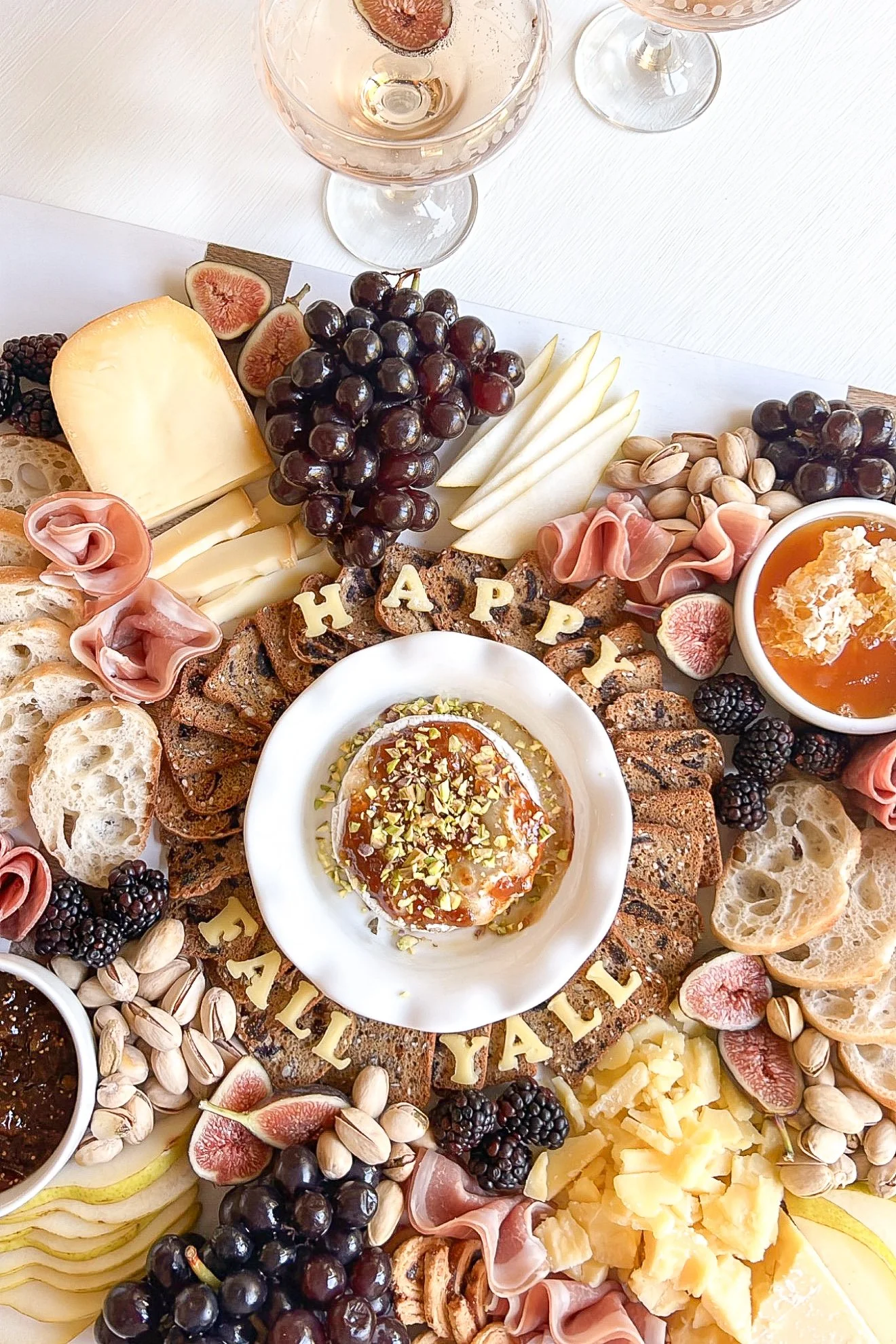
And if you're planning an entire fall gathering rather than just dessert, start with my Fall Charcuterie Board with Baked Brie, Fig Jam & Pistachios before bringing this cake out for dessert.

Shop My Baking Favorites

These are the cake pans, mixing bowls, decorating tools and baking essentials I reach for again and again in my kitchen.

Gather Around the Table

I think what I love most about these milestone cakes is that they're becoming a little collection of Amelia's first year while also giving me an excuse to create recipes I genuinely want to make again.

For 10 months, pear felt just right—soft, sweet and perfectly suited to the beginning of fall.

And I love how this one came together: three layers of golden brown butter pear cake, spiced pear filling tucked between each one, and that soft vanilla mascarpone cream covering the entire cake in loose, whipped swoops.

Fresh pears on top were all it needed.

Ten months with our girl, celebrated the way we seem to celebrate most things around here—with cake.

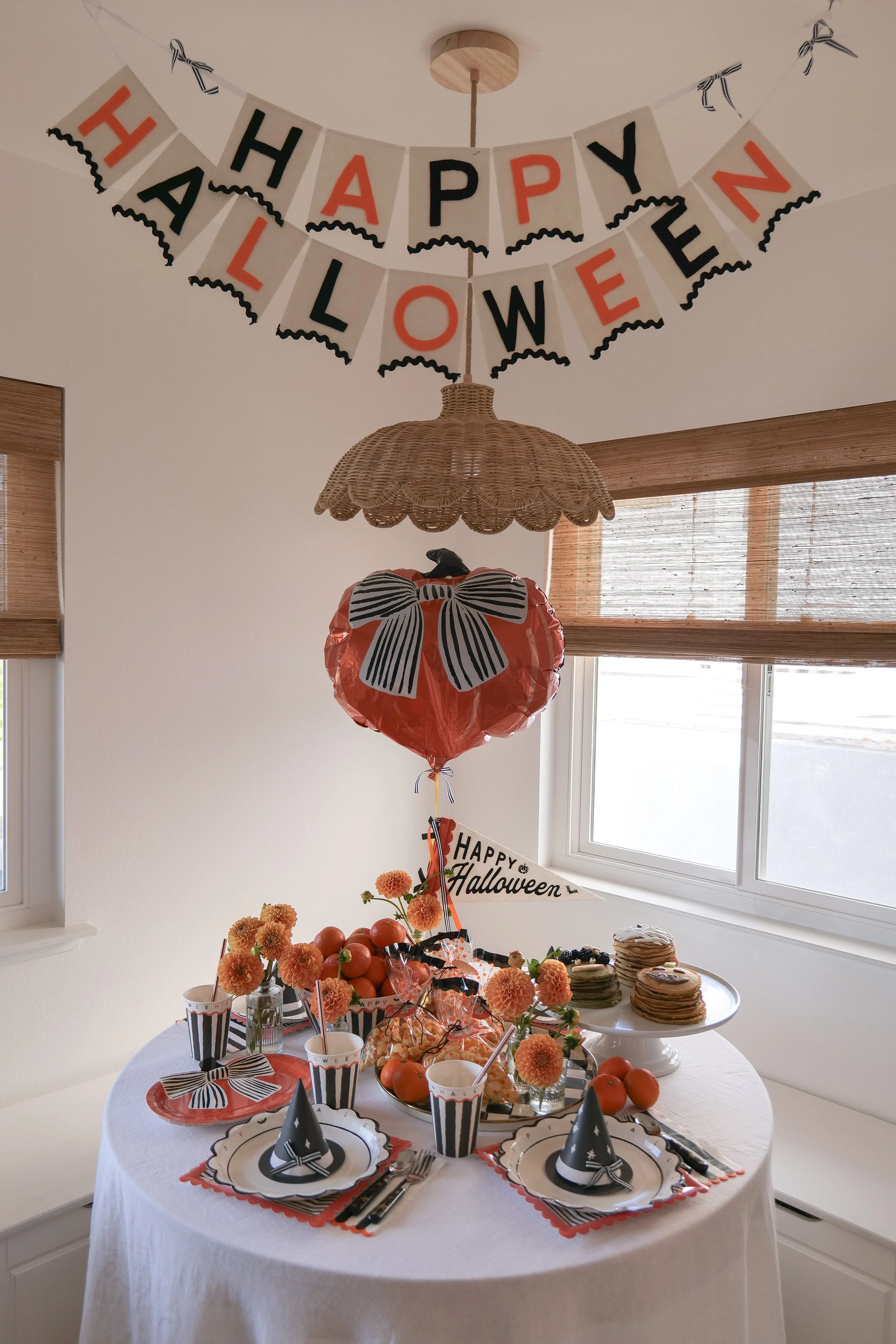
A Simple Halloween Breakfast Table for Kids

Some of my favorite traditions with our kids are the ones that aren't really traditions yet—the little things we do one morning that are so sweet, I immediately know I want to do them again next year.

This little Halloween breakfast table for the kids was exactly that.

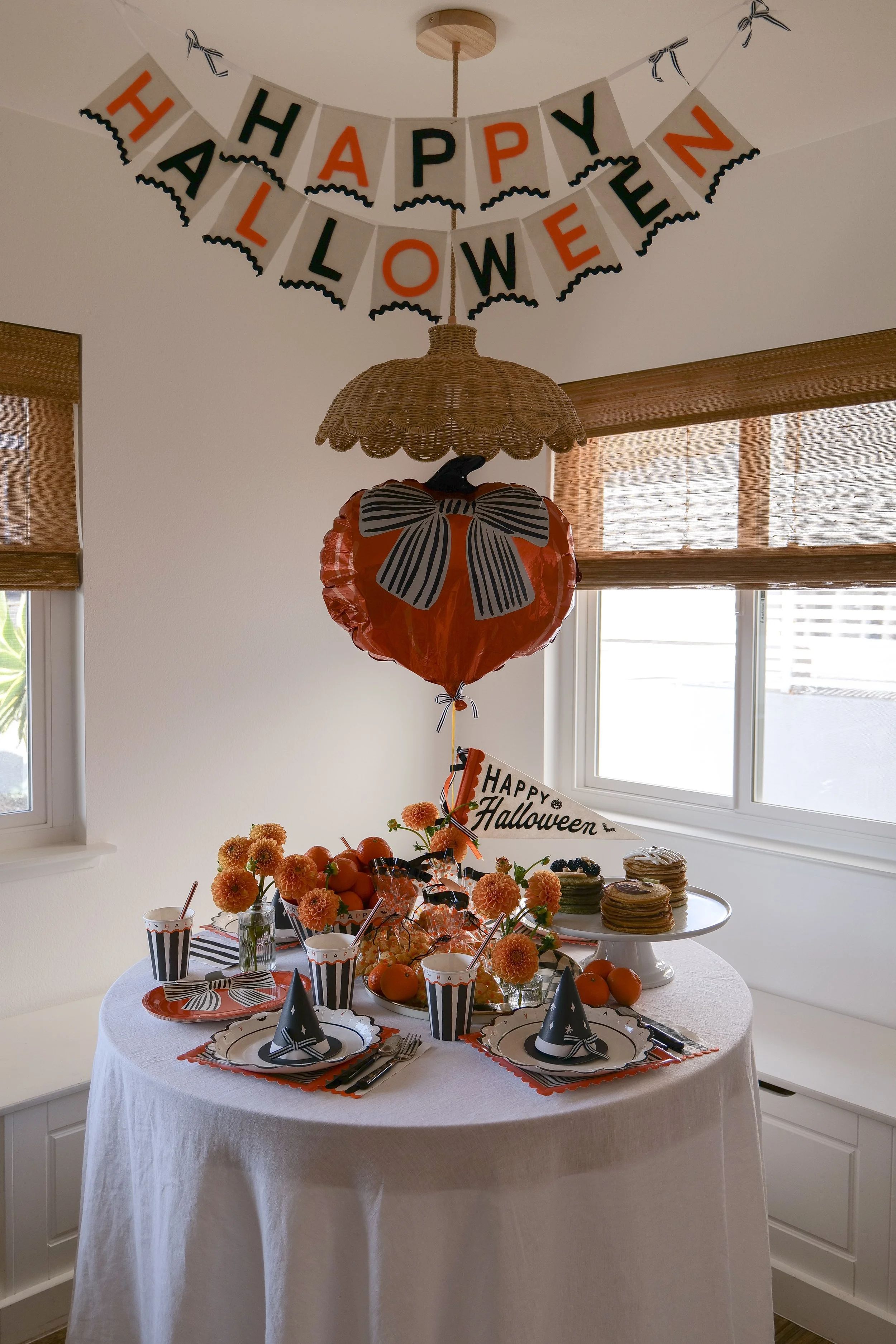
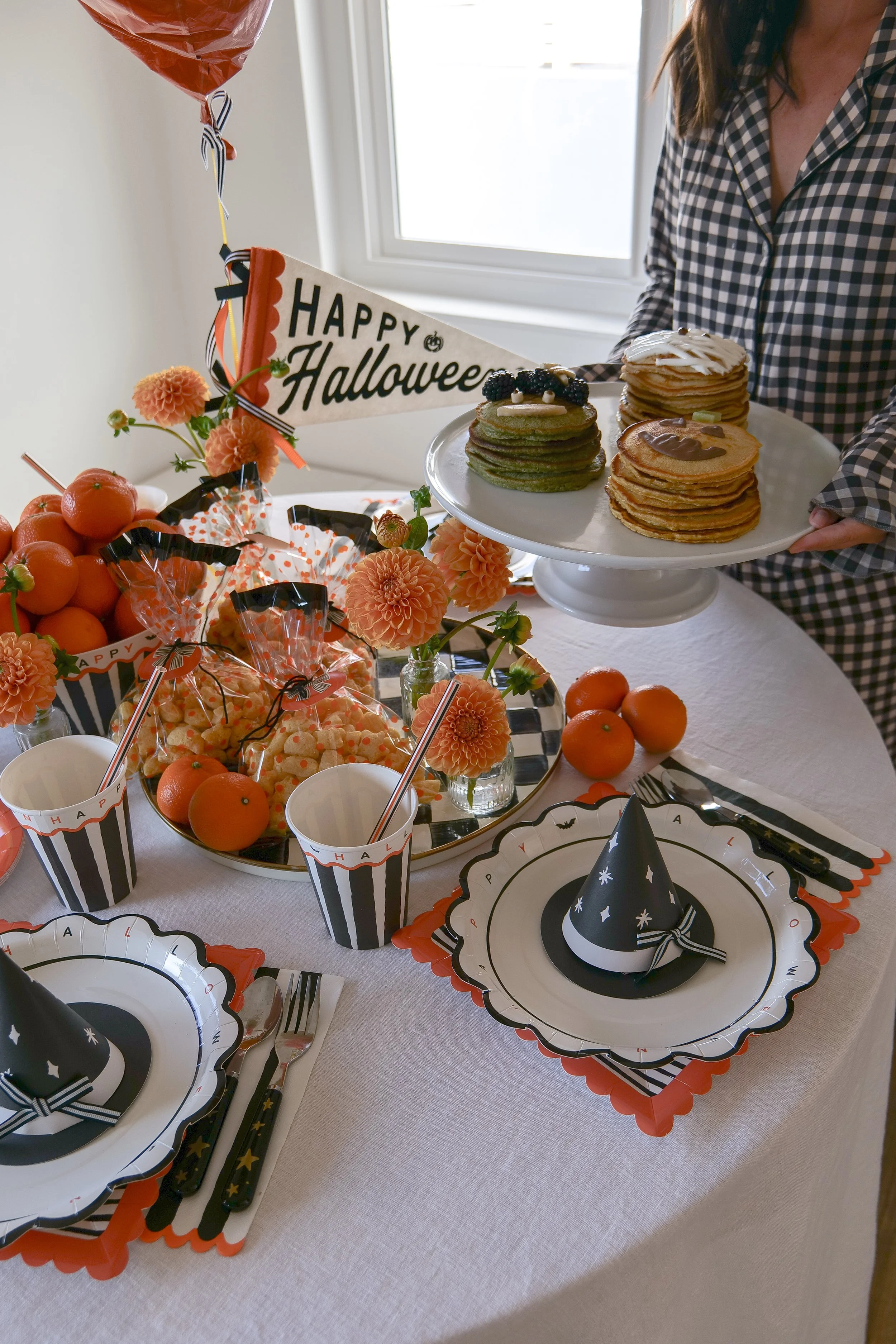
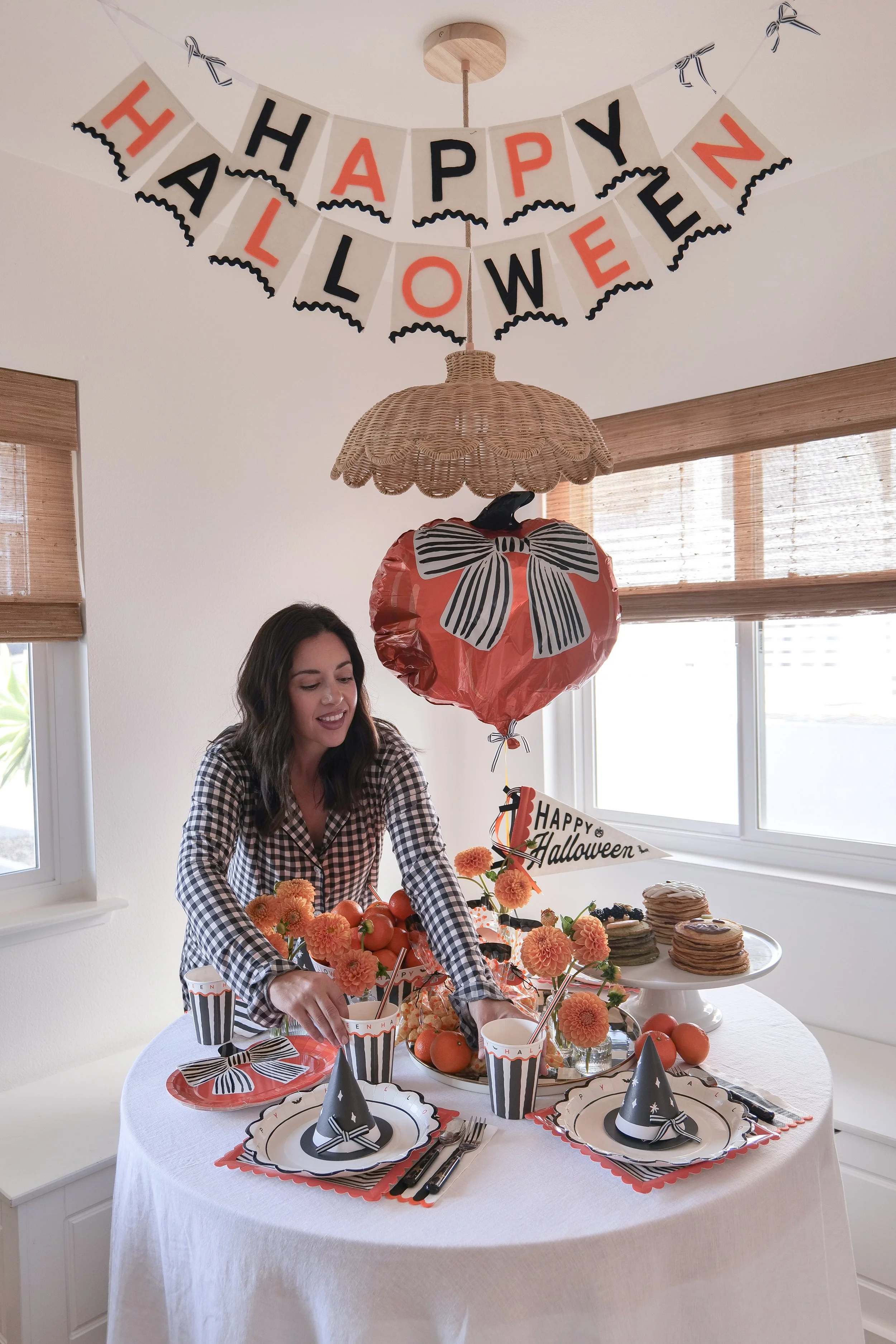
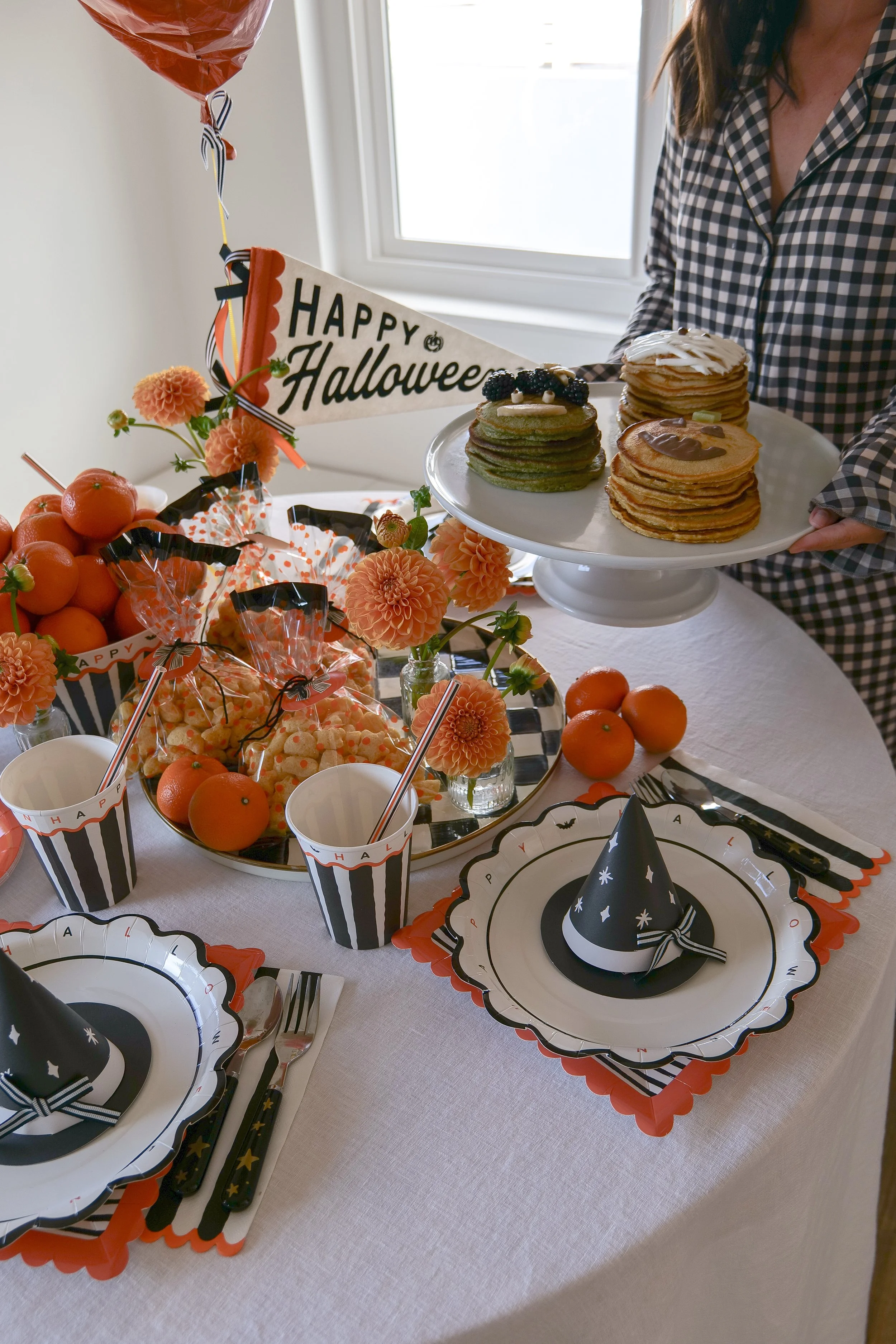
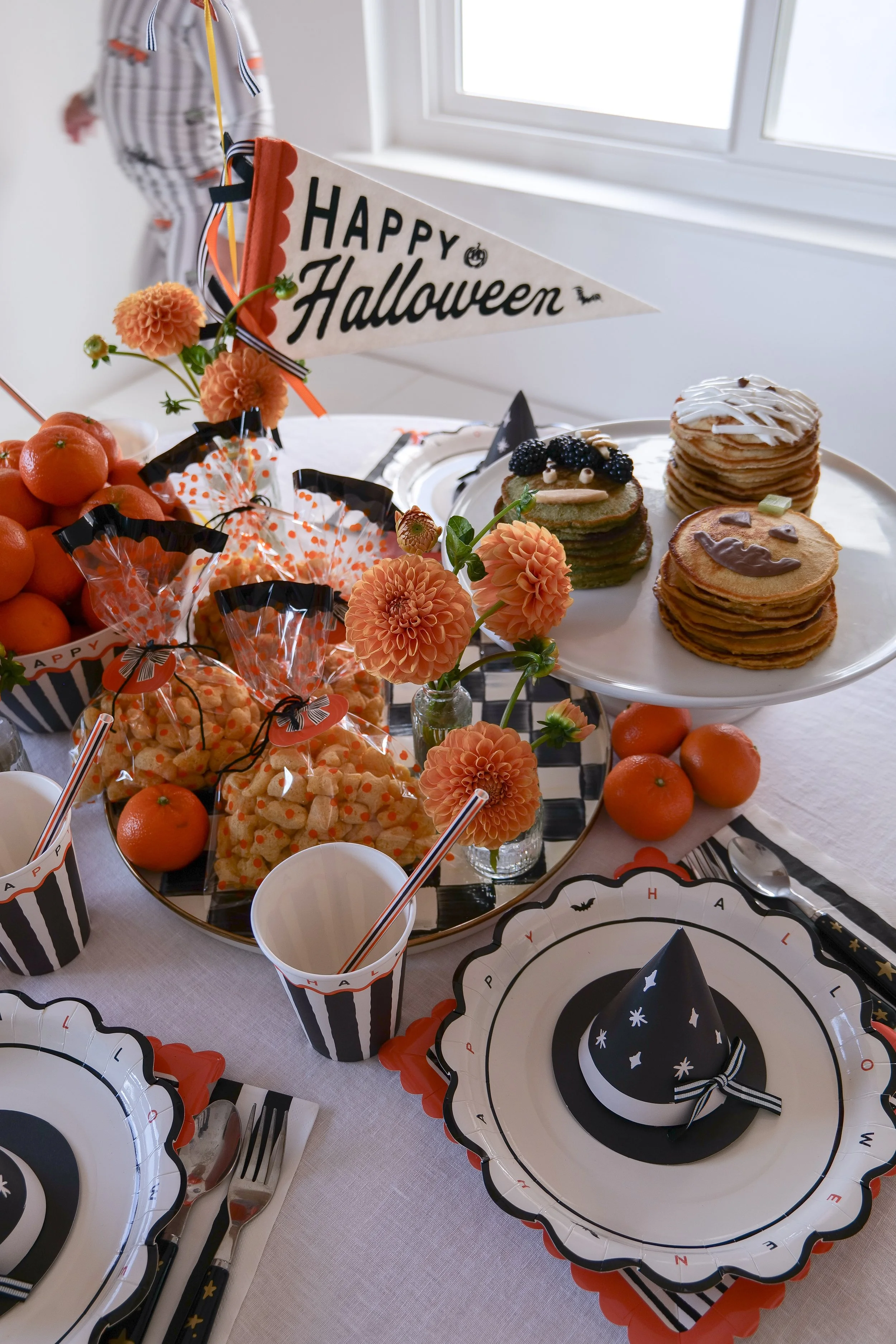
Halloween breakfast table for kids with festive pancakes, orange flowers and Halloween table decorations.

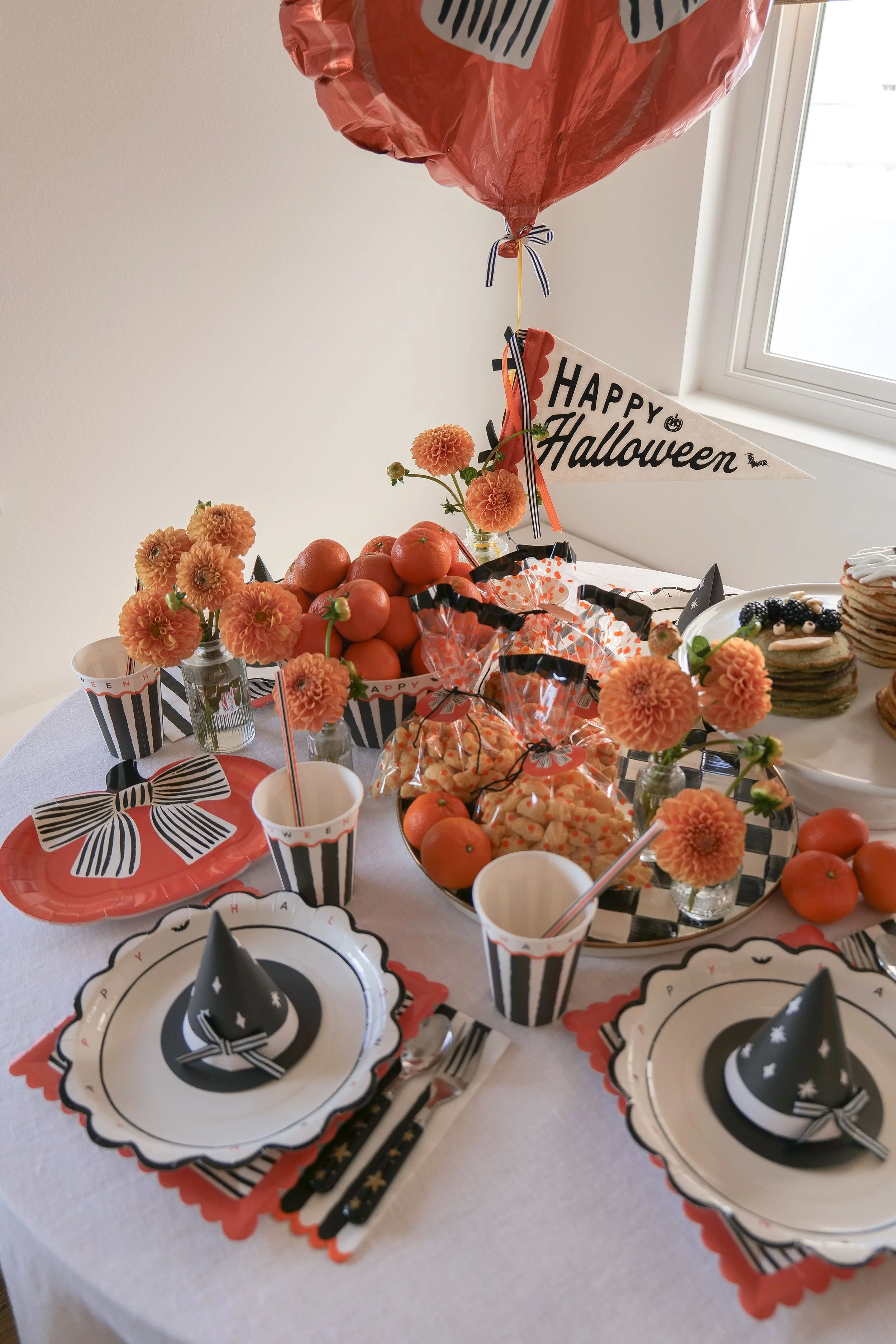
Nothing about it was overly complicated. I pulled together an orange, black and white table, added fresh orange dahlias, made our Halloween character pancakes and tucked a few of the kids' favorite snacks into little Halloween favors.

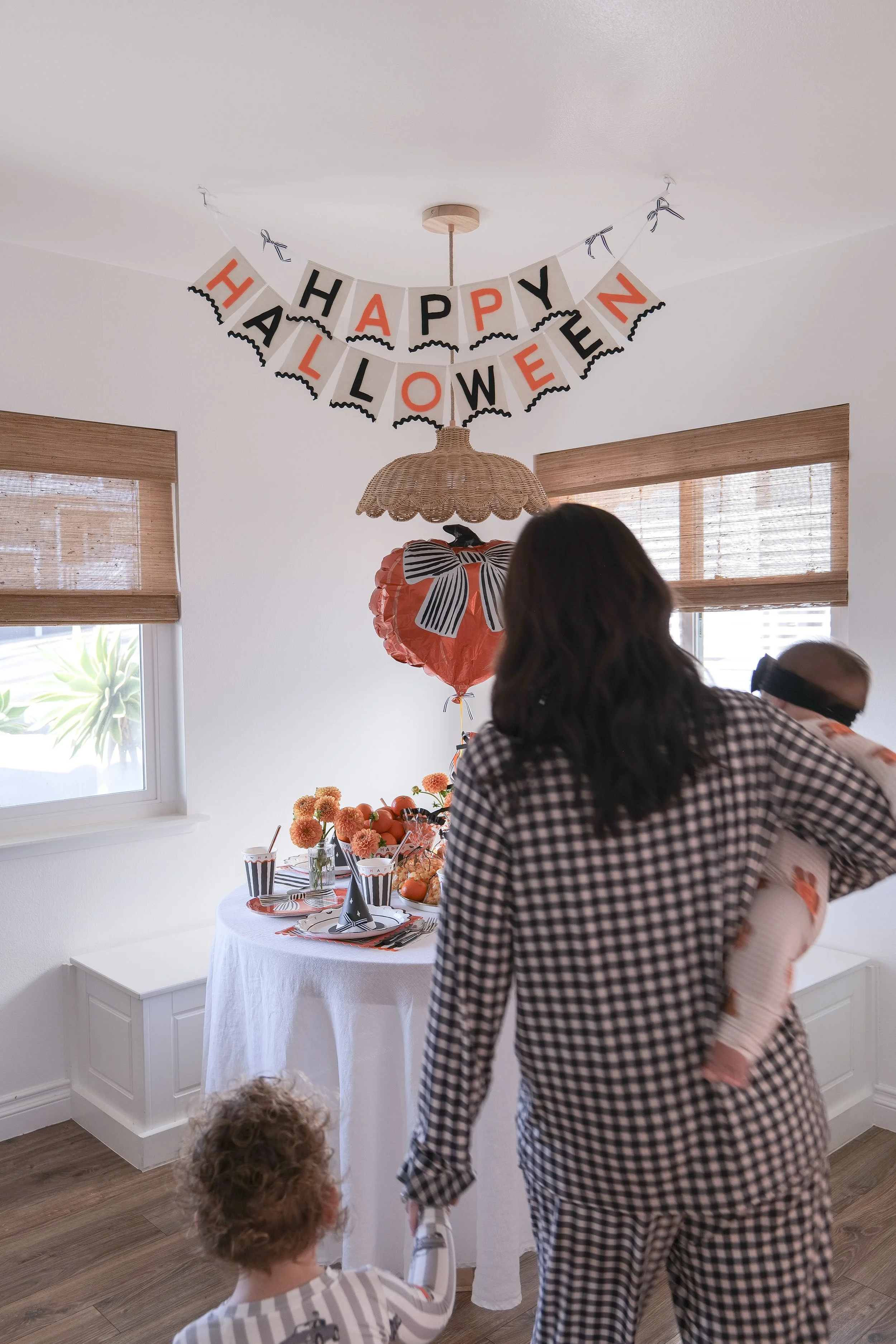
We all wore our Halloween pajamas, sat around the table together and turned an otherwise ordinary October breakfast into something that felt really special.

And honestly, these are the mornings I know I'm going to miss someday.

A Halloween Breakfast Made for Little Ones

When I'm setting a holiday table for our family, I want it to feel special without feeling too precious for little hands.

Especially at this stage of life.

I want Shepherd to be excited when he sees it. I want Amelia sitting right there with us. I want everyone eating the food, touching everything and actually enjoying the table instead of worrying about keeping it picture-perfect.

For this Halloween breakfast, I kept everything within a simple orange, black and white color palette.

The Halloween pancakes brought in the playful part, while orange dahlias made the table feel a little more elevated. Then I added small Halloween favors at each place setting so the kids had something fun waiting for them when they came to the table.

It was festive without requiring an entire house full of Halloween decorations.

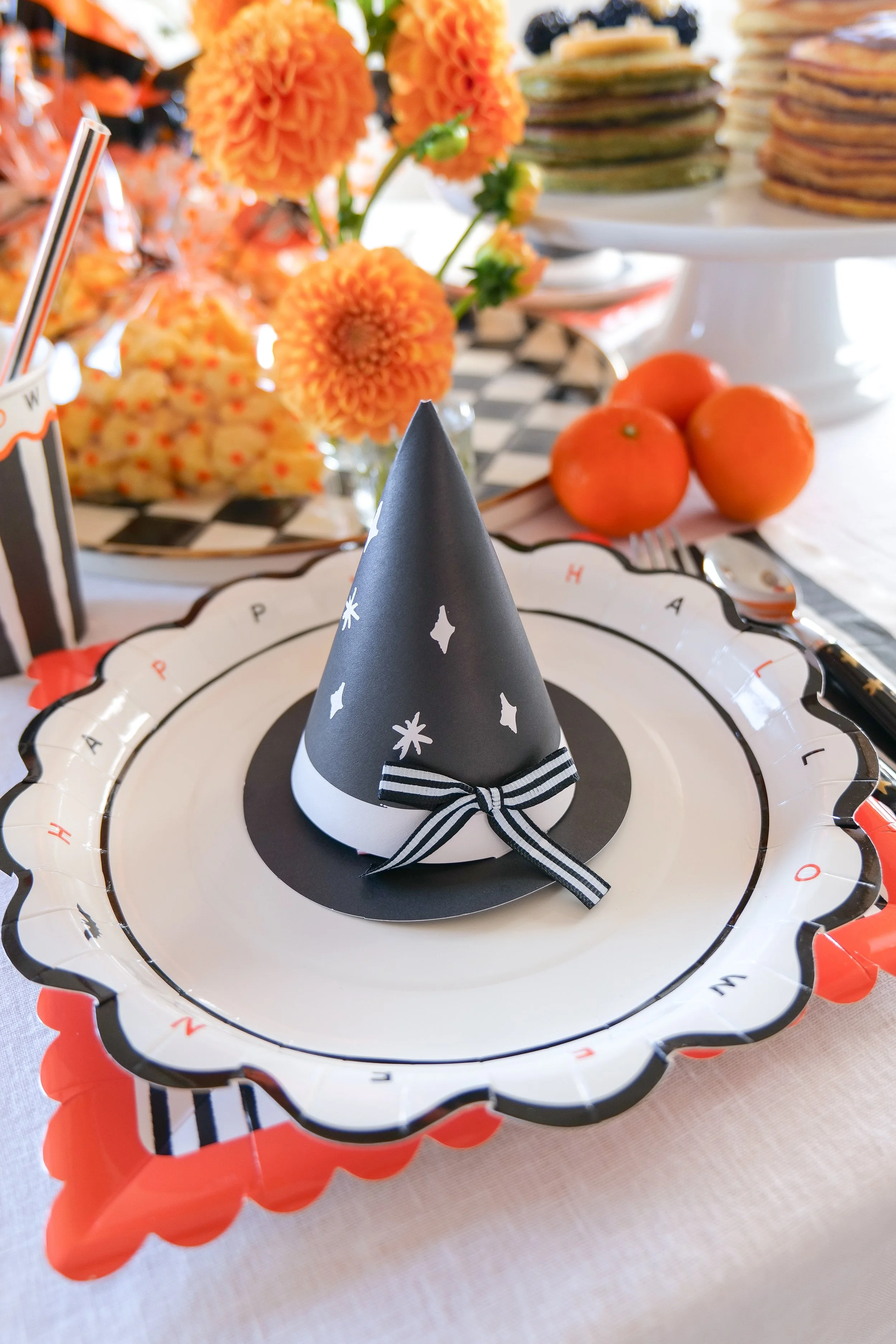
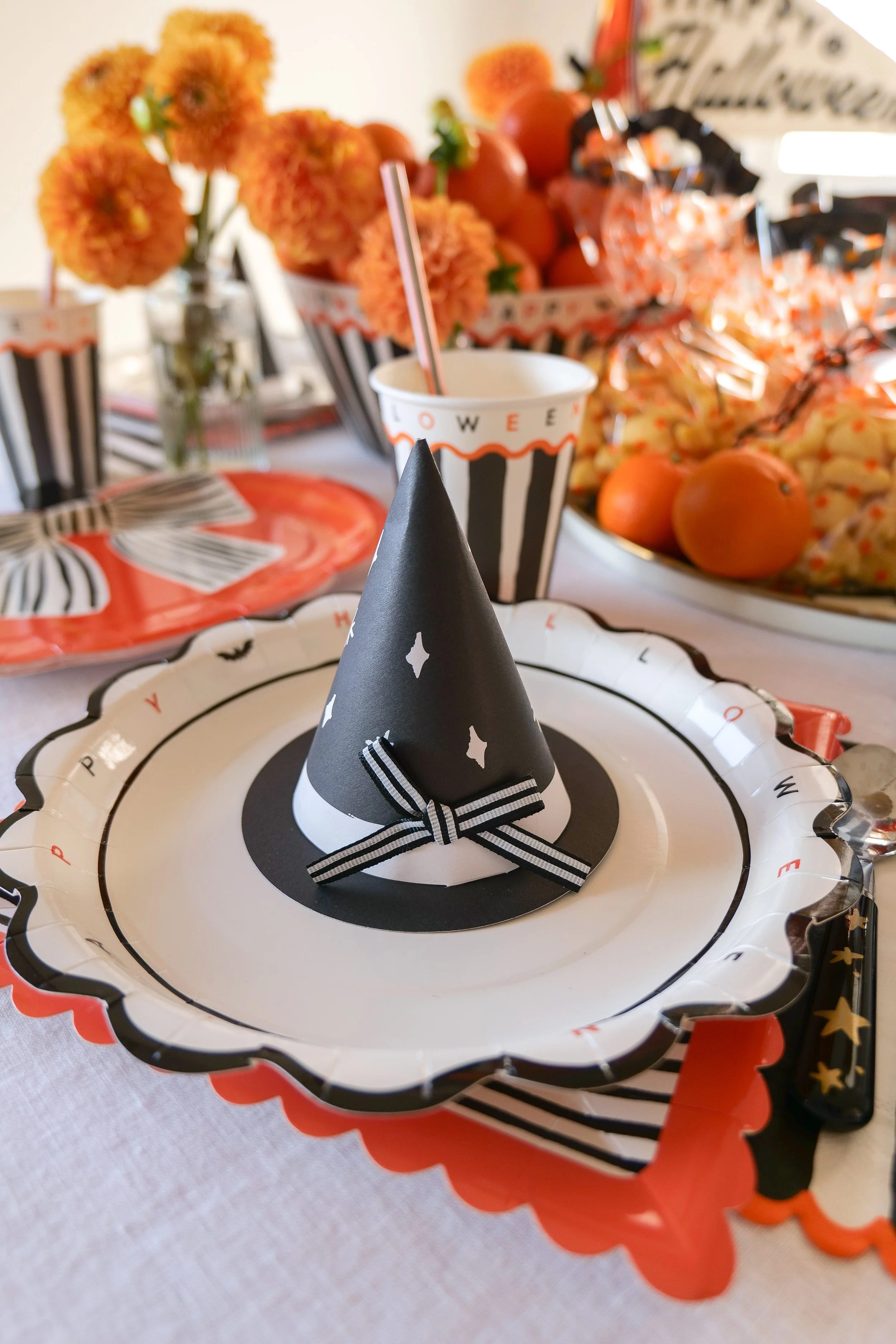
Witch hat Halloween favors filled with Little Spoon Bars for kids.

What I Put on Our Halloween Breakfast Table

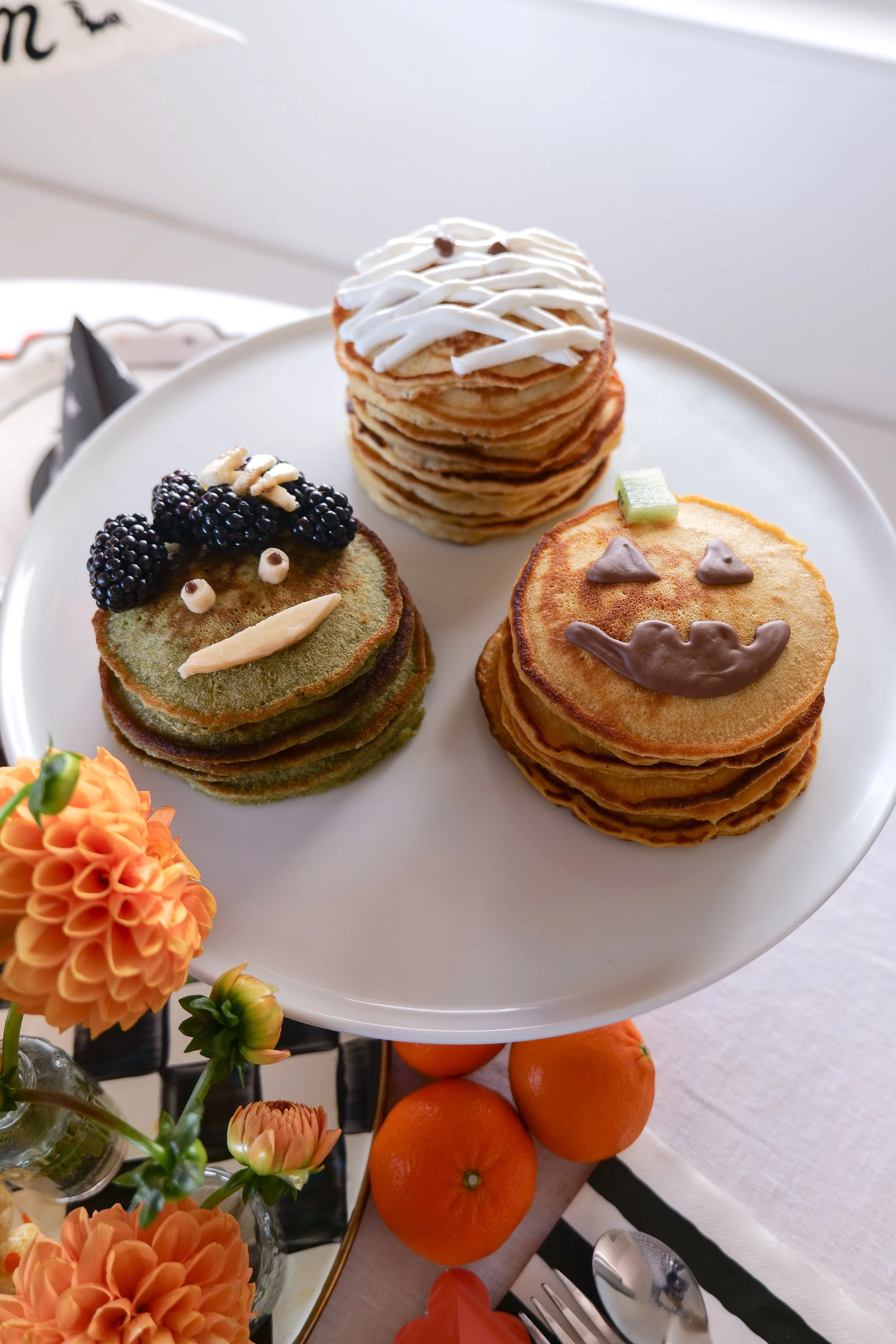
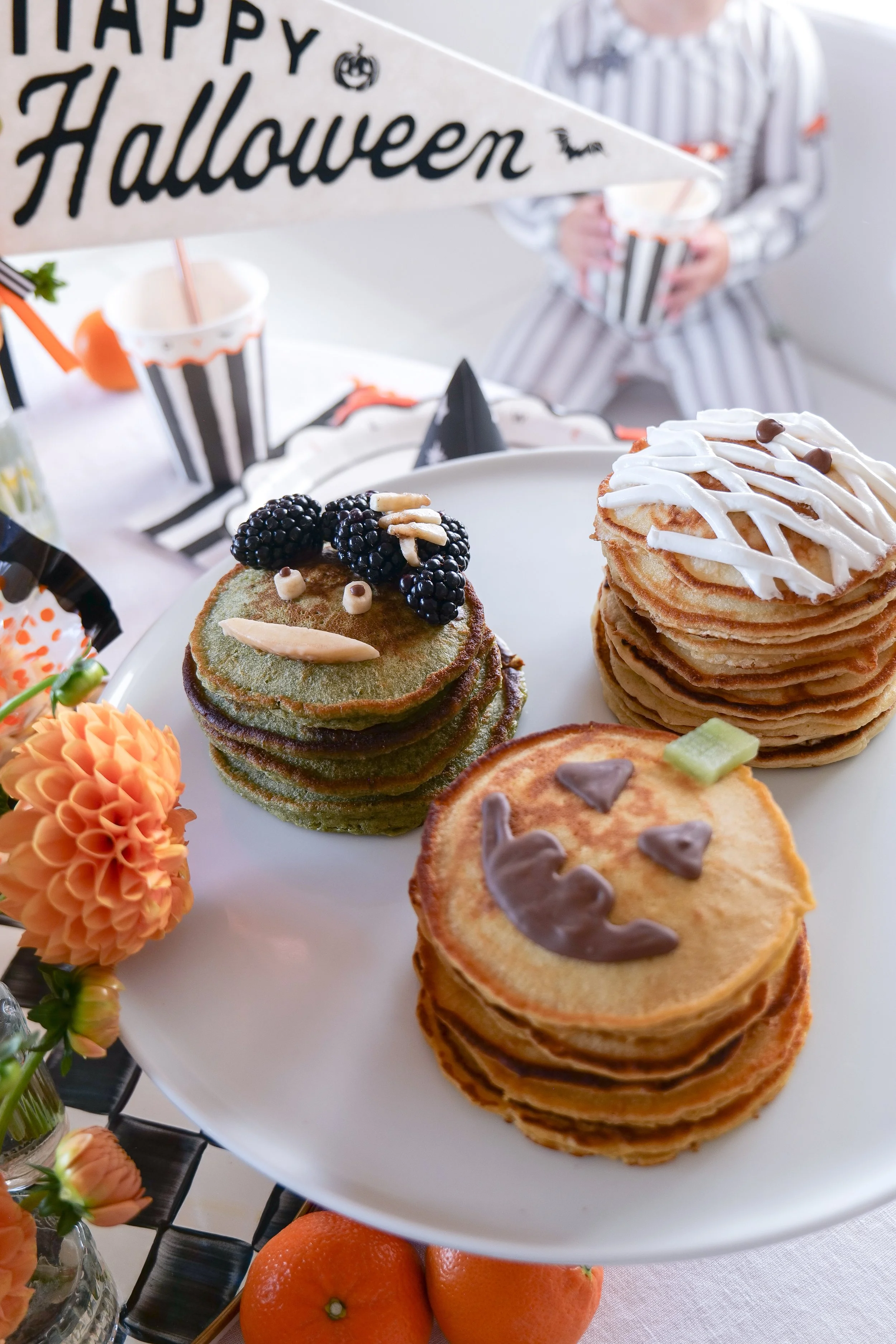
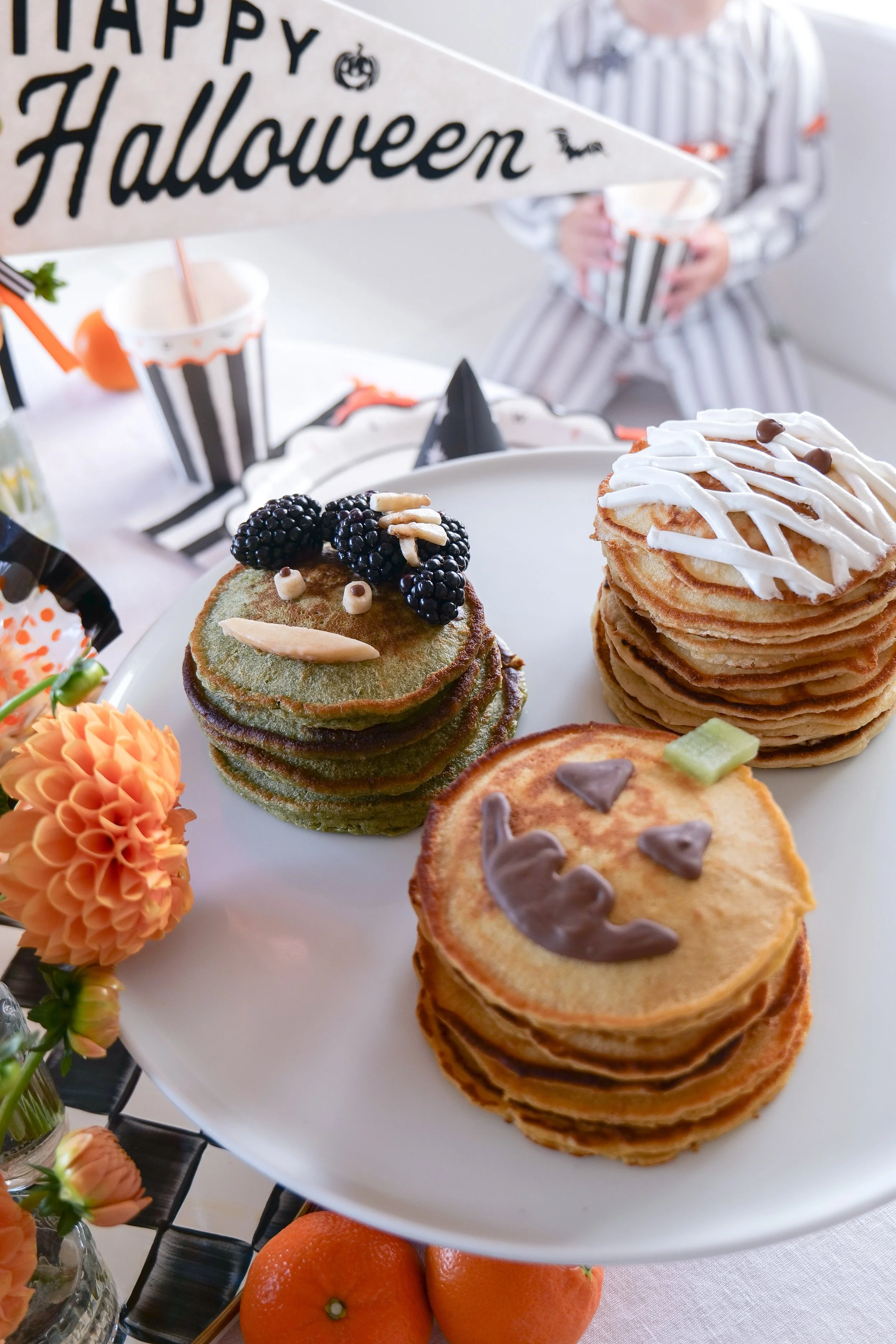
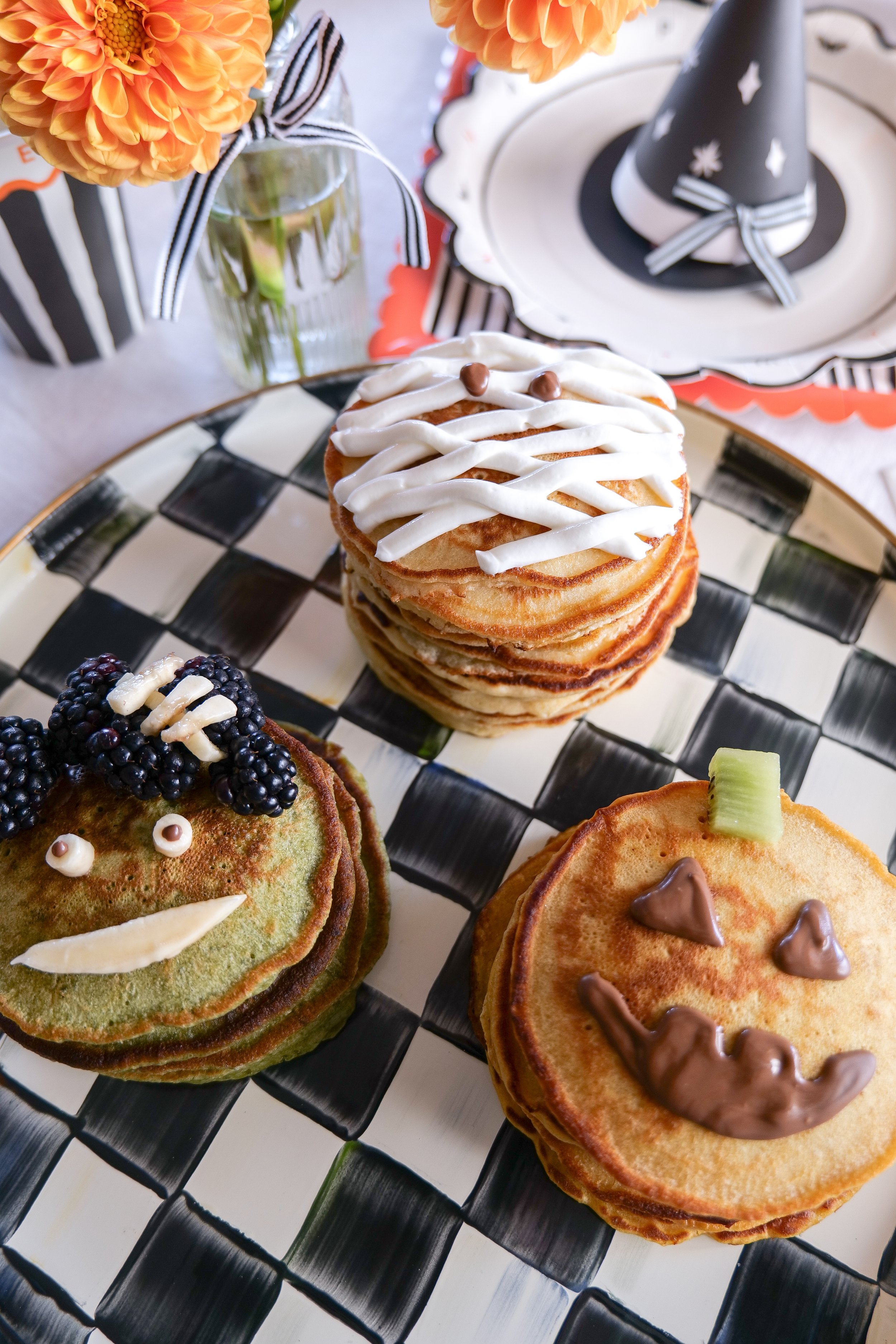
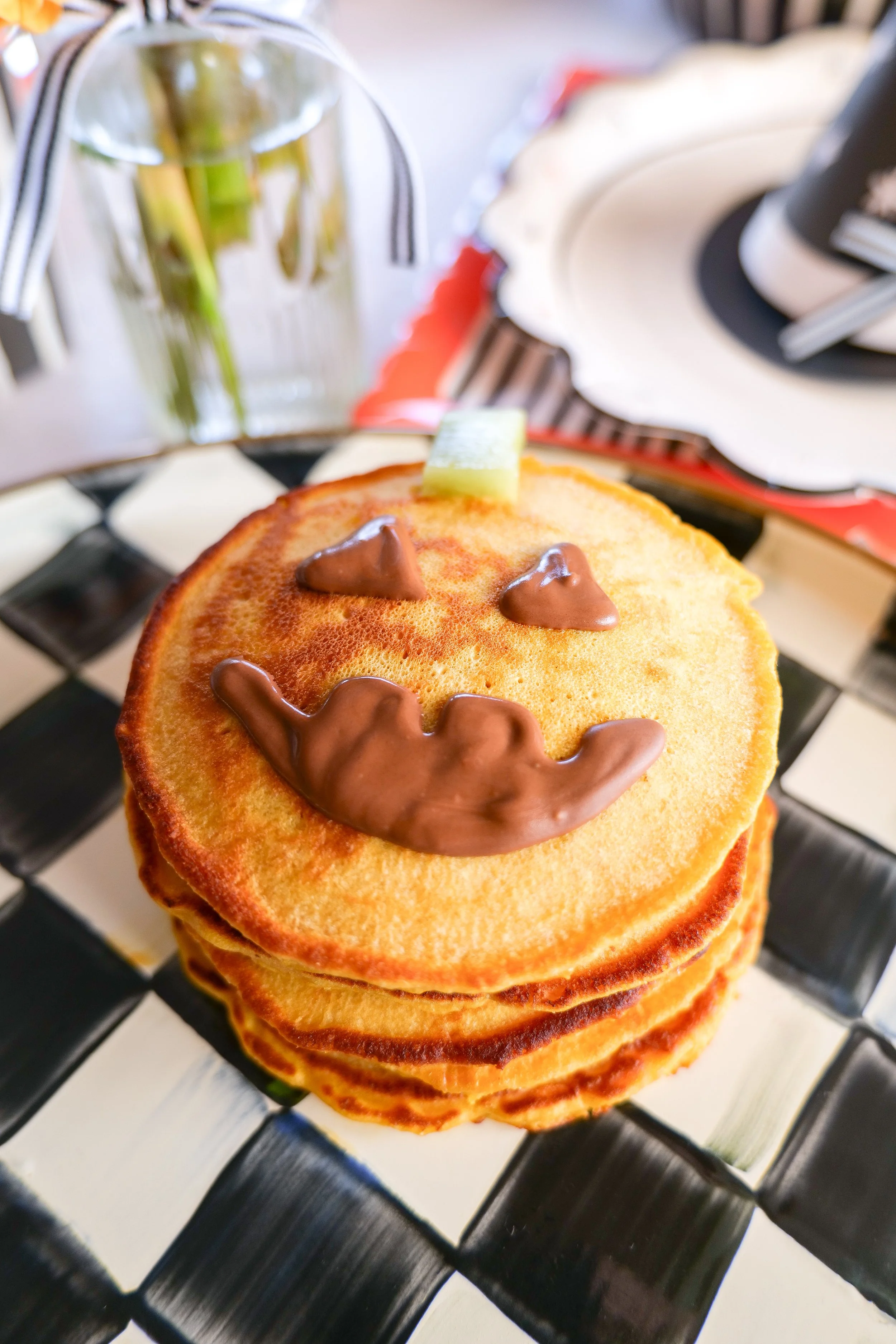
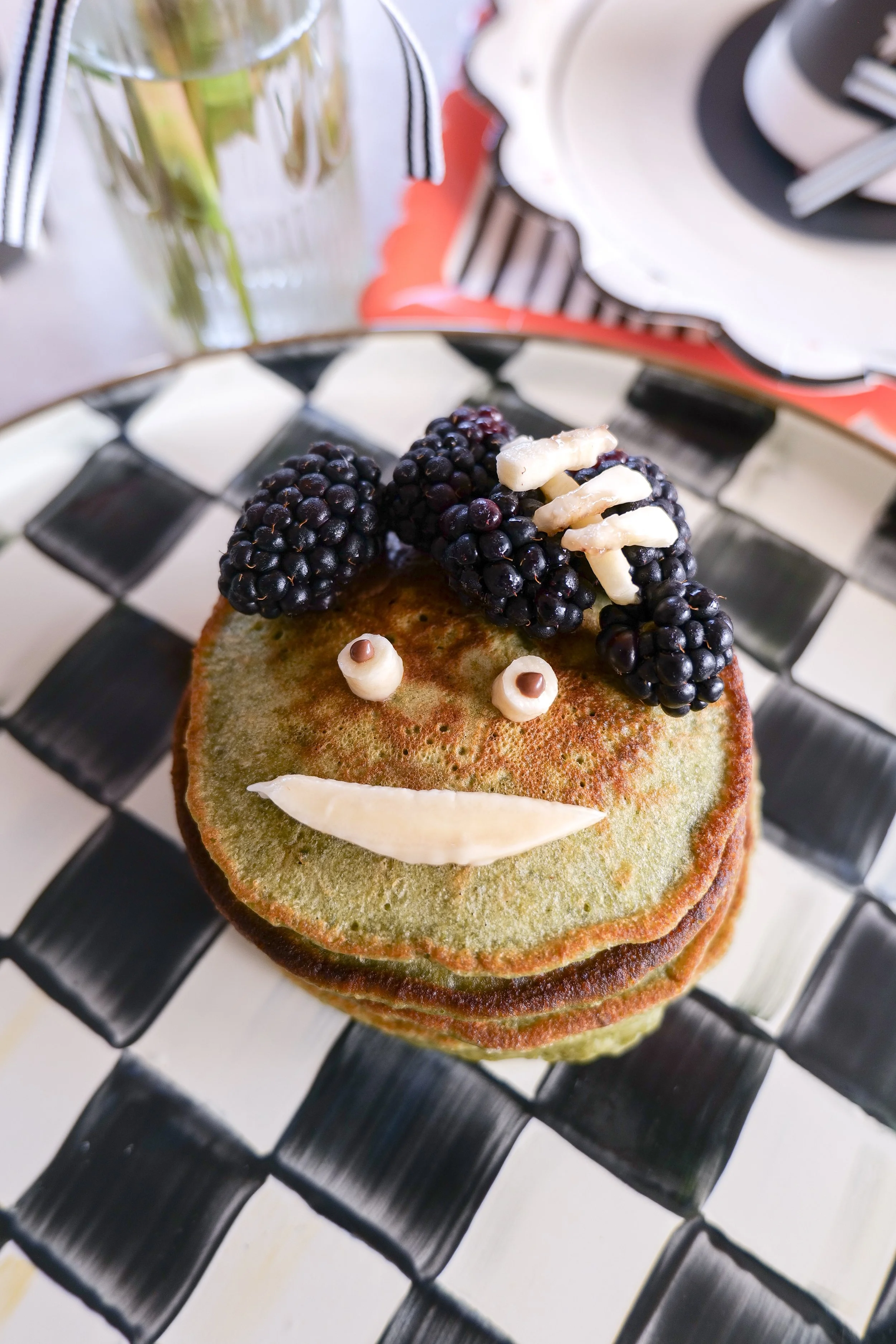
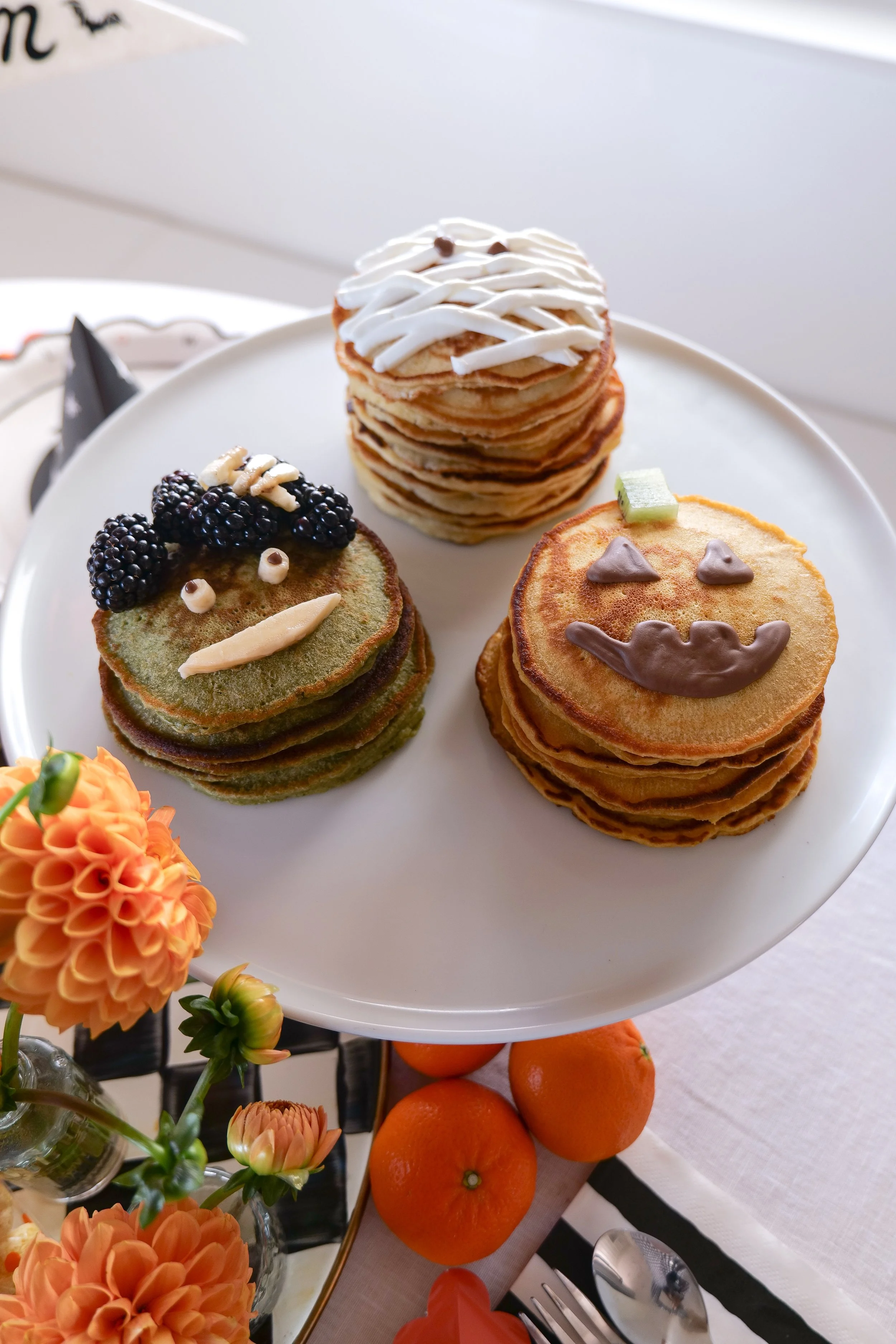
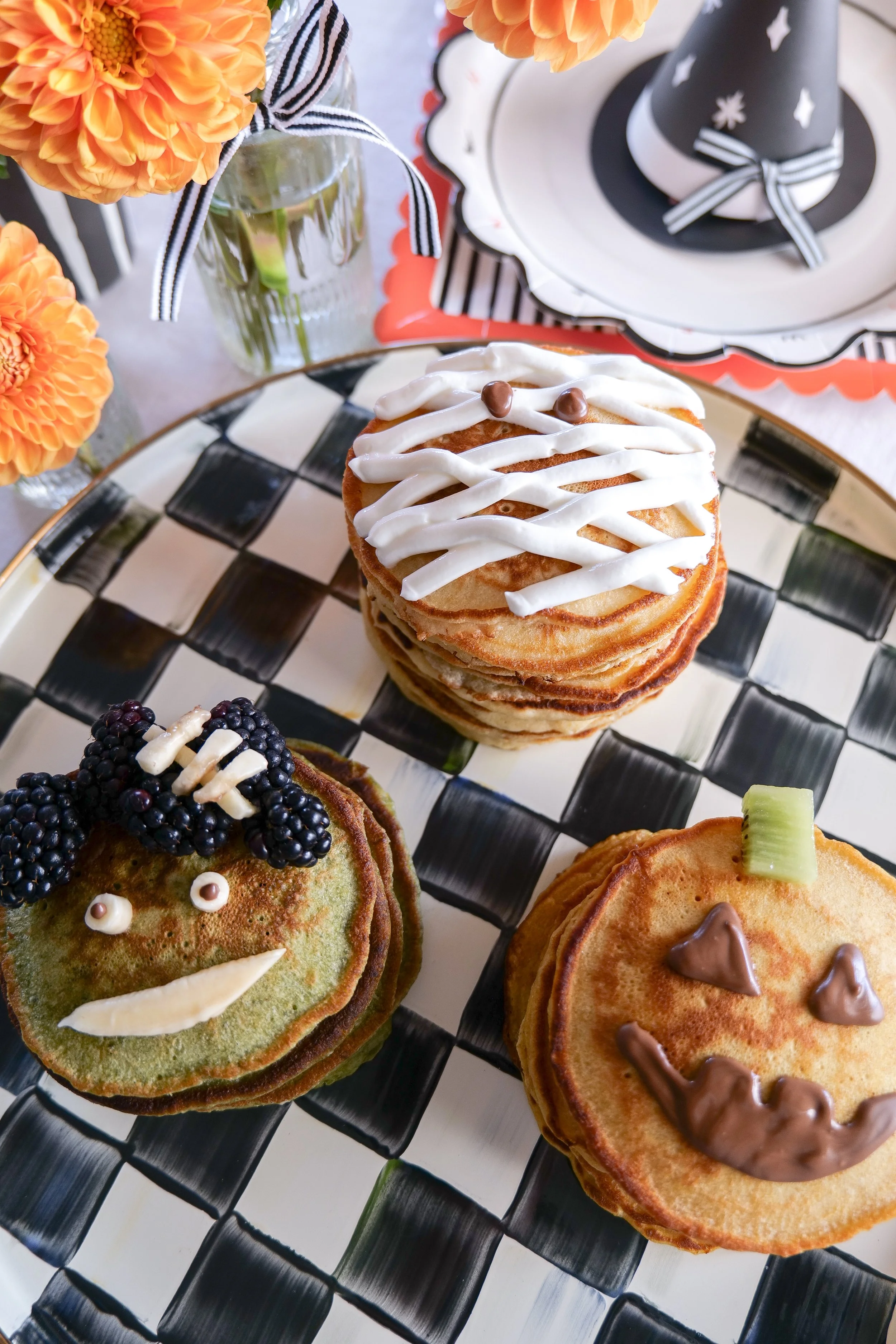
The star of breakfast was definitely our Mummy, Pumpkin and Frankenstein Sourdough Discard Pancakes.

I started with my favorite sourdough discard pancake batter, doubled it and divided it into three bowls. One stayed plain for our mummy, one got a little natural orange coloring for the pumpkin and the last was naturally colored green with matcha for Frankenstein.

Then I used Greek yogurt, chocolate and fresh fruit to make all three characters.

Halloween Sourdough Discard Pancakes – Mummy, Pumpkin & Frankenstein

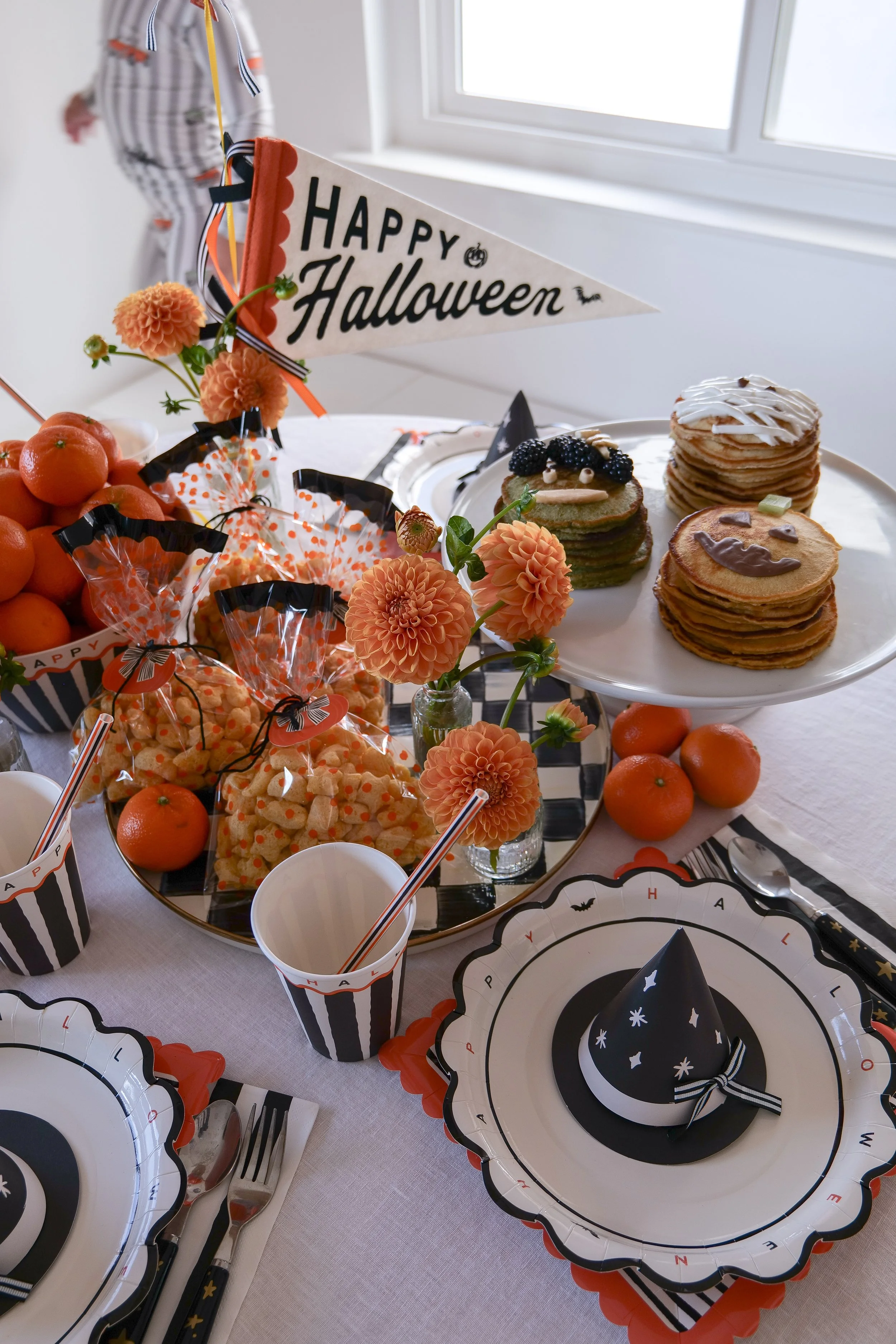
Halloween breakfast setup at home with pancakes, favors and seasonal table decor.

I love that they're fun for kids but are still made from a breakfast we would normally eat at home.

Alongside the pancakes, I added a big bowl of Cuties because...duh.

They're orange. It's Halloween. They practically decorated the table for me.

And more importantly, they're something the kids will actually eat.

Halloween Goodie Bags for Breakfast

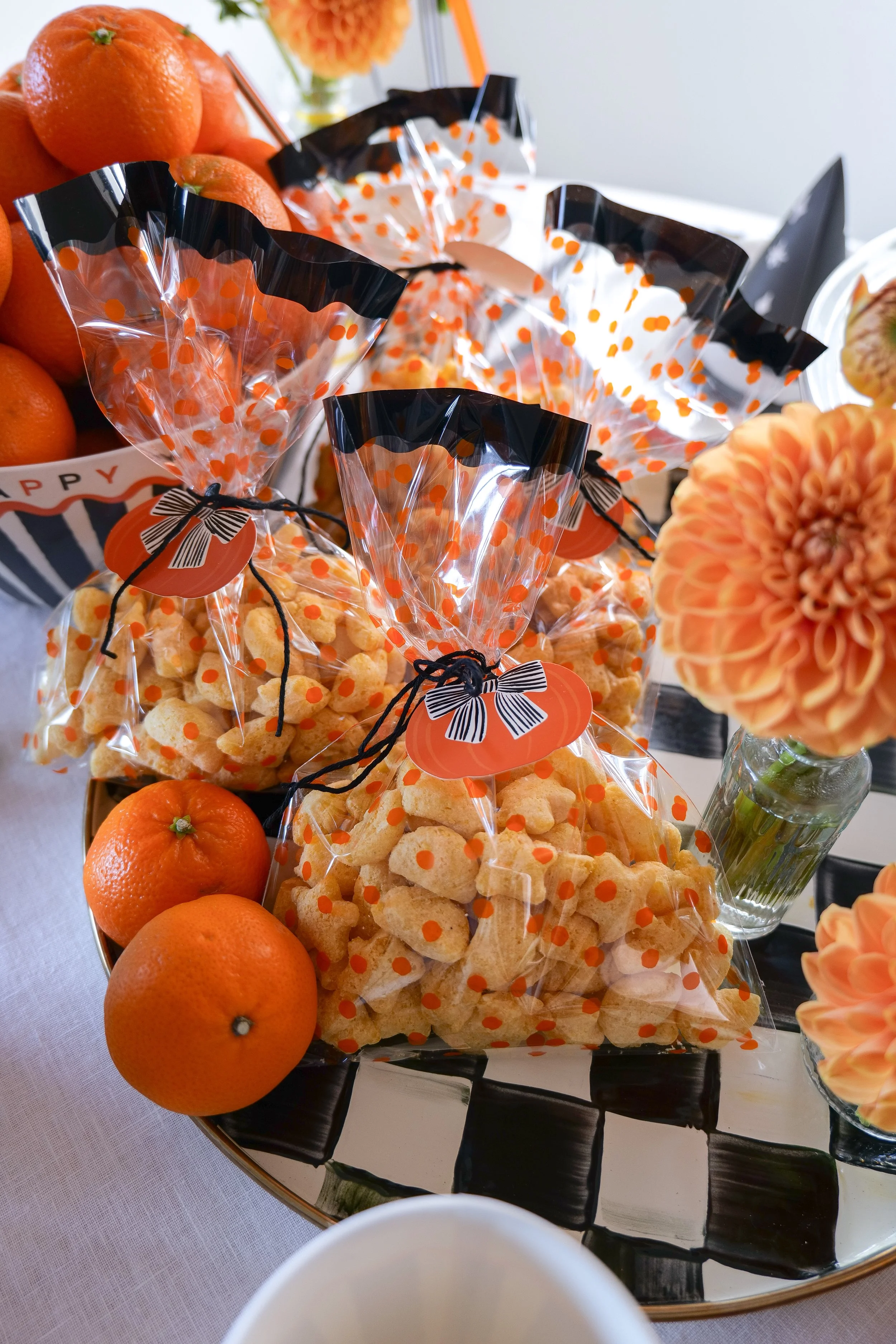
Halloween goodie bags filled with Little Spoon Puffs for a kids breakfast table.

I wanted each of the kids to have a little surprise waiting at the table, but I didn't want to fill the entire breakfast with candy.

Instead, I made little Halloween goodie bags filled with Little Spoon Puffs.

They worked as part of the table decor while also giving the kids something they already love.

I also used little witch hats as party favors and filled those with Little Spoon Bars.

This might be my favorite little detail because the hats added height and a Halloween element to the table, but they weren't decorations I was buying just to look pretty for one morning.

They doubled as favors.

If you're recreating a Halloween breakfast for your own kids, that's one of my biggest tips: let the food and favors become part of the decor.

A bowl of orange fruit, Halloween snacks tucked into bags and favors at each place setting can make the entire table feel finished without adding a ton of extra decorations.

Fresh Orange Dahlias for the Centerpiece

Halloween place setting for kids at a festive breakfast table.

For the centerpiece, I kept it incredibly simple with fresh orange dahlias.

They were perfect.

The orange tied into the Halloween theme without making the table feel overly themed, and fresh flowers always make even a casual breakfast at home feel a little more special.

You could easily recreate the same idea with whatever orange flowers you can find at the grocery store or farmers market.

I wouldn't make the arrangement too tall or elaborate, especially for a family breakfast. I like being able to actually see everyone across the table.

The Halloween Pajamas Made It Even Cuter

Family enjoying a festive Halloween breakfast tradition at home.

Of course, we had to coordinate with the table.

Mine were black and white gingham, which ended up fitting the whole orange, black and white color palette perfectly.

Amelia wore the sweetest tan gingham pajamas with little bears dressed in pumpkin costumes, and Shepherd wore gray striped pajamas with skeletons driving cars.

Which may be the most Shepherd pair of Halloween pajamas imaginable.

I love that they weren't perfectly matching sets. Everything coordinated without feeling like we were all wearing exactly the same thing, and each pair still felt like them.

It made the morning—and the photos—even sweeter.

Shop Our Halloween Breakfast

I rounded up the pieces from our breakfast along with more of my favorite Halloween finds for little ones in my Halloween with Kids Favorites

I'll keep adding to the shelf throughout the season, including Halloween pajamas, kids' tableware, baking pieces, little favors, kitchen finds and other things we're using for our October traditions.

If you want to recreate a similar breakfast, I would start with just a few pieces rather than buying an entirely new table:

  • Halloween or black-and-white plates and cups

  • Simple napkins or linens

  • Little treat bags

  • Halloween party favors

  • Seasonal pajamas

  • Kid-friendly Halloween snacks

  • A few baking or pancake-making essentials

  • Fresh orange flowers

Use what you already own for everything else.

How to Create an Easy Halloween Breakfast Table for Kids

Mummy, pumpkin and Frankenstein pancakes served for a kids Halloween breakfast.
Halloween place setting for kids at a festive breakfast table.
Halloween morning breakfast table with character pancakes and festive decorations.

The biggest thing I took away from this breakfast is that you really don't need much.

Start with one simple color palette. Orange, black and white made it easy for me to look around the house and pull things together without worrying about whether every piece was technically "Halloween."

Then choose one special food.

For us, it was the Halloween pancakes. You don't need an entire buffet of themed recipes when one really fun dish immediately tells the story.

Next, add something unexpected at the kids' places. A tiny goodie bag, witch hat filled with snacks or another inexpensive party favor instantly makes sitting down at the table exciting for them.

Finally, use food as decoration.

The bowl of Cuties is probably the easiest example. It's something we were going to eat anyway, but all of that bright orange fruit looked so cute sitting on the Halloween table.

What to Serve for a Kids Halloween Breakfast

Halloween character pancakes served as part of a festive kids breakfast.

Our Halloween Sourdough Discard Pancakes were plenty festive on their own, so I don't think you need to make every single thing Halloween themed.

I'd pair them with easy breakfast foods your family already loves: eggs, bacon or sausage, fresh fruit and milk or juice for the kids.

For another cozy addition, my Peach Coffee Cake with Crumble Topping would be perfect for a larger Halloween brunch.

You could also add my Apple Pie Overnight Oats or Blueberry Cinnamon Roll Loaf if you're hosting more people.

Make It a Halloween Morning Tradition

I think this is the part I love most.

Halloween can so easily become about everything we're going to do later that day—the costumes, trick-or-treating and all the excitement that comes with it.

But there's something really sweet about starting the celebration first thing in the morning.

Put on the Halloween pajamas. Make something fun for breakfast. Give the kids a tiny surprise. Sit down together before the craziness of the day starts.

It doesn't have to be elaborate enough for Pinterest.

It just has to feel special to them.

Simple Halloween tablescape for kids with festive breakfast and seasonal decorations.

Frequently Asked Questions

How do you decorate a Halloween breakfast table for kids?

Start with a simple Halloween color palette and use a few playful details rather than trying to theme every piece. I used orange, black and white with fresh orange flowers, Halloween pancakes, little favors and seasonal pajamas.

What can I put in Halloween goodie bags besides candy?

Snacks your kids already enjoy are an easy alternative. I filled our goodie bags with Little Spoon Puffs and put Little Spoon Bars inside witch hat party favors.

Other ideas could include stickers, temporary tattoos, small toys or other age-appropriate treats.

What food can double as Halloween table decor?

Anything naturally orange works beautifully. I used a bowl filled with Cuties, but mini pumpkins, apples or other seasonal fruit could work too.

What should I serve for a Halloween breakfast?

Choose one special Halloween breakfast and keep everything else simple. We made mummy, pumpkin and Frankenstein sourdough discard pancakes and served them alongside easy breakfast foods and fruit.

Do kids need matching Halloween pajamas?

Definitely not. I actually love coordinating pajamas more than perfectly matching ones. Ours all worked within the same neutral Halloween palette while still being completely different.

Kids enjoying a festive Halloween morning breakfast at home.

More Halloween Ideas for Kids

If you're planning your own Halloween morning, start with my Halloween Sourdough Discard Pancakes and then shop everything I've saved to my Kids Halloween Favorites ShopMy Shelf

You can also find more seasonal recipes here:

Pumpkin Tiramisu

Brown Butter Pumpkin Oatmeal Skillet Cookie

Matcha Pancakes

Final Thoughts

I know this season of matching pajamas, funny pancakes and tiny goodie bags around the breakfast table won't last forever.

That's probably why I love doing these things so much right now.

It wasn't an elaborate Halloween party. It was just the four of us at home in our pajamas, eating pancakes around a table covered in orange, black and white.

But Shepherd got his skeletons driving cars. Amelia got tiny bears dressed like pumpkins. We had Frankenstein pancakes, little witch hats filled with snacks and a bowl of Cuties sitting next to the prettiest orange dahlias.

And somehow all of those little details turned breakfast into a memory.

Those are the traditions I want to keep.

SHOP OUR KIDS HALLOWEEN FAVORITES

Simple Halloween breakfast for kids with festive pancakes and Halloween table decorations.

Halloween Sourdough Discard Pancakes: Mummy, Pumpkin & Frankenstein

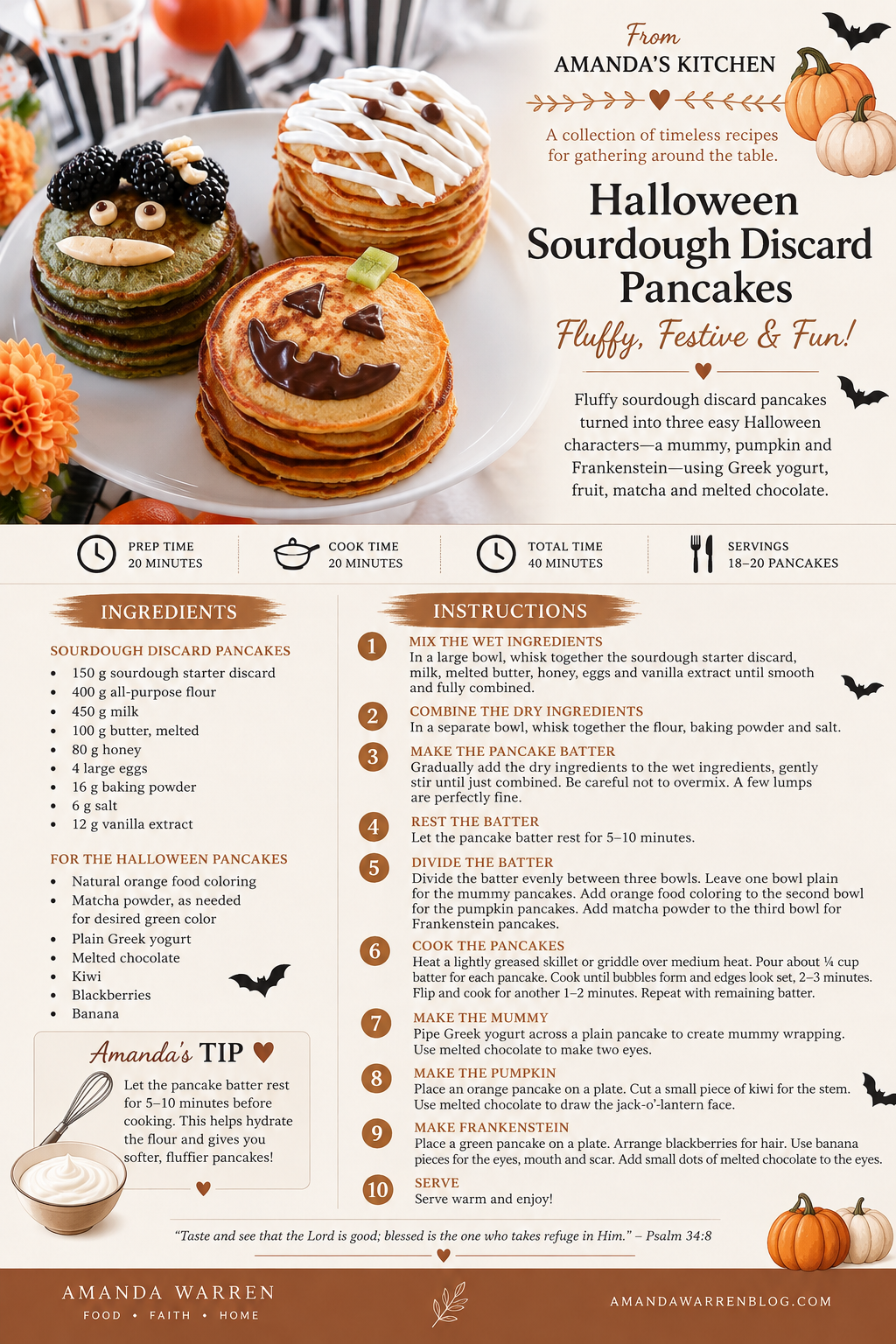
There’s something about making an ordinary breakfast a little festive that makes the holidays feel extra special with kids. These Halloween Sourdough Discard Pancakes are made from our favorite fluffy sourdough discard pancake recipe and turned into three easy Halloween characters: a mummy, pumpkin and Frankenstein.

And the best part? You only have to make one pancake batter.

I doubled my regular sourdough discard pancake recipe, divided the batter into three bowls and made a small change to each. I left the mummy batter plain, added natural orange food coloring to the pumpkin batter and used matcha to naturally turn Frankenstein green.

Then we decorated them with Greek yogurt, fresh fruit and a little melted chocolate.

They’re festive without requiring a million ingredients or complicated decorating, which is exactly the kind of Halloween recipe I want to make with little ones.

Halloween sourdough discard pancakes decorated as a mummy, pumpkin and Frankenstein.

An Easy Halloween Breakfast for Kids

I love finding little ways to make each season feel special for our kids, and it doesn’t always need to be a big event.

Sometimes it’s simply making pancakes look like Frankenstein on an October morning.

These would be so cute for Halloween morning, an October weekend breakfast or even a Halloween brunch with friends. You can make all three characters like I did or just choose your favorite and keep things even simpler.

Easy Halloween pancakes for kids decorated with fruit, Greek yogurt and chocolate.

If you’re planning more Halloween fun with little ones, I’m also putting all of the Halloween pieces we use and love in my Kids Halloween Favorites—kid-friendly kitchen tools, Halloween plates and cups, baking supplies, seasonal finds and everything that makes these little traditions more fun.

And if you love making breakfast feel a little more special, my Peach Coffee Cake with Crumble Topping is another favorite for slow mornings at home.

Three Halloween Pancakes from One Batter

Instead of making three separate recipes, I made one double batch of my sourdough discard pancake batter and divided it evenly between three bowls.

From there, each bowl becomes one of our Halloween characters.

It makes these look much more complicated than they actually are.

Mummy, pumpkin and Frankenstein Halloween pancake ideas made from one sourdough discard pancake batter.

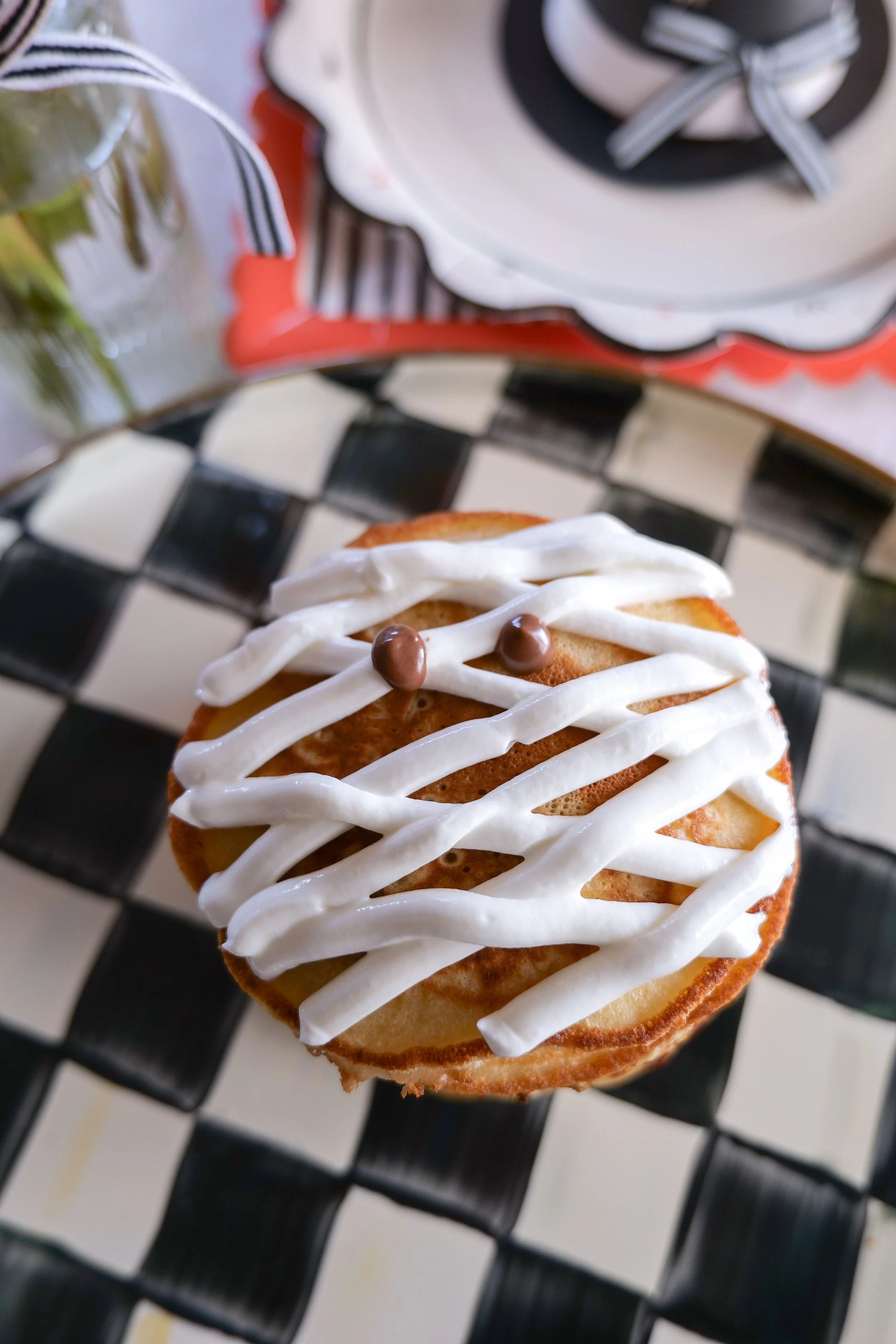
Mummy Pancakes

The mummy is the simplest of the three.

I left this portion of the pancake batter completely plain. Once cooked, I used a piping bag filled with plain Greek yogurt to create the mummy wrapping and melted chocolate for the eyes.

And definitely don't worry about making the yogurt lines perfect. Uneven lines actually make the mummy look better.

Mummy Halloween pancake decorated with Greek yogurt wrapping and melted chocolate eyes.

This is also a great one if you don't want to change the pancake batter at all. You can make your regular pancakes and let the decoration turn them into Halloween breakfast.

Pumpkin Pancakes

For the pumpkin, I added natural orange food coloring to the second bowl of batter.

Full disclosure: you really couldn’t tell mine were very orange once they were cooked!

But once I added a little kiwi stem and drew the jack-o’-lantern face with melted chocolate, they were still so cute.

If you use natural food coloring and yours does the same thing, don’t stress about it. The decorations do most of the work.

Pumpkin Halloween pancake decorated with a kiwi stem and melted chocolate jack-o-lantern face.

You could actually skip the orange coloring altogether if you want. The kiwi stem and chocolate face are enough to make a regular golden pancake read as a pumpkin.

Matcha Frankenstein Pancakes

Frankenstein might be my favorite.

Instead of using green food coloring, I added matcha to the third bowl of pancake batter. It naturally turns the pancakes green while adding just a subtle matcha flavor.

Green matcha Frankenstein pancake decorated with blackberries, banana and melted chocolate.

For the decorations, I used blackberries across the top for his hair and pieces of banana for the scar, eyes and mouth. A little melted chocolate adds the final details.

I love that so much of his face is made from fruit, too. He's festive and silly without needing a bunch of specialty Halloween candy.

Shop Everything for a Kids Halloween Morning

One of my favorite parts of creating these little seasonal traditions is pulling out a few special pieces that make an otherwise normal breakfast feel exciting.

I created a Kids Halloween Favorites shelf on ShopMy with my favorite Halloween finds for little ones, including seasonal tableware, baking pieces, kid-friendly kitchen tools and other things I’ll be using throughout October.

I’ll keep adding to this shelf throughout the season, so it can be a spot to find everything I’m using for our Halloween recipes, treats and little traditions.

Festive Halloween breakfast for kids with mummy, pumpkin and Frankenstein pancakes.

Halloween Sourdough Discard Pancakes

Fluffy sourdough discard pancakes turned into three easy Halloween characters—a mummy, pumpkin and Frankenstein—using Greek yogurt, fruit, matcha and melted chocolate.

Prep Time: 20 minutes
Cook Time: 20 minutes
Total Time: 40 minutes
Servings: Approximately 18–20 pancakes, depending on size

Ingredients

Sourdough Discard Pancakes

  • 150 g sourdough starter discard

  • 400 g all-purpose flour

  • 450 g milk

  • 100 g butter, melted

  • 80 g honey

  • 4 large eggs

  • 16 g baking powder

  • 6 g salt

  • 12 g vanilla extract

For the Halloween Pancakes

  • Natural orange food coloring

  • Matcha powder, as needed for desired green color

  • Plain Greek yogurt

  • Melted chocolate

  • Kiwi

  • Blackberries

  • Banana

Instructions

1. Mix the Wet Ingredients

In a large bowl, whisk together the sourdough starter discard, milk, melted butter, honey, eggs and vanilla extract until smooth and fully combined.

2. Combine the Dry Ingredients

In a separate bowl, whisk together the flour, baking powder and salt.

3. Make the Pancake Batter

Gradually add the dry ingredients to the wet ingredients, gently stirring until just combined.

Be careful not to overmix. A few lumps are perfectly fine and will help keep the pancakes light and fluffy.

4. Rest the Batter

Let the pancake batter rest for 5–10 minutes. This helps hydrate the flour and gives you softer, fluffier pancakes.

5. Divide the Batter

Divide the batter evenly between three bowls.

Leave the first bowl plain for the mummy pancakes.

Add natural orange food coloring to the second bowl for the pumpkin pancakes.

Add matcha powder to the third bowl a little at a time until you reach your desired shade of Frankenstein green.

6. Cook the Pancakes

Heat a lightly greased non-stick skillet or griddle over medium heat.

Pour about ¼ cup batter onto the skillet for each pancake.

Cook until bubbles begin forming on the surface and the edges look set, about 2–3 minutes. Flip and cook for another 1–2 minutes, or until cooked through.

Repeat with the remaining batter.

7. Make the Mummy

Place a plain pancake on a plate.

Add plain Greek yogurt to a piping bag and pipe it back and forth across the pancake to create mummy wrapping.

Use melted chocolate to make two eyes.

8. Make the Pumpkin

Place an orange pancake on a plate.

Cut a small piece of kiwi and place it at the top for the pumpkin stem.

Use melted chocolate to draw the eyes and jack-o’-lantern mouth.

9. Make Frankenstein

Place a matcha pancake on a plate.

Arrange blackberries across the top for Frankenstein’s hair.

Cut banana into small pieces to create his eyes, mouth and scar. Add small dots of melted chocolate to the banana eyes to finish his face.

Serve and enjoy!

Fluffy sourdough discard Halloween pancakes decorated as three easy Halloween characters.

Amanda’s Notes

Don’t worry if the pumpkin isn’t very orange. Natural food coloring can become much more subtle once the pancake is cooked. Mine did! Once you add the kiwi stem and chocolate face, it still looks like a pumpkin.

Add the matcha gradually. You only need enough to turn the batter green. Adding too much can make the matcha flavor stronger than you want.

Let the pancakes cool slightly before decorating. This is especially important for the mummy. If the pancake is piping hot, the Greek yogurt can start to melt and run.

Use a piping bag for the chocolate, too. It makes drawing the little faces much easier. You can also use a small zip-top bag and snip off the tiniest corner.

Let the kids decorate their own. Put out bowls of blackberries, banana, kiwi, yogurt and chocolate and let everyone create their own Halloween pancake character. They definitely don’t have to be perfect.

Keep cooked pancakes warm. Since this makes a double batch, keep finished pancakes on a baking sheet in a low oven while you finish cooking the remaining batter.

What to Serve with Halloween Pancakes

Because the pancakes are already the fun part of breakfast, I’d keep everything else really simple.

Serve them with fresh fruit, scrambled eggs, bacon or breakfast sausage and maple syrup on the side.

For a bigger Halloween brunch, make several of each character and arrange them together on a large platter with extra fruit.

You could even turn breakfast into a decorate-your-own Halloween pancake bar. Make the pancakes and set out bowls of Greek yogurt, melted chocolate, banana, blackberries and kiwi so everyone can create their own character.

Halloween breakfast pancakes for kids decorated as a mummy, jack-o-lantern and Frankenstein.

For another cozy breakfast to add to your fall rotation, try my Peach Coffee Cake with Crumble Topping, Apple Pie Overnight Oats or Blueberry Cinnamon Roll Loaf

Frequently Asked Questions

Can I make Halloween pancakes without sourdough discard?

Yes. You can use the same decorating ideas with your favorite pancake recipe. You’ll just need enough batter to divide between the three Halloween characters.

Does matcha make pancakes green?

Yes. Matcha naturally gives the pancake batter a beautiful green color, which makes it perfect for Frankenstein without needing green food coloring.

Will the matcha make the pancakes taste like matcha?

A small amount will add a subtle matcha flavor, but it shouldn’t overwhelm the pancakes. Start with a little and add more until you have the green color you want.

Can I make these Halloween pancakes ahead of time?

Yes. Cook the pancakes ahead of time and store them in an airtight container in the refrigerator. Reheat before serving and wait to add the fruit, Greek yogurt and chocolate decorations until just before eating.

What can I use instead of orange food coloring?

You can leave the pumpkin pancake batter plain. The kiwi stem and chocolate jack-o’-lantern face are enough to make it look like a pumpkin.

How do I keep the Greek yogurt from melting on the mummy pancakes?

Allow the pancakes to cool for a few minutes before piping on the Greek yogurt. You want them warm, but not steaming hot.

Cute Halloween pancake ideas featuring mummy, pumpkin and Frankenstein sourdough pancakes.

More Fall & Halloween Recipes

If you’re looking for more recipes to make throughout October, try:

Save This Recipe

Save this one for Halloween morning, an October weekend breakfast or your next Halloween brunch with the kids.

Printable Halloween Sourdough Discard Pancakes recipe card with mummy, pumpkin and Frankenstein pancake instructions.

Gather Around the Table

These Halloween Sourdough Discard Pancakes are exactly the kind of seasonal tradition I love creating with our kids.

They’re simple, a little silly and turn an ordinary breakfast at home into something they get excited about.

And you don't need three recipes or a cart full of special ingredients to make them.

One batch of our favorite sourdough discard pancakes, a little matcha, fruit, Greek yogurt and chocolate turns breakfast into a mummy, pumpkin and Frankenstein.

The characters don't need to be perfect. In fact, I think the wonky ones are usually the cutest.

And those little mornings around the table are the memories I want to hold onto most.

Creamy White Pasta Sauce with Parmesan

This homemade white pasta sauce is rich, creamy and incredibly easy to make with butter, shallot, garlic, heavy cream and Parmesan cheese. It comes together in less than 30 minutes and is one of those simple recipes that can become the base for so many different dinners.

Toss it with your favorite pasta for an easy weeknight meal, add chicken or shrimp for extra protein or stir in vegetables depending on what you have on hand. It's simple enough to make on a busy night but still gives you that creamy, comforting pasta you would order at a restaurant.

I especially love the combination of shallot and garlic in this version. They cook gently in butter before the flour and cream are added, building flavor into the sauce without making it complicated.

Once you know how to make a basic creamy Parmesan sauce like this, it's an easy recipe to come back to again and again.

Creamy white pasta sauce with freshly grated Parmesan and black pepper.

Why You'll Love This White Pasta Sauce

There are a few reasons this is such a good recipe to keep in your back pocket.

It's quick. The entire sauce comes together on the stovetop in less than 30 minutes.

It's simple. You only need a handful of ingredients, and most are things you may already keep in your kitchen.

And it's incredibly versatile. Serve it simply with pasta and Parmesan, or use it as the starting point for chicken, shrimp, sausage, mushrooms, spinach or other vegetables.

Most importantly, making white pasta sauce from scratch isn't difficult. Once you've made the roux and slowly whisked in the cream, you're only a few minutes away from a smooth, creamy Parmesan sauce.

Pasta tossed in an easy homemade white sauce with Parmesan cheese.

Ingredients You'll Need

Butter

Butter creates the base of the sauce and is what we'll use to gently cook the shallot and garlic before making the roux.

Shallot

I love using shallot here instead of a larger onion. It gives the sauce a subtle savory sweetness without overpowering the other flavors.

Garlic

Two fresh garlic cloves add plenty of flavor. Add the garlic after the shallot has softened and cook it only until fragrant so it doesn't burn.

All-Purpose Flour

Flour combines with the butter to create a simple roux. This is what helps thicken the cream into a smooth sauce that will cling beautifully to the pasta.

Heavy Cream

This is meant to be a rich white sauce, so I use heavy cream for the best texture.

Parmesan Cheese

For the refreshed recipe, I prefer freshly grated Parmesan rather than the Parmesan-or-mozzarella option from my original recipe.

Parmesan gives the sauce a salty, nutty flavor and melts beautifully into the cream.

Amanda's Tip: Grate Parmesan from a block when possible. Pre-shredded cheeses often contain ingredients that keep the shreds from sticking together, which can prevent them from melting as smoothly into a sauce.

Italian Seasoning

A little Italian seasoning brings in plenty of flavor without needing several different herbs.

Salt & Black Pepper

Finish the sauce with salt and freshly ground black pepper to taste. Because Parmesan is already salty, taste the finished sauce before adding additional salt.

How to Make White Pasta Sauce

1. Cook the Shallot and Garlic

Melt the butter in a saucepan over medium-low heat.

Add the finely chopped shallot and cook until softened and translucent. Add the minced garlic and cook briefly, just until fragrant.

You don't want either ingredient to brown. Keeping the heat relatively low gives you that mellow flavor while keeping the finished sauce beautifully pale.

2. Make the Roux

Sprinkle the all-purpose flour over the butter and shallot mixture.

Whisk continuously until the flour is completely incorporated and the mixture is smooth. Let it cook for about 1–2 minutes to remove the raw flour taste.

3. Slowly Add the Cream

Gradually pour in the heavy cream while whisking continuously.

Adding the cream slowly helps it incorporate smoothly into the roux without creating lumps.

Add the Italian seasoning and continue cooking over medium-low heat, stirring frequently, until the sauce gently simmers and begins to thicken.

Avoid bringing the cream to a hard boil.

Homemade white sauce tossed with pasta and topped with Parmesan.

4. Add the Parmesan

Reduce the heat to low or remove the saucepan from the heat before adding the cheese.

Add the freshly grated Parmesan a little at a time, stirring until it melts smoothly into the sauce.

Season with salt and freshly ground black pepper to taste.

The finished white sauce should be smooth, creamy and thick enough to coat the pasta without feeling heavy or gluey.

How to Serve White Pasta Sauce

The easiest way to serve this sauce is also one of my favorites: toss it with freshly cooked pasta and finish with plenty of freshly grated Parmesan and black pepper.

Before draining your pasta, reserve some of the pasta water. Once the sauce and pasta are combined, you can add a small splash of the warm pasta water if you want to loosen the sauce.

This is especially helpful because creamy sauces naturally continue to thicken as they sit.

Creamy Parmesan pasta sauce coating freshly cooked pasta.

The Best Pasta Shapes for White Sauce

One of the nice things about this sauce is that you don't need a particular type of pasta.

Long noodles such as fettuccine or linguine are perfect when you want that classic creamy pasta feel.

Short pasta shapes such as penne, rigatoni, fusilli, farfalle or cavatappi are also great because the sauce works its way into their ridges, folds and curves.

Use whatever you have—or whatever pasta shape your family loves most.

White sauce pasta finished with grated Parmesan and freshly ground black pepper.

What Can I Add to White Pasta Sauce?

Think of this recipe as a starting point. Once you know how to make the sauce, it's incredibly easy to turn it into a different dinner depending on what you have in the refrigerator.

For protein, try:

  • Grilled or seared chicken

  • Shrimp

  • Italian sausage

  • Salmon

For vegetables, try:

  • Mushrooms

  • Broccoli

  • Spinach

  • Peas

  • Asparagus

  • Zucchini

I usually wouldn't add several of these at once. Choose one protein and one vegetable and let the creamy Parmesan sauce bring everything together.

Make It Garlic Parmesan

If you love garlic, add another clove and finish the pasta with plenty of freshly grated Parmesan.

Make It Spicy

Add a pinch of crushed red pepper flakes along with the Italian seasoning.

Add Mushrooms

Sauté sliced mushrooms separately until deeply golden, then stir them into the finished sauce.

Add Spinach

Add fresh spinach to the warm sauce just before serving and let it wilt.

What to Serve with Creamy White Pasta

Because this sauce is rich, I like keeping the rest of dinner fairly simple.

Serve the pasta with garlic bread or focaccia for soaking up any extra sauce and add something fresh or green alongside it. A Caesar salad, roasted broccoli, broccolini or simple sautéed vegetables would all work beautifully.

If you're serving the pasta as a side rather than the main course, pair it with grilled chicken, salmon or shrimp.

Easy creamy pasta sauce made with heavy cream and freshly grated Parmesan.

How to Store & Reheat White Pasta Sauce

Allow leftover sauce to cool before transferring it to an airtight container and refrigerating it.

When reheating, use low heat and stir frequently. Cream sauces can thicken considerably once chilled, so add a small splash of cream or milk as needed to bring the sauce back to a creamy consistency.

I prefer this sauce freshly made or refrigerated rather than frozen. Cream-based sauces can sometimes separate or become grainy after freezing and reheating, so freezing wouldn't be my first choice for this recipe.

<a id="recipe"></a>

Creamy White Pasta Sauce with Parmesan

A simple homemade white pasta sauce made with butter, shallot, garlic, heavy cream and freshly grated Parmesan. Rich, creamy and ready in less than 30 minutes.

Prep Time: 10 minutes
Cook Time: 15 minutes
Total Time: 25 minutes

Ingredients

  • ¼ cup (4 tablespoons) butter

  • 1 shallot, finely chopped

  • 2 cloves garlic, minced

  • 3 tablespoons all-purpose flour

  • 2 cups heavy cream

  • 1 cup freshly grated Parmesan cheese

  • 2 teaspoons Italian seasoning

  • ¼ teaspoon salt, plus more to taste

  • Freshly ground black pepper, to taste

For Serving

  • Cooked pasta of choice

  • Reserved pasta water, as needed

  • Additional freshly grated Parmesan

  • Freshly ground black pepper

Instructions

  1. Melt the butter in a saucepan over medium-low heat.

  2. Add the finely chopped shallot and cook until softened and translucent.

  3. Add the garlic and cook briefly, just until fragrant.

  4. Sprinkle in the flour and whisk continuously until completely smooth. Cook for 1–2 minutes to remove the raw flour taste.

  5. Gradually pour in the heavy cream while whisking continuously.

  6. Add the Italian seasoning and cook over medium-low heat, stirring frequently, until the sauce gently simmers and begins to thicken.

  7. Reduce the heat to low or remove the saucepan from the heat.

  8. Gradually stir in the freshly grated Parmesan until completely melted and the sauce is smooth.

  9. Season with salt and freshly ground black pepper to taste.

  10. Toss immediately with your favorite cooked pasta. If needed, add reserved pasta water a small amount at a time until the sauce reaches your desired consistency.

  11. Finish with additional Parmesan and black pepper and serve warm.

Amanda's Tip

Add the Parmesan over very low heat or with the saucepan removed from the heat. Too much heat can cause a cheese sauce to become grainy rather than giving you that beautifully smooth, creamy finish.

Parmesan white sauce pasta served as an easy creamy dinner.
Printable Creamy White Pasta Sauce with Parmesan recipe card with ingredients and instructions.

Frequently Asked Questions

Is white pasta sauce the same as Alfredo sauce?

Not exactly. This white pasta sauce begins with butter and flour to create a roux before heavy cream and Parmesan are added. Alfredo-style sauces are generally made without flour, so while the two can have a similar creamy Parmesan flavor, the preparation is different.

Why is my white pasta sauce lumpy?

The easiest way to prevent lumps is to add the cream gradually while whisking continuously. This helps the liquid incorporate smoothly into the butter and flour mixture.

How do I thicken white pasta sauce?

The flour in this recipe thickens the sauce as it gently simmers. Give the sauce a few minutes over medium-low heat before deciding it needs additional thickening. The Parmesan will thicken it further once added.

How do I thin white pasta sauce?

If you're serving the sauce with pasta, reserved pasta water is my favorite way to loosen it. Add just a small splash at a time until you reach the consistency you like.

Can I make white pasta sauce ahead of time?

Yes, although creamy sauces are best freshly made. Refrigerate the sauce in an airtight container and reheat gently over low heat. Add a splash of cream or milk if needed to restore its creamy consistency.

Can I use milk instead of heavy cream?

Heavy cream is what I use for this recipe and gives the sauce its rich, creamy consistency. A thinner dairy product will change the finished texture, so I recommend sticking with heavy cream unless you're using a substitution you've tested before.

More Pasta & Italian Recipes

If you're looking for another pasta night idea, try my Garlic Mushroom & Shrimp Pasta or make my Baked Burrata Pumpkin Ziti with Pork Sausage when you're craving something especially cozy.

My Easy Mushroom & Pea Risotto is another creamy Italian-inspired dinner, while Mom's Favorite Minestrone Soup is perfect when you want something lighter but still comforting.

Shop My Kitchen Favorites

A good saucepan, whisk and Parmesan grater are really all you need for this recipe, and they're pieces I use constantly in my kitchen.

Final Thoughts

There are certain recipes worth knowing without having to think too much about them, and a simple homemade white pasta sauce is one of those for me.

Butter, shallot, garlic, cream and Parmesan turn into a rich, creamy sauce in less than 30 minutes, and from there you can make it your own depending on what you have in the refrigerator.

Serve it simply over pasta, add chicken or shrimp, stir in vegetables or use it as the starting point for another dinner entirely.

It's simple, cozy and exactly the kind of recipe I want to have ready for a busy weeknight.

Homemade creamy white pasta sauce with Parmesan served over pasta.

Slow Cooker BBQ Brisket

There are some dinners that are worth cooking low and slow, and brisket is one of them. This Slow Cooker BBQ Brisket starts on the stovetop with a simple smoky brown sugar rub and a good sear before cooking for hours in BBQ sauce until the meat is fall-apart tender.

The finished brisket is shredded and tossed right back into all of those BBQ cooking juices, giving you tender, saucy pieces of beef that are perfect for an easy family dinner, Sunday supper or feeding a crowd.

One of my favorite things about making this recipe is using my 360 Cookware Slow Cooker. The stainless steel pot can go directly onto my stovetop, so I can sear the brisket and build all of that flavor without dirtying another pan. Once it's browned, the same pot moves onto the slow cooker base and takes it from there.

It's simple, mostly hands-off and exactly the kind of cozy dinner I want waiting for us at the end of the day.

Tender shredded slow cooker BBQ brisket served with its savory BBQ cooking juices.

Why You'll Love This Slow Cooker BBQ Brisket

This recipe has been in my kitchen for years, but giving the original a few little updates made it even better. Smoked paprika adds more depth to the dry rub, Worcestershire gives the BBQ cooking sauce another savory layer, and beef broth makes the whole thing richer.

The method is still incredibly simple.

You get a beautiful sear on the brisket, pour over the BBQ sauce and let the slow cooker do the rest. Several hours later, the brisket practically falls apart under your forks.

  • Mostly hands-off after the initial sear

  • Made with simple, easy-to-find ingredients

  • Fall-apart tender and perfect for shredding

  • Great for feeding family or a larger gathering

  • Leftovers reheat beautifully

  • Everything can be seared and slow cooked in the same 360 Cookware pot

Easy slow cooker brisket cooked until tender and easy to pull apart.

Ingredients You'll Need

For the Brisket

  • 4–5 lb beef brisket

  • 1 tablespoon olive oil, for searing

For the Dry Rub

  • 2 1/2 teaspoons kosher salt

  • 2 teaspoons garlic powder

  • 2 teaspoons chili powder

  • 1 1/2 teaspoons onion powder

  • 1 1/2 teaspoons smoked paprika

  • 1 teaspoon black pepper

  • 1 1/2 tablespoons dark brown sugar

For the BBQ Cooking Sauce

  • 1 1/2 cups BBQ sauce

  • 3/4 cup beef broth

  • 1 tablespoon Worcestershire sauce

Shredded BBQ brisket coated lightly in flavorful cooking juices.

A Few Ingredient Notes

Beef Brisket

Look for a brisket around 4–5 pounds with some visible marbling. If it has a particularly thick fat cap, you can trim it down to approximately 1/4 inch, but don't remove all of the fat. That fat helps add flavor and moisture during the long cooking time.

BBQ Sauce

BBQ sauce is one of the biggest flavors in this recipe, so use one you already know you love. A smoky or slightly sweet BBQ sauce works especially well with the brown sugar and smoked paprika in the dry rub.

Beef Broth

I prefer beef broth here instead of vegetable broth because it adds another layer of rich, savory flavor to the cooking liquid.

Smoked Paprika

The smoked paprika gives us some of that deep, smoky flavor you associate with brisket without needing an outdoor smoker.

Worcestershire Sauce

Just a tablespoon adds savory depth and a little tang to the BBQ sauce without overpowering it.

How to Make Slow Cooker BBQ Brisket

1. Prepare the Brisket

Remove the brisket from the refrigerator and trim any excessively thick or hard pieces of fat, leaving approximately a 1/4-inch fat cap.

Pat the entire brisket very dry with paper towels.

This might seem like a small step, but a dry surface is important for getting that beautiful browned crust once the brisket hits the hot pan.

2. Make the Brisket Rub

In a small bowl, combine the kosher salt, garlic powder, chili powder, onion powder, smoked paprika, black pepper and dark brown sugar.

Generously coat all sides of the brisket with the seasoning mixture, using your hands to press the rub into the meat.

Don't forget the edges. You want seasoning over the entire brisket.

Fall-apart tender beef brisket made in a slow cooker.

3. Sear the Brisket

Heat the 360 Cookware Slow Cooker pot on the stovetop over medium to medium-high heat.

Add the olive oil.

Once the pot is hot, carefully add the brisket. Sear the first side without moving it for approximately 4–5 minutes, or until it develops a deep golden-brown crust.

Flip and sear the other side for another 4–5 minutes. If possible, quickly sear the edges as well.

You're not trying to cook the brisket through at this point. We're simply building color and flavor before it cooks low and slow.

Homemade BBQ beef brisket seasoned with a smoky dry rub and slow cooked until tender.
Slow-cooked beef brisket shredded into large tender pieces for serving.

This is one of my favorite reasons for using the 360 Cookware Slow Cooker for this recipe. I can sear the brisket right in the stainless steel pot and then move that exact same pot onto the slow cooker base. All of those flavorful browned bits stay right there with the brisket—and I don't have another pan to wash.

4. Make the BBQ Cooking Sauce

While the brisket is searing, add the BBQ sauce, beef broth and Worcestershire sauce to a bowl and whisk until combined.

Once the brisket is browned and the pot has been transferred to the slow cooker base, slowly pour the BBQ mixture around and over the brisket.

The brisket does not need to be submerged. It will release additional juices and fat as it cooks.

Position the brisket fat-side up before adding the lid.

Fall-apart slow cooker brisket with a smoky BBQ dry rub.
Shredded slow cooker brisket tossed with just enough BBQ cooking juices to stay moist.

5. Cook the Brisket Low and Slow

Cover and cook on low for approximately 7–8 hours, beginning to check the brisket around 6 1/2 hours.

Brisket is one of those recipes where tenderness matters more than watching the clock.

When it's ready, a fork or temperature probe should slide into the thickest part with very little resistance and the meat should easily begin to pull apart.

The internal temperature will often be around 200–205°F by the time brisket reaches this fall-apart stage, but don't use temperature as your only indicator.

If you try to pull the brisket apart and it still feels firm or resistant, put the lid back on and give it more time.

6. Rest and Shred the Brisket

Carefully transfer the cooked brisket to a large cutting board or serving dish.

Let it rest for approximately 15–20 minutes.

Using two forks, gently pull the brisket apart into large, tender pieces. Discard any large pieces of unrendered fat as you go.

I like to leave some larger pieces rather than finely shredding everything. You get a much better texture and all of those tender pieces hold onto the BBQ sauce beautifully.

Easy BBQ brisket served as a hearty family dinner.
Juicy slow cooker brisket with tender shredded beef and BBQ sauce.

7. Toss the Brisket With the BBQ Juices

Skim any excessive fat from the cooking liquid if needed.

Return the shredded brisket to the slow cooker and gently toss everything together until the meat is coated in the warm BBQ cooking juices.

Let the brisket sit in the sauce for a few minutes before serving. The shredded pieces will soak up even more of that flavor while staying incredibly tender.

Serve warm directly from the slow cooker with additional BBQ sauce if desired.

Slow cooker BBQ brisket ready to serve for a family dinner or gathering.
Crockpot BBQ beef brisket cooked low and slow until fork tender.

Amanda's Tips for the Best Shredded Brisket

Don't Skip the Sear

Could you put a seasoned brisket directly into your slow cooker? Yes. But taking those extra few minutes to sear it first builds so much more flavor.

You also get all of those browned bits at the bottom of the pot, which become part of the BBQ cooking sauce.

Let Tenderness Tell You When It's Done

This is probably my biggest brisket tip.

If you've reached the end of your cooking time and the brisket doesn't easily pull apart, it isn't done yet.

It doesn't necessarily mean you've overcooked it or done something wrong. Tough brisket often simply needs more time for the connective tissue to break down.

Don't Over-Shred It

I prefer pulling the brisket into larger pieces rather than creating very fine shreds. The texture is better and those bigger pieces stay incredibly juicy once they're tossed back into the sauce.

Keep Some of the Fat

Trim away excessively thick or hard fat before cooking, but don't try to make the brisket completely lean. Leaving approximately 1/4 inch of the fat cap helps add moisture and flavor while it cooks.

Put It Back in the Juices

Don't throw away that cooking liquid!

Once shredded, return the brisket to the slow cooker and toss it through those BBQ juices. This is what gives the finished brisket that juicy, saucy texture.

BBQ brisket seasoned with smoked paprika, chili powder, garlic and brown sugar.

What to Serve With Slow Cooker BBQ Brisket

This is one of those main dishes that works with so many classic comfort-food sides.

I love serving shredded BBQ brisket with creamy mashed potatoes, mac and cheese, cornbread, roasted potatoes, broccolini, roasted vegetables or a simple salad.

For something a little more casual, pile the brisket onto toasted buns for BBQ brisket sandwiches.

And don't overlook the leftovers. The shredded brisket is so good in tacos, quesadillas, sandwiches, baked potatoes or even over nachos the next day.

Corn Bread Loaf Recipe

Spinach Salad Featuring A Warm Shallot Dressing, Apples, and Pistachios!

Easy Slow Cooker Baked Beans with Bacon

Homemade slow cooker BBQ brisket shredded and ready to serve.

How to Store Leftover Brisket

Store leftover brisket in an airtight container in the refrigerator for up to 3–4 days.

Most importantly, store some of the BBQ cooking liquid with the meat. The sauce helps keep the shredded brisket moist and flavorful as it sits.

How to Reheat Brisket Without Drying It Out

Reheat leftover brisket gently along with some of its reserved BBQ juices.

You can warm it covered over low heat until heated through or reheat individual portions as needed.

Adding a spoonful of the cooking liquid before reheating is one of the easiest ways to keep leftover brisket tender.

Frequently Asked Questions

How long does a 4–5 pound brisket take in a slow cooker?

Plan on approximately 7–8 hours on low for a 4–5 pound brisket. Begin checking around 6 1/2 hours, but use the texture of the meat rather than time alone to determine when it's ready.

How do I know when brisket is ready to shred?

Your brisket is ready when a fork or temperature probe slides into the meat with very little resistance and you can easily pull it apart with two forks. If it's still difficult to shred, continue cooking it.

What temperature should brisket be for shredding?

Brisket will often be around 200–205°F when it becomes fall-apart tender enough to shred. However, every brisket is a little different, so tenderness is a better final test than temperature alone.

Does brisket need to be covered in liquid in a slow cooker?

No. The brisket does not need to be completely submerged. It will release additional fat and juices during the long cooking process.

Should brisket cook fat-side up or fat-side down?

For this recipe, place the brisket fat-side up during the slow-cooking portion. The fat will render as the brisket cooks.

Why is my brisket still tough after hours in the slow cooker?

It most likely needs more time. Brisket contains a lot of connective tissue that needs a long cooking time to break down. If the meat is still resistant when you try to pull it apart, continue cooking and check it again later.

Can I make slow cooker brisket ahead of time?

Yes. This is a great make-ahead recipe because the shredded brisket reheats beautifully in its cooking juices. Store the meat together with some of the sauce and gently reheat before serving.

Slow Cooker BBQ Brisket Recipe

Prep Time: 20 minutes
Cook Time: 7–8 hours
Rest Time: 15–20 minutes
Total Time: Approximately 7 hours 35 minutes–8 hours 40 minutes
Servings: Approximately 8

Ingredients

For the Brisket

  • 4–5 lb beef brisket

  • 1 tablespoon olive oil, for searing

For the Dry Rub

  • 2 ½ teaspoons kosher salt

  • 2 teaspoons garlic powder

  • 2 teaspoons chili powder

  • 1 ½ teaspoons onion powder

  • 1 ½ teaspoons smoked paprika

  • 1 teaspoon black pepper

  • 1 ½ tablespoons dark brown sugar

For the BBQ Cooking Sauce

  • ¾ cup BBQ sauce

  • ½ cup beef broth

  • 2 teaspoons Worcestershire sauce

For Serving

  • Additional BBQ sauce, optional

Instructions

  1. Trim any excessively thick or hard fat from the brisket, leaving approximately a ¼-inch fat cap. Pat the brisket very dry with paper towels.

  2. In a small bowl, combine the kosher salt, garlic powder, chili powder, onion powder, smoked paprika, black pepper and dark brown sugar. Rub the seasoning mixture generously over all sides of the brisket.

  3. Heat a large stainless steel pot over medium to medium-high heat. Add the olive oil. Sear the brisket for approximately 4–5 minutes per side, or until deeply browned. Sear the edges briefly if possible.

  4. In a bowl, whisk together the BBQ sauce, beef broth and Worcestershire sauce.

  5. Place the brisket fat-side up in the slow cooker. Pour the BBQ mixture around and over the brisket. Cover and cook on low for approximately 7–8 hours, beginning to check for tenderness around 6 ½ hours.

  6. Once the brisket is fall-apart tender and easily pulls apart with a fork, transfer it to a cutting board or serving dish. Let it rest for 15–20 minutes.

  7. Use two forks to shred the brisket into large, tender pieces, discarding any large pieces of unrendered fat.

  8. Skim excess fat from the cooking liquid. Rather than returning all of the liquid to the meat, spoon some of the BBQ cooking juices over the shredded brisket and gently toss. Continue adding a little at a time until the brisket is as saucy as you like.

  9. Return the brisket to the slow cooker for a few minutes to warm through if needed. Serve warm with additional BBQ sauce on the side for anyone who wants it.

Amanda's Tip

Don't rely on cooking time alone to tell you when your brisket is ready. If it still resists when you try to pull it apart, give it more time. A properly cooked brisket should shred easily with two forks.

Save This Slow Cooker BBQ Brisket for Later

This is one of those recipes worth keeping for the nights when you want something cozy and comforting without spending the entire afternoon standing over the stove.

A quick sear in the beginning gives the brisket so much flavor, and then the slow cooker takes care of everything else. By dinner, you have tender shredded brisket coated in a rich BBQ sauce that's ready to serve straight from the pot.

Final Thoughts

There’s something about a dinner that cooks low and slow all day that makes the whole house feel a little cozier, and this Slow Cooker BBQ Brisket is one of those recipes I know I’ll come back to again and again.

I love that it feels like a hearty, comforting dinner without requiring me to spend hours in the kitchen. Taking a few extra minutes to season and sear the brisket in the beginning builds so much flavor, and from there, the slow cooker does the rest.

By dinnertime, the brisket is fall-apart tender and ready to shred right back into all of those rich BBQ cooking juices. It’s simple enough for a family dinner but still feels special enough to serve when we have people over.

And the leftovers might be one of my favorite parts. Pile the brisket onto sandwiches, tuck it into tacos or simply warm it back up in that extra BBQ sauce the next day.

If you make this Slow Cooker BBQ Brisket, I hope it becomes one of those easy, comforting dinners your family comes back to again and again.

Tender BBQ brisket made in the slow cooker and served warm with extra sauce on the side.

How to Make an Easy Fall Charcuterie Board with Baked Brie

There are few things I love more than putting together a beautiful board when we’re having people over. It looks special sitting in the middle of the table, but it’s also one of the easiest appetizers to make because so much of it is simply choosing a few good ingredients and arranging them together.

For fall, I wanted this charcuterie board to feel warm, seasonal and a little elevated without making it complicated. I started with a wheel of warm baked Brie in the center, topped it with sweet fig jam and crushed pistachios, then built the rest of the board around it with fresh figs, pears, blackberries, red grapes, cheese, crackers and more pistachios.

Add a bottle of cold Champagne, and this is exactly the kind of appetizer I want for a cozy fall evening.

Fall charcuterie board with baked Brie, prosciutto, figs, pears and grapes

Why You'll Love This Fall Charcuterie Board

This board is beautiful enough for a fall dinner party but simple enough to make for a casual evening at home. There isn't much cooking involved, and you can easily adjust the amounts depending on how many people you're serving.

The warm baked Brie is what makes it feel a little more special. Fig jam adds sweetness, pistachios add crunch, and all of those beautiful fall fruits bring color to the board naturally.

It's also easy to customize. Think of this less as a strict recipe and more as a formula you can use all season.

Make the Baked Brie

The baked Brie is the centerpiece of the entire board, so that's where I like to start.

Preheat the oven to 350°F.

Place one wheel of Brie in a small round oven-safe baking dish or plate. Using a sharp knife, lightly score the top of the Brie in a crosshatch pattern by making three horizontal lines and three vertical lines across the rind. You only need to score the surface rather than cutting deeply into the cheese.

Wheel of Brie scored in a crosshatch pattern before baking

Bake the Brie for 10–15 minutes, or until it's warm and softened in the center but still holding its shape.

Remove it from the oven and spoon fig jam over the top while the cheese is still warm.

Adding fig jam to warm baked Brie

Finish with a generous sprinkle of crushed pistachios.

Baked Brie topped with fig jam and crushed pistachios

That's it. Creamy warm Brie, sweet fig jam and salty pistachios—and suddenly the center of the charcuterie board feels like its own appetizer.

What to Put on a Fall Charcuterie Board

Once the Brie is taken care of, the rest is really about layering different flavors, colors and textures around it.

For this board, I used:

  • Baked Brie with fig jam and crushed pistachios

  • Fresh figs

  • Fresh blackberries

  • Red grapes

  • Fresh pears

  • Prosciutto

  • An additional cheese of choice

  • Brown square crackers from Trader Joe’s

  • Sliced French bread

  • Pistachios

  • Extra fig jam for serving

I love the combination of sweet and savory on this one. The figs, blackberries, pears and deep red grapes bring in those beautiful fall colors naturally, while the prosciutto and cheese balance all of the fruit.

I also added a small jar of fig jam directly to the board. Since everyone inevitably wants more once they taste it with the Brie, having extra there for the cheese, prosciutto and bread makes perfect sense.

The sliced French bread is especially good with the warm Brie, while the crackers give everyone another option for building little bites.

Easy fall charcuterie board with fruit, cheese and crackers

How to Arrange a Fall Charcuterie Board

I always find it easier to start with the largest items and work outward.

Place the round dish of baked Brie in the center of the board, then add your small jar of fig jam nearby. These become your anchors for everything else.

Next, arrange the larger ingredients around them. Add clusters of red grapes, halved figs, pears, blackberries and cheese, then loosely fold the prosciutto into little ribbons and tuck it between the fruit and cheese.

Add the sliced French bread and crackers in slightly overlapping rows. I like having both because the bread is perfect for scooping up warm Brie and fig jam, while the crackers add more crunch.

Finally, scatter pistachios into some of the smaller open spaces.

Don't worry about making everything perfectly symmetrical. A charcuterie board looks prettier to me when the ingredients feel abundant and a little organic rather than perfectly placed.

Fall cheese board with fresh figs, pears and red grapes

Use Fall Fruit to Make It Seasonal

You really don't need pumpkins or leaf-shaped everything to make a charcuterie board feel like fall.

For me, it's the combination of fresh figs, pears, blackberries and deep red grapes that gives this board its seasonal color. The darker berries and grapes are especially pretty next to the golden crackers, creamy cheese and pink prosciutto.

And if you haven't tried a slice of fresh pear with warm Brie, fig jam and a pistachio or two, do it.

Baked Brie centerpiece on a fall charcuterie board

Amanda's Tips for the Perfect Board

Slice the pears last. Pears can begin to brown once they're cut, so I like to slice them close to serving rather than letting them sit on the board for too long.

Bake the Brie right before serving. You can arrange most of the board first, then bake the Brie and add it to the center while it's still warm.

Start with the largest ingredients. Place the Brie first, followed by fruit and cheese, then use crackers and pistachios to fill the remaining spaces.

Repeat ingredients around the board. A few smaller clusters usually look more natural than putting every grape, fig or cracker in one section.

Don't overthink it. The board doesn't need to be perfectly symmetrical. Let the shapes and colors of the ingredients create the arrangement for you.

Can You Make a Charcuterie Board Ahead of Time?

Most of it, yes.

You can gather all of your ingredients, prepare the serving pieces and arrange some of the board ahead of time. Keep any ingredients that require refrigeration properly chilled until you're closer to serving.

I would save the pears and baked Brie for last. Slice the pears close to serving so they stay fresh, then bake the Brie and add the fig jam and pistachios just before bringing the board to the table.

That way, the Brie is still beautifully warm when everyone starts eating.

What to Serve with a Fall Charcuterie Board

For me, the answer is Champagne or Sparkling Wine, this is my current favorite.

There's something about a cold coupe glass of bubbly with warm Brie, fruit and crackers that makes such a simple appetizer feel like an occasion.

I love this board before a fall dinner, but it would be just as good for girls' night, happy hour at home or one of those evenings when the charcuterie board basically becomes dinner.

Set out a few pretty glasses, open a bottle of Champagne and let everyone help themselves.

Charcuterie board with fresh figs, pears, cheese and crackers
Fall charcuterie board with fig jam baked Brie
Fall charcuterie board with baked Brie served with Champagne

Easy Fall Charcuterie Board Shopping List

For the Baked Brie

  • 1 wheel Brie

  • Fig jam

  • Crushed pistachios

For the Board

  • Fresh figs, halved

  • Fresh blackberries

  • Red grapes

  • Fresh pears, sliced

  • Prosciutto

  • 1 additional cheese of choice

  • Brown square crackers from Trader Joe's

  • French bread, sliced

  • Pistachios

  • Extra fig jam for serving

For Serving

  • Champagne

How Much Charcuterie Do I Need?

You don't need exact measurements for a board like this. The amount you use depends on the size of your serving board, the number of people you're serving and whether this is an appetizer or more of a casual meal.

Start with the Brie in the center, then add enough of each larger ingredient to create several sections around the board. Use crackers and pistachios to fill in the remaining spaces.

If you're serving this before dinner, you can keep everything fairly simple. If the board is the main food for a happy hour or casual gathering, make it fuller and keep extra crackers nearby so you can replenish them as needed.

Shop My Entertaining Favorites

A beautiful serving board, small dishes and glassware are some of the pieces I use over and over again when we're entertaining. I keep my favorites together so they're easy to find whenever we're having people over.

FAQ

Frequently Asked Questions

What do you put on a fall charcuterie board?

For this fall charcuterie board, I used warm baked Brie with fig jam and pistachios, fresh figs, red grapes, pears, an additional cheese, crackers and more pistachios. Seasonal fruit is an easy way to give a cheese board beautiful fall color without making it overly themed.

How long do you bake Brie?

For this board, bake the Brie at 350°F for 10–15 minutes, or until the center is warm and softened while the wheel is still holding its shape.

Do you remove the rind from Brie before baking?

No. You can leave the rind on the Brie. For this recipe, lightly score the top in a crosshatch pattern before placing it in the oven.

What jam goes well with baked Brie?

Fig jam is especially good with baked Brie because its sweetness pairs beautifully with the creamy cheese. I finish mine with crushed pistachios for a salty, crunchy contrast.

Can I make a fall charcuterie board ahead of time?

You can prepare much of the board ahead, but keep ingredients that require refrigeration chilled until appropriate for serving. I like to slice the pears and bake the Brie closer to serving so the pears stay fresh and the Brie reaches the table warm.

What do you drink with a fall charcuterie board?

I love serving this board with Champagne. The cold, sparkling wine is especially good alongside creamy Brie, fig jam, fruit and salty crackers.

More Fall Recipes & Entertaining Ideas

If you're planning a fall gathering, there are so many ways to carry these flavors and colors through the rest of the menu. Serve this board before my Maple Bacon Fall Salad, or use my Elegant Thanksgiving Table Setting Ideas if you're putting together a larger fall or Thanksgiving gathering.

For something sweet afterward, try my Pumpkin Swirl Brownies, Brown Butter Pumpkin Sandwich Cookies or Brown Butter Spice Cake with Honey & Fig Jam Frosting. The spice cake is an especially pretty pairing with this board because the fig jam carries through both, which makes the whole menu feel intentional.

Final Thoughts

This is my favorite kind of entertaining food: beautiful enough to put in the center of the table but incredibly simple to make.

The warm Brie with fig jam and pistachios makes the whole board feel a little more special, while fresh figs, pears and deep red grapes bring in all those beautiful fall colors without needing much styling at all.

And served with a cold glass of Champagne? Even better.

Whether you're putting it out before dinner, having friends over for happy hour or just making an ordinary fall evening feel a little more special, this is one of those boards you can come back to all season.

20 Fall Outfits from Just 4 Pieces: My Fall Capsule Wardrobe

What if four pieces in your closet could give you 20 completely different outfits?

I started with two coordinating sets—four pieces total—and wanted to see how far I could actually take them. Of course I love the ease of wearing a matching set exactly as it was designed, but what really makes me want to buy one is knowing I'll wear the pieces separately too.

So I started with the two full sets, mixed all four pieces together and then pulled things I already love from my closet: denim, gingham, blazers, cardigans, sneakers, boots, belts and a few favorite bags.

Twenty outfits later, I think this might be my favorite way to think about a fall capsule wardrobe.

It isn't about limiting yourself to four pieces. It's about choosing a few really versatile pieces that make everything else in your closet work harder.

20 fall outfits styled from a four-piece capsule wardrobe

The 4 Pieces That Started It All

The foundation of this capsule is two coordinating sets: a sleeveless mockneck with matching pants and a short-sleeve tie top with a matching skirt.

Each set works beautifully on its own, but the colors also coordinate with each other. That was the part that made me want to experiment with them.

4 Pieces, 20 Fall Outfits

The easiest way to see just how different these four pieces can look is to see all 20 outfits together.

I started by wearing each set exactly as intended, then swapped the pieces between sets. From there, I styled each piece with things already in my closet until the original four pieces started to feel completely different.

Now let's break down every look.

Look 1: The Mockneck Set

Fall capsule wardrobe outfit styled from four versatile pieces

First, the easiest outfit of all: wear the set exactly as it was designed.

The sleeveless mockneck and coordinating pants make getting dressed incredibly simple, but the monochromatic look still feels polished. This is also the perfect starting point because you'll see just how different both pieces look by the end.

Shop the core pieces: Sleeveless Mockneck + Matching Pants

Look 2: The Skirt Set

Neutral fall outfit from a four-piece capsule wardrobe

The second set gives me an entirely different silhouette. The short-sleeve tie top paired with its matching skirt feels feminine and put together without needing much styling.

And again, it's an outfit you can put on without thinking about what goes together—which is one of the reasons I love matching sets in the first place.

Shop the core pieces: Tie Top + Matching Skirt

Look 3: Mix the Sets — Mockneck + Skirt

Elevated everyday fall outfit with neutral pieces

This is where the capsule really starts.

Taking the mockneck from the first set and pairing it with the skirt from the second immediately gives me a third outfit without adding a single new piece.

Because the colors coordinate, it still looks intentional rather than like I simply grabbed pieces from two different sets.

Look 4: Mix the Sets — Tie Top + Pants

Mix and match fall outfit from a capsule wardrobe

Then I did the opposite: the tie top with the pants.

Four pieces, and before I've even added anything else from my closet, I already have four complete outfits.

This is exactly what I look for when I'm trying to decide whether a matching set is actually worth adding to my wardrobe. I want to know I'll reach for each piece independently—not only when I'm wearing the full set.

The First Four Looks Are the Capsule Test

If you're trying to recreate this with pieces in your own closet, this is the test I would use.

Can you wear both sets as intended? Can you swap the tops? Can you swap the bottoms?

If all four combinations work, you already have a really good foundation before adding jackets, denim, shoes or accessories.

Look 5: Mockneck Set + Blazer & Booties

Easy neutral fall capsule wardrobe outfit

Adding a blazer and booties completely changes the original mockneck set.

The matching pieces keep the outfit streamlined underneath, while the blazer gives it structure and makes the whole look feel much more fall-ready.

This is such an easy formula when you have a matching set: wear it as your base layer and let the jacket and shoes change the mood.

Shop these similar — blazer and booties

Look 6: Mockneck + Jeans + Striped Cardigan

Elevated fall outfit styled with capsule wardrobe pieces

This is much closer to what an everyday fall outfit actually looks like for me.

I took the same mockneck, swapped the matching pants for jeans, added sneakers and threw a striped cardigan over my shoulders. Add the diaper bag and it's an easy outfit for being out with the kids that still feels put together.

The cardigan also gives me another layer without needing to fully commit to wearing a sweater when the weather isn't quite there yet.

Shop these added pieces — jeans + sneakers + diaper bag

Look 7: Mockneck + Gingham Pants

Women's neutral fall outfit with versatile separates

One of the easiest ways to make a capsule feel less basic is to pair your solid staples with a pattern.

Here, the mockneck gets a completely different personality with gingham pants. Sandals keep it transitional for those warmer fall days, and the diaper bag makes this another outfit I could actually wear through a normal day with the kids.

Shop additional pieces — gingham pants + sandals

Look 8: Pants + Slim Black Top

Easy everyday fall outfit from a small capsule wardrobe

Now we're taking the mockneck out completely and letting the pants stand on their own.

I paired them with a slim black top, brown belt and a bag that pulls the black and brown together.

I especially love mixing black and brown for fall. The brown accessories warm up the black top while the pants keep everything from feeling too dark.

Shop the added pieces — black top

Look 9: Add the Plaid Coat

Minimal fall outfit styled with mix and match pieces

Same base outfit, completely different feeling.

I added a long plaid coat over Look 8, which is also a good reminder that you don't need an entirely different outfit every time you want a different look.

Sometimes the best capsule pieces are the ones that disappear underneath a great third layer.

Shop a similar — plaid coat or this adorable version.

Look 10: Pants + White Linen Button-Down

Elevated neutral fall outfit idea for women

A white button-down is one of those pieces I reach for over and over because it can make almost any bottom feel fresh again.

Here I paired the capsule pants with a white linen button-down, sandals and my diaper bag for another easy transitional look.

It's relaxed, simple and proof that these pants don't need their matching top to feel complete.

Shop pieces to complete the look — white linen button-down + sandals + diaper bag

Look 11: Pants + White Tee + Sneakers

Fall capsule wardrobe outfit with versatile separates

This might be one of the easiest looks of the entire capsule.

A white long-sleeve tee and sneakers make the pants casual, while the baseball hat and leopard belt add just enough personality.

I love adding one small print to an otherwise simple outfit. It keeps basics from feeling boring without requiring another statement piece.

Shop added pieces — tee + sneakers + baseball hat + leopard belt

Look 12: Pants + Striped Cardigan

Easy neutral fall outfit for everyday wear

The same pants work again with the striped cardigan, brown belt and black-and-brown bag.

At this point, the pants have gone from matching-set bottoms to blazer outfit, casual mom outfit, patterned layers, linen and knitwear—which is exactly what I mean when I say I want the individual pieces in a set to earn their place in my closet.

Look 13: Tie Top + Jeans + Cowboy Boots

Chic fall outfit styled from capsule wardrobe pieces

Now we're moving back to the tie top, but this time it doesn't feel anything like the original skirt set.

I paired it with jeans, cowboy boots and a plaid blazer for a layered fall look with a little Western influence.

This is one of my favorite examples of why I don't want to mentally keep a matching set together forever. Once you start treating the top like any other top in your closet, you get so many more options.

Shop added pieces — jeans + cowboy boots + plaid blazer

Look 14: Tie Top + Gingham Pants

Mix and match neutral outfit idea for fall

The tie top also works with the same gingham pants I paired with the mockneck earlier.

The print makes the top feel more playful, while the sandals keep the outfit easy and transitional.

And now one pair of gingham pants has given us two completely different outfits using two different pieces from the capsule.

Look 15: The Skirt Set + Blazer & Heels

Simple elevated fall outfit using versatile separates

We're back to the original skirt set—but now with a blazer and heels.

I love this one because it shows how easily the exact same matching set can go from simple on its own to something much more polished just by changing the styling around it.

This would be such an easy formula for dinner, an event or anytime I want to feel a little more dressed up without putting together an entirely new outfit.

Shop similar — heels

Look 16: Skirt + Black Cardigan

Neutral women's fall capsule wardrobe outfit

The skirt takes a dressier turn with a black cardigan, black heels and my Dior bag.

Keeping the accessories black makes the whole outfit feel clean and elevated while letting the skirt remain the focus.

Shop added pieces — cardigan + where to rent the bag

Look 17: Skirt + Cropped Mockneck

Elevated fall outfit using mix and match wardrobe basics

For another dressed-up version, I paired the skirt with a long-sleeve cropped mockneck in a different color and black heels.

Tucking my hair into the mockneck also gives the whole look a slightly different feel—one of those tiny styling changes that costs nothing but can completely change an outfit.

Shop similar — cropped mockneck + heels

Look 18: Skirt + White Tee + Linen Shirt + Sneakers

Minimal fall outfit from a four-piece capsule wardrobe

And now the same skirt goes completely casual.

I layered a linen shirt over a white long-sleeve tee, then added sneakers, a baseball hat and my diaper bag.

This might be one of my favorite transformations because it takes a piece that could easily live in the "dressier" section of my closet and turns it into something I can actually wear during the day.

Look 19: Skirt + Striped Cardigan + Booties

Neutral everyday fall outfit inspiration for women

For Look 19, I kept the white tee but changed everything around it.

A brown belt, brown booties and the striped cardigan immediately make the skirt feel more autumnal and layered.

It's another good example of why accessories matter so much in a smaller wardrobe. The core outfit can stay incredibly simple while the belt, shoes and knit completely change the finished look.

Look 20: Skirt + Black Top + Cowboy Boots

Fall capsule wardrobe outfit from a 20-look collection

And for the final look, I paired the skirt with a fitted black long-sleeve top, cowboy boots and a Western-style belt.

I love ending here because it looks so different from the matching set we started with in Look 2—even though the skirt is exactly the same.

That's really the entire point of this capsule.

Shop exact & similar styles — black top + cowboy boots + Western belt

What This Taught Me About Building a Capsule Wardrobe

I don't think a capsule wardrobe has to mean owning a tiny closet filled entirely with beige basics.

For me, it's more about being intentional about the pieces I bring in.

Can I wear the top with multiple bottoms? Can I take the pants from sneakers to boots? Can the skirt work for dinner and a day out with the kids? Can something I bought as a set eventually become two staples I reach for independently?

Those are the questions that make a piece feel worth buying.

Starting with two coordinating sets made this especially easy because I knew I had four pieces that already worked together. Everything else—denim, jackets, cardigans, tees, shoes, belts and bags—came from layering those four pieces with the kinds of things most of us already have in our closets.

And that's how four new pieces turned into 20 outfits.

How to Build a Fall Capsule Wardrobe You’ll Actually Wear

If you're trying this with your own closet, I wouldn't start by shopping for 20 outfits.

Start with a few versatile pieces that coordinate with each other and then look at what you already own.

A great pair of jeans, white tee, button-down, cardigan, blazer, sneakers and boots can completely change those core pieces without requiring an entirely new wardrobe.

I also wouldn't avoid pattern or color just because you're building a capsule. My gingham pants, striped cardigan, plaid layers and leopard belt are some of the things that keep these looks from feeling repetitive.

The foundation can be simple. The styling doesn't have to be.

Shop My Fall Capsule Wardrobe

I put the four pieces that started this capsule together with the jackets, denim, knits, shoes, belts, bags and other pieces I used throughout these 20 looks so everything is easy to find in one place.

The Four Pieces That Started It All

Sleeveless Mockneck & Matching Pant Set
Short-Sleeve Tie Top & Matching Skirt Set

Final Thoughts

I started this thinking it would be fun to see how many outfits I could make from two matching sets. What surprised me was how quickly I stopped seeing them as sets at all.

The mockneck became a top I'd wear with jeans or gingham pants. The pants worked with everything from a white tee and sneakers to a black top and long plaid coat. The tie top went with denim and cowboy boots, and the skirt went from heels and a Dior bag to sneakers and my diaper bag.

That's what I want more of in my closet.

I still want pieces that feel special and make me excited to get dressed, but I also want them to work for my actual life. Something I can wear with sneakers while I'm out with the kids, layer up when fall finally feels like fall, and completely change with boots or heels for dinner.

Four pieces. Two matching sets. Twenty outfits.

I'd say they earned their place in my closet.

Ribeye Steak Sandwich with Garlic Aioli & Caramelized Onions

There are sandwiches you throw together for lunch, and then there are sandwiches that feel like something you'd order at a really good restaurant.

This ribeye steak sandwich is definitely the second kind.

Tender slices of buttery seared ribeye are layered onto toasted focaccia with sweet caramelized onions, melted provolone, peppery arugula and a creamy homemade garlic aioli. It's rich and hearty, but the fresh lemon in the aioli and bite from the arugula balance everything out.

And despite looking a little impressive once it's stacked and sliced, there really isn't anything complicated about making it.

Steak focaccia sandwich with garlic aioli and caramelized onions

I've actually had a version of this recipe on the blog since 2023, and it was one I knew I wanted to come back to.

The original was already a favorite, but a few little changes make it even better. We're letting the onions slowly caramelize in butter until they're golden and sweet, searing the ribeye in butter until beautifully browned but still tender inside, and toasting the focaccia before piling everything together.

The result is one very good steak sandwich.

Why You'll Love This Ribeye Steak Sandwich

The ribeye stays tender and juicy. Ribeye has beautiful marbling and plenty of flavor, which makes it one of my favorite cuts for a steak sandwich.

The onions are slowly caramelized. Giving them time to cook in butter brings out their natural sweetness without needing to add sugar.

Everything is cooked with butter. From the golden onions to the seared steak, butter adds another layer of rich flavor to an already delicious sandwich.

The garlic aioli takes just a few minutes. Mayonnaise, fresh garlic and lemon create a creamy, bright sauce that ties everything together.

The focaccia gets toasted. Those crisp golden edges add texture and help the bread hold up to the steak, onions and aioli.

It's simple enough for dinner but feels a little special. This is the kind of meal I love making when I want something easy that still feels like more than an ordinary sandwich.

Ribeye steak sandwich on toasted focaccia

Ingredients You'll Need

You don't need a long list of ingredients to make a really good steak sandwich. The key is choosing a flavorful cut of steak and letting each of these simple ingredients do its job.

Ingredients for steak focaccia sandwiches with garlic aioli

Ribeye Steak

The steak is the star of the sandwich, and ribeye works especially well because its marbling gives it so much flavor and helps it stay tender and juicy.

Once it's cooked and rested, we'll slice it thinly against the grain so it's easy to bite through once it's layered inside the sandwich.

Butter

We're keeping this recipe simple and using butter for both the onions and the steak.

It gives the caramelized onions plenty of rich flavor and helps create a beautifully browned exterior on the ribeye.

Because butter can brown more quickly than cooking oil, I cook the steak over medium-high heat rather than taking the skillet all the way to extremely high heat.

Focaccia

I love using focaccia for this sandwich because it's sturdy enough to hold all of those juicy fillings without falling apart.

Toasting the cut sides before assembling the sandwich gives it even more texture and helps keep the bread from becoming soggy.

If you want to make yours completely from scratch, my Garlic & Herb Focaccia Bread is perfect here.

Steak focaccia sandwich ingredients arranged before cooking

Yellow Onion

Slowly caramelized onions give this sandwich that sweet and savory flavor that works so well with ribeye.

We're skipping the added sugar from my original recipe and simply letting the onions cook slowly in butter until their natural sugars caramelize.

Provolone Cheese

Provolone melts beautifully over the warm steak and onions while still being mild enough to let the ribeye remain the star.

Arugula

Arugula is technically optional, but I love it here.

You only need a small handful. Its peppery bite adds freshness and helps cut through the richness of the steak, cheese and garlic aioli.

Garlic Aioli

Our homemade garlic aioli couldn't be much easier.

Mayonnaise, fresh garlic, lemon juice, salt and pepper come together into a creamy sauce that adds just enough brightness and garlic flavor to every bite.

How to Make Garlic Aioli

I like to make the garlic aioli first so it can sit in the refrigerator while I prepare the rest of the sandwich.

Stir together the mayonnaise, finely grated garlic, fresh lemon juice, salt and pepper in a small bowl until smooth.

Taste and adjust the seasoning if needed, then cover and refrigerate until you're ready to assemble.

Giving it a little time to sit also lets the fresh garlic and lemon work their way into the mayonnaise.

Creamy homemade garlic aioli for steak sandwich

How to Caramelize Onions for a Steak Sandwich

This part takes a little patience, but it's worth it.

Melt 1 tablespoon of butter in a large skillet over medium-low heat.

Add the thinly sliced onion with a small pinch of salt and let it slowly cook.

The onions will soften first and then gradually become deeper and deeper golden brown.

Give them about 20–30 minutes, stirring occasionally.

If your pan starts looking dry or you notice browned bits sticking to the bottom, add a tablespoon or two of water and scrape those flavorful bits back into the onions.

The biggest thing here is not to rush them by turning the heat way up. Slowly caramelizing the onions brings out their natural sweetness and gives you so much more flavor.

Once they're deeply golden and soft, transfer them to a bowl and set aside.

onions for steak focaccia sandwich
Golden caramelized onions for steak focaccia sandwich

How to Cook Ribeye for a Steak Sandwich

Take your ribeye out of the refrigerator about 20–30 minutes before you're ready to cook it.

Pat the steak very dry and generously season both sides with kosher salt and freshly ground black pepper.

Heat a cast-iron or stainless-steel skillet over medium-high heat.

Add 1 tablespoon of butter and let it melt and become hot and foamy.

Add the ribeye to the skillet.

Ribeye steak seasoned

Sear the ribeye on both sides until you have a deeply browned crust and the center reaches your preferred doneness.

Because steaks can vary so much in thickness, I much prefer checking the internal temperature rather than relying only on a specific number of minutes.

For medium-rare, I like to remove the steak from the pan around 125–130°F and allow the temperature to continue rising slightly while it rests.

Ribeye steak seared in butter in a skillet

Transfer the steak to a cutting board and let it rest for at least 10 minutes before slicing.

Don't skip the rest.

Giving the ribeye those few extra minutes helps keep all of those juices inside the steak instead of running onto your cutting board.

Once rested, slice the ribeye thinly against the grain.

Thinly sliced rested ribeye steak

Toast the Focaccia

While the steak rests, slice the focaccia horizontally.

Place the cut sides into the warm skillet and toast until lightly golden, about 1–2 minutes.

There should be plenty of buttery flavor left behind from the steak. If your skillet is completely dry, you can add a small pat of butter before adding the focaccia.

This is such a small extra step, but I love the texture it gives the finished sandwich. It also helps the focaccia stand up to all that garlic aioli and those steak juices.

How to Assemble the Steak Sandwich

Now for the best part.

Spread a generous layer of garlic aioli over the toasted sides of the focaccia.

Golden toasted focaccia for steak sandwich

Layer the thinly sliced ribeye onto the bottom piece of focaccia.

Steak sandwich layered with provolone and caramelized onions

Spoon those golden caramelized onions over the steak, followed by the provolone.

Toasted focaccia layered with sliced ribeye, caramelized onions and provolone cheese before serving.

Let the provolone soften over the warm steak, or place the open sandwich under the broiler very briefly until the cheese is melted.

Rested ribeye sliced thinly against the grain for a tender steak focaccia sandwich.

Finish with a small handful of arugula and the second piece of aioli-covered focaccia.

Steak focaccia sandwich with arugula and garlic aioli

Gently press everything together and slice the sandwich in half.

And if a little aioli runs down the side while you're eating it, I'd say you've probably done it right.

Buttery ribeye steak sandwich served on golden toasted focaccia
Steak focaccia sandwich cut in half showing ribeye, provolone and onions

Amanda's Tips for the Best Steak Sandwich

Let the steak rest. Give it at least 10 minutes before slicing so all of those juices stay inside the ribeye.

Slice against the grain. Thin slices cut against the grain make the steak more tender and much easier to bite through in sandwich form.

Don't rush the onions. Keep the heat lower and give them time. That's how you get deeply golden, naturally sweet caramelized onions.

Watch your butter. Butter gives the steak amazing flavor, but it can brown quickly. Medium-high heat gives you a beautiful sear without taking the skillet to screaming-hot temperatures.

Toast the focaccia. It adds texture and keeps the creamy aioli and juicy steak from immediately soaking into the bread.

Use a thermometer. The thickness of ribeye can vary quite a bit, so internal temperature is more reliable than cooking strictly by time.

Make the aioli first. Letting it rest in the refrigerator while you cook gives the garlic and lemon a little time to come together.

What to Serve with a Ribeye Steak Sandwich

This sandwich is definitely hearty enough to be dinner on its own, but I love adding something simple on the side.

Crispy fries or roasted potatoes are probably the obvious choice, especially if you're going for that steakhouse-at-home feeling.

A simple green salad is perfect if you want something lighter, and a warm bowl of tomato soup would be especially good once the weather starts cooling down.

You can also slice the sandwiches into smaller portions if you're serving them as part of a casual lunch or gathering.

Sliced ribeye sandwich with creamy garlic aioli on focaccia

Can I Use a Different Cut of Steak?

Absolutely.

Ribeye is my favorite for this particular sandwich because the marbling gives it so much flavor and helps keep the meat tender and juicy.

Sirloin or New York strip can also work well.

Whatever cut you choose, the most important things are cooking it to the doneness you enjoy, allowing it to rest and slicing it thinly against the grain.

Can I Make the Garlic Aioli Ahead of Time?

Yes, and this is an easy part of the recipe to prepare ahead.

Make the garlic aioli earlier in the day, cover it and keep it refrigerated until you're ready to assemble the sandwiches.

I actually like giving it a little time to sit because the garlic and lemon flavors have more time to come together.

Can I Make the Caramelized Onions Ahead of Time?

Yes.

Prepare the caramelized onions ahead of time and store them covered in the refrigerator.

When you're ready to make the sandwiches, gently warm the onions in a skillet before assembling everything.

If you're making this for dinner on a busy night, having the aioli and onions ready to go makes the rest of the recipe come together much faster.

How Should I Store Leftovers?

If you know you'll have leftovers, I recommend storing the individual components separately rather than refrigerating a fully assembled sandwich.

Keep the cooked steak, caramelized onions and garlic aioli in separate airtight containers in the refrigerator.

When you're ready to eat, gently warm the steak and onions, toast fresh focaccia and assemble the sandwich just before serving.

Shop My Kitchen Favorites

A good skillet, sharp knife and instant-read thermometer are a few of the kitchen tools I reach for when making recipes like this one at home.

Ready to Make It?

If you've been looking for a steak sandwich that feels a little more special than the usual weeknight dinner, this is it.

The juicy ribeye, sweet caramelized onions, melted provolone and garlicky lemon aioli make every layer worth the few extra minutes it takes to put together.

You can find the complete ingredient measurements and step-by-step instructions in the printable recipe card below.

Ribeye Steak Sandwich with Garlic Aioli & Caramelized Onions

Tender slices of buttery seared ribeye layered with sweet caramelized onions, melted provolone, peppery arugula and creamy garlic aioli on golden toasted focaccia.

Prep Time: 15 minutes
Cook Time: 35 minutes
Rest Time: 10 minutes
Total Time: 1 hour
Servings: 2 large sandwiches

Ingredients

For the Steak Sandwich

  • 1 ribeye steak, about 10–12 oz

  • Kosher salt, to taste

  • Freshly ground black pepper, to taste

  • 2 tablespoons butter, divided

  • 1 large yellow onion, thinly sliced

  • 4 slices provolone cheese

  • 2 large pieces focaccia, sliced horizontally

  • 1–2 cups arugula, optional

  • Additional butter for toasting the focaccia, if needed

For the Garlic Aioli

  • ½ cup mayonnaise

  • 2 large garlic cloves, finely grated or minced

  • 1 tablespoon fresh lemon juice

  • ¼ teaspoon kosher salt

  • ¼ teaspoon freshly ground black pepper

Instructions

1. Make the Garlic Aioli

In a small bowl, stir together the mayonnaise, garlic, lemon juice, salt and pepper until smooth.

Taste and adjust the seasoning as desired.

Cover and refrigerate while you prepare the rest of the sandwich.

2. Caramelize the Onions

Melt 1 tablespoon butter in a large skillet over medium-low heat.

Add the thinly sliced onion and a small pinch of salt.

Cook for 20–30 minutes, stirring occasionally, until the onions are very soft and deeply golden.

If the pan becomes too dry or browned bits begin sticking, add 1–2 tablespoons of water and scrape the browned bits from the bottom of the pan back into the onions.

Transfer the caramelized onions to a bowl and set aside.

3. Cook the Ribeye

Remove the ribeye from the refrigerator about 20–30 minutes before cooking.

Pat the steak dry with a paper towel and generously season both sides with salt and freshly ground black pepper.

Heat a cast-iron or stainless-steel skillet over medium-high heat.

Add the remaining 1 tablespoon butter and allow it to melt and become hot and foamy.

Add the ribeye and sear on both sides until deeply browned and cooked to your preferred doneness.

For medium-rare, remove the steak from the pan when the internal temperature reaches approximately 125–130°F. The temperature will continue to rise slightly while the steak rests.

Transfer the steak to a cutting board and allow it to rest for at least 10 minutes.

Slice thinly against the grain.

4. Toast the Focaccia

Slice the focaccia horizontally.

Place the cut sides into the warm skillet and toast for 1–2 minutes, or until lightly golden.

If the skillet is dry, add a small pat of butter before toasting the focaccia.

Remove from the skillet.

5. Assemble the Sandwiches

Spread a generous layer of garlic aioli over the cut sides of the toasted focaccia.

Layer the sliced ribeye over the bottom pieces of focaccia followed by the caramelized onions and provolone.

Allow the provolone to soften over the warm steak, or place the open sandwiches under the broiler briefly until the cheese is melted.

Add a small handful of arugula and finish with the top pieces of focaccia.

6. Serve

Gently press the sandwiches together and slice each in half.

Serve immediately while the steak is warm and the cheese is melted.

Steak Focaccia Sandwich with Garlic Aioli printable recipe card

Amanda's Tip

Don't rush the two ingredients that make this sandwich so good: the onions and the steak.

Let the onions slowly caramelize in butter until they're deeply golden, and give the ribeye a full 10 minutes to rest before slicing so those juices stay inside the steak.

For an even better sandwich, slice the ribeye thinly against the grain and don't skip toasting the focaccia in that buttery skillet.

More Recipes to Make Next

If you love a really good homemade lunch or casual dinner, here are a few more recipes to try next.

Garlic & Herb Focaccia Bread

Make the focaccia for your steak sandwich completely from scratch. It's soft, flavorful and the perfect bread for holding all of that ribeye, garlic aioli and caramelized onion.

Delicious Buttery Italian Croissant Sandwich

Another hearty sandwich that's perfect for an easy lunch or dinner when you want something a little more special.

Creamy Basil Tomato Soup

A warm bowl of creamy tomato soup is such a good pairing with a sandwich, especially as we head into cooler weather.

The Perfect Beginner's Sourdough Bread

If homemade bread is your thing, this is another recipe to add to your baking list.

A Note From Amanda

This is one of those recipes that reminds me how easy it can be to make something at home that feels a little more special than an ordinary weeknight dinner.

A really good piece of steak, onions slowly cooking in butter on the stove, bread getting golden in the pan and everyone inevitably wandering into the kitchen because dinner smells so good.

Those are some of my favorite meals to make.

Nothing overly complicated and nothing that requires an entire day in the kitchen. Just really good ingredients layered together into something my family genuinely looks forward to eating.

This steak sandwich has been on my blog since 2023, and I'm so happy to finally give it the little refresh it deserved.

I hope it becomes one of those recipes you come back to whenever you're craving a really good sandwich at home.

"Taste and see that the Lord is good."
Psalm 34:8

Made with love for the people you love.

Toasted focaccia sandwich filled with sliced ribeye and arugula
Homemade steak focaccia sandwich with melted provolone and caramelized onions

What No One Tells You About Moving from California to Texas (Why We Moved Back)

What No One Tells You About Moving from California to Texas (Why We Moved Back)

We moved from California to Texas, fell in love with our home and nearly four acres, and eventually made the decision to move back. From the real cost of moving to Texas to family, acreage, weather, and the two miracle babies who made our Texas chapter forever special, this is what we learned along the way.

Read More

Orange Olive Oil Cake with Mascarpone Cream & Fresh Fall Fruit

Orange Olive Oil Cake with Mascarpone Cream &amp; Fresh Fall Fruit

A beautifully moist orange olive oil layer cake with fresh citrus, lightly sweetened mascarpone cream, and seasonal figs, blackberries, and champagne grapes. Simple enough to make at home but beautiful enough for birthdays and fall gatherings.

Read More

Brown Butter Pumpkin Sandwich Cookies with Cream Cheese Filling

Brown Butter Pumpkin Sandwich Cookies with Cream Cheese Filling

Soft pumpkin cutout cookies made with nutty brown butter and warm fall spices, then sandwiched around a thick vanilla cream cheese filling. These beautiful pumpkin sandwich cookies are a fun fall baking project for kids, gatherings, gifting and Thanksgiving.

Read More

Blueberry Cinnamon Roll Loaf with Brown Butter Icing

There are few things better than pulling a warm cinnamon roll from the oven, but this Blueberry Cinnamon Roll Loaf with Brown Butter Icing might be my new favorite way to make them. It takes everything I love about a classic cinnamon roll—soft homemade dough, a sweet filling, and plenty of icing—and turns it into a beautiful twisted loaf filled with juicy blueberries.

Instead of a traditional brown sugar cinnamon filling, this loaf is layered with a homemade blueberry cinnamon filling made with blueberries, lemon juice, sugar, and just enough cinnamon to give it that familiar cinnamon roll warmth. Once rolled, sliced, and twisted, the blueberry filling creates beautiful ribbons throughout the loaf.

And then there’s the icing.

Brown butter gives a simple vanilla glaze a warm, nutty flavor that pairs so well with the blueberries. It’s sweet without taking over the entire loaf and melts into all those little twists and crevices.

This is the kind of recipe I love for a slow weekend morning, brunch with family, or even as a sweet addition to a holiday breakfast table.

Homemade blueberry cinnamon roll loaf with fresh blueberry filling and brown butter vanilla icing.

Why You'll Love This Blueberry Cinnamon Roll Loaf

This recipe starts with the same soft yeast dough I use for my cinnamon roll loaf, but the filling and icing completely transform it.

The blueberry filling is cooked before being added to the dough, creating a thick, jammy consistency that is much easier to roll and twist than using whole berries alone. A little lemon juice brightens the blueberries, while cinnamon gives the filling that unmistakable cinnamon roll flavor.

The loaf is then cut lengthwise and twisted before baking. Not only does this create a beautiful presentation, but it exposes some of the blueberry filling so you get ribbons of fruit throughout the finished loaf.

The final touch is a generous drizzle of homemade brown butter vanilla icing.

You get a little bit of everything in each slice: soft bread, sweet blueberries, warm cinnamon, bright lemon, and rich brown butter.

Sliced blueberry cinnamon roll loaf showing soft bread and layers of blueberry cinnamon filling.
Close-up of blueberry-filled swirls in a homemade cinnamon roll loaf.

What Makes This Cinnamon Roll Loaf Different?

Traditional cinnamon rolls are usually rolled, sliced into individual rolls, placed in a baking dish, and frosted after baking.

For this recipe, we're taking that same basic idea and turning it into one beautiful loaf.

After spreading the blueberry filling over the dough, you'll roll it into one long log. Instead of slicing individual cinnamon rolls, you'll cut the entire log lengthwise to expose the layers inside.

The two pieces are then twisted around one another before baking.

It sounds fancy, but once you see the process, it's surprisingly simple. Those exposed blueberry swirls make the finished loaf beautiful enough for a special brunch while still feeling like cozy homemade comfort food.

Brown butter vanilla icing drizzled over a warm homemade blueberry cinnamon roll loaf.

The Secret to a Blueberry Filling That Doesn't Spill Everywhere

Fruit fillings can be tricky in cinnamon rolls because blueberries release quite a bit of liquid as they cook.

For this recipe, we're turning the blueberries into a quick homemade filling before assembling the loaf.

The blueberries cook with sugar, fresh lemon juice, and cinnamon until they begin to soften and release their juices. Then a small amount of cornstarch mixed with water is stirred in.

This thickens the mixture into a jam-like consistency that can actually be spread over the dough without immediately running everywhere.

The most important part is allowing the filling to cool completely before spreading it onto your dough. A warm filling can soften the dough and make rolling and twisting much more difficult.

Blueberry cinnamon bread finished with a generous drizzle of brown butter vanilla icing.

Fresh vs. Frozen Blueberries

You can make this Blueberry Cinnamon Roll Loaf with either fresh or frozen blueberries.

Fresh blueberries are wonderful when they're in season, but frozen blueberries make this recipe something you can enjoy all year.

If you're using frozen blueberries, there's no need to thaw them first. Add them directly to your saucepan and keep in mind they may take a little longer to cook because of the extra moisture.

Either way, you're looking for a thick, spoonable filling rather than a runny blueberry sauce.

Ingredients for homemade blueberry cinnamon roll loaf with brown butter icing.

Why Add Cinnamon to Blueberry Filling?

Blueberry and lemon are naturally delicious together, but this is still a cinnamon roll loaf.

Adding a teaspoon of cinnamon to the blueberry filling gives the loaf a subtle warmth without overpowering the berries.

The cinnamon should sit quietly in the background rather than being the strongest flavor. You'll still taste blueberry first, followed by that familiar cinnamon-roll warmth.

Why This Dough Has Two Rises

Yeast dough needs time to develop its soft, airy texture.

For this recipe, the dough gets its first rise before it is rolled and filled. Cover the dough and leave it in a warm place for approximately 1½–2 hours, or until it has roughly doubled in size.

After the loaf has been filled, rolled, cut, and twisted, we're giving it a second, shorter rise of approximately 30–45 minutes.

That second rise allows the dough to become puffy again after all of the rolling and shaping.

Rather than watching the clock alone, pay attention to the dough. The temperature of your kitchen can affect how quickly yeast works. You're looking for a loaf that looks visibly puffier and softer before it goes into the oven.

Homemade blueberry cinnamon filling cooking in a saucepan for blueberry cinnamon roll loaf.
Homemade yeast dough rolled into a rectangle for blueberry cinnamon roll bread.

How to Make Brown Butter

Brown butter is one of those simple kitchen techniques that makes such a difference in a recipe.

Place the butter in a light-colored saucepan over medium heat and allow it to melt. As it cooks, the butter will begin to foam.

Continue stirring or swirling the pan and watch the milk solids at the bottom. They'll gradually turn golden brown, and the butter will begin to smell warm and nutty.

Once you see those golden-brown bits and smell that unmistakable toasted aroma, remove the pan from the heat.

Brown butter can go from perfectly toasted to burned quickly, so don't walk away during those last few minutes.

For this recipe, we're using the brown butter in the icing rather than the dough, allowing us to keep the soft cinnamon roll dough while still getting plenty of that delicious brown butter flavor.

Shop My Baking Essentials

These are some of the baking tools I reach for again and again when making homemade breads, cakes, cookies and something sweet for my family.

Homemade brown butter vanilla icing prepared for blueberry cinnamon roll loaf.

Blueberry Cinnamon Roll Loaf with Brown Butter Icing

Ingredients

Dough

4½ teaspoons fast-acting dry yeast

¼ cup warm water

½ cup granulated sugar

½ cup butter, softened

1 large egg

1 teaspoon salt

1 cup milk

4 cups all-purpose flour, plus additional flour if needed

Blueberry Cinnamon Filling

1½ cups blueberries, fresh or frozen

⅓ cup granulated sugar

1 tablespoon fresh lemon juice

1 teaspoon ground cinnamon

1 tablespoon cornstarch

1 tablespoon water

Brown Butter Vanilla Icing

¼ cup brown butter

1½ cups powdered sugar

2 tablespoons milk, plus additional as needed

1 teaspoon vanilla extract

Pinch of sea salt

Instructions

1. Activate the Yeast

Add the warm water and yeast to a small bowl and gently stir.

Let the mixture sit for approximately 10 minutes, until the yeast looks foamy and active.

The water should be warm rather than hot. Water that is too hot can damage the yeast.

2. Make the Dough

While the yeast activates, add the sugar, softened butter, egg, milk, and salt to a large mixing bowl.

Mix with an electric mixer until well combined.

Add the activated yeast mixture and mix again until incorporated.

3. Add the Flour

Gradually add the flour, mixing as you go.

Once you've incorporated all 4 cups, continue mixing for another few minutes until a soft dough forms.

The dough should be slightly tacky but manageable.

If it is still too wet to form into a ball, add additional flour ¼ cup at a time, being careful not to add more than necessary.

4. First Rise

Form the dough into a ball and leave it in the bowl.

Cover with a clean kitchen towel or plastic wrap and place it in a warm area of your kitchen.

Allow the dough to rise for approximately 1½–2 hours, or until roughly doubled in size.

5. Make the Blueberry Cinnamon Filling

While the dough rises, add the blueberries, sugar, lemon juice, and cinnamon to a medium saucepan.

Cook over medium heat, stirring occasionally, until the blueberries begin to soften and release their juices.

Gently crush some of the berries with the back of your spoon while leaving some texture in the filling.

In a small bowl, whisk together the cornstarch and water until completely smooth.

Pour the cornstarch mixture into the blueberries and stir continuously for another 1–2 minutes, until the filling becomes thick and spreadable.

Remove from the heat, transfer to a bowl, and refrigerate until completely cooled.

6. Roll Out the Dough

Once the dough has doubled in size, lightly flour your work surface and use a rolling pin to roll the dough into a large rectangle approximately ¼ inch thick.

7. Add the Blueberry Filling

Spread the cooled blueberry cinnamon filling evenly over the dough.

Leave approximately ½ inch around the edges to make rolling easier and help prevent the filling from spilling out.

8. Roll the Loaf

Starting along one of the long sides, tightly roll the dough into a long log.

Gently pinch the seam to help seal it.

9. Cut and Twist

Using a sharp knife, carefully cut the log lengthwise down the center, creating two long pieces and exposing the blueberry layers inside.

Turn the pieces so the cut sides face upward.

Gently twist the two pieces around one another, trying to keep the exposed blueberry layers facing upward as much as possible.

Tuck both ends underneath the loaf.

Transfer the shaped loaf to a baking sheet lined with parchment paper.

Blueberry breakfast loaf with cinnamon filling and homemade brown butter icing.

10. Second Rise

Loosely cover the shaped loaf with a clean kitchen towel or plastic wrap.

Allow it to rise in a warm place for another 30–45 minutes, or until noticeably puffy.

Toward the end of the second rise, preheat the oven to 350°F.

11. Bake

Bake the loaf at 350°F for approximately 20–30 minutes, beginning to check it around the 20-minute mark.

The top should be beautifully golden brown and the dough in the center should be baked through.

Because the blueberry filling adds moisture, your loaf may need slightly longer than a traditional cinnamon roll loaf.

If the top is browning too quickly before the center is finished, loosely cover it with aluminum foil for the remainder of the baking time.

Remove from the oven and allow it to cool for approximately 15–20 minutes before icing.

Freshly baked blueberry cinnamon roll loaf with golden brown twisted layers.

Make the Brown Butter Icing

While the loaf cools, make the icing.

Brown ¼ cup butter in a small saucepan over medium heat until the milk solids become golden brown and the butter develops a nutty aroma.

Remove from the heat and allow it to cool slightly.

Whisk together the brown butter, powdered sugar, 2 tablespoons milk, vanilla extract, and a pinch of sea salt.

Continue whisking until completely smooth.

If the icing is too thick, add additional milk 1 teaspoon at a time until you reach your desired consistency.

Drizzle generously over the slightly warm loaf, allowing the icing to fall into all of those blueberry-filled twists.

Slice, serve, and enjoy!

Brown butter vanilla icing drizzled over a warm homemade blueberry cinnamon roll loaf.
Homemade blueberry cinnamon roll bread with blueberry swirls and sweet brown butter icing.

Can I Make This Blueberry Cinnamon Roll Loaf Ahead of Time?

Yes. If you're serving the loaf for brunch or a special morning, you can prepare some of the components ahead of time.

The blueberry filling is especially easy to make in advance. Prepare it, transfer it to an airtight container, and refrigerate until you're ready to assemble your loaf.

You can also brown the butter for the icing ahead of time and refrigerate it separately.

For the freshest texture, I prefer baking the loaf the day I plan to serve it.

Homemade blueberry sweet bread twisted with cinnamon blueberry filling and finished with brown butter icing.

How to Store Leftover Blueberry Cinnamon Roll Loaf

Store leftover loaf tightly covered or in an airtight container.
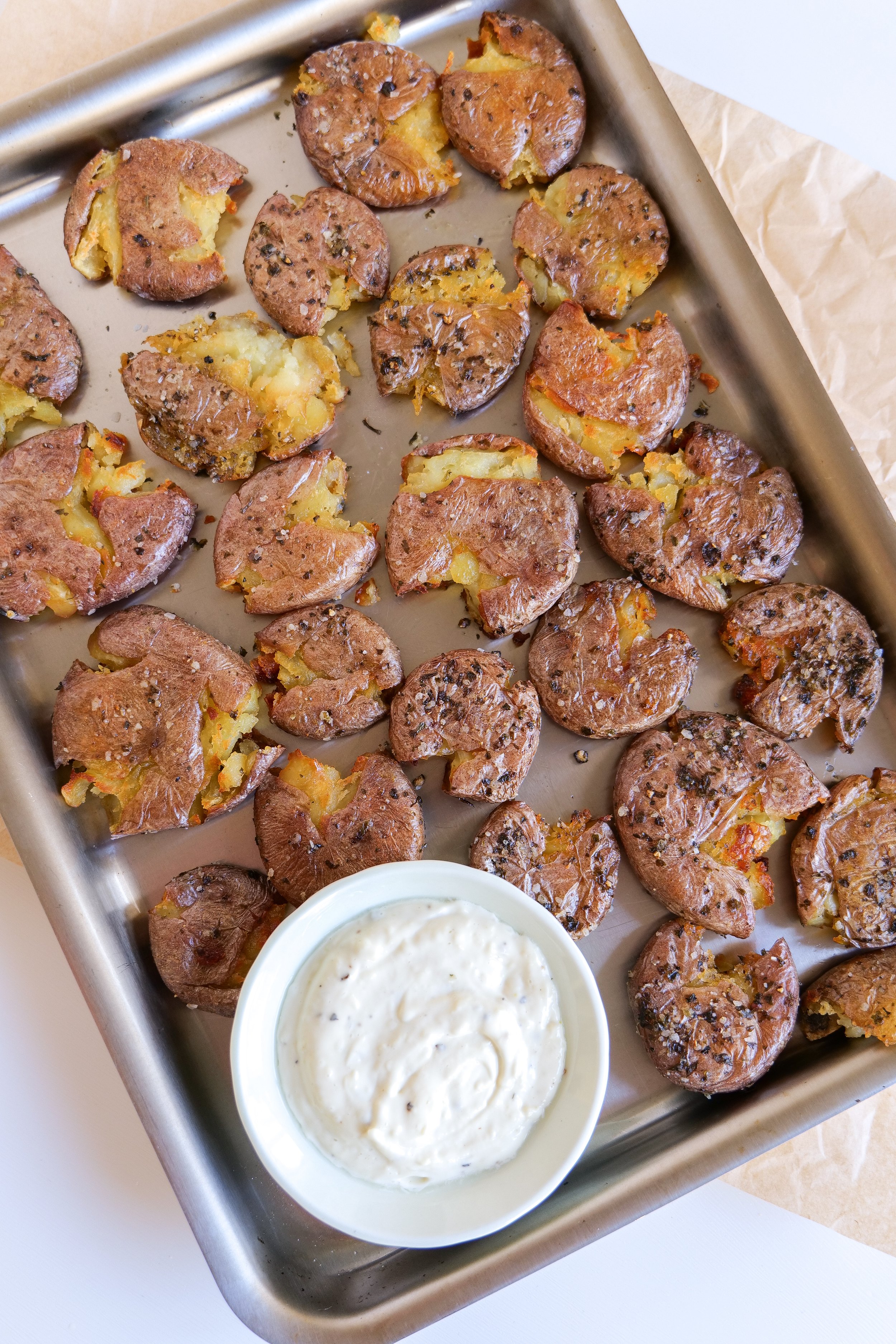
For short-term storage, keep it at room temperature for up to about two days. For longer storage, refrigerate the loaf.

You can also freeze individual slices. Wrap them well before placing them into a freezer-safe container or bag.

When you're ready for another piece, gently warm an individual slice before serving. The slightly warmed blueberry filling and brown butter icing are especially delicious.

Soft blueberry cinnamon roll bread with layers of homemade blueberry filling and vanilla brown butter icing.

What to Serve with Blueberry Cinnamon Roll Loaf

This loaf is beautiful enough to be the centerpiece of a brunch spread.

Serve it alongside fresh fruit, eggs, bacon, coffee, or a homemade latte for a complete breakfast.

It's also sweet enough to stand on its own as an afternoon treat or dessert.

Because the loaf has both blueberry and brown butter flavors, I especially love it alongside a simple cup of hot coffee where neither one has to compete with another strong flavor.
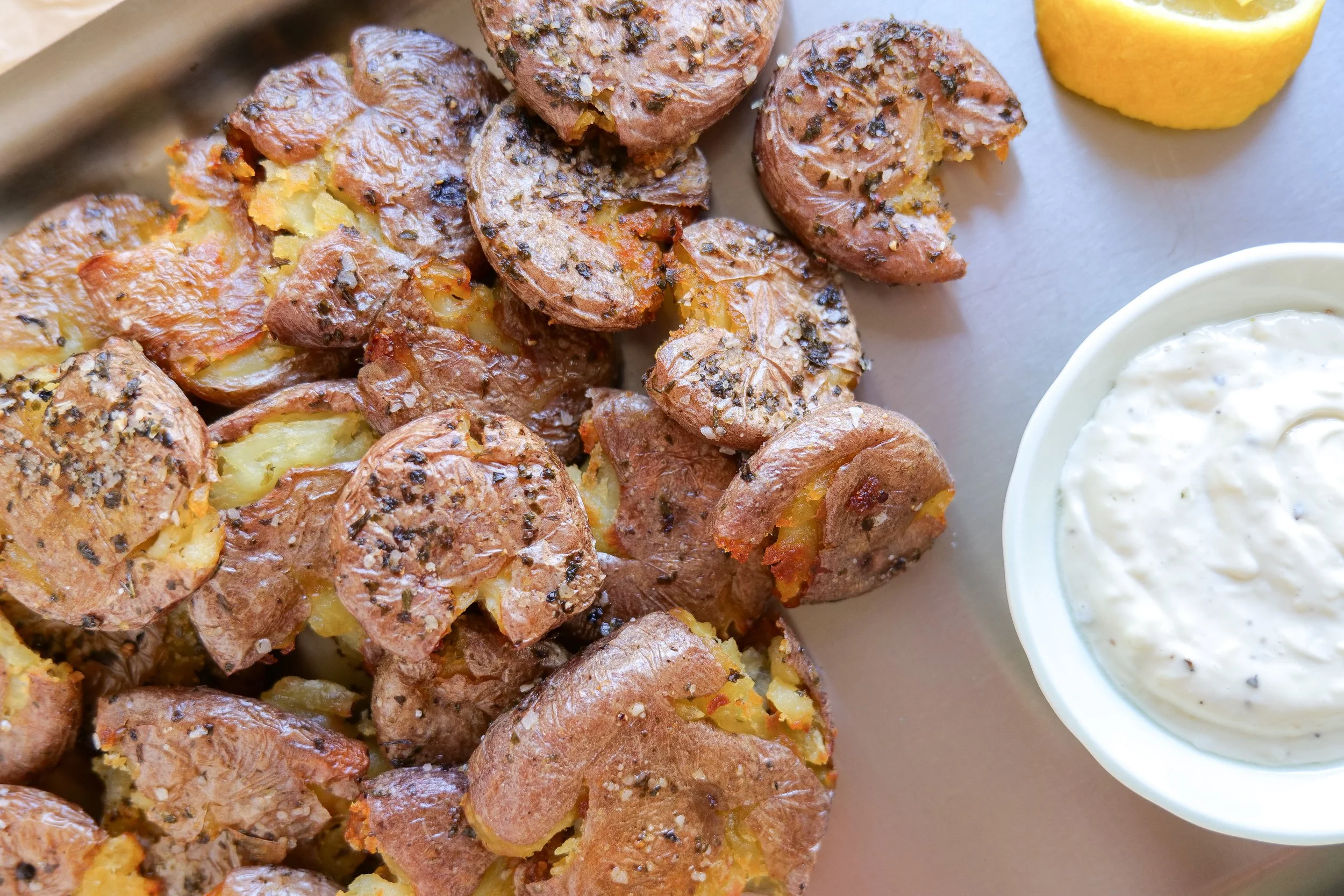
Homemade blueberry cinnamon roll loaf topped with sweet brown butter icing and blueberry-filled swirls.
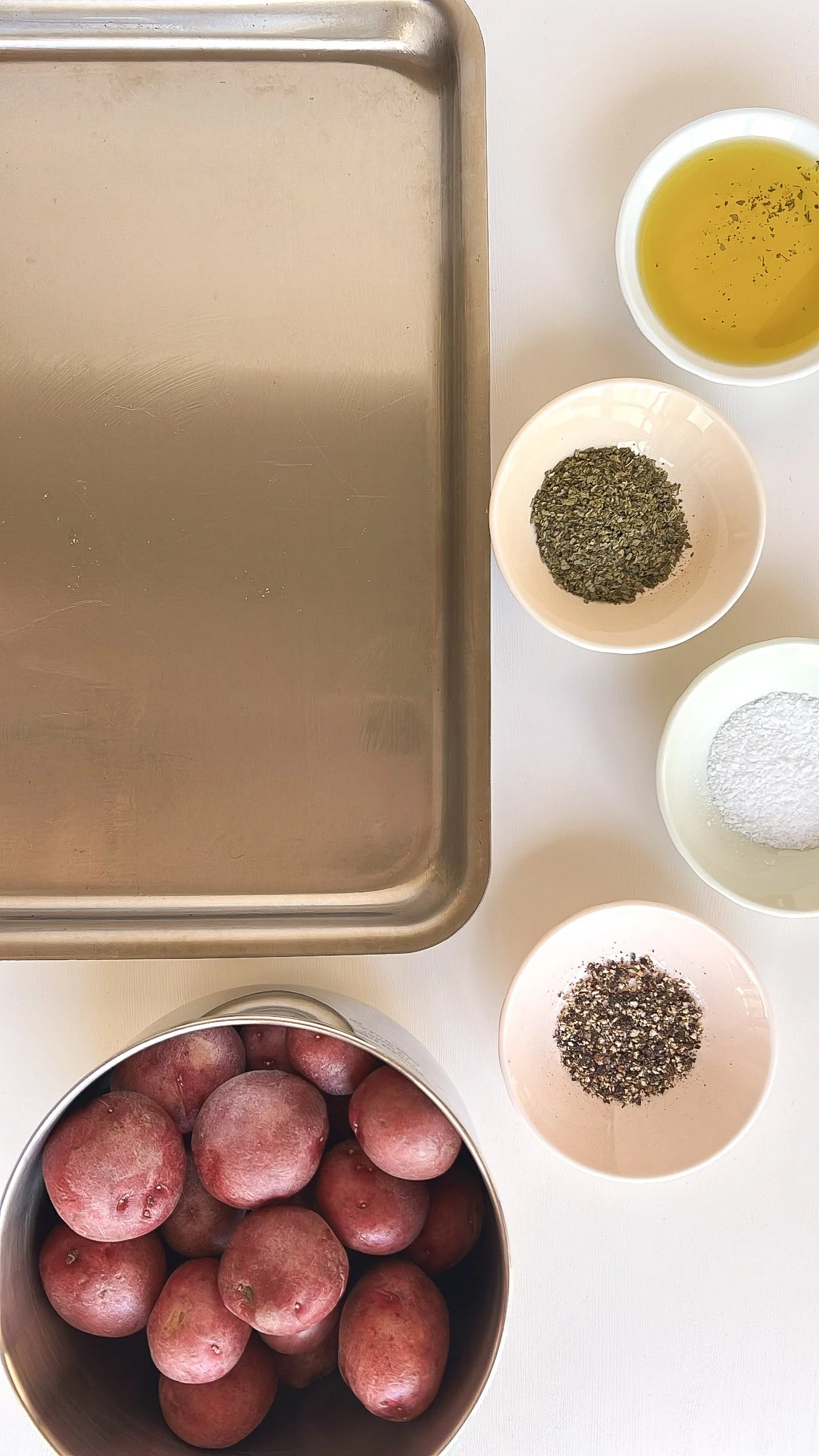
Other Cinnamon Roll Recipes You'll Love

If you love this Blueberry Cinnamon Roll Loaf, try some of my other homemade cinnamon roll recipes next:

Sweet Perfection: Baking the Ultimate Cinnamon Roll Loaf with Espresso Glaze

Sweet Serenity: Mastering the Art of Pumpkin Cinnamon Rolls with Cream Cheese Icing

Blackberry Cinnamon Rolls with Mascarpone Frosting

More Breakfast & Brunch Recipes

Savory Sausage, Crisp Bacon, and a Sweet Maple Dijon Spread Delight!

Pumpkin Pie Overnight Oats with a Hard Chocolate Top

Soft Cream Cheese Lemon Blueberry Scones

Berry Custard Puff Pastry Tart

Blueberry Orange Glazed Muffins

Banana Bread Recipe

Pumpkin Coffee Cake with Pecan Crumbles

A Sweet and Delicious Recipe for Lemon Poppyseed Bread

Indulge in Delicious Personal Pear Tarts

Save This Recipe

Whether you're planning a weekend brunch, baking something special for your family, or simply looking for a new blueberry recipe to add to your collection, I've included a printable recipe card below so it's easy to save, print, and share with the people you love.

Printable From Amanda’s Kitchen recipe card for blueberry cinnamon roll loaf with brown butter icing.

Easy Slow Cooker Pulled Pork

Tender, Juicy & Perfect Every Time

There are certain recipes that become staples in our home because they make life just a little easier, and this Easy Slow Cooker Pulled Pork is one of them.

With just a few minutes of prep, the slow cooker transforms a simple pork shoulder into incredibly tender, flavorful pulled pork that's perfect for everything from busy weeknight dinners to backyard barbecues and family gatherings. It's one of those recipes that fills the house with the most incredible aroma and always brings everyone into the kitchen asking when dinner will be ready.

One of my favorite things about this recipe is how versatile it is. We pile it onto toasted brioche buns, tuck it into tacos, spoon it over baked potatoes, or use the leftovers for nachos the next day. It freezes beautifully, reheats wonderfully, and somehow tastes even better after the flavors have had more time to come together.
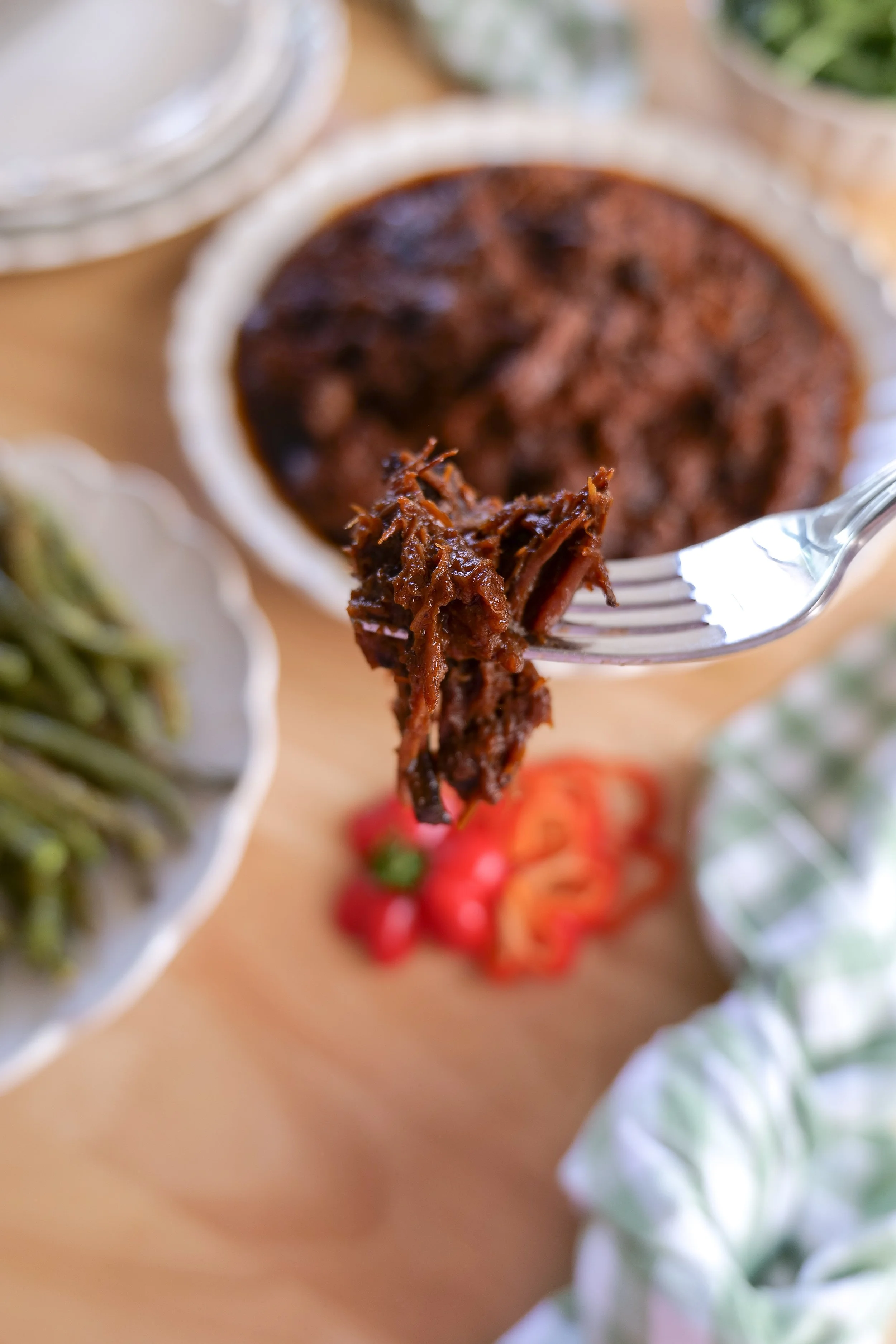
If you're looking for a dependable recipe that's simple enough for everyday dinners but special enough for entertaining, this slow cooker pulled pork is one you'll find yourself making again and again.

Tender homemade slow cooker pulled pork seasoned with a brown sugar and spice dry rub.

Why You'll Love This Recipe

This recipe has become one of my favorite meals because it's almost effortless while delivering incredible flavor every single time.

You'll love it because it's:

  • Made with simple pantry ingredients

  • Perfect for meal prep

  • Great for feeding a crowd

  • Tender, juicy, and flavorful

  • Freezer friendly

  • Easy enough for busy weeknights

  • Perfect for sandwiches, tacos, rice bowls, nachos, and baked potatoes

  • A wonderful recipe for summer barbecues, football season, and family gatherings

Tender slow cooker pulled pork shredded and ready to serve for an easy family dinner.
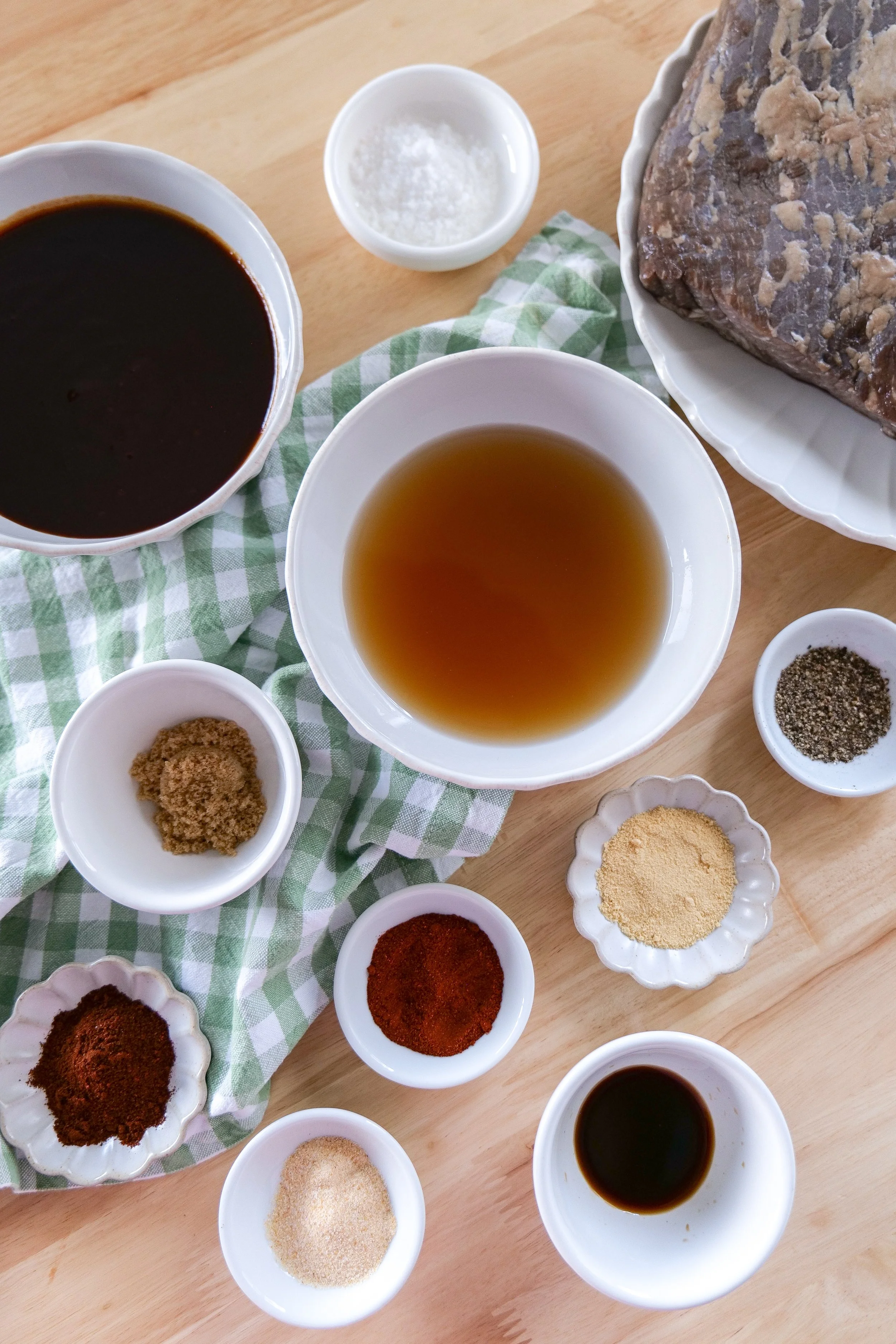
Ingredient Notes

Simple ingredients come together to create rich, slow-cooked flavor.
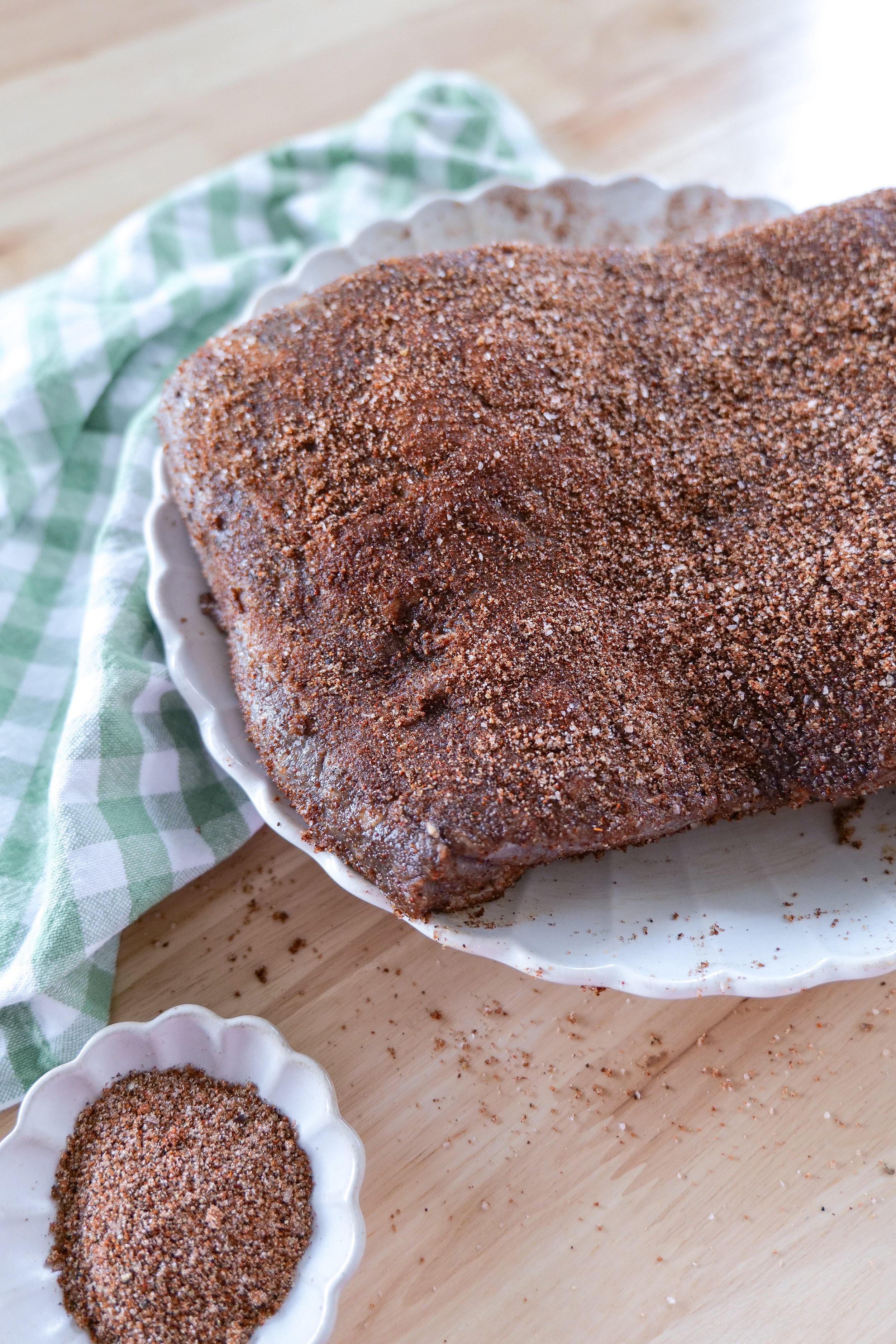
Pork Shoulder

Pork shoulder (also called pork butt or Boston butt) is my favorite cut because of its beautiful marbling. As it cooks low and slow, the fat melts into the meat, creating incredibly tender pulled pork.

Chicken Broth

A little broth helps keep the pork moist while creating flavorful cooking juices you'll want to stir back into the shredded meat.

Brown Sugar

Brown sugar balances the smoky spices while helping develop a beautiful caramelized crust during searing.

Red Onion

As the onion slowly cooks, it melts into the juices, adding sweetness and another layer of flavor.

The Spice Blend

Paprika, cumin, garlic, onion powder, and just a touch of cayenne create a smoky seasoning that's flavorful without being overly spicy.

Ingredients for easy slow cooker pulled pork including pork shoulder, red onion, chicken broth, olive oil and dry rub seasonings.

Kitchen Tools

You'll only need a few kitchen staples.

  • Slow cooker

  • Chef's knife

  • Cutting board

  • Small mixing bowl

  • Measuring spoons

  • Two forks for shredding

I've linked all of my favorite slow cooker essentials, knives, and everyday kitchen tools in my Kitchen Essentials below.

SHOP MY KITCHEN FAVORITES

Easy Slow Cooker Pulled Pork Recipe

Ingredients

Pulled Pork

  • 5-pound pork shoulder or pork butt

  • 1 medium red onion, thinly sliced

  • ¾ cup chicken broth

  • 3 tablespoons olive oil

Dry Rub

  • 2 teaspoons fine sea salt

  • 1½ teaspoons black pepper

  • 2 teaspoons paprika

  • 1½ teaspoons garlic powder

  • ¾ teaspoon onion powder

  • ¾ teaspoon chili powder

  • ½ teaspoon cayenne pepper (optional)

  • 1½ teaspoons ground cumin

  • ¼ cup packed brown sugar

Instructions

Step 1

Heat the olive oil in your 360 Cookware slow cooker insert or a large skillet over medium heat.

Add the sliced red onion and sauté for about 2–3 minutes, just until it begins to soften.

Step 2

While the onion cooks, combine all of the dry rub ingredients in a small bowl.

Pat the pork shoulder dry with paper towels, then generously coat every side with the seasoning mixture, pressing it into the meat.

Move the onions to the side of the pan and carefully add the pork.

Sear for 4–5 minutes per side, creating a deep golden crust.

Step 3

Transfer the insert to the slow cooker base (or transfer everything into your slow cooker if using a skillet).

Pour the chicken broth around the pork, being careful not to wash away the seasoning on top.

Cover and cook:

  • LOW: 7–8 hours

  • HIGH: 4–5 hours

The pork is ready when it easily falls apart with two forks and reaches an internal temperature of approximately 200–205°F.

Step 4

Transfer the pork to a cutting board.

Allow it to rest for 10 minutes, then shred using two forks.

Return the shredded pork to the slow cooker and toss it with the cooking juices and onions until evenly coated.

Serve warm however you like.

Amanda's Quick Tips

  • Don't skip the searing—it adds incredible flavor.

  • Shred the pork directly into the cooking juices.

  • If the pork isn't shredding easily, let it cook a little longer.

  • Brioche buns make incredible pulled pork sandwiches.

  • Leftovers taste even better the next day.

Seasoned pork shoulder with sliced red onion prepared in the slow cooker before cooking.
Pork shoulder coated in homemade brown sugar dry rub and placed in the slow cooker.

Amanda's Tips

One of the reasons I love this recipe so much is because it's incredibly forgiving, but these simple tips will help you make the best pulled pork every single time.

Sear Before Slow Cooking

Although it's tempting to skip this step, searing the pork creates a flavorful crust that adds richness to the finished dish. It only takes a few extra minutes and is well worth the effort.

Let It Rest Before Shredding

Once the pork has finished cooking, allow it to rest for about 10 minutes before shredding. This helps the juices redistribute throughout the meat, keeping every bite tender and flavorful.

Toss It Back Into the Juices

After shredding, return the pork to the slow cooker and mix it into the cooking juices and onions. This is my favorite trick for keeping pulled pork incredibly juicy.

Taste Before Serving

Every pork shoulder is a little different. Taste the finished pork before serving and add an extra pinch of salt or black pepper if needed.

Perfect for Meal Prep

This recipe makes a generous amount and reheats beautifully, making it one of my favorite meals to prepare ahead for busy weeks.

Homemade pulled pork slow cooked until tender and easily shredded.

Easy Variations

This recipe is wonderfully versatile and can be used in so many different ways.

BBQ Pulled Pork

Stir your favorite barbecue sauce into the shredded pork just before serving.

Mexican-Inspired Pulled Pork

Add fresh lime juice and chopped cilantro after shredding. Serve in tacos, burritos, quesadillas, or rice bowls.

Hawaiian Pulled Pork

Top with grilled pineapple and pickled red onions for a sweet and savory combination.

Carolina Style

Skip the barbecue sauce and serve with a tangy vinegar-based sauce instead.

Spicy Pulled Pork

Add additional cayenne pepper or stir in chopped chipotle peppers in adobo sauce after shredding.

Easy homemade pulled pork made from slow-cooked pork shoulder with a flavorful dry rub.

Make Ahead Tips

This is one of my favorite recipes for entertaining because almost all of the work can be done ahead of time.

Cook the pork the day before, shred it, and store it in the refrigerator with all of the cooking juices.

The next day, simply warm everything together in the slow cooker on the Warm setting until heated through.

It's one less thing to worry about when hosting family or friends.

Storage & Freezing

Store leftover pulled pork in an airtight container in the refrigerator for up to 4 days.

For longer storage, freeze portions with some of the cooking juices for up to 3 months.

To reheat, thaw overnight in the refrigerator and warm gently on the stovetop or in the slow cooker until heated through.

Slow-cooked pulled pork served tender and shredded for an easy dinner.

Frequently Asked Questions

What's the best cut of pork for pulled pork?

Pork shoulder or pork butt are the best choices because they have enough marbling to become incredibly tender during slow cooking.

Can I skip searing the pork?

Yes, but I highly recommend taking a few extra minutes to sear it first for the best flavor.

How do I know when it's done?

The pork should easily pull apart with two forks and reach an internal temperature of about 200–205°F.

Can I cook it overnight?

Absolutely. Cooking on LOW overnight works beautifully.

Can I freeze leftovers?

Yes! Freeze the shredded pork with some of the cooking juices to help it stay moist when reheated.

Can I use barbecue sauce?

Definitely. Stir it in after shredding or serve it on the side so everyone can customize their meal.

Why isn't my pork shredding?

It simply needs more time. Continue cooking until it falls apart effortlessly.

What's the best bread for sandwiches?

Soft brioche buns are my favorite, but potato rolls, ciabatta, or Kaiser rolls are all excellent options.

Can I make this ahead for a party?

Yes! In fact, I think it tastes even better the next day after the flavors have had more time to develop.

Is this recipe spicy?

Not really. The cayenne adds a subtle warmth, but you can reduce or omit it if you prefer.

Tender pulled pork made with a homemade brown sugar, paprika and cumin dry rub.

Ways to Serve Pulled Pork

One of the best things about this recipe is how many meals you can make from it.

Try serving it:

  • On toasted brioche buns

  • In tacos

  • On nachos

  • Over baked potatoes

  • In rice bowls

  • Inside quesadillas

  • On flatbread pizzas

  • In sliders for parties

  • Stuffed into baked sweet potatoes

  • Over macaroni and cheese

It's one of those recipes that never gets old because every meal feels a little different.

What to Serve with Pulled Pork

Complete your meal with one (or several) of these favorite sides:

  • Creamy coleslaw

  • Slow Cooker Baked Beans

  • Macaroni and cheese

  • Cornbread

  • Potato salad

  • Roasted vegetables

  • Sweet potato fries

  • Watermelon slices

  • Fresh fruit salad

  • Pickles

Juicy shredded slow cooker pulled pork made with pork shoulder and simple seasonings.

More Dinner Recipes You'll Love

If your family enjoys comforting, easy dinners like this one, here are a few more favorites from Amanda's Kitchen:

  • Easy Skillet Chicken Pot Pie with Biscuits

  • Apple-Glazed Chicken Thighs

  • Italian Lasagna Soup

  • Chicken Tortilla Soup

  • Stuffed Italian Sausage Pasta Shells

  • Chorizo One Pan Dinner

  • Slow Cooker Braised Short Ribs

Shop My Kitchen Favorites

I've linked my favorite slow cooker, Dutch oven, knives, cutting boards, measuring tools, and everyday kitchen essentials that I use to make recipes like this one.

SHOP MY KITCHEN FAVORITES

Save This Recipe

Whether you're planning a backyard barbecue, feeding a crowd, or simply looking for an easy family dinner, I've included the printable recipe card below so it's easy to save, print, and make again whenever you need it.

This is one of those timeless recipes that always earns a spot back on the menu.

Printable From Amanda’s Kitchen recipe card for easy slow cooker pulled pork.

A Note From Amanda

Some of my favorite recipes aren't the ones that require fancy ingredients or hours in the kitchen. They're the ones that bring people together around the table, leave plenty of leftovers to enjoy the next day, and become part of family traditions.

This pulled pork is one of those recipes in our home. It's simple enough for an ordinary Tuesday night but special enough for birthdays, holidays, game days, and backyard gatherings with the people we love most.

I hope it becomes one of those dependable recipes your family asks for again and again.

"Taste and see that the Lord is good; blessed is the one who takes refuge in Him."
Psalm 34:8

Made with love for the people you love.

Caramelized Onion & Mushroom Chicken Thighs

A Cozy One-Pan Chicken Dinner

There are certain dinners that feel a little special without requiring an entire afternoon in the kitchen, and these Caramelized Onion & Mushroom Chicken Thighs are exactly that.

Bone-in, skin-on chicken thighs are seasoned simply and seared until the skin is beautifully golden and crisp. In the same skillet, thinly sliced onions slowly caramelize before mushrooms, fresh rosemary, thyme, and broth are added to create a rich, savory pan sauce.

Everything comes together in one skillet, allowing all of those browned bits from the chicken to become part of the sauce. The result is tender, juicy chicken surrounded by buttery mushrooms and sweet caramelized onions that taste like something you might order at a cozy little restaurant.

Serve it over creamy mashed potatoes, buttered noodles, or rice to soak up every bit of the sauce. Add a simple green vegetable or salad and you have a comforting family dinner that feels just as appropriate for a weeknight as it does for Sunday dinner with family.

Bone-in chicken thighs with caramelized onions, mushrooms, rosemary and a savory skillet pan sauce.

Why You'll Love This Recipe

This is one of those recipes that takes simple ingredients and turns them into something incredibly comforting.

You'll love it because it's:

  • Made primarily in one skillet

  • Full of rich, savory flavor

  • Made with simple ingredients

  • Perfect for cozy fall and winter dinners

  • Easy enough for a weeknight

  • Beautiful enough to serve when entertaining

  • Delicious with mashed potatoes, rice, or noodles

  • Made with bone-in chicken thighs that stay wonderfully juicy

  • Finished with an easy pan sauce rather than a heavy cream sauce

The combination of crispy chicken, sweet onions, earthy mushrooms, and fresh herbs makes every bite feel much more special than the amount of work involved.

Ingredients for caramelized onion and mushroom chicken thighs with fresh herbs and seasonings.
Golden skillet chicken thighs served with sautéed brown mushrooms and caramelized onions.

Why Chicken Thighs Work So Well

Bone-in, skin-on chicken thighs are perfect for skillet recipes like this because they stay tender and juicy as they cook.

Searing them skin-side down also creates a beautifully crisp exterior while leaving behind flavorful browned bits in the skillet.

Don't clean that pan.

Those little browned pieces are exactly what you want when you begin cooking the onions. As you add the butter, onions, mushrooms, and broth, all of that flavor works its way into the sauce.

Crispy bone-in chicken thighs surrounded by savory mushrooms and onions.

Ingredient Notes

Chicken Thighs

I use bone-in, skin-on chicken thighs for the best flavor and texture. Pat them very dry before seasoning so the skin can become crisp when it hits the hot skillet.

Onion

Use one large onion sliced thinly. Giving the onion enough time to slowly turn golden brings out its natural sweetness and creates much more flavor than simply sautéing it for a few minutes.

Mushrooms

I like brown mushrooms, such as cremini or baby bella mushrooms, because they have a slightly deeper flavor than white button mushrooms.

Butter

Butter helps brown the chicken and gives the onions and mushrooms a rich flavor. The recipe uses 4 tablespoons total, divided between the chicken and vegetables.

Fresh Rosemary & Thyme

Fresh herbs give the pan sauce that cozy, savory flavor that works so beautifully with chicken and mushrooms.

Vegetable Broth

Broth loosens all of the flavorful browned bits from the skillet and creates the simple sauce surrounding the chicken.

Mushroom chicken thighs in a skillet with caramelized onions and fresh herbs.

Kitchen Tools

You don't need many tools for this dinner, which is another reason I love it.

  • Large stainless steel or oven-safe skillet

  • Sharp chef's knife

  • Cutting board

  • Small bowl for seasoning

  • Tongs

  • Wooden spoon

  • Meat thermometer

I've linked some of the pans, knives, utensils, and other everyday pieces I use most often in my Kitchen Essentials shelf.

SHOP MY KITCHEN ESSENTIALS

Caramelized Onion & Mushroom Chicken Thighs Recipe

Prep Time: 15 minutes
Cook Time: Approximately 45 minutes
Total Time: Approximately 1 hour
Servings: 6

Ingredients

  • 6–8 bone-in, skin-on chicken thighs

  • 1 teaspoon sea salt

  • ½ teaspoon freshly ground black pepper

  • 1 teaspoon onion powder

  • 1 teaspoon garlic powder

  • ¼ teaspoon paprika

  • 4 tablespoons salted butter, divided

  • 1 large onion, thinly sliced

  • 8 ounces brown mushrooms, sliced

  • 2 sprigs fresh rosemary

  • 2 sprigs fresh thyme

  • 1 cup vegetable broth

  • 1 teaspoon dried thyme

  • Olive oil, if needed

  • Fresh thyme, for garnish

Instructions

Step 1: Prepare the Chicken

Heat a large skillet over medium-high heat.

While the skillet heats, pat the chicken thighs thoroughly dry with paper towels. Removing as much surface moisture as possible is one of the keys to achieving beautifully crisp skin.

In a small bowl, combine the sea salt, black pepper, onion powder, garlic powder, and paprika.

Season the chicken generously on both sides.

Step 2: Sear the Chicken

Add 2 tablespoons of salted butter to the hot skillet and allow it to melt.

Place the chicken thighs skin-side down in the skillet, being careful not to overcrowd the pan. Work in batches if necessary.

Leave the chicken undisturbed for approximately 5–7 minutes. When the skin has developed a deep golden crust, it should release easily from the skillet.

Flip and sear the second side for another 5–7 minutes.

Transfer the chicken to a plate and loosely cover while you prepare the onions and mushrooms.

The chicken does not need to be completely cooked through at this point.

Step 3: Caramelize the Onion

Reduce the heat to medium-low and add the remaining 2 tablespoons of butter to the same skillet.

Use a wooden spoon to gently loosen the flavorful browned bits left behind from the chicken.

Add the thinly sliced onion.

Cook for approximately 15 minutes, stirring regularly, until the onion becomes soft, golden, and caramelized.

If the skillet begins to look dry, add a small drizzle of olive oil.

Step 4: Add the Mushrooms & Herbs

Add the sliced mushrooms, rosemary sprigs, fresh thyme sprigs, and dried thyme.

Cook until the mushrooms soften and begin to brown, approximately 5–7 minutes.

Step 5: Make the Pan Sauce

Pour in the vegetable broth.

Use your wooden spoon to scrape the bottom of the skillet so all of those flavorful browned bits become part of the sauce.

Bring the mixture to a gentle simmer and cook for approximately 5 minutes.

Step 6: Finish the Chicken

Return the chicken thighs to the skillet, nestling them into the onions and mushrooms while keeping as much of the crispy skin above the liquid as possible.

Continue cooking gently until the thickest part of each chicken thigh reaches a safe internal temperature of 165°F.

Depending on the size of your chicken thighs and how far they cooked during searing, this will generally take another 10–15 minutes.

Spoon some of the sauce over the chicken as it cooks, avoiding the crispy skin when possible.

Step 7: Serve

Remove the rosemary and thyme stems.

Taste the sauce and adjust the salt and pepper if needed.

Serve the chicken warm with plenty of caramelized onions, mushrooms, and pan sauce spooned around it.

Finish with fresh thyme if desired.

Enjoy!

Amanda's Quick Tips

  • Pat the chicken completely dry before seasoning.

  • Don't move the chicken while the skin is searing.

  • If it sticks to the skillet, give it another minute before trying to flip it.

  • Don't rush the onions; their slow caramelization is where so much of the flavor develops.

  • Cook mushrooms until their moisture has released and they begin to brown.

  • Keep the crispy chicken skin mostly above the sauce.

  • Always use the internal temperature rather than cooking time alone to determine when chicken is done.

Savory skillet chicken thighs with golden skin, mushrooms and onions.

How to Get Crispy Chicken Thigh Skin

The difference between good skillet chicken and really good skillet chicken often comes down to the skin.

First, make sure your chicken is dry. Moisture creates steam, which works against browning.

Next, make sure the skillet is hot before adding the chicken.

Once the chicken goes into the pan, resist the temptation to move it around. Let it develop a crust.

One of my favorite tricks when cooking with stainless steel is simply waiting. If your chicken is firmly stuck to the skillet when you try to flip it, it often hasn't developed its crust yet. Give it another minute and try again.

Finally, when the chicken returns to the sauce, keep the skin above the liquid as much as possible so you don't lose all of that beautiful texture you just created.

Juicy chicken thighs topped with sweet caramelized onions and sautéed mushrooms.

How to Caramelize Onions for Chicken

Caramelized onions aren't difficult, but they do require a little patience.

Keep the heat around medium-low and allow the onions to cook gradually rather than trying to brown them quickly over high heat.

Stir them regularly so they cook evenly and pick up the browned bits from the chicken.

You'll know they're ready when they're soft, deeply golden, and noticeably sweeter than when they went into the pan.

Those 15 minutes make a huge difference in the finished dish, so this is one step I wouldn't rush.

One-pan mushroom chicken thighs served in a savory herb pan sauce.

Amanda's Tips

Don't Overcrowd the Skillet

If your chicken thighs don't comfortably fit without touching, sear them in batches. Overcrowding lowers the temperature of the pan and can cause the chicken to steam instead of brown.

Give the Mushrooms Time to Brown

Just like the chicken, mushrooms develop more flavor when they're given time to brown.

Use a Meat Thermometer

Chicken thighs vary considerably in size, which makes an internal temperature much more reliable than an exact cooking time.

Taste Your Sauce at the End

The chicken, butter, and broth all contribute salt to the final sauce. Wait until everything has cooked together before deciding whether it needs more seasoning.

Can I Use Boneless Chicken Thighs?

Yes.

Boneless, skinless chicken thighs can be used, but they'll cook more quickly and you won't get the same crispy-skin element.

Sear them until browned and begin checking their internal temperature earlier when you return them to the skillet.

If you have the choice, I prefer bone-in, skin-on thighs for this particular recipe because their richness works beautifully with the caramelized onions and mushrooms.

Easy Variations

Creamy Mushroom Chicken

After the chicken is fully cooked, remove it briefly and stir a splash of heavy cream into the sauce. Simmer gently until slightly thickened, then return the chicken to the skillet.

Garlic Mushroom Chicken

Add 2–3 cloves of minced garlic during the final minute of cooking the mushrooms.

White Wine Mushroom Chicken

Replace part of the broth with a dry white wine. Allow the wine to simmer for a few minutes before adding the remaining broth.

Extra Herb Chicken

Add additional rosemary and thyme for a more pronounced herb flavor.

Parmesan Mushroom Chicken

Finish the mushrooms and onions with freshly grated Parmesan just before serving.

What to Serve with Caramelized Onion & Mushroom Chicken

The sauce is one of the best parts of this recipe, so I especially love sides that can soak it up.

Try serving it with:

  • Creamy mashed potatoes

  • Buttered egg noodles

  • Steamed rice

  • Roasted potatoes

  • Creamy polenta

  • Crusty bread

  • Roasted asparagus

  • Green beans

  • Roasted broccoli

  • Simple arugula salad

  • Mixed greens with lemon vinaigrette

For a particularly cozy dinner, mashed potatoes and a simple green vegetable would be my first choice.

Easy skillet mushroom chicken dinner made with bone-in chicken thighs and caramelized onions.

Make Ahead Tips

You can slice the onions and mushrooms and mix the seasoning blend earlier in the day to make dinner prep faster.

I prefer cooking the chicken fresh so the skin stays as crisp as possible.

If you're making the entire meal ahead, store the chicken and sauce together and use the reheating method below.

How to Store Leftovers

Allow leftovers to cool before transferring them to an airtight container.

Store in the refrigerator for up to 3–4 days.

For longer storage, the cooked chicken and sauce can be frozen in an airtight freezer-safe container for up to 3 months.

Keep in mind that mushrooms may have a slightly softer texture after freezing and reheating.

How to Reheat Chicken Thighs

For the best texture, place the chicken and sauce in an oven-safe dish, cover loosely with foil, and warm in a 350°F oven until heated through.

You can remove the foil toward the end of reheating to help the chicken skin regain some of its texture.

Individual portions can also be reheated gently on the stovetop.

Frequently Asked Questions

What mushrooms are best with chicken thighs?

Cremini or baby bella mushrooms are my first choice because their deeper, earthy flavor works particularly well with caramelized onions and chicken.

Can I use white mushrooms?

Absolutely. White button mushrooms will also work.

Can I use chicken breasts?

You can, although you'll need to adjust the cooking time carefully because chicken breasts are leaner and can dry out more easily.

Do I have to use bone-in chicken thighs?

No. Boneless thighs work, but bone-in, skin-on chicken thighs give this recipe its best flavor and texture.

How do I know when chicken thighs are done?

Use an instant-read thermometer inserted into the thickest portion of the chicken without touching the bone. Chicken is safe once it reaches 165°F.

Why is my chicken skin not crispy?

The most common causes are excess moisture on the chicken, a skillet that wasn't hot enough, overcrowding, or moving the chicken before a crust had time to form.

How long does it take to caramelize the onions?

For this recipe, plan on approximately 15 minutes. We're looking for soft, deeply golden onions rather than the much darker onions used in something like French onion soup.

Can I make this dairy-free?

Yes. Replace the butter with your preferred cooking oil or dairy-free butter.

Can I make the sauce creamy?

Yes. A splash of heavy cream added at the end creates a delicious creamy mushroom sauce.

What should I serve with mushroom chicken thighs?

Mashed potatoes, rice, noodles, polenta, or crusty bread are especially good because they soak up the pan sauce.

Golden chicken thighs with caramelized onions, brown mushrooms, rosemary, and thyme in a savory skillet sauce.

More Cozy Dinner Recipes You'll Love

If you enjoyed these Caramelized Onion & Mushroom Chicken Thighs, you may also enjoy these comforting recipes from Amanda's Kitchen:

Easy Skillet Chicken Pot Pie with Biscuits

A cozy one-pan chicken dinner topped with golden, flaky biscuits.

Apple-Glazed Chicken Thighs

Another simple chicken thigh dinner with a sweet and savory seasonal glaze.

Creamy Chicken & Mushroom Couscous Soup

Perfect if you love the chicken and mushroom combination in this recipe.

Italian Penicillin Soup

A warm, comforting soup that's perfect for cooler evenings.

Italian Lasagna Soup

All of the cozy flavors of lasagna in an easy soup.

Slow Cooker Pulled Pork

An easy make-ahead dinner that's perfect for busy weeks and feeding a crowd.

Shop My Kitchen Favorites

I've gathered the cookware, knives, serving pieces, and everyday kitchen essentials I reach for when making recipes like this in my Kitchen Essentials shelf.

SHOP MY KITCHEN ESSENTIALS

Save This Recipe

Whether you're looking for a cozy weeknight dinner or something a little special to make for family and friends, save these Caramelized Onion & Mushroom Chicken Thighs for the next time you're craving a warm, savory skillet dinner.

I've included my printable From Amanda's Kitchen recipe card below so you can save it, print it, and come back to the recipe whenever you need it.

Printable recipe card for caramelized onion and mushroom chicken thighs from Amanda's Kitchen.

A Note From Amanda

Some of my favorite dinners are the ones that turn simple ingredients into something that feels a little more special.

Chicken, onions, and mushrooms aren't complicated ingredients, but giving each one the time to develop its flavor completely changes the finished dish. The crispy chicken, sweet onions, earthy mushrooms, and warm herbs make this one of those meals that feels comforting from the moment it starts cooking.

I hope this becomes one of those recipes you pull out on cool evenings when you want something warm on the table and everyone gathered around it.

"Taste and see that the Lord is good."
Psalm 34:8

Made with love for the people you love.