Classic French Ratatouille Recipe with Farmers Market Vegetables
/There is something about walking through a farmers market on a warm summer morning that always makes me want to slow down and cook with whatever looks most beautiful.
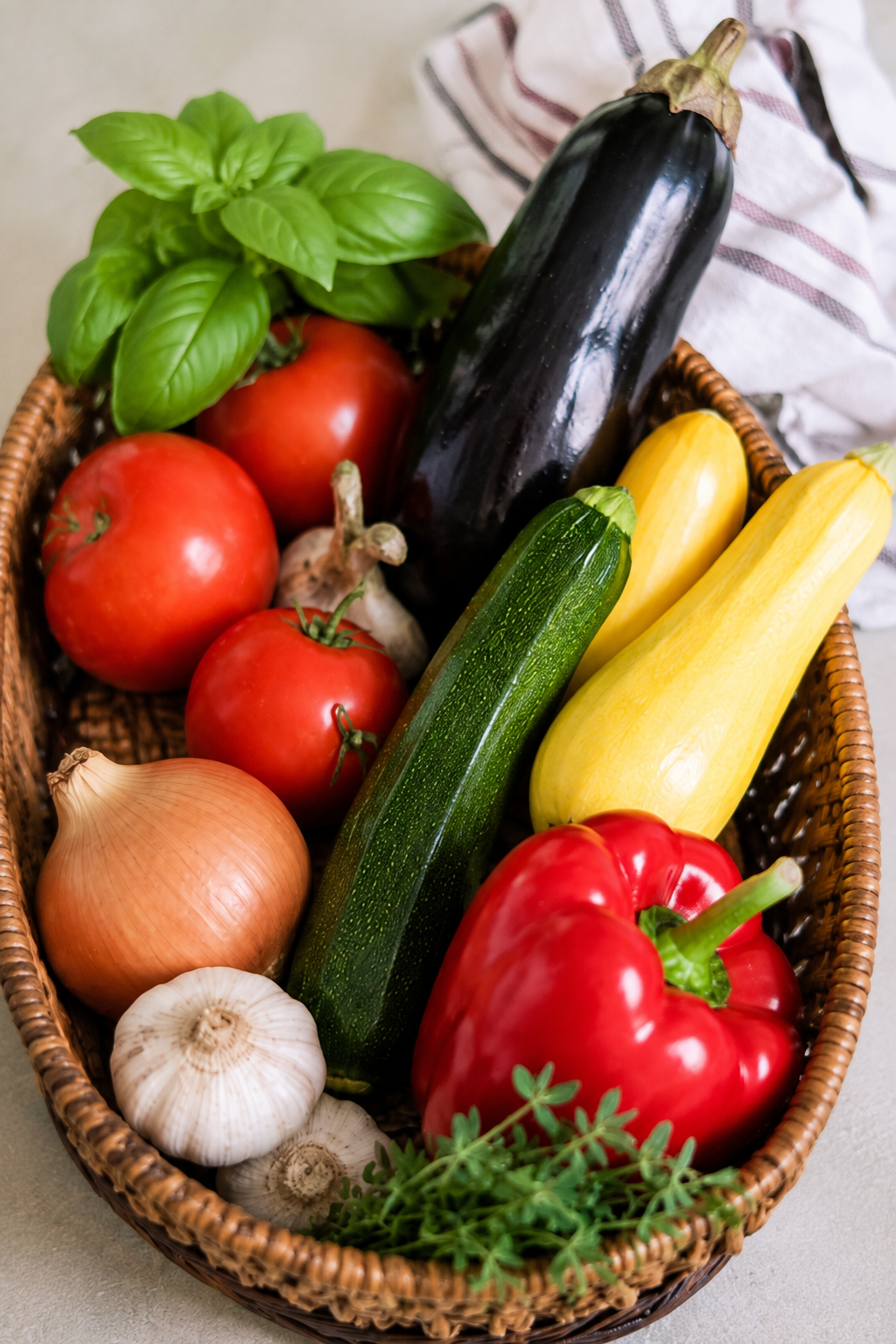
Baskets filled with ripe tomatoes, glossy eggplant, tender zucchini, yellow squash, fragrant basil, and colorful peppers make dinner feel less like another item on my list and more like an opportunity to create something special for the people I love.
Classic French ratatouille is one of my favorite recipes for turning that farmers market produce into a beautiful seasonal meal.
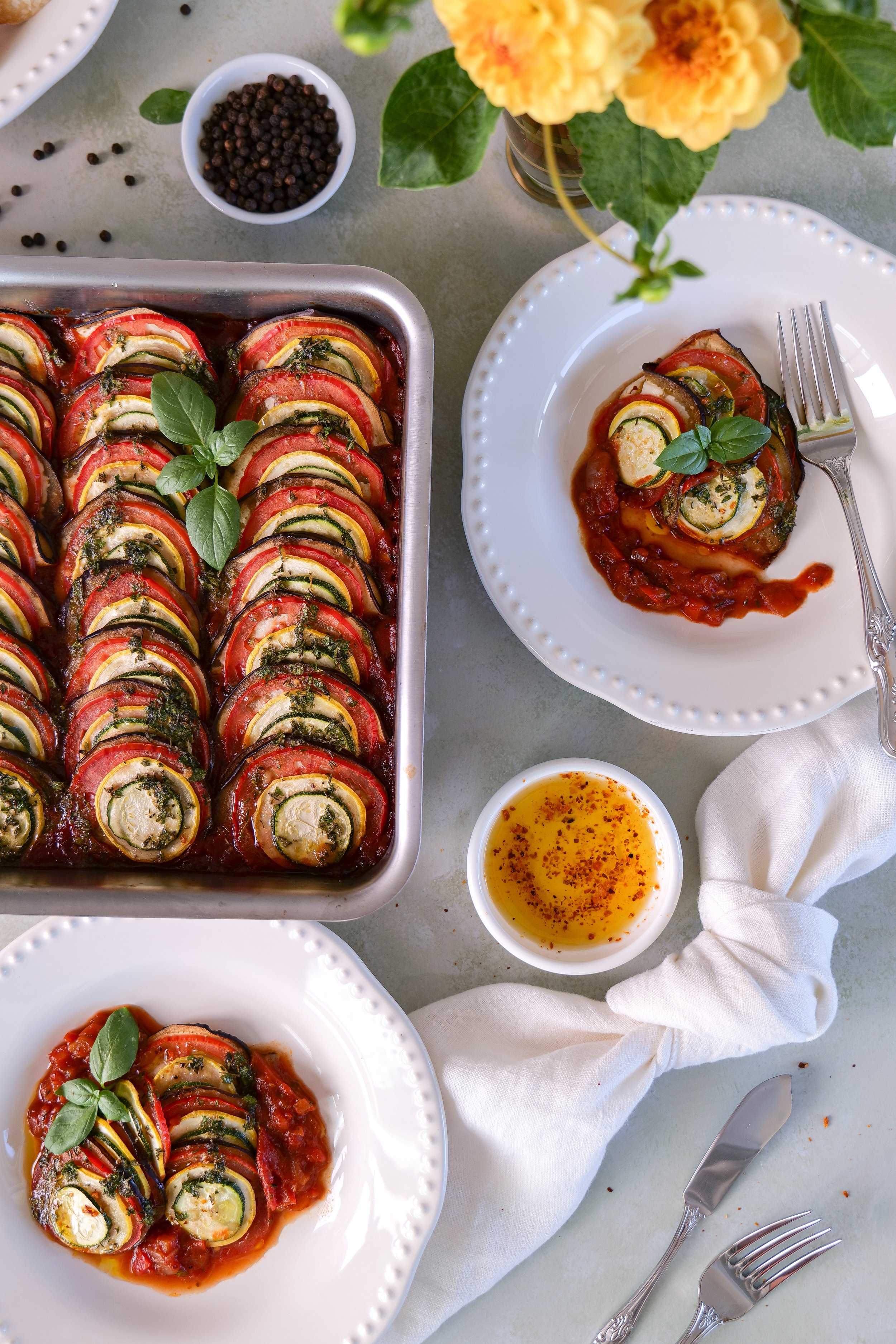
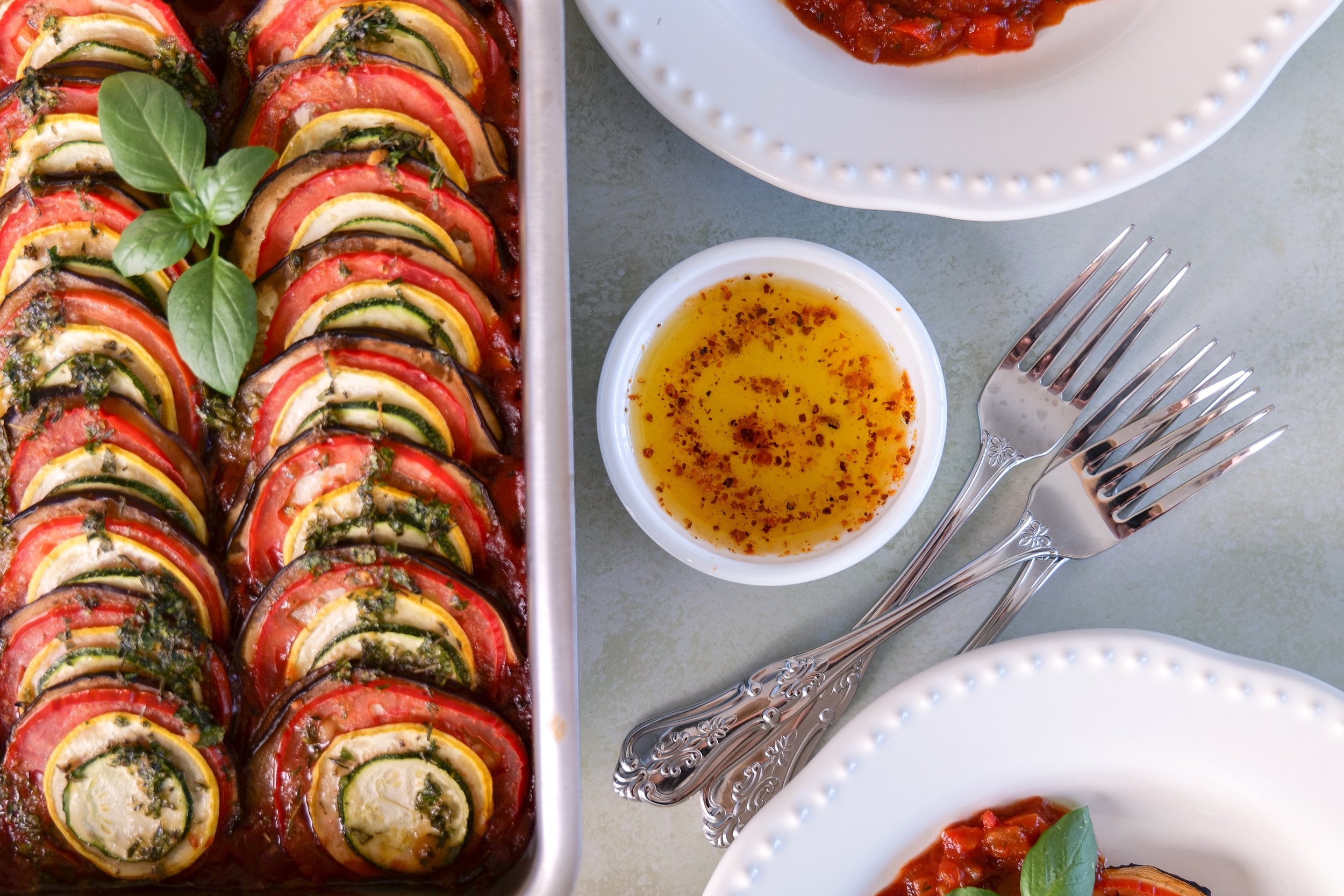
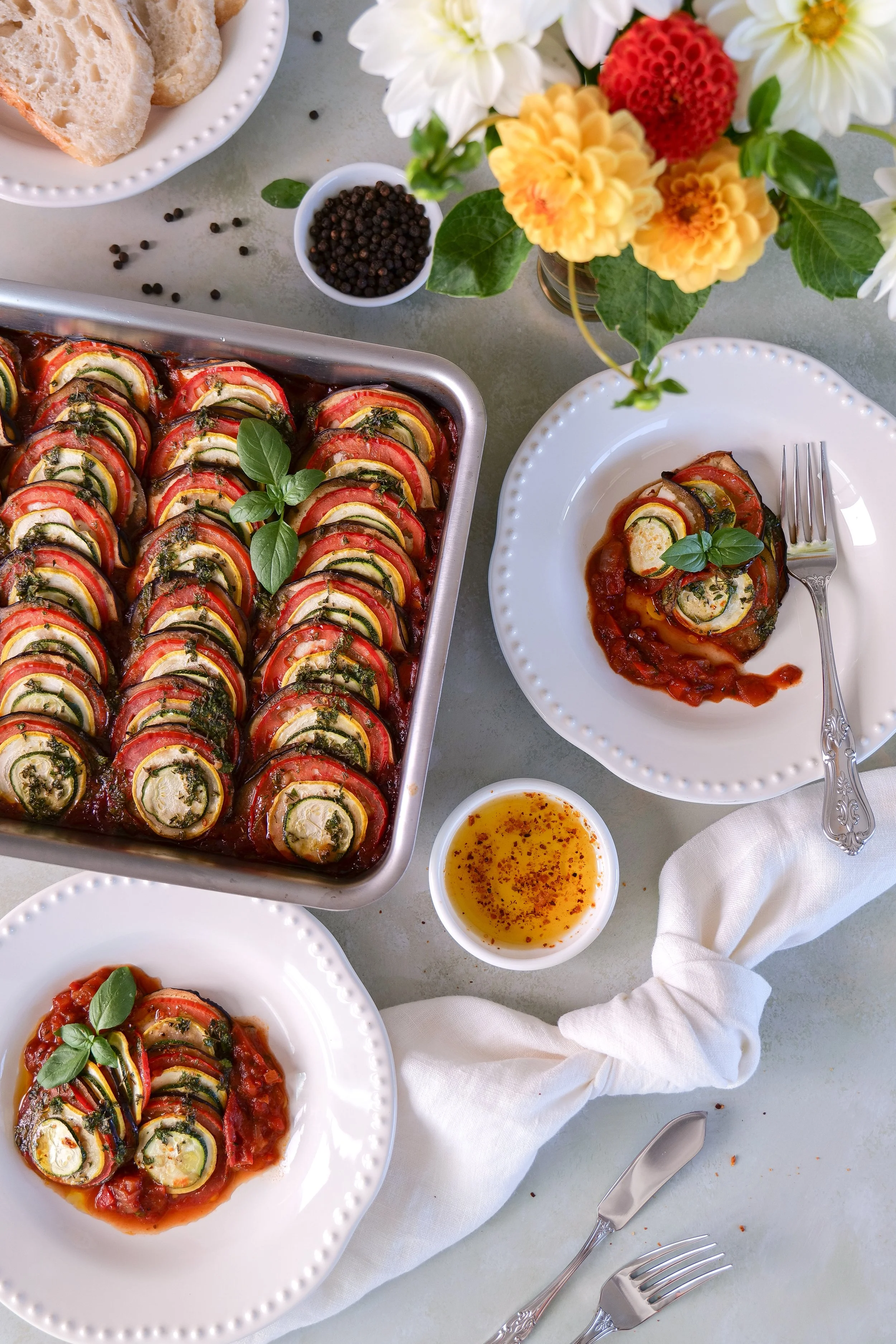
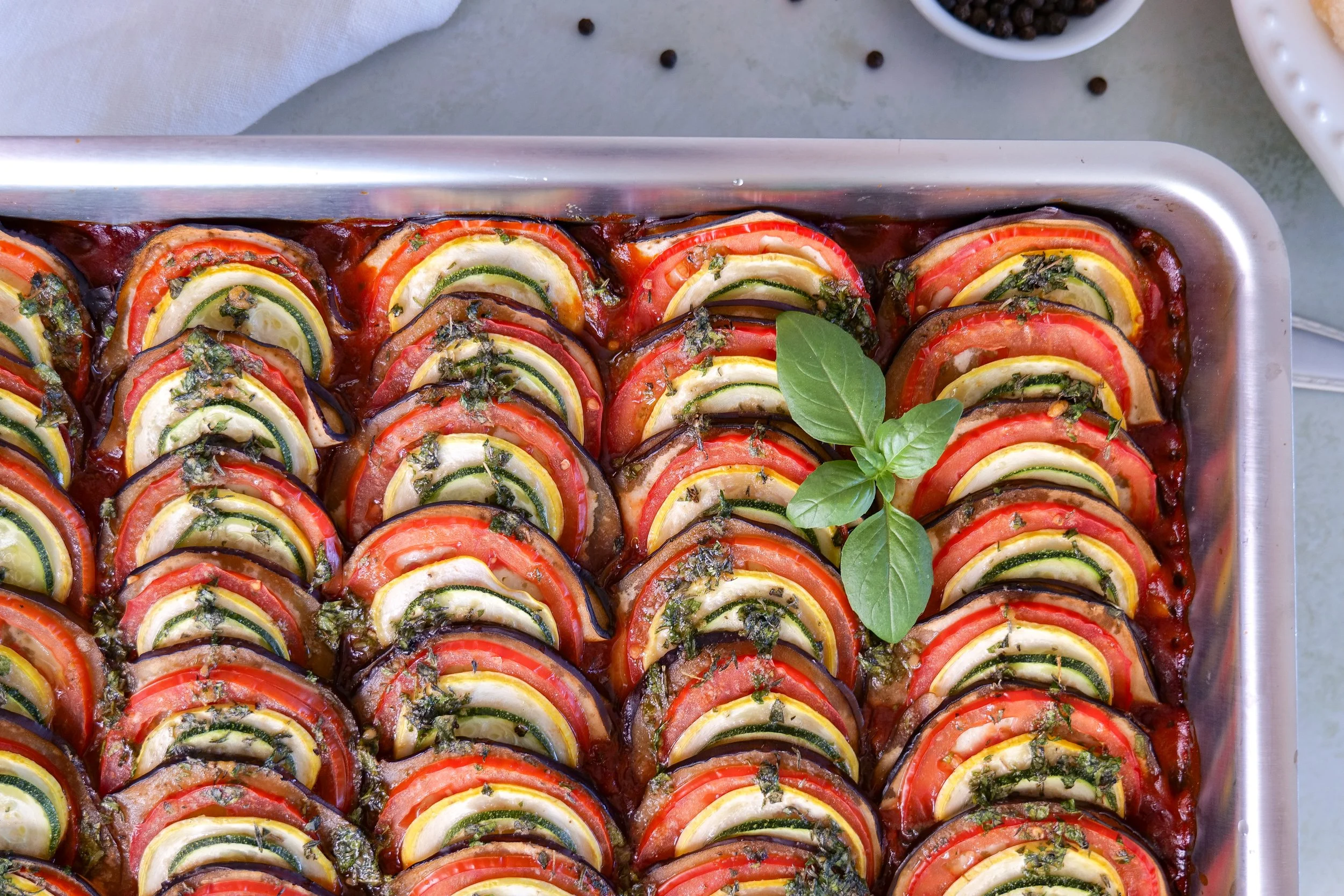
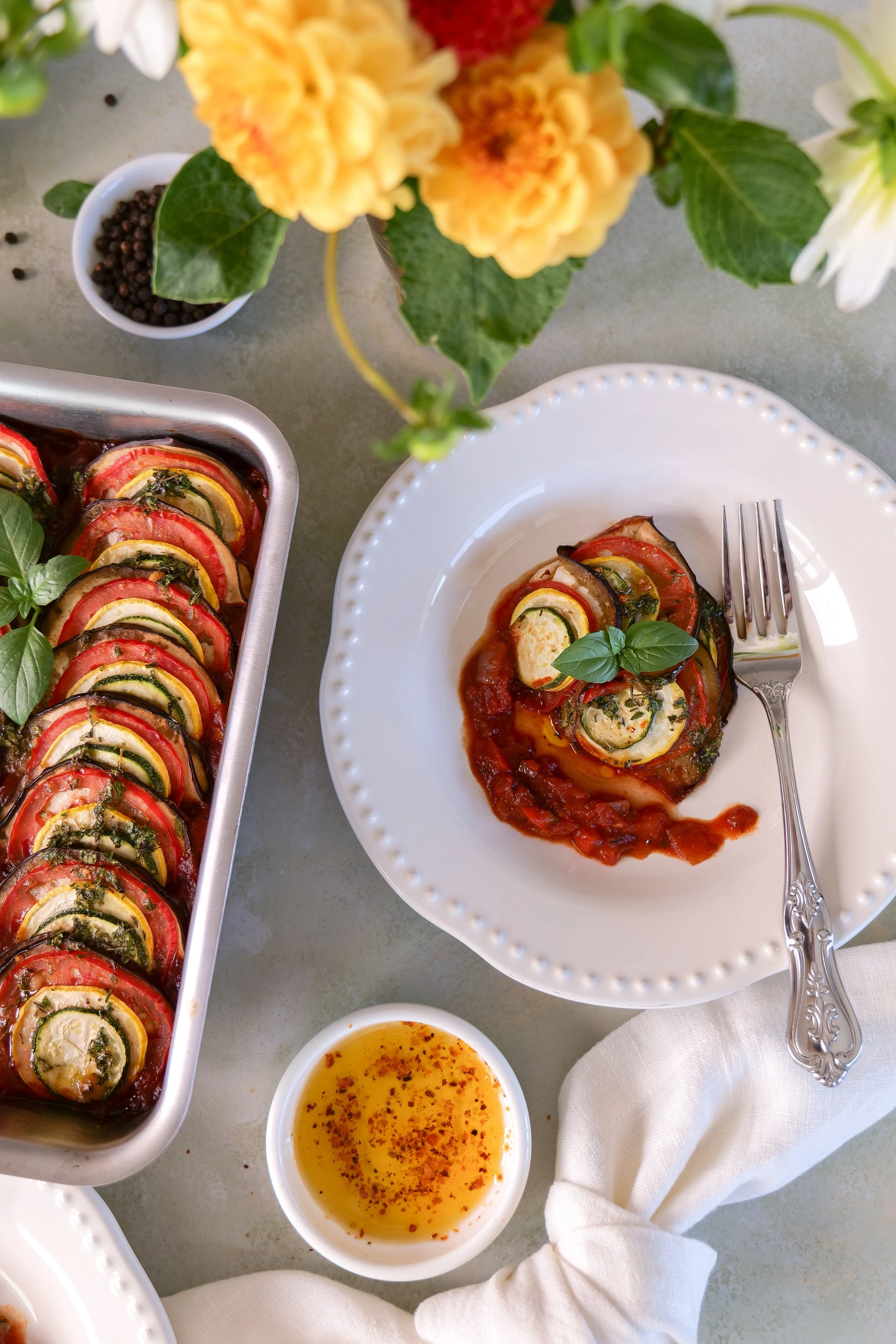
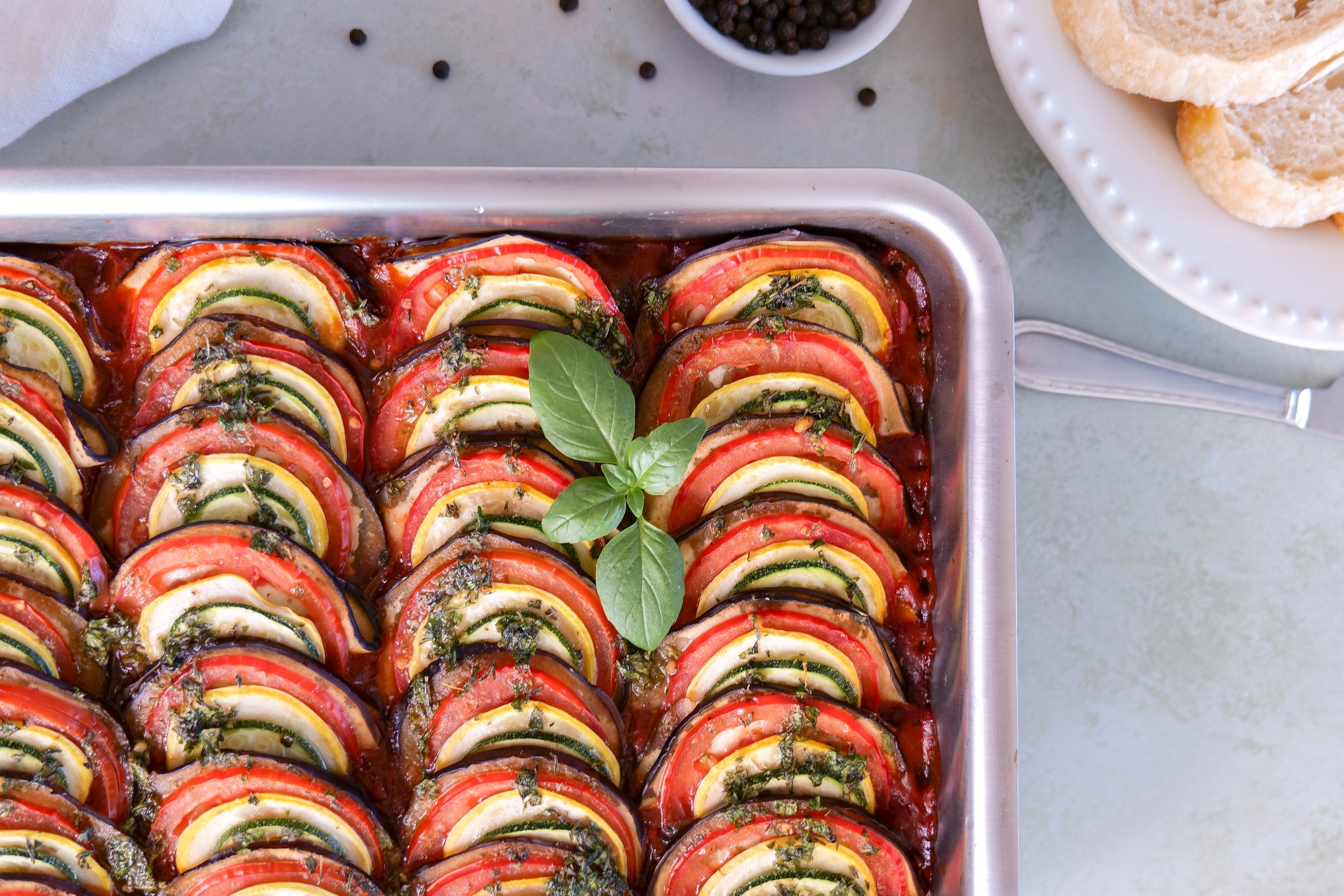
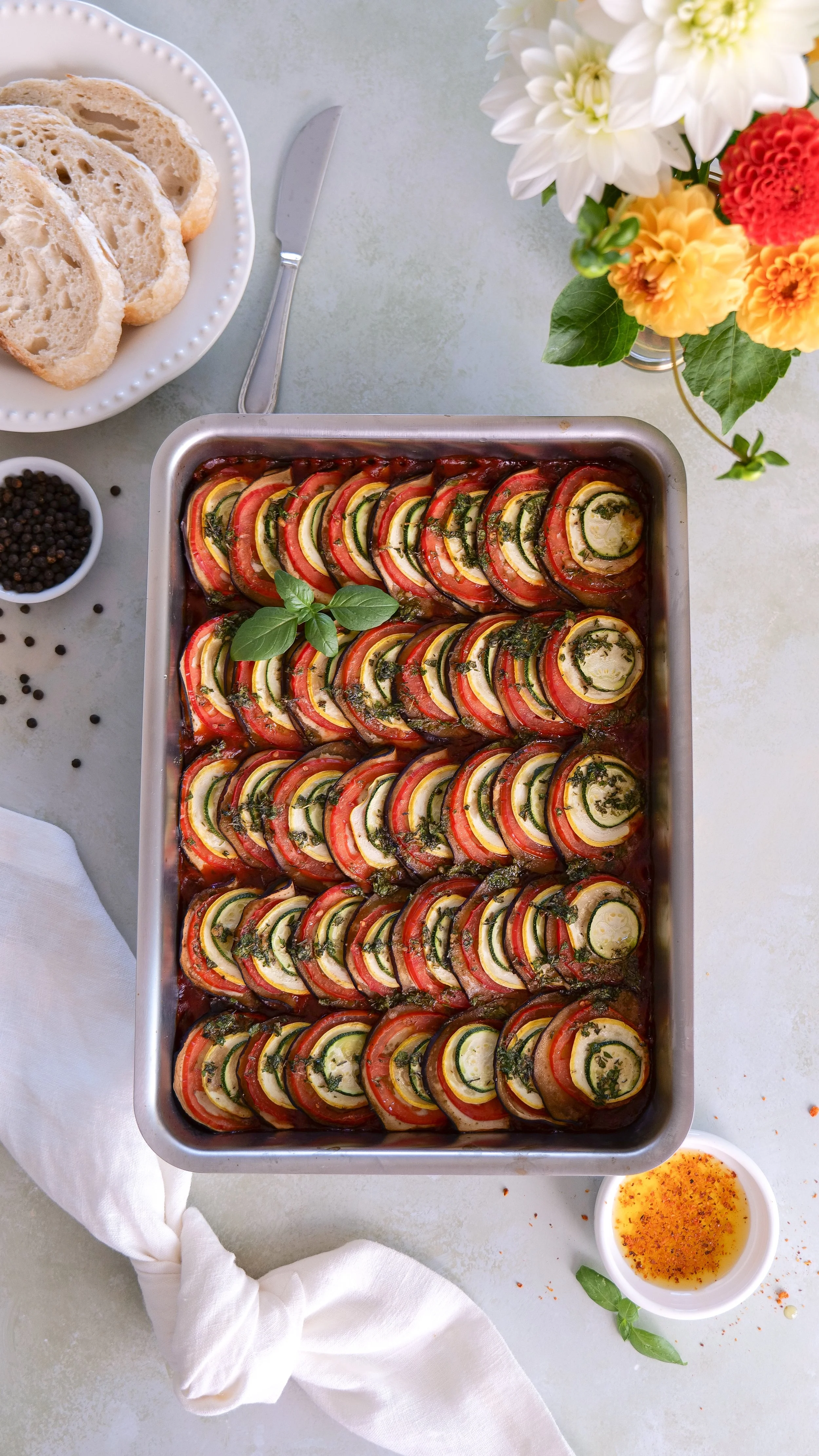
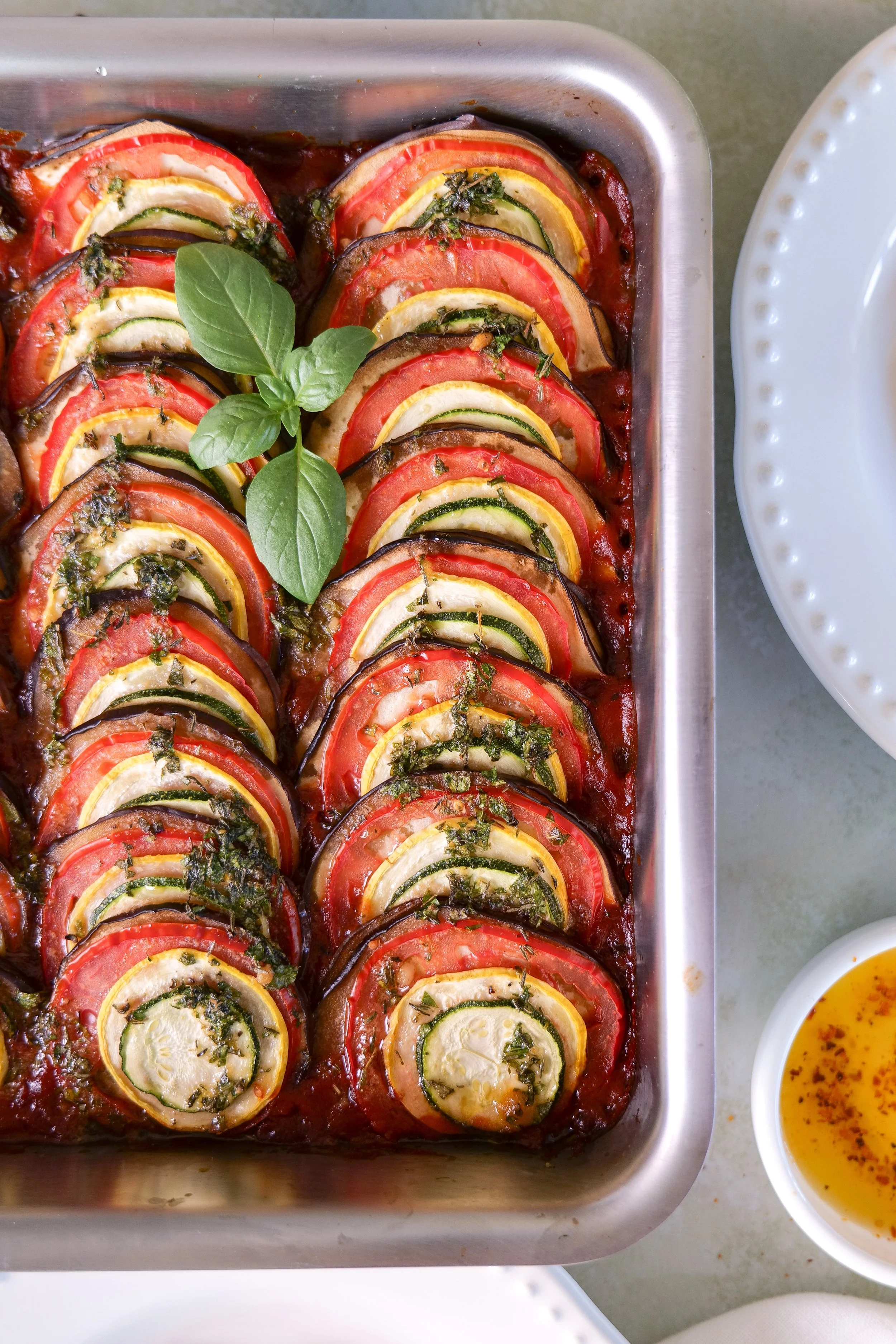
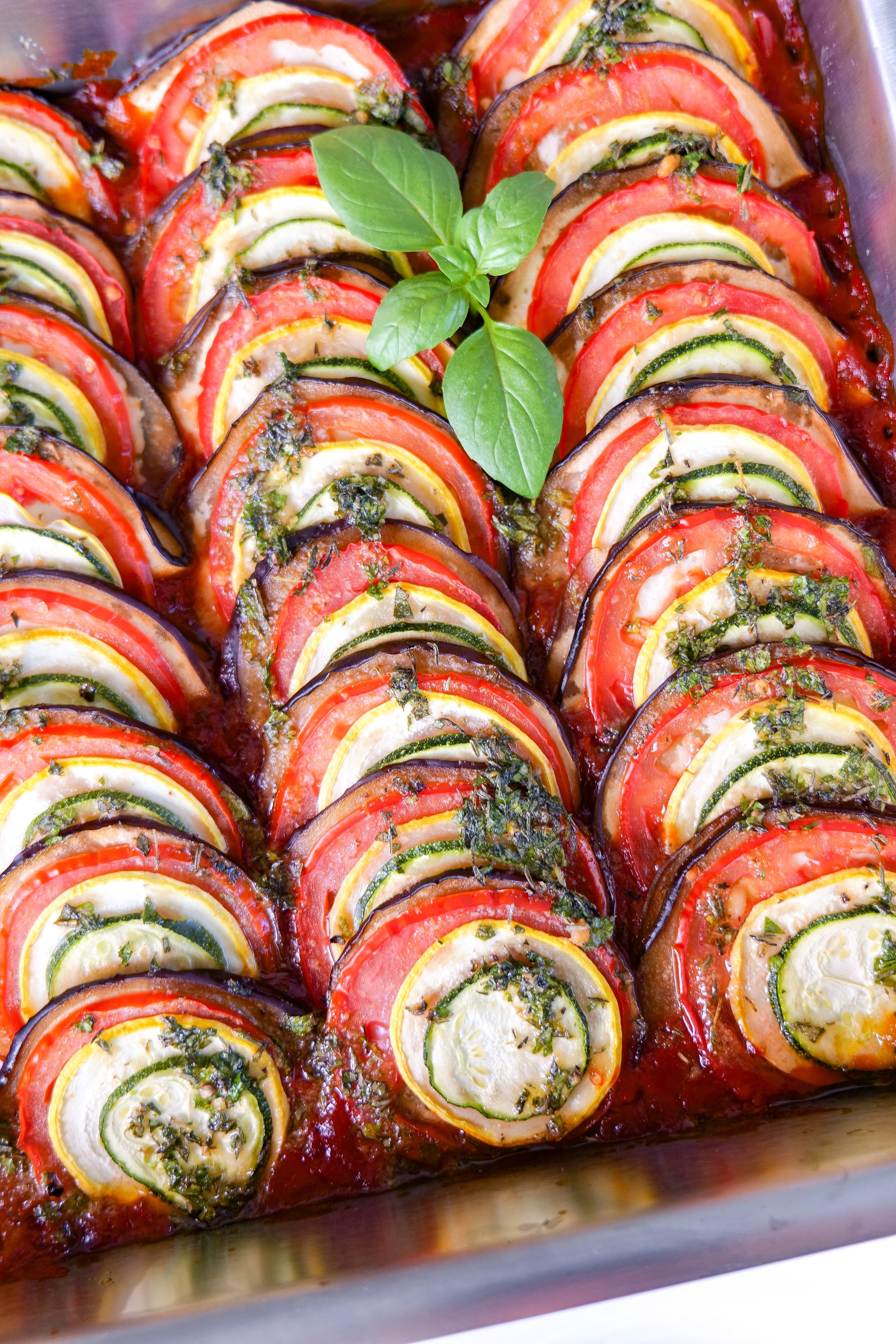
Thin slices of zucchini, yellow squash, eggplant, tomatoes, red onion, and bell pepper are layered over a rich tomato and herb sauce, then baked until the vegetables are tender and the edges are lightly caramelized. The finished dish is colorful, comforting, and full of fresh summer flavor.
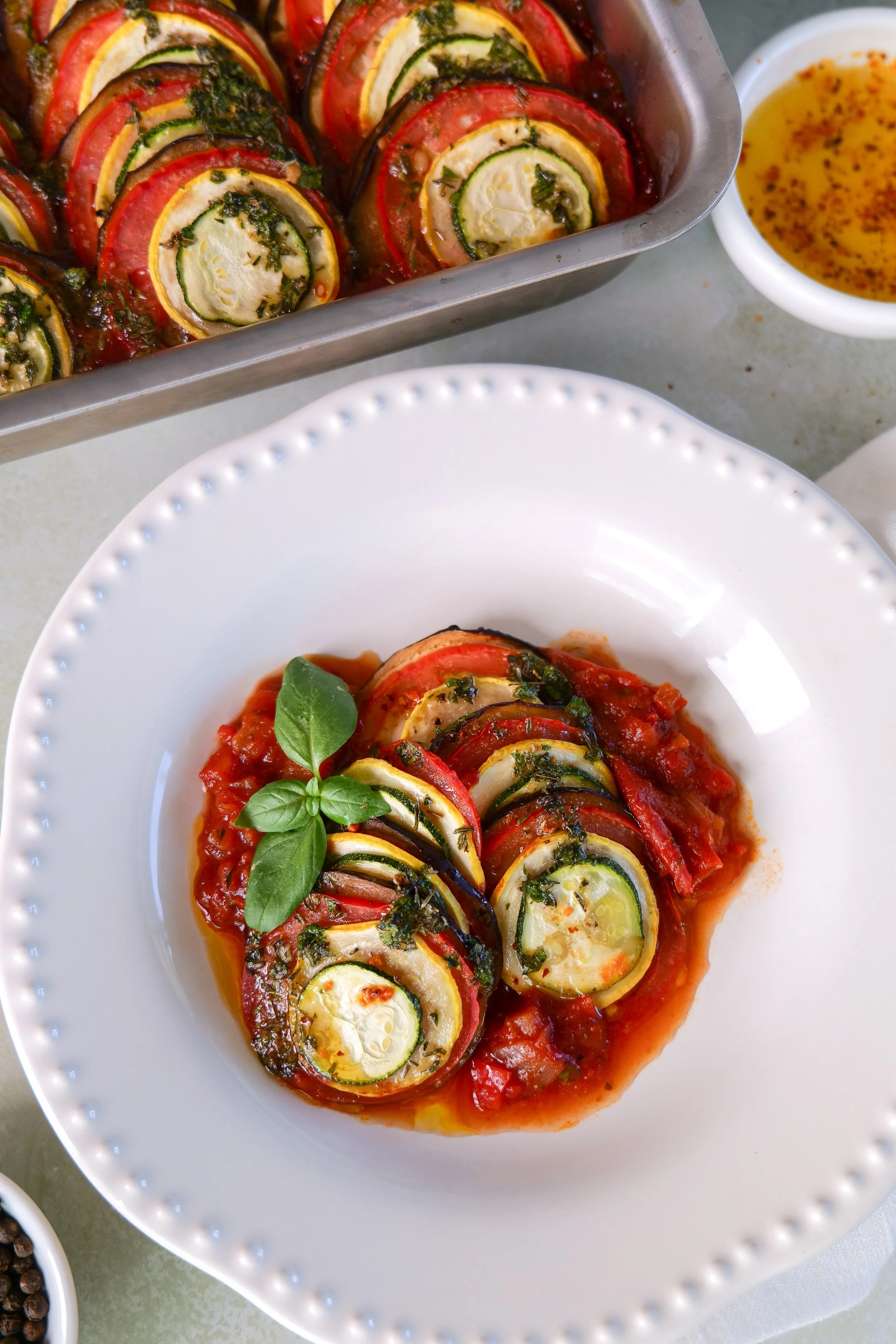
This easy oven-baked ratatouille is beautiful enough to serve while entertaining but simple enough to enjoy as part of a family dinner. Serve it with warm, crusty bread, spoon it over creamy polenta, pair it with grilled chicken, or enjoy it as a vegetable-forward main dish.
The best meals do not always require complicated ingredients. Sometimes they begin with a morning at the farmers market, a basket filled with whatever is in season, and a little time gathered together in the kitchen.
Why You Will Love This Classic Ratatouille
This recipe celebrates summer vegetables at their very best. It is one of those dishes that looks impressive on the table while still feeling rustic, relaxed, and welcoming.
You will love this recipe because it is:
Filled with fresh, seasonal vegetables
Naturally vegetarian and gluten-free
Beautiful enough for summer entertaining
A wonderful way to use farmers market or garden produce
Easy to prepare ahead of time
Delicious warm, at room temperature, or reheated
Versatile enough to serve as a main dish or side
Even more flavorful the following day
Ratatouille is also easy to adapt. The vegetables do not need to be perfectly identical, and your dish can change slightly depending on what looks best at the market that week.
From the Farmers Market to the Table
One of the things I love most about seasonal cooking is that every trip to the farmers market brings a little new inspiration.
Some weeks the tomatoes are the star. Other weeks, I find the most beautiful zucchini, fragrant bunches of basil, or eggplants in unexpected shapes and colors. Ratatouille allows all of those vegetables to come together in one warm and comforting dish.
When shopping for this recipe, look for vegetables that are relatively similar in width. This will make it easier to cut uniform rounds and create the layered appearance that makes baked ratatouille so beautiful.
Do not worry if your vegetables are different colors, shapes, or sizes. The natural variation is part of what makes a farmers market ratatouille feel special.
What Is Ratatouille?
Ratatouille is a traditional vegetable dish associated with the Provence region of France. It is typically made with a combination of eggplant, zucchini, tomatoes, peppers, onions, garlic, olive oil, and herbs.
There are several ways to prepare it. Some versions cook each vegetable separately before combining everything into a rustic stew. This oven-baked version arranges thinly sliced vegetables over a seasoned tomato sauce before slowly baking them together.
The result is a dish with a beautiful layered presentation and the comforting flavor of traditional ratatouille.
What to Pick Up at the Farmers Market
The farmers market is the perfect place to gather the vegetables for this recipe. Choose produce that feels firm, fresh, and heavy for its size.
Eggplant
Choose an eggplant with smooth, glossy skin and no soft or wrinkled areas. A smaller or medium eggplant is often easier to layer because the slices fit well alongside the zucchini and squash.
Zucchini and Yellow Squash
Look for smaller zucchini and yellow squash with firm, vibrant skin. Very large squash may contain more seeds and moisture and can be less tender.
Tomatoes
Ripe summer tomatoes add beautiful color and flavor. Roma tomatoes are easy to slice and layer, while heirloom tomatoes can give the finished dish a more colorful farmers market appearance.
Red Onion
Red onion adds sweetness, color, and a subtle savory flavor as it bakes. Slice it thinly so it softens at the same rate as the other vegetables.
Red Bell Pepper
Red bell pepper adds natural sweetness and another layer of color. Select a firm pepper with smooth skin.
Fresh Basil and Parsley
Fresh herbs brighten the finished dish and balance the rich tomato sauce. Save a little extra basil for garnishing just before serving.
Garlic
Garlic builds the savory base of the tomato sauce. Freshly minced garlic will give you the best flavor.
Kitchen Tools You Will Need
You do not need many specialty tools to prepare ratatouille, but a few reliable kitchen pieces make the process easier.
A large round oven-safe skillet or baking dish
A sharp chef’s knife
A sturdy cutting board
A mandoline slicer, optional
A small mixing bowl
Measuring spoons
Aluminum foil
A wooden spoon or silicone spatula
A mandoline can help create consistently thin slices, but a sharp knife works just as well. Always use the hand guard that comes with your mandoline and stop slicing before your fingers get close to the blade.
I linked the cookware, knives, cutting boards, linens, and serving pieces I use most often in my kitchen below.
Ingredients
Vegetables
1 medium eggplant, sliced into ¼-inch rounds
2 medium zucchini, sliced into ¼-inch rounds
2 medium yellow squash, sliced into ¼-inch rounds
4–5 Roma tomatoes, sliced into ¼-inch rounds
Tomato & Roasted Pepper Sauce
1 tablespoon olive oil
1 medium yellow onion, diced
1 medium red bell pepper, diced
3 cloves garlic, minced
1 (15-ounce) can crushed tomatoes
1 (8-ounce) can tomato sauce
¼ cup water
1 teaspoon kosher salt
½ teaspoon black pepper
1 teaspoon dried basil
½ teaspoon dried thyme
½ teaspoon dried oregano
Herb Oil
3 tablespoons olive oil
2 tablespoons chopped fresh basil
2 tablespoons chopped fresh parsley
1 teaspoon garlic powder
½ teaspoon dried thyme
Salt and freshly cracked black pepper, to taste
For serving (optional):
Fresh basil
Flaky sea salt
Freshly grated Parmesan or burrata
Extra virgin olive oil
Ingredient Notes and Substitutions
Choosing the Vegetables
Try to select eggplant, zucchini, squash, onions, and tomatoes with similar diameters. This is not essential for flavor, but it helps the vegetable rounds sit evenly in the pan.
Fresh Versus Canned Tomatoes
Fresh tomatoes are used in the layered portion of this recipe, while canned crushed tomatoes and tomato sauce create the base. This combination gives you both the beauty of fresh produce and the rich consistency of a cooked tomato sauce.
Adjusting the Heat
The red pepper flakes add gentle warmth rather than making the dish overly spicy. Reduce the amount or leave them out entirely when cooking for anyone who prefers mild flavors.
Fresh Herbs
Fresh basil and parsley give the ratatouille a bright finish. You can substitute additional basil for the parsley or add a small amount of fresh rosemary.
Other Vegetables
Ratatouille is naturally adaptable. You can add orange or yellow bell peppers or use more zucchini in place of one of the yellow squash. Avoid overcrowding the pan with watery vegetables, as this can make the finished dish too loose.
How to Make Oven-Baked Ratatouille
Step 1: Prepare the Vegetables
Preheat the oven to 375 degrees Fahrenheit.
Wash and thoroughly dry all of the fresh vegetables. Trim the ends from the eggplant, zucchini, and yellow squash.
Thinly slice the eggplant, zucchini, yellow squash, and tomatoes. Aim for slices approximately 1/8 to 1/4 inch thick. Set the sliced vegetables aside while you prepare the sauce. Dice the onion and bell pepper.
Step 2: Make the Tomato and Herb Sauce
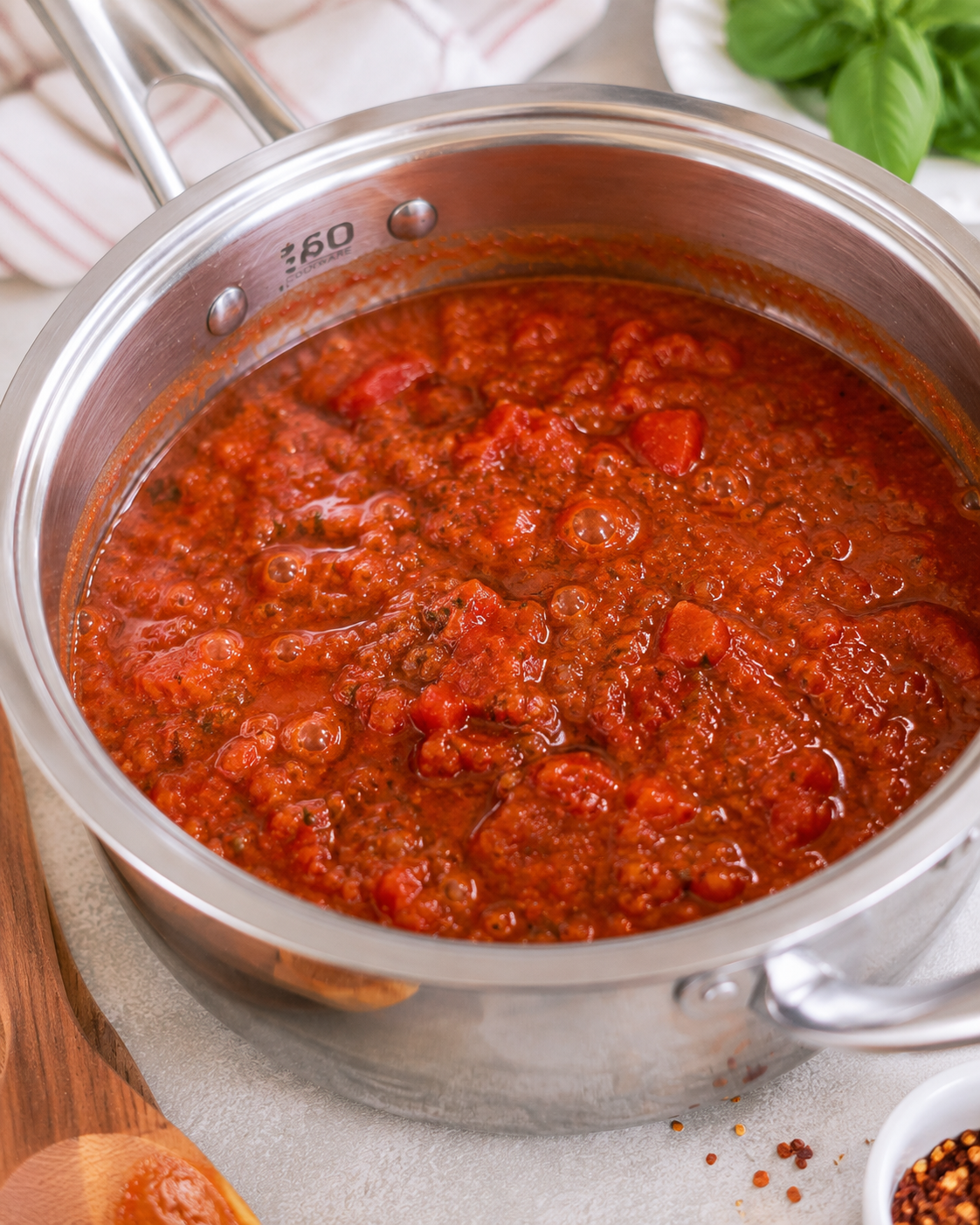
Place a large round oven-safe skillet over medium heat. Add 1 tablespoon of olive oil and the onion and pepper. Cook until softened and add in the minced garlic. Cook briefly, stirring often, until the garlic becomes fragrant. Be careful not to let it brown.
Add the crushed tomatoes, tomato sauce, water, dried oregano, dried thyme, fresh basil, sea salt, and black pepper.
Stir until everything is fully combined. Allow the sauce to simmer gently for 5 to 10 minutes, or until it has thickened slightly and the herbs have become fragrant.
Remove the skillet from the heat.
When using a separate baking dish instead of an oven-safe skillet, prepare the sauce in a saucepan and pour it into the bottom of the baking dish.
Step 3: Prepare the Herb Topping
In a small bowl, combine the olive oil, fresh basil, fresh parsley, garlic powder, dried thyme, sea salt, and black pepper.
Stir until the herbs are evenly distributed throughout the olive oil. Set the mixture aside.
Step 4: Layer the Vegetables
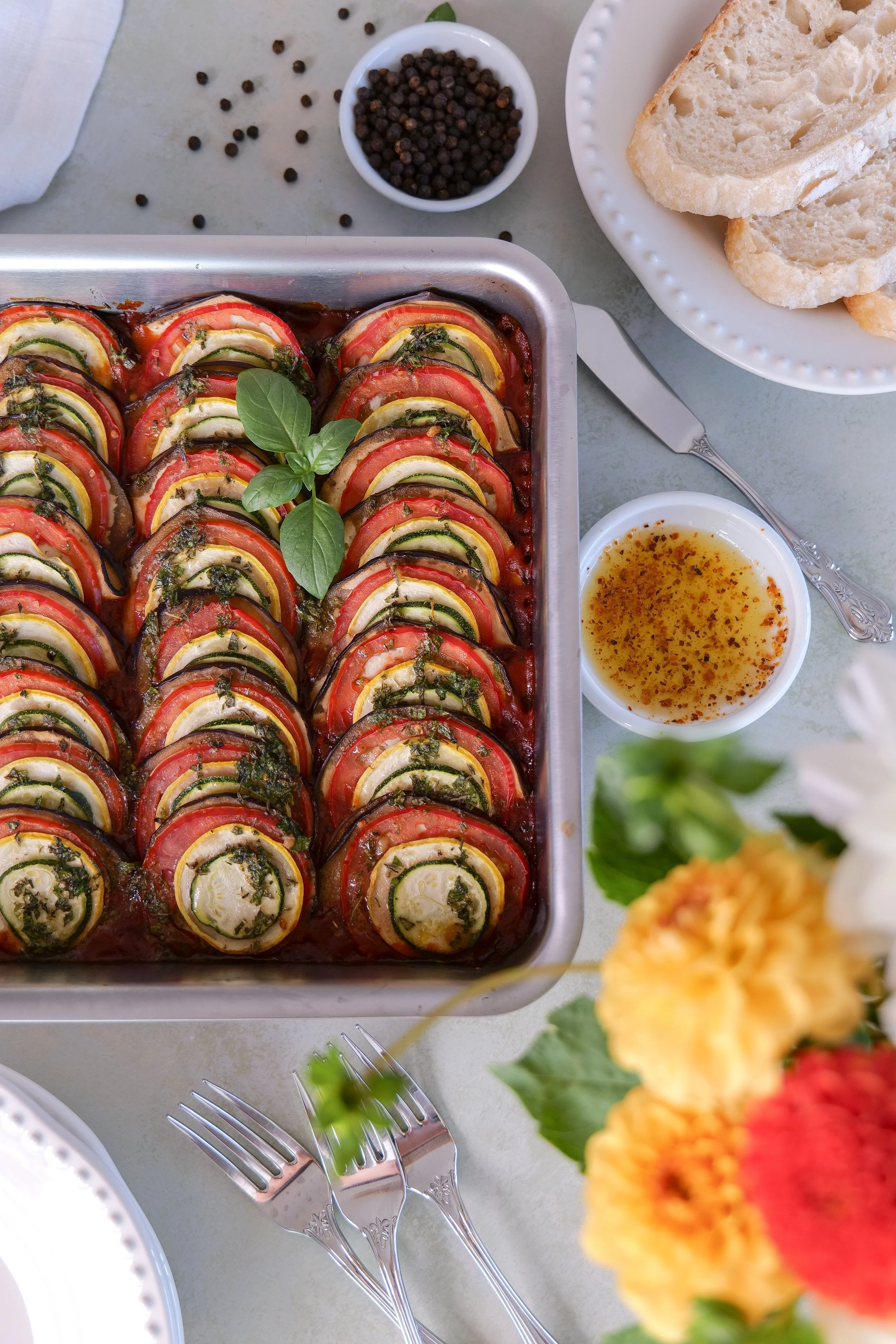
Beginning along the outside edge of the pan, arrange the sliced vegetables upright in an alternating pattern.
You can use a repeating pattern or simply alternate the vegetables according to their colors and sizes.
Continue arranging the vegetables in concentric circles, working toward the center of the pan. Tuck smaller slices into any gaps until the tomato sauce is covered.
The vegetables should fit closely together but should not be packed so tightly that they cannot cook evenly.
Step 5: Add the Herb Topping
Spoon or brush the herb and olive oil mixture evenly over the vegetables. Make sure some of the herbs settle between the slices.
Step 6: Bake the Ratatouille
Place the ratatouille in the preheated oven and bake for 45 minutes.
For additional color, place the dish under the broiler for 1 to 2 minutes at the end. Watch it closely so the vegetables do not burn.
Allow the ratatouille to rest for approximately 10 minutes before serving.
Finish with fresh basil, parsley, flaky sea salt, or freshly grated Parmesan, if desired.
Amanda’s Tips for the Best Ratatouille
Slice the Vegetables Evenly
Vegetables of a similar thickness will cook at approximately the same rate. A mandoline makes this faster, but a sharp chef’s knife works beautifully.
Do Not Skip the Sauce
The seasoned tomato sauce gives the vegetables moisture and flavor as they bake. It also makes the ratatouille especially delicious when served with bread, pasta, or polenta.
Avoid Overcrowding the Pan
The vegetables should sit closely together without being compressed. Packing them too tightly can prevent the heat from circulating evenly.
Season Every Layer
Season the tomato sauce to taste before arranging the vegetables. The herb topping then adds another layer of flavor to the vegetables themselves.
Let It Rest Before Serving
Allowing the ratatouille to rest for 10 minutes gives the sauce time to settle and makes it easier to serve.
Make It Ahead
Ratatouille is one of those wonderful dishes that becomes even more flavorful after the vegetables and herbs have had time to sit together. Make it a day ahead and gently reheat it before serving.
What to Serve with Ratatouille
Ratatouille can be served as a vegetarian main course, a side dish, or part of a larger summer meal.
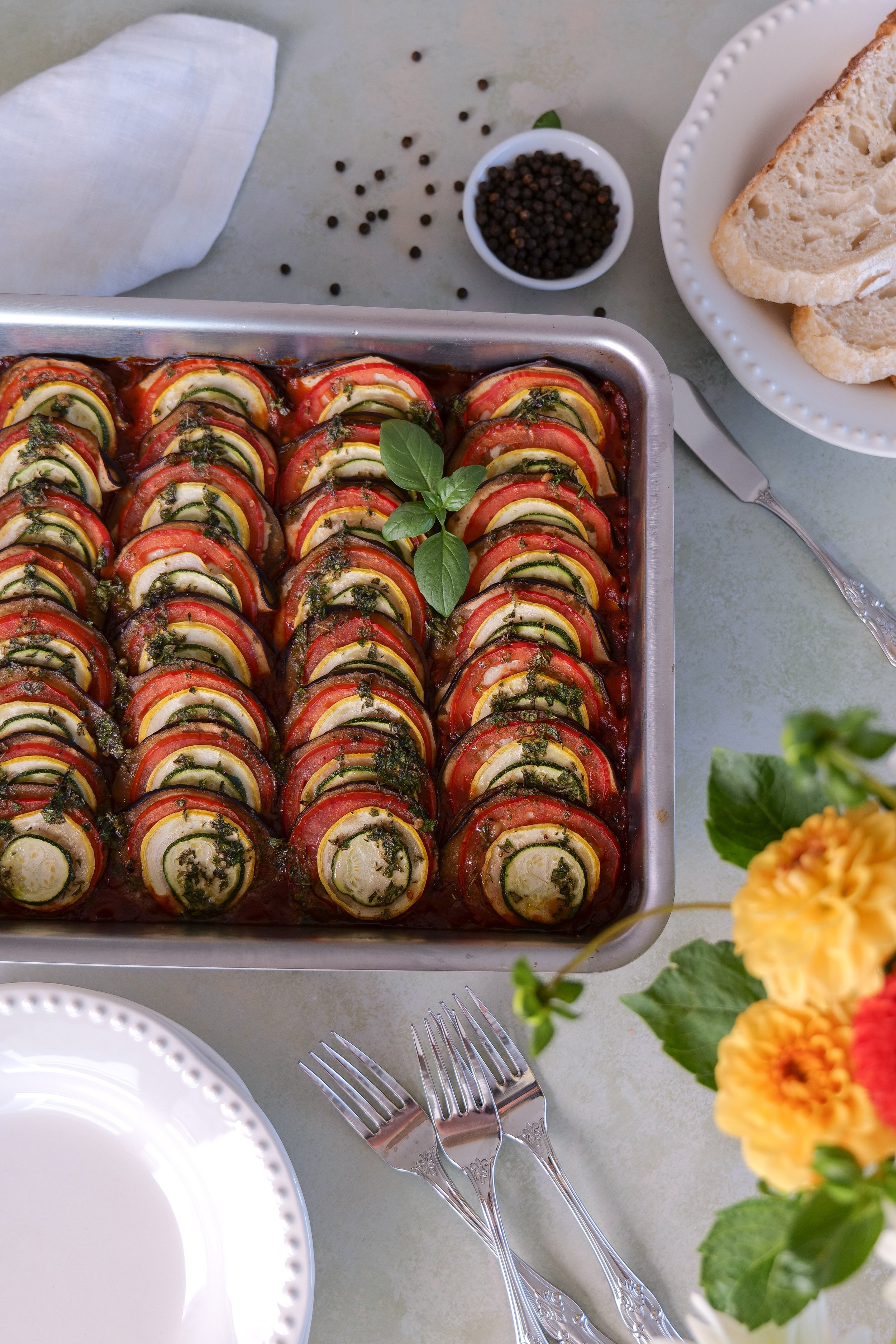
Serve It with Crusty Bread
Warm sourdough, French bread, or focaccia is perfect for soaking up the tomato and herb sauce.
Spoon It Over Polenta
Creamy polenta provides a comforting base and turns the vegetables into a satisfying vegetarian dinner.
Add Pasta or Grains
Serve ratatouille over pasta, couscous, farro, quinoa, or rice for a simple and filling meal.
Pair It with Grilled Chicken
For a larger summer dinner, serve it alongside my Grilled Chicken, Mexican Street Corn and Cucumber Salad.
Serve It with Risotto
The vegetables pair beautifully with my Easy Mushroom and Pea Risotto.
Add Burrata or Parmesan
Place torn burrata over the warm vegetables just before serving, or finish each portion with freshly grated Parmesan cheese.
Turn It into Brunch
Serve leftover ratatouille with softly cooked eggs and toasted sourdough for an easy seasonal brunch.
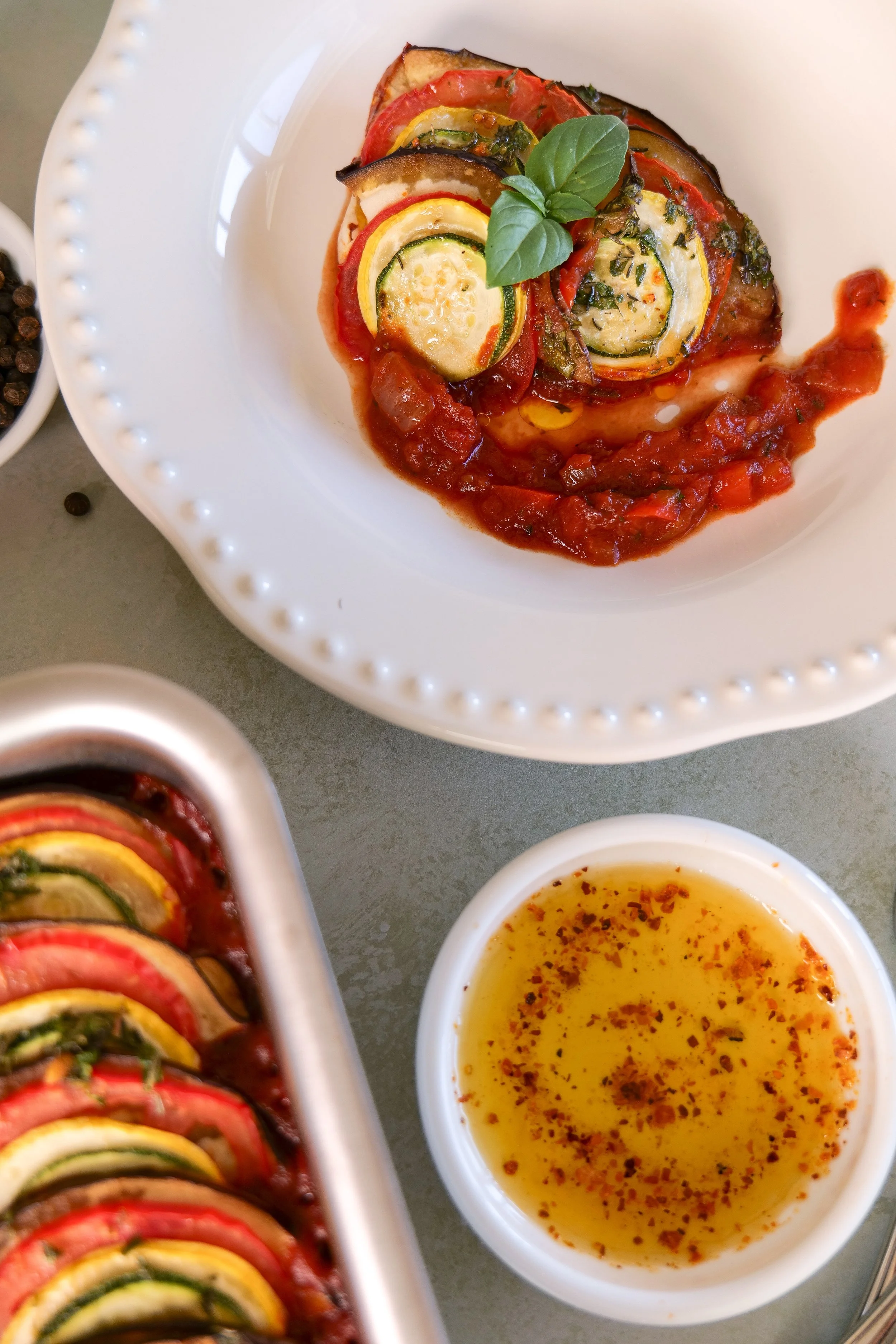
A Simple Farmers Market Dinner Menu
For an easy summer gathering, build your menu around seasonal ingredients and relaxed family-style serving.
Begin with fresh bread, marinated olives, or a simple cheese board. Serve the ratatouille alongside grilled chicken, roasted salmon, steak, or a large green salad.
For another vegetable-centered main dish, try my Zucchini Roll-Ups Dinner.
Finish the evening with a fresh fruit dessert, cobbler, or homemade ice cream. The goal is not to create a complicated menu. Let the produce remain the centerpiece and choose dishes that can be placed in the middle of the table for everyone to share.
Ratatouille Variations
Rustic Ratatouille
Instead of arranging the vegetables in rounds, cut everything into chunks. Sauté the vegetables and allow them to simmer together in the tomato sauce until tender.
Ratatouille with Burrata
Place a ball of burrata in the center of the warm ratatouille just before serving. Finish with basil, olive oil, salt, and black pepper.
Ratatouille with Parmesan
Sprinkle grated Parmesan over the vegetables during the final 10 minutes of baking.
Spicy Ratatouille
Increase the red pepper flakes or add a finely chopped chili pepper to the sauce.
Ratatouille with Protein
Serve the vegetables with grilled chicken, Italian sausage, salmon, shrimp, white beans, or a fried egg.
Individual Ratatouille Dishes
Divide the sauce and sliced vegetables between small oven-safe dishes for individual portions. Adjust the baking time as needed and begin checking the vegetables earlier.
How to Store Ratatouille
Allow leftover ratatouille to cool before transferring it to an airtight container.
Store it in the refrigerator for up to four or five days. The flavors often deepen overnight, making it a wonderful make-ahead lunch or dinner.
How to Reheat Ratatouille
For the best texture, place the ratatouille in an oven-safe dish, cover it loosely, and reheat it at 325 degrees Fahrenheit until warmed through.
Individual portions can also be warmed gently in a covered skillet over medium-low heat or reheated in the microwave.
Add fresh basil after reheating to brighten the flavors.
Can You Freeze Ratatouille?
Yes. Ratatouille can be frozen, although the vegetables may become softer once thawed.
Allow it to cool completely, then transfer it to a freezer-safe container. Freeze for up to three months.
Thaw it overnight in the refrigerator before gently reheating. Frozen ratatouille works especially well when served over pasta or polenta, where a softer texture will not be as noticeable.
Frequently Asked Questions
Do I Need to Peel the Eggplant?
No. The eggplant skin softens as it bakes and helps the slices keep their shape. Choose a fresh eggplant with smooth, tender skin.
Do I Need to Salt the Eggplant First?
Salting is generally unnecessary when using a fresh, smaller eggplant. When your eggplant is especially large or seems very moist, lightly salt the slices, let them sit for approximately 20 minutes, and pat them dry before layering.
Can I Make Ratatouille Ahead of Time?
Yes. You can assemble and bake the ratatouille a day before serving. Cover it and refrigerate it after cooling, then reheat it gently in the oven.
You can also prepare the tomato sauce one or two days in advance and refrigerate it separately.
Can I Assemble It Now and Bake It Later?
You can assemble it several hours ahead, cover it tightly, and refrigerate it until you are ready to bake. Allow a cold glass or ceramic baking dish to sit at room temperature briefly before placing it in a hot oven.
Is Ratatouille Served Hot or Cold?
Ratatouille can be served hot, warm, or at room temperature. I prefer it warm from the oven for dinner and at room temperature when serving it as part of a summer lunch or appetizer spread.
Is Ratatouille a Main Dish or a Side Dish?
It can be either. Serve it with bread, grains, pasta, beans, eggs, or cheese for a vegetarian main course. It also makes a beautiful side for chicken, steak, fish, or sausage.
Why Is My Ratatouille Watery?
Fresh vegetables naturally release moisture as they cook. Use firm produce, avoid slicing it too thickly, and bake the dish uncovered during the final portion of the cooking time.
Allowing the finished ratatouille to rest before serving will also help the sauce settle.
Can I Use Vegetables from My Garden?
Absolutely. This is one of the best recipes for using a summer garden harvest. Zucchini, yellow squash, eggplant, tomatoes, peppers, onions, and fresh herbs can all go directly from the garden into this dish.
A Note From Amanda
There is something meaningful about creating a meal from ingredients that were chosen slowly and intentionally.
A morning at the farmers market, a basket filled with fresh vegetables, and an afternoon spent preparing them may seem simple, but those are often the moments that make a season feel memorable.
This ratatouille is not meant to be perfect. The vegetables may be different sizes. The layers may not all look exactly alike. A tomato may be a little softer than the others, and fresh herbs may be scattered across the table while you cook.
That is part of the beauty of it.
It is a recipe that invites us to notice what is in season, use what we have, and turn simple ingredients into something worth gathering around the table for.
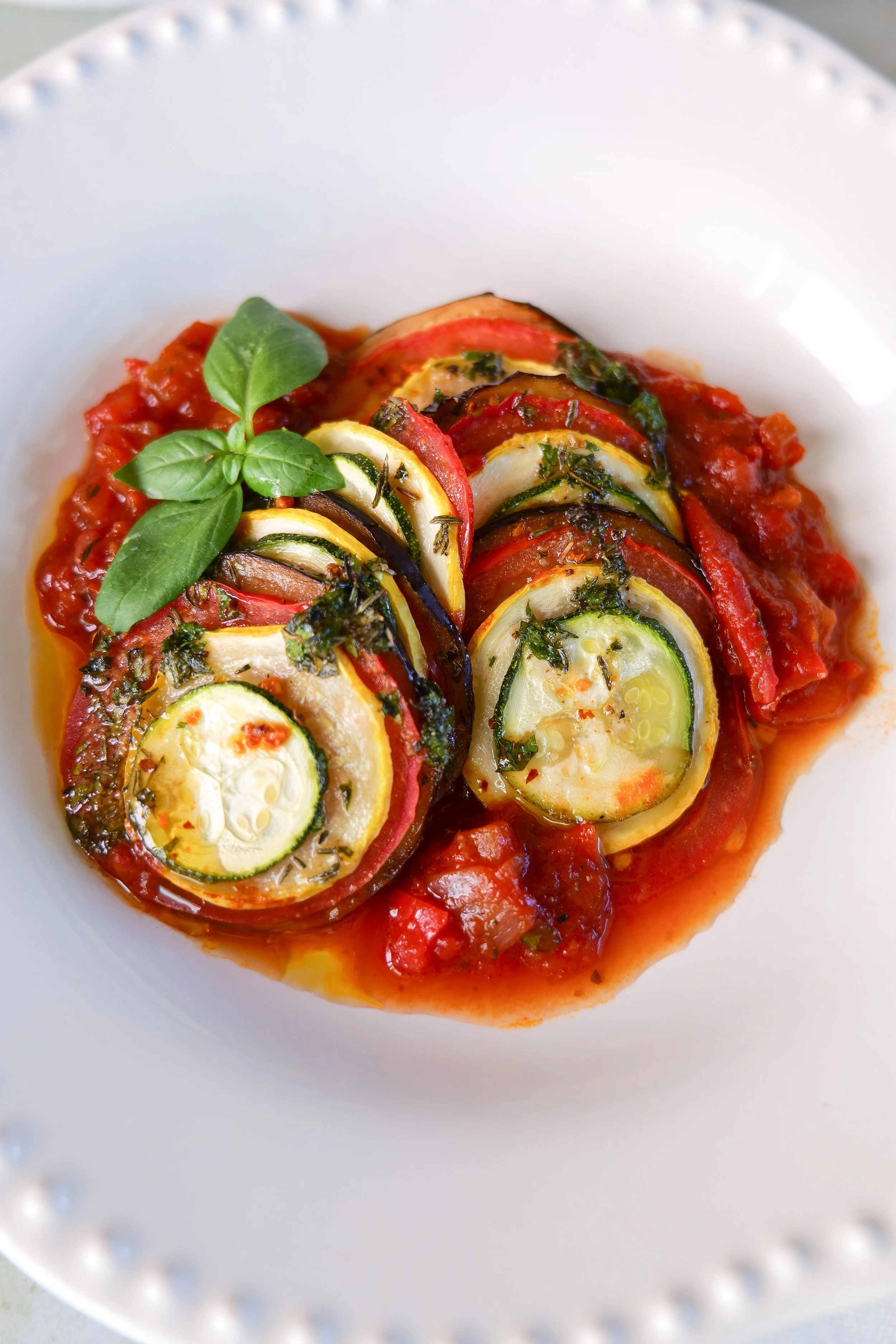
Classic French Ratatouille Recipe
Prep Time: 30 minutes
Cook Time: 55 to 60 minutes
Total Time: Approximately 1 hour 30 minutes
Servings: 6 to 8
Ingredients
Vegetables
1 medium eggplant, sliced into ¼-inch rounds
2 medium zucchini, sliced into ¼-inch rounds
2 medium yellow squash, sliced into ¼-inch rounds
4–5 Roma tomatoes, sliced into ¼-inch rounds
Tomato & Roasted Pepper Sauce
1 tablespoon olive oil
1 medium yellow onion, diced
1 medium red bell pepper, diced
3 cloves garlic, minced
1 (15-ounce) can crushed tomatoes
1 (8-ounce) can tomato sauce
¼ cup water
1 teaspoon kosher salt
½ teaspoon black pepper
1 teaspoon dried basil
½ teaspoon dried thyme
½ teaspoon dried oregano
Herb Oil
3 tablespoons olive oil
2 tablespoons chopped fresh basil
2 tablespoons chopped fresh parsley
1 teaspoon garlic powder
½ teaspoon dried thyme
Salt and freshly cracked black pepper, to taste
For serving:
Fresh basil
Flaky sea salt
Freshly grated Parmesan or burrata (optional)
Extra virgin olive oil
Instructions
Step 1
Preheat the oven to 375°F.
Step 2
Heat the olive oil in a medium saucepan over medium heat. Add the diced onion and diced red bell pepper. Cook for 6–8 minutes, stirring occasionally, until the vegetables are soft and beginning to caramelize. Add the minced garlic and cook for another 30 seconds, just until fragrant.
Step 3
Stir in crushed tomatoes, tomato sauce, water, salt, black pepper, dried basil, thyme and oregano. Bring the sauce to a gentle simmer. Cook for 10–15 minutes, allowing it to thicken slightly while the flavors come together.
Step 4
Spread the tomato and pepper sauce evenly across the bottom of a 9×13-inch baking dish.
Step 5
Arrange the sliced vegetables vertically, alternating eggplant, zucchini, yellow squash, tomato. Continue until the baking dish is tightly packed with beautiful rows of vegetables.
Step 6
In a small bowl, whisk together olive oil, basil, parsley, garlic powder, thyme, salt, pepper. Brush or spoon the herb oil evenly over all of the vegetables.
Step 7
Cover tightly with aluminum foil. Bake for 45 minutes. Remove the foil and continue baking for another 25–35 minutes, or until the vegetables are tender and lightly caramelized around the edges.
Step 8
Allow the ratatouille to rest for 10 minutes before serving. Finish with fresh basil, flaky sea salt, a drizzle of good olive oil, and freshly grated Parmesan or burrata if desired.
Amanda’s Tips
Choose vegetables with similar widths to make the layered presentation easier to create.
Slice everything as evenly as possible so the vegetables cook at the same rate.
Season the tomato sauce before adding the vegetables and adjust it to your taste.
Allow the finished ratatouille to rest before serving so the sauce can settle.
Make it a day ahead when entertaining. The flavor becomes even better overnight.
Storage
Refrigerate leftovers in an airtight container for up to five days. Reheat gently in a covered baking dish at 325 degrees Fahrenheit.
Freeze cooled ratatouille in a freezer-safe container for up to three months. Thaw overnight in the refrigerator before reheating.
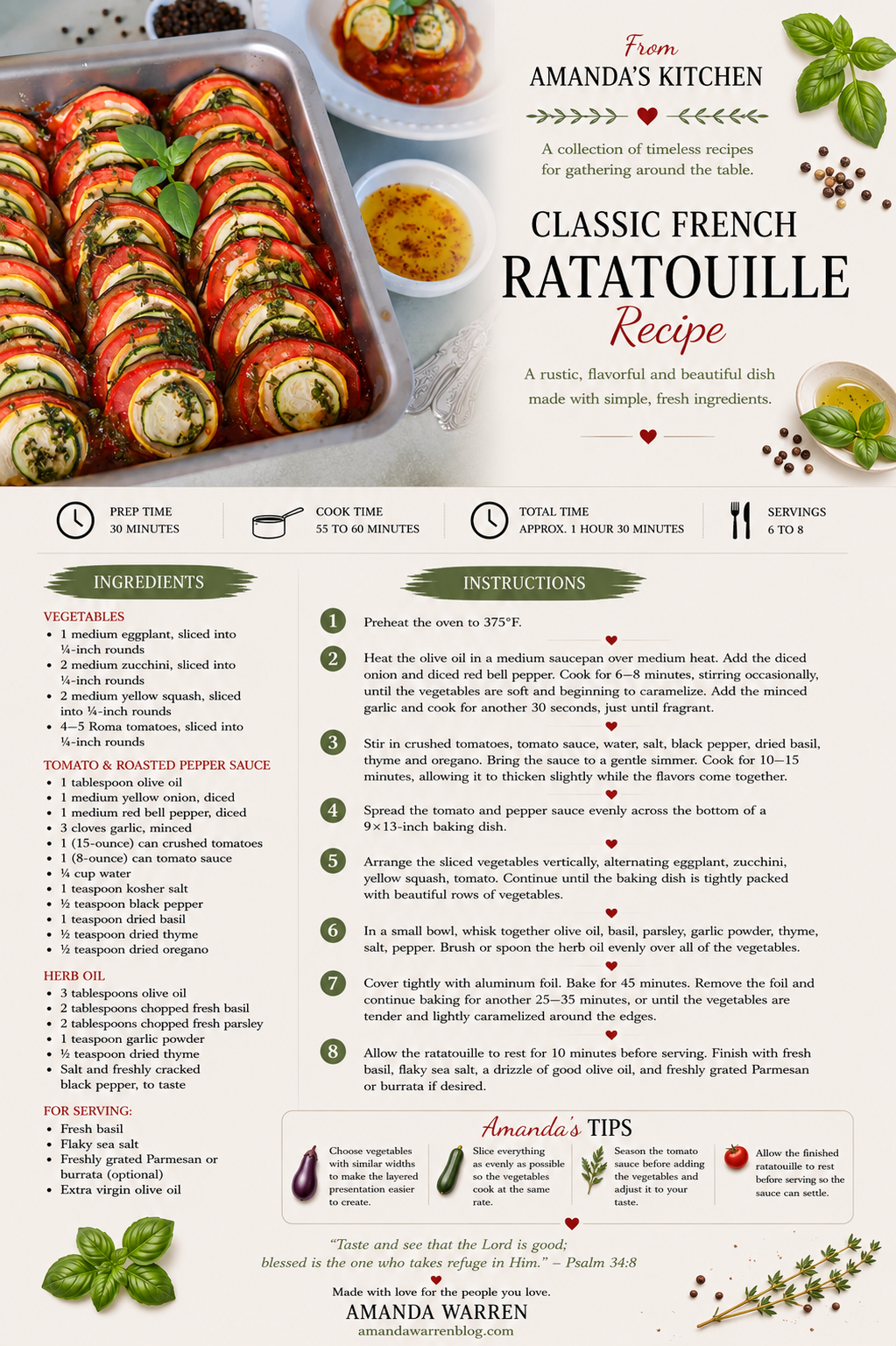
Save This Recipe
Whether you're planning ahead for a special occasion or adding a new favorite to your recipe collection, I've included a printable recipe card below so it's easy to save, print, and share with the people you love.
More Seasonal Vegetable Recipes You Will Love
For another beautiful way to use summer zucchini, make my Zucchini Roll-Ups Dinner.
For a complete warm-weather meal, try my Grilled Chicken, Mexican Street Corn and Cucumber Salad.
For a comforting vegetarian dinner, make my Easy Mushroom and Pea Risotto.
You can also explore more of my seasonal recipes and gathering ideas throughout the Food and Drinks section of the blog.